

We may earn a commission when you buy through links on this page, at no extra cost to you. Learn more.
A pinot grigio substitute should be dry, light to medium in body, and refreshing, with enough acidity to work alongside seafood, salads, and simple pasta. Verdejo, Soave, Picpoul, and Albariño are useful starting points, but each changes the glass in a different way. Choose Verdejo or Soave for a familiar profile, Picpoul for extra zip, and Vermentino or Godello when you want more texture.
Pinot Grigio is popular because its usual Italian style is crisp, uncomplicated, and food-friendly. A replacement does not need to taste identical; it should preserve the qualities you value most, such as a clean finish, restrained fruit, bright acidity, or an easy match for a weeknight meal. The options below cover both wines to drink and dry whites to use in recipes.
What Makes a Good Pinot Grigio Replacement?
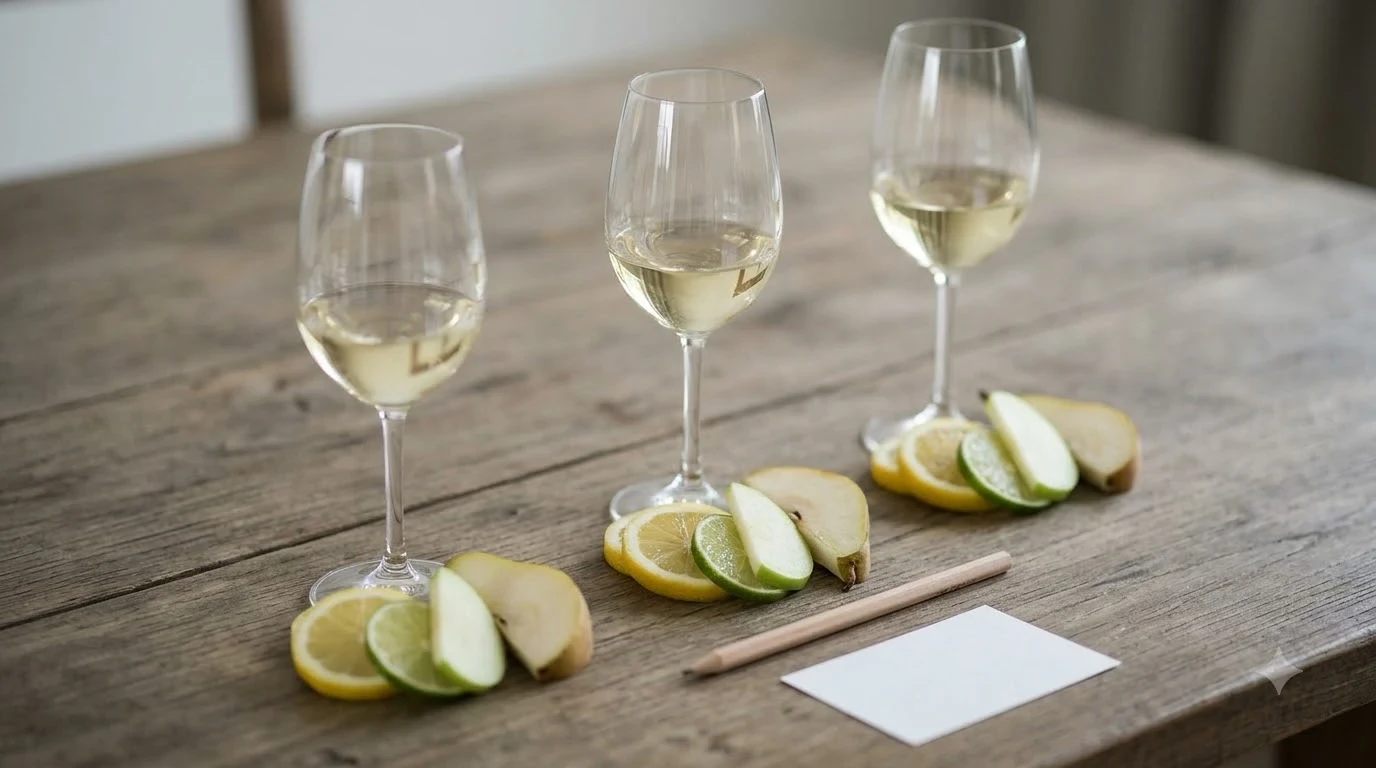
The closest match is usually a dry white wine with a light to medium body, restrained oak, and fresh acidity. In its familiar Italian style, Pinot Grigio shows lemon, green apple, pear, and sometimes almond, with a clean finish rather than a heavy, creamy texture.
Decanter describes Pinot Grigio from Trentino, Veneto, and Friuli as clean and crisp, with high acidity and citrus notes. Pinot Gris from Alsace, by contrast, is often fuller and more aromatic, with ripe stone fruit, honey, and spice. The same grape can therefore offer two different benchmarks: light and neutral, or rich and expressive.
For a light Italian-style bottle, start with Verdejo, Soave, Picpoul, or unoaked Sauvignon Blanc. Albariño and Vermentino bring more obvious aromas or mineral notes, while Godello and richer Pinot Gris add weight. Compare body, acidity, and flavor intensity: match two of those three features and the substitute will usually work, even when its fruit notes differ.
| Wine style | Typical body | Acidity | Serving temperature | Best reason to choose it |
|---|---|---|---|---|
| Verdejo | Light to medium | Medium-high to high | 45–50°F | Dry, citrus-led freshness |
| Soave | Light to medium | Medium | 45–50°F | Subtle pear and apple |
| Picpoul | Light to medium | High | 45–50°F | Green apple and lime |
| Albariño | Medium | High | 45–50°F | Citrus, stone fruit, and coastal freshness |
| Vermentino | Medium | Medium-high to high | 45–50°F | Saline character and texture |
| Godello | Medium | Medium-high to high | 50–55°F | More concentration and mouthfeel |
| Unoaked Chardonnay | Medium | Medium | 50–55°F | Rounder apple and lemon |
Use the temperature ranges as starting points: light, crisp whites are generally best at 45–50°F, while fuller whites show better detail around 50–55°F. Too much chilling can mute aromas; too much warmth can make a white seem soft and broad.
Closest Matches: Verdejo, Soave, and Picpoul
Verdejo, Soave, and Picpoul are practical alternatives when you want a dry white that feels straightforward and refreshing. Verdejo keeps a citrus-and-green-fruit profile, Soave is often gentle and restrained, and Picpoul turns up the acidity.
Verdejo from Rueda
Verdejo is a Spanish grape strongly associated with Rueda in central Spain. Its wines commonly show lime, green apple, and herbal notes, with pleasant acidity and a dry finish. VinePair lists Verdejo as a wine to try for Pinot Grigio drinkers; its overview of lesser-known white wines describes the grape’s lime note and green-fruit character.
Choose a fresh, unoaked Verdejo when you want brightness without much weight. It can be more herbal than Pinot Grigio, so pair it with grilled shrimp, lemony chicken, vegetable salads, or dishes finished with fresh herbs. Rueda on the label is a useful clue when shopping for this style.
Soave from Veneto
Soave is made primarily from Garganega and can be a natural substitute if you like Pinot Grigio’s modest fruit and easygoing structure. Basic examples are often light, with lemon, pear, white flowers, and a subtle almond-like finish. Garganega can add a little more texture and a faintly bitter finish.
Serve Soave with grilled white fish, risotto, vegetable pasta, or mild cheeses. Soave Classico identifies a historic hillside zone, not a guarantee that every bottle will be fuller or better than a basic Soave. Producer and vineyard choices matter more than the word Classico by itself.
Picpoul from Languedoc
Picpoul, often sold as Picpoul de Pinet, is a strong choice if you like Pinot Grigio’s clean citrus character but want more snap. It commonly offers green apple, lemon, and lime with high acidity. Wine Enthusiast calls it a middle ground with more texture and aroma than Pinot Grigio and less grassy intensity than Sauvignon Blanc; see its guide to alternatives to Sauvignon Blanc.
That extra acidity suits oysters, mussels, fried seafood, and simply grilled fish. Picpoul can taste more tart than a softer Pinot Grigio, so it is not the closest match for drinkers who prefer very mild whites. With seafood or a dish dressed with lemon, its extra lift is an advantage.
Brighter Alternatives: Albariño and Sauvignon Blanc
Albariño and Sauvignon Blanc suit drinkers who want more aromatic detail and a brighter line of acidity. Albariño usually adds peach, grapefruit, and floral notes, while Sauvignon Blanc can bring lime, gooseberry, cut grass, and a more obvious herbal character.
Albariño from Rías Baixas
Albariño from Galicia in northwestern Spain is an excellent choice when you want a lively white that remains dry and food-friendly. Rías Baixas examples often combine citrus, peach, apple, and floral aromas with refreshing acidity. The style is more aromatic than a neutral Pinot Grigio, but its bright finish works in many of the same settings.
Serve Albariño with shrimp, scallops, grilled fish, ceviche, sushi, or a salad with citrus dressing. It also works with goat cheese and lighter chicken dishes. Choose a fresh, unoaked bottling for the closest match; lees-aged or oak-influenced examples can feel broader and richer.
Sauvignon Blanc for citrus and herbs
Sauvignon Blanc works when freshness matters more than a neutral flavor. It is generally high in acidity and often brings grapefruit, lime, green apple, and herbal notes. New Zealand examples can be highly aromatic, while Loire Valley wines such as Sancerre often lean toward citrus and minerals.
Pair it with goat cheese, asparagus, green salads, herb-roasted chicken, or seafood with lemon. If the food is delicate, choose a restrained Loire-style example rather than a pungent tropical version. Match the wine’s acidity to the food: a vinegar- or lemon-dressed salad needs a wine with equal or greater acidity, or the wine can taste flat.
Rounder Choices: Vermentino, Godello, and Pinot Gris
Vermentino, Godello, and Pinot Gris are useful when you want to move beyond Pinot Grigio without giving up freshness. Vermentino adds a saline edge, Godello brings more concentration, and Pinot Gris offers the same grape in a potentially richer style.
Vermentino for a coastal profile
Vermentino is grown in Mediterranean regions including Sardinia, Liguria, Corsica, and southern France. In Liguria it may be called Pigato, while Rolle is a name used in parts of France. Coastal examples combine citrus and stone fruit with herbs, salty-mineral notes, and medium body. VinePair describes the grape as tangy and fruity, with maritime influences and a fuller texture.
Choose Vermentino with grilled prawns, calamari, clams, roast chicken, or pasta with olive oil and herbs. Compared with light Pinot Grigio, it is often broader and more savory. Sardinian Vermentino or a bottle from the Tuscan coast is a good place to start.
Godello for extra texture
Godello from Valdeorras in Galicia offers a more substantial alternative. It can show citrus, peach, and grapefruit peel, with brisk acidity balanced by a richer mouthfeel. Its mineral character and concentrated fruit make it useful with grilled poultry, roast vegetables, or seafood in a richer sauce.
For a closer match, seek a fresh, unoaked style. Barrel-influenced Godello can work with roast chicken, creamy seafood pasta, or firm white fish served with butter, but its flavor and weight move further from a simple Pinot Grigio.
Pinot Gris: same grape, different style
Pinot Gris is not a separate grape from Pinot Grigio; the names refer to the same variety. Italian Pinot Grigio is often made for freshness and lightness, while Alsace Pinot Gris can be fuller and more aromatic, with ripe stone fruit, honey, and spice. Oregon and New Zealand also produce Pinot Gris in a range of styles.
Choose a dry Pinot Gris when you want more body but still enjoy the grape’s character. For the same light profile as everyday Italian Pinot Grigio, favor a fresh, unoaked bottling rather than a richer Alsace expression. Fuller examples suit roast pork, mushrooms, richer fish, and poultry with cream.
Choosing a Substitute for Food and Cooking
The best bottle depends on the dish. Delicate seafood and salads call for a light, crisp white; richer food can benefit from more body, while the wine still needs enough acidity to keep the pairing fresh.
For shellfish, oysters, and grilled white fish, start with Picpoul, Albariño, or Vermentino. Picpoul and Albariño bring lively acidity; Vermentino contributes a savory coastal note that works with olive oil and herbs. For poached fish or simple shrimp pasta, Soave or Verdejo is often quieter. Avoid tannic reds with oily fish, since the combination can taste harsh.
With chicken, vegetable pasta, risotto, or mild cheese, consider Verdejo, Soave, unoaked Chardonnay, or Godello. Chardonnay’s medium acidity and rounder apple-and-lemon profile can suit cream sauces; Godello is better when the dish includes mushrooms, browned surfaces, or a concentrated sauce.
For cooking, replace Pinot Grigio with another dry white rather than a sweet or heavily oaked bottle. Soave, Verdejo, Pinot Blanc, or unoaked Chardonnay work in risotto, pan sauces, seafood pasta, and recipes calling for a splash of white wine. Sauvignon Blanc also works, although its grassy aromas may become more noticeable as a sauce reduces.
Use the same volume first and taste before adding lemon, vinegar, or salt. Wine contributes liquid, acidity, and aroma; a sharper substitute may need less added acid. For a nonalcoholic version, use unsalted broth with a little lemon juice, added gradually so the dish does not become too sour.
Serving, Buying, and Storing the Bottle
Serve most crisp substitutes chilled but not icy, and store opened bottles in the refrigerator. Attention to temperature and freshness can make a Verdejo or Soave feel as satisfying as the Pinot Grigio you usually buy.
For light whites such as Verdejo, Soave, Picpoul, Albariño, and most Pinot Grigio, aim for 45–50°F. Fuller whites such as Godello, richer Pinot Gris, and Chardonnay generally show better around 50–55°F. A 750-milliliter bottle provides about five 5-ounce pours, a useful planning measure for dinner.
Shop by grape and region: Rueda for Verdejo, Veneto for Soave, Languedoc for Picpoul de Pinet, Rías Baixas for Albariño, and Sardinia for Vermentino. Choose a fresh, unoaked bottling when you want to imitate light Italian Pinot Grigio; move toward richer regions or barrel-aged styles only when you want more texture.
After opening, keep still white wine in the refrigerator with a stopper and aim to finish it within 3–5 days. An unopened bottle of fresh, simple Pinot Grigio or a similar white is generally intended for early drinking rather than extended cellaring. For bottle-life details, read how long Pinot Grigio lasts unopened; the same freshness-first approach applies to many crisp everyday whites.
Tip: Chill the bottle before guests arrive, then let it warm in the glass for a few minutes. That can reveal pear, citrus, floral, or mineral notes that disappear when a white is served straight from an icy refrigerator.
Appearance can help set expectations, but it is not a dependable quality test. Pinot Grigio ranges from pale straw to light copper, in part because of grape color and skin contact. See Pinot Grigio color for more detail, and use the same serving principles in how to serve Pinot Grigio for many of these alternatives.
Frequently Asked Questions
Verdejo from Rueda, Picpoul from Languedoc, and Albariño from Rías Baixas are reliable starting points, but the right choice depends on flavor and the meal. These answers cover a few further details.
Is Pinot Blanc a good substitute for Pinot Grigio?
Yes. Pinot Blanc, also called Pinot Bianco in Italy and Weissburgunder in German-speaking regions, is often dry and gently flavored, with apple and citrus notes. It works well with seafood, salads, and light pasta.
Can sparkling wine replace Pinot Grigio?
A dry sparkling wine can fill the same aperitif role, although its bubbles make the experience different. Choose Brut or Extra Brut and serve it around 40–50°F. Cava uses bottle fermentation, while Prosecco is typically made from Glera using the tank method.
Is every Rueda white wine made only from Verdejo?
No. Rueda is a designation, not a guarantee of a single-grape wine. Wines labeled Rueda DO must contain at least 50% Verdejo or Sauvignon Blanc, so the remaining blend can change the aroma and texture.
Can I use red wine instead of Pinot Grigio in a recipe?
Usually not as a direct replacement. Red wine brings color, tannin, and stronger flavors that can alter a pale pan sauce, seafood dish, or risotto. For most recipes calling for Pinot Grigio, another dry white is more dependable.
Can dry vermouth replace Pinot Grigio in cooking?
Yes, especially in a savory pan sauce, but dry vermouth is fortified and flavored with botanicals, so it has a more assertive profile than a neutral white wine. Start with a smaller amount, then add broth or water to reach the recipe’s intended liquid volume. Avoid it in delicate dishes where herbal flavors could overwhelm the ingredients.
For the closest everyday replacement, begin with Verdejo or Soave; choose Picpoul or Albariño for more acidity, and Vermentino or Godello for fuller texture. A dry, unoaked white served at the right temperature preserves much of Pinot Grigio’s easygoing appeal while giving the meal a different accent.
More in Wine Types & Grapes
 What Does Mourvèdre Taste Like? Flavor Profile, Regions, and PairingsUpdated Nov 20, 2026
 What Does Marsanne Taste Like? Flavors, Styles, and Food PairingsUpdated Nov 20, 2026
 What Does Malvasia Taste Like? Styles, Flavors, and Food PairingsUpdated Nov 20, 2026
 What Does Grenache Blanc Taste Like? Flavor Profile, Styles, and PairingsUpdated Nov 20, 2026
 What Does Garnacha Taste Like? Key Flavors, Styles, and Pairing TipsUpdated Nov 20, 2026
 What Does Fruit Wine Taste Like? A Complete Flavor and Style BreakdownUpdated Nov 20, 2026