

We may earn a commission when you buy through links on this page, at no extra cost to you. Learn more.
A picpoul grape is Picpoul, an old French white wine grape that makes dry, high-acid, light-bodied whites with flavors of green apple, citrus blossom, and a saline edge. Wine references describe it as an old French variety with bright acidity and no tannins, which makes it one of the most seafood-friendly whites on the shelf. The wine is usually meant to be drunk young and cold, and it pairs especially well with shellfish and fried dishes.
This guide covers what the picpoul grape is, what the wine tastes like, how to serve it, and which foods bring out its best side. It is written for shoppers who see Picpoul listed on a shelf and want to know whether it suits their table.
What the Picpoul Grape Is
Picpoul is a white wine grape from France. Wine Folly describes it simply as an old French white variety, and the name is often seen in full as Picpoul de Pinet on bottles. The name hints at the grape’s character: wine writers describe it as sharp and lively rather than round or rich.
Because it is a white grape with high acidity, Picpoul tends to produce wines that taste crisp from the first sip. Winemakers do not usually try to add weight to Picpoul. The grape’s natural structure is the point, and a good bottle keeps that edge without feeling thin.
For shoppers, the practical takeaway is simple. If you want a white that tastes clean and lively, with more acidity than fruit sweetness, Picpoul is a strong candidate. If you prefer buttery or oaked whites, it will feel very different.
Flavor Profile and Body
The most common flavors described for Picpoul are green apple, citrus blossom, lemon, and thyme, along with a saline note. The fruit is bright and fresh rather than tropical or ripe, and the herbal and mineral touches give the wine a clean finish.
In body, Picpoul is light. Wine references describe it as dry and light-bodied with no tannins, so the wine feels fresh and easy on the palate rather than grippy. The acidity is the main structure, and it is high. That is what gives the wine its lift when it is served cold and paired with food.
| Trait | What to expect with Picpoul |
|---|---|
| Color and body | Light-bodied white with no tannins |
| Acidity | High, the main source of its freshness |
| Aromas and flavors | Green apple, citrus blossom, lemon, thyme, saline |
| Serving temperature | 38 to 45°F (3 to 7°C) |
| Glass | White wine glass |
| Cellaring | Suggested 1 to 3 years, per Wine Folly |
How to Serve Picpoul
Serve Picpoul cold. Wine Folly recommends a serving temperature of 38 to 45°F (3 to 7°C), which is colder than many people keep their white wines. At that range, the acidity feels crisp and the fruit stays clean rather than flat.
Decanting is not needed. The wine is light and fresh, and its appeal comes from that brightness rather than from aeration. A standard white wine glass suits it, and a glass with a narrower bowl keeps the aromas focused for a wine that is mostly about freshness.
For storage, Wine Folly suggests cellaring Picpoul for one to three years. That window is useful to know, but most bottles on a retail shelf are intended to be enjoyed soon after purchase, especially if the vintage on the label is recent.
Food Pairing With Picpoul
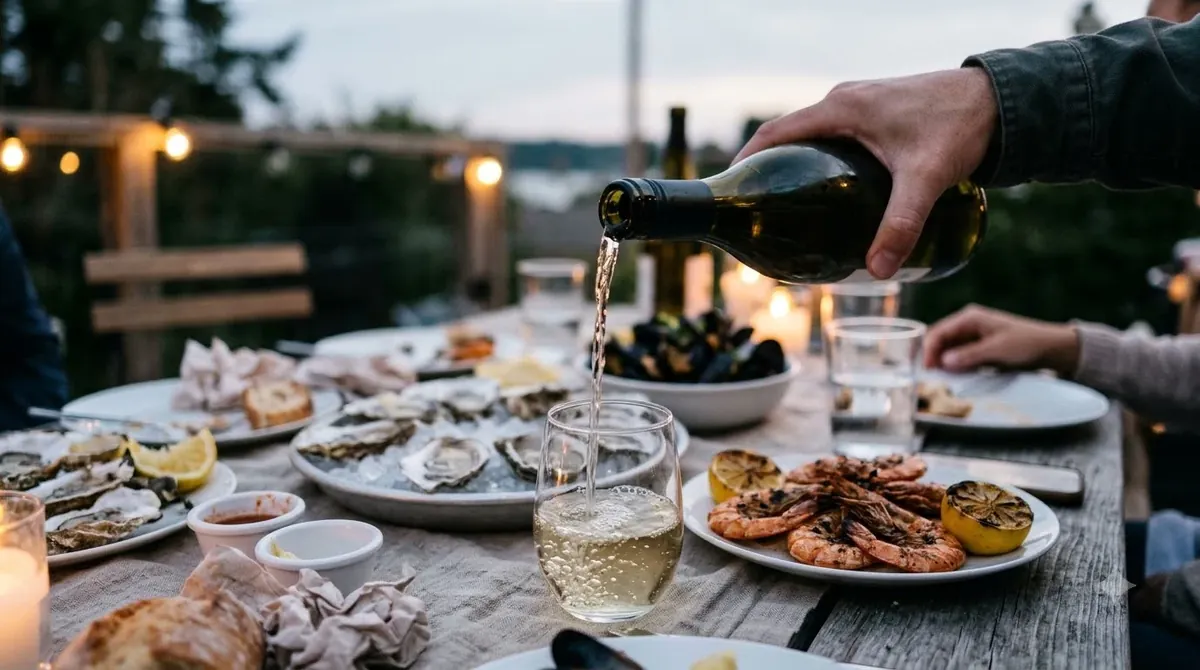
Seafood is the natural partner for Picpoul. The wine’s acidity and saline note line up well with shellfish and fish, and Wine Folly lists raw oysters, sushi, Mediterranean-style fish dishes, and fried calamari as good matches.
Fried foods are another strong pairing. The acidity cleans the palate after oil and batter, so Picpoul works well with fried appetizers. It is also a sensible choice for a summer table with grilled fish, a lemon-forward seafood pasta, or a platter of cold shellfish.
When a dish is very rich or heavily spiced, a lighter Picpoul may feel too slight. In those cases, choose a richer white or a food-friendly sparkling wine. The rule of thumb with Picpoul is to match it with dishes where a squeeze of lemon would also be welcome.
How to Choose a Picpoul
Look for a bottle with a recent vintage, since the wine is fresh and best enjoyed while its fruit and acidity are at their peak. A label that names the producer and the appellation gives you more to go on than a generic white wine label.
Think about the meal first. For shellfish, fried starters, or a light lunch, Picpoul is a reliable choice. For a heavier main course, a richer white or a red with more structure may be a better fit. Picpoul is most rewarding when it is the wine that sets the pace of the meal rather than the one that tries to carry a heavy dish.
Tip: Chill the bottle well before serving, and keep it cold on the table. The wine loses some of its lift as it warms, and its acidity is the feature to protect.
Common Mistakes With Picpoul
The most common mistake is serving Picpoul too warm. A wine with this much acidity needs a cold glass to show its crispness, and a bottle left on a sunny patio for an hour can taste flat and dull. Keep the bottle in an ice bucket or the refrigerator until just before pouring, and refill from a chilled bottle rather than leaving the glass to warm.
The second mistake is pairing Picpoul with heavy, buttery, or heavily spiced food and expecting the wine to stand up to it. A light-bodied white with no tannins has less weight than a buttery Chardonnay or a rich sauce, so the food can overwhelm the glass. In those meals, a richer white is the safer choice.
A third mistake is treating Picpoul like a wine to keep for years. Wine references suggest a cellaring window of one to three years, so a bottle bought for a special occasion much later may have lost the brightness that makes it appealing. Buying a recent vintage and drinking it within a season is the simplest way to get the wine at its best.
Finally, shoppers sometimes judge Picpoul against bold red wines and find it lacking. The wine was never designed to compete on weight or tannin. It is a clean, precise white, and it shines when the table is built around seafood, fried starters, and fresh herbs.
Frequently Asked Questions
Is Picpoul a sweet or dry wine?
Picpoul is generally dry. Wine references describe it as a dry, light-bodied white with high acidity and no tannins, so the wine tastes crisp rather than sugary.
What does Picpoul taste like?
Common descriptions include green apple, citrus blossom, lemon, and thyme, with a saline finish. The wine is bright and fresh rather than ripe or tropical.
What is the best food to serve with Picpoul?
Raw oysters, sushi, fried calamari, and Mediterranean-style fish are classic matches. The wine’s acidity also suits fried appetizers and light seafood pasta.
Should Picpoul be served chilled?
Yes. Wine Folly recommends serving it at 38 to 45°F (3 to 7°C) in a white wine glass, since the cold temperature keeps the acidity crisp and the fruit clean.
Picpoul is a clear example of a white built around acidity, which makes it one of the easiest whites to pair with the seafood and fried dishes many shoppers already enjoy. For more on how grape character shapes what ends up in the glass, read our guide to La Crescent grape, or browse the full wine by type hub to compare other white styles. The reference used for the serving and pairing notes is Wine Folly’s Picpoul grape profile.
More in Wine Types & Grapes
 Zinfandel Sugar Content: Dry Red vs. White Zinfandel GramsUpdated Nov 21, 2026
 Best Zinfandel Substitute Options for Sipping and CookingUpdated Nov 21, 2026
 Zweigelt Food Pairing: Best Dishes, Cheeses, and Serving TipsUpdated Nov 21, 2026
 Zinfandel Tannins Explained: How Structure Shapes Every BottleUpdated Nov 21, 2026
 Zinfandel Sweetness Level: Dry Red vs. Sweet White Zin ExplainedUpdated Nov 21, 2026
 Xinomavro Food Pairing: Best Dishes, Styles, and Serving TipsUpdated Nov 21, 2026