

We may earn a commission when you buy through links on this page, at no extra cost to you. Learn more.
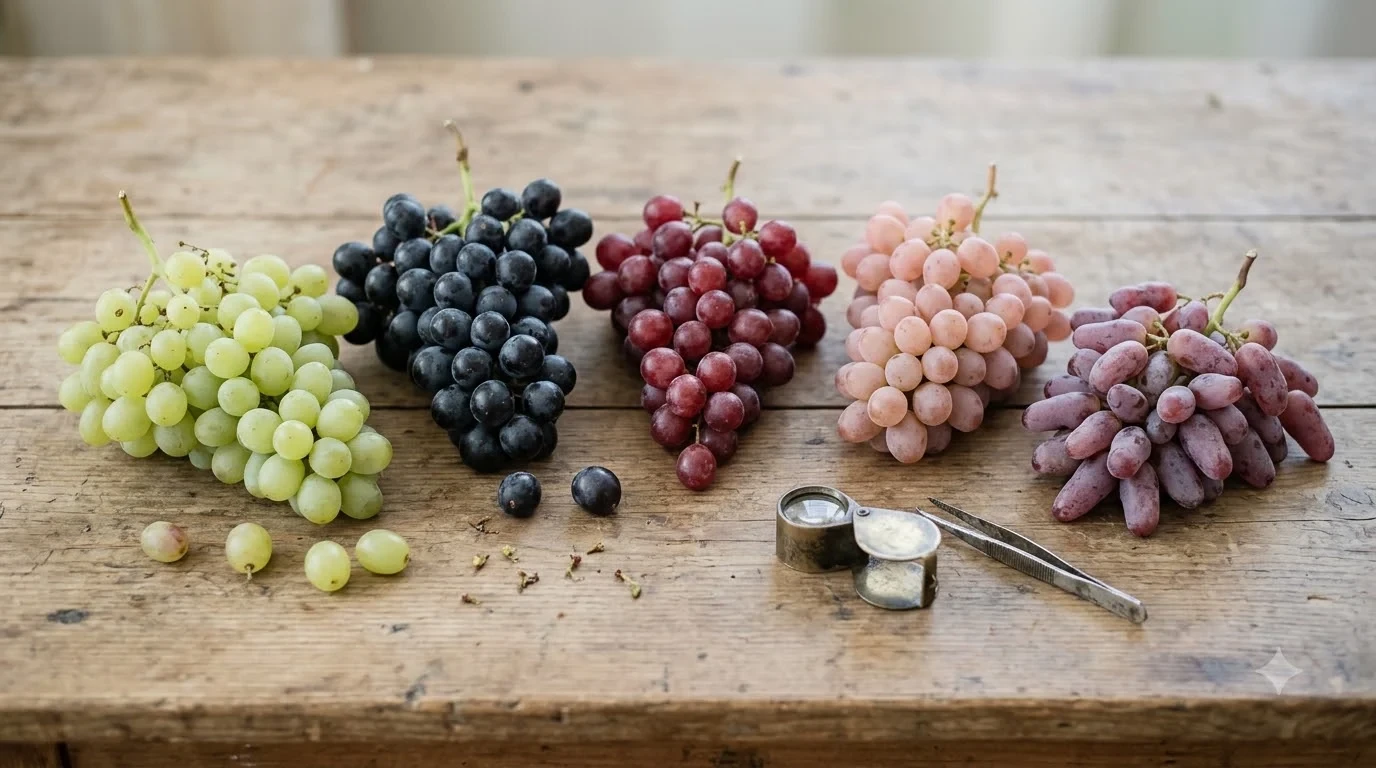
The Petite Pearl grape is a cold-hardy red hybrid bred by Tom Plocher in Hugo, Minnesota, from a 1996 cross of MN 1094 and E.S. 4-7-26, and released in 2009. University of Minnesota Extension reports that it is now grown in 25 US states and four Canadian provinces. Winemakers value it for deep-colored reds with moderate acidity, soft tannins, and aromas of blueberry, cherry, plum, and forest floor. It also buds late and survives winters that damage many European varieties.
Petite Pearl has moved from a Minnesota breeding project to a familiar name on cold-climate wine labels. This article covers where the grape came from, how the vine behaves, what the wine tastes like, and how to serve it with food.
Breeding History of the Petite Pearl Grape
Petite Pearl is a planned cross rather than a chance seedling, and its family tree explains both its winter hardiness and its red-wine quality.
Tom Plocher, owner of Plocher Vines in Hugo, Minnesota, made the cross in 1996 between MN 1094, a line from the University of Minnesota breeding program, and E.S. 4-7-26, a line from Elmer Swenson’s cold-climate work. According to the University of Minnesota Extension fact sheet, the variety’s background includes Vitis vinifera, Vitis riparia, and Vitis labrusca. That mix gave the vine hardiness from American species and wine quality from vinifera ancestry.
The grape was released in 2009 and takes its name from its small, shiny blue-black berries. It has since spread well beyond Minnesota, with plantings across the Upper Midwest, the Northeast, and parts of Canada. In 2016, TTB published a proposal to add Petite Pearl to its list of approved grape variety names after Plocher petitioned the agency. That matters for consumers because a varietal label carrying the name is a regulated claim, not a marketing nickname.
Plocher’s goal was not simply a vine that survives. He wanted a grape that could withstand cold winters, resist disease, and still make balanced wine. The cross brought together the University of Minnesota’s breeding line and Swenson’s hardy material, a combination that later proved useful in vineyards from Vermont to Colorado.
Cold Hardiness and Vineyard Behavior
The vine’s strongest selling point is a late, cautious start in spring and reliable wood hardiness through Zone 4b winters.
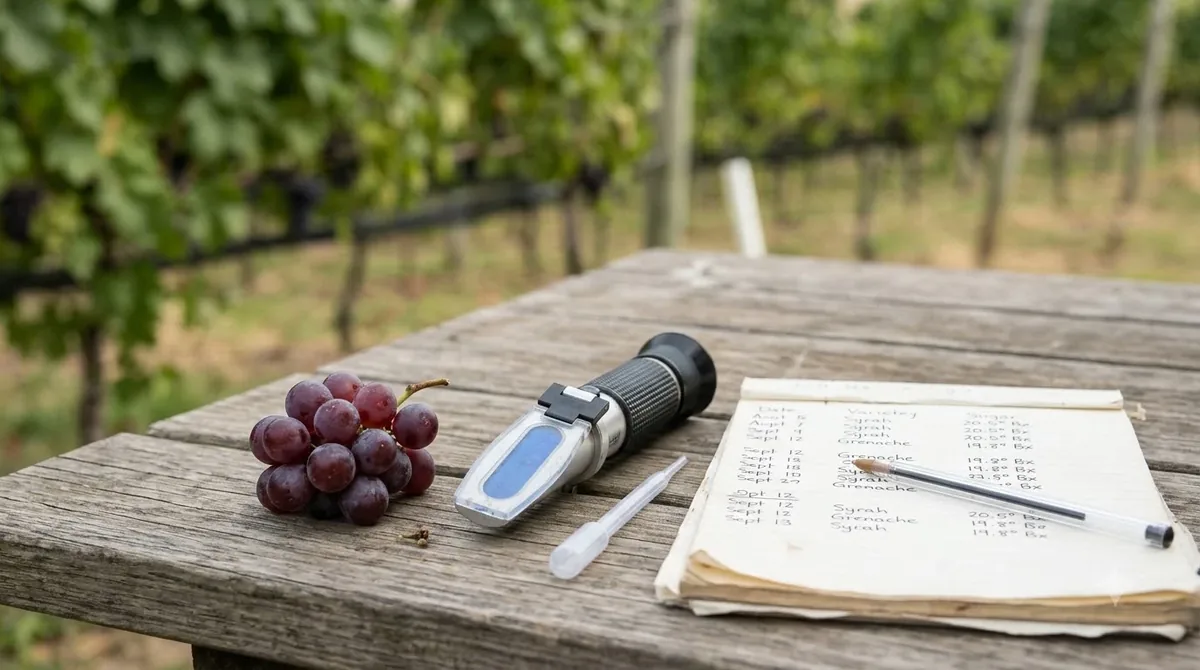
Petite Pearl buds 10 to 12 days later than Marquette, a difference that helps it avoid spring frost. University of Minnesota Extension places harvest in late September in southern Minnesota at roughly 2,600 growing degree days Fahrenheit. If a freeze does kill the primary buds, secondary buds can be up to 80 percent fruitful, according to Wine Enthusiast. That second crop is a meaningful insurance policy in regions with erratic spring weather.
Winter hardiness has limits, and they are well documented. The vine came through a February 2021 low of -32 F with no injury, but it was injured at Zone 4a and 3b sites after a -38 F event in January 2019 and during the 2014 polar vortex. Extension calls it a good choice for Zone 4b sites and favored sites in Zone 4a. Growers on colder ground should expect some risk rather than treat the vine as invincible.
In the vineyard, Petite Pearl has moderate vigor and a naturally drooping growth habit, so it is usually trained to a single high wire. Vines are spaced 5 to 6 feet apart, and the grape tolerates soil pH from 6.0 to 8.0. Each shoot typically carries two to three clusters, and clusters weigh 85 to 180 grams, averaging about 100 grams. Those small clusters concentrate skins and color. Growers looking for a white partner for a cold-climate planting can compare it with La Crescent, another hybrid bred for short seasons.
What Petite Pearl Wine Tastes Like
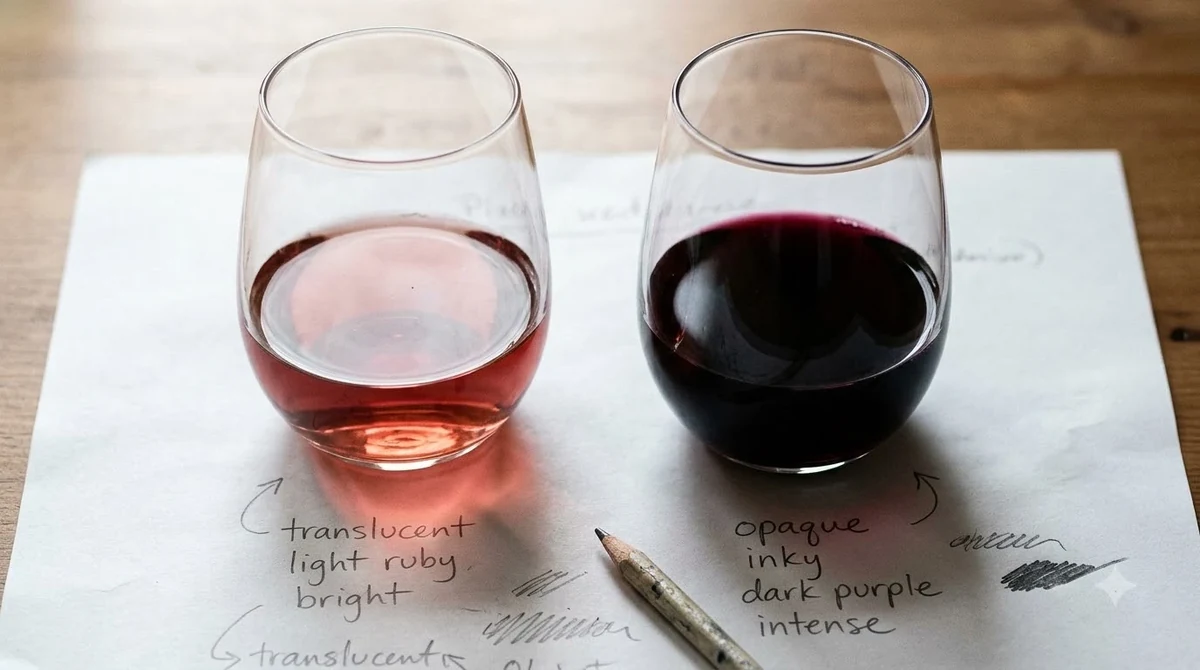
Petite Pearl makes a garnet-red wine with blueberry and cherry fruit, savory forest-floor notes, moderate acidity, and soft tannins.
The core aromatic range is blueberry, cherry, and plum, with hints of anise, almond, mint, cassis, and forest floor depending on yeast selection and ripeness, according to the British Columbia Wine Grape Co. Plocher’s own tasting notes add clove, star anise, celery seed, and wild mushrooms. Those savory notes are one reason the wine can handle grilled meat and earthy dishes without tasting simple or sweet.
Commercial examples show how much site and vintage matter. Wine Enthusiast’s review of Turquoise Mesa Winery’s 2017 Petite Pearl from Colorado found spice, pomegranate, wild raspberry, crushed-velvet tannins, and mild acidity. Carboy’s 2018 Petite Pearl from Grand Valley showed cranberry, cherry, vibrant acidity, oaky tones, gently tingling tannins, and pepper. Both descriptions point to a medium-bodied red with more texture than many cold-climate hybrids.
Structurally, the wine is built on moderate acidity and soft tannins rather than power. Its acidity is lower than the piercing freshness of a grape such as Fiano, so it feels rounder on the palate, and it usually ferments dry without a sharp, tart edge. Winemakers often describe the chemistry as closer to vinifera reds than to older hybrids, which is why the wine can stand on its own as a varietal bottling.
Harvest Numbers and Winemaking Decisions
Growers pick Petite Pearl at 22 to 24 Brix and a must pH of 3.35 to 3.50, numbers that keep the finished wine dry and balanced.
| Measurement | Typical Petite Pearl figure | Why it matters |
|---|---|---|
| Cluster weight | 85–180 g, average about 100 g | Small clusters concentrate skins, color, and tannin |
| Harvest Brix | 22–24 | Enough sugar for a dry red without excessive alcohol |
| Must pH | 3.35–3.50 | Keeps the wine fresh and microbially stable |
| Titratable acidity | 0.7–0.8 percent | Lower than many hybrids, so the wine tastes less tart |
| Bud break | 10–12 days after Marquette | Avoids most spring frost events |
| Harvest timing | Late September in southern Minnesota | Corresponds to about 2,600 growing degree days Fahrenheit |
| Winter hardiness | Zone 4b; no injury at -32 F | Reliable in cold-climate sites with good air drainage |
| Yield | About 4 tons per acre | Modest crop that supports concentration |
The fruit is thick-skinned and deeply colored, and Plocher’s winemaking notes say the best wines have come from a 48-hour cold soak before fermentation. That step pulls color and aroma from the skins without extracting harsh tannin. Fermentation can run dry at moderate alcohol, and the resulting wine usually needs little adjustment in the cellar.
Yeast choice is a real winemaking decision with this grape. Different strains push the aroma toward blueberry and cherry or toward savory, minty, and forest-floor notes. Oak is optional rather than mandatory; a light touch adds spice and texture, while heavy toast can bury the fruit. Petite Pearl also works as a blending component, where it supplies color, mid-palate structure, and acidity to a softer partner.
Dry Red, Rosé, and Other Styles
Petite Pearl is flexible enough to make a varietal red, a rosé, and sparkling wine, and each style uses the grape differently.
The most common expression is a dry varietal red. Carboy in Colorado set out to make a rosé from Petite Pearl in 2017 and instead ended up with a sought-after single-varietal red, a useful example of how the grape can surprise a winemaker. The wine’s deep garnet color and soft tannin make it approachable young, while its acidity keeps it from feeling heavy.
Rosé is a natural second style. Plocher’s notes point out that fruit harvested earlier than full maturity has produced outstanding rosé, including a Lincoln Peak Winery example. Picking at lower Brix preserves freshness, and the thick skins give the wine a vivid color after only brief contact. Sparkling styles, including pét-nat and bubbly red, also appear from producers working with the variety.
Blending is the third path. Petite Pearl can serve as the structural backbone of a red blend with small additions of other varieties, contributing color, tannin, and acidity. For a broader look at how red, rosé, and sparkling categories differ, see the guide to wine by type. The grape’s savory, peppery side also echoes reds from Côtes du Rhône, which makes those food-friendly blends a useful comparison for drinkers exploring the style.
Serving Temperature and Food Pairings
Serve Petite Pearl at about 55 to 60 F and pair it with grilled meat, tomato-based pasta, or a charcuterie board.
A medium-bodied red with moderate tannin tastes fresher and more aromatic slightly below typical room temperature. Aim for 55 to 60 F, the band usually recommended for light reds. Tassel Ridge Winery serves its Iowa Petite Pearl at room temperature, which works in a cool dining room, but a bottle that feels warm will taste flatter and more alcoholic. A standard 750 ml bottle pours about five 5-ounce glasses.
Salt and fat soften tannin, so cured meat, hard cheese, and grilled steak are reliable partners. Tomato sauce brings acidity that matches the wine’s own acidity, which is why pasta with tomato-based sauce works so well. Tassel Ridge recommends grilled meat or tomato-based pasta, and the wine also handles wood-fired pizza and blue cheese. Avoid oily fish such as mackerel or sardines, because the tannin in the red clashes with the oil.
Chili heat is another consideration. Alcohol and tannin amplify capsaicin, so a spicy dish will make a higher-alcohol Petite Pearl feel hotter. If the meal is spicy, choose a bottle with moderate alcohol and keep the food’s heat in check. For milder dishes, the wine’s pepper and savory notes are an asset rather than a problem.
Tip: If a young Petite Pearl feels tight or closed, pour it into a decanter for about 30 minutes. That short exposure to air softens the tannin and brings the blueberry and cherry fruit forward without flattening the wine.
Reading Labels, Storing, and Aging
A Petite Pearl label can tell you whether you are buying a varietal wine or a blend, and proper storage protects the wine’s fruit and acidity.
TTB has moved to add Petite Pearl to its list of approved grape variety names, following Plocher’s petition and the agency’s published proposal. That regulatory step gives a varietal label real meaning: a bottle marked Petite Pearl should be made predominantly from the grape rather than simply carrying the name as a brand. Blends may list Petite Pearl alongside other varieties, and those wines can be just as serious as a varietal bottling.
Store bottles on their side at about 55 F, away from light and temperature swings. Once opened, a still red like Petite Pearl holds for about three to five days in the refrigerator, where the cold slows oxidation. Let the wine warm back toward 55 to 60 F before serving. The grape’s tannin and acidity give it more structure than many cold-climate reds, so a well-made bottle can improve for a few years, though most examples are built to drink within a few years of release.
Frequently Asked Questions
Why is the grape called Petite Pearl?
The name comes from the grape’s small, shiny blue-black berries, which resemble little pearls. Individual berries weigh only about 2 grams, and the compact clusters average roughly 96 grams. The “petite” part of the name fits both the berry size and the tight cluster shape.
How many heat units does Petite Pearl need to ripen?
Plocher’s viticultural data puts the range at 2,200 to 2,600 growing degree days Fahrenheit over a season of about 160 days. That range makes the grape viable in short-season regions where later-ripening reds struggle. The lower end of the range still brings the fruit to useful sugar and acidity levels.
Can Petite Pearl be used for sparkling wine?
Yes. Producers have made pét-nat and bubbly red styles from the variety, and the grape’s acidity holds up in a sparkling format. Early-picked fruit keeps the base wine fresh, while the thick skins can contribute color and a touch of tannin. These bottles are usually released young and served chilled.
How should Petite Pearl vines be pruned?
University of Minnesota Extension recommends spur pruning with 5 to 6 buds per linear foot of cordon, aiming for about 25 to 30 buds total per vine. Shoot thinning to one or two shoots per spur follows, alternating between the two. The vine produces very little lateral growth, so the pruning job is simpler than with many other hybrids.
Where was Petite Pearl first planted outside Minnesota?
Shelburne Vineyard in Vermont was the first to plant the grape when it was released. The vineyard’s head winegrower was looking for varieties that would grow well in Vermont’s short, cold season. That early planting helped establish Petite Pearl as a grape with a following beyond the Upper Midwest.
Petite Pearl gives cold-climate growers and drinkers a red grape that behaves more like a European variety than an old-fashioned hybrid. Its late bud break, reliable hardiness, and moderate acidity make it practical in the vineyard, while its blueberry, cherry, and savory notes make it pleasurable in the glass. For anyone exploring cold-hardy reds, it is one of the most complete examples available.
More in Wine Types & Grapes
 Zinfandel Sugar Content: Dry Red vs. White Zinfandel GramsUpdated Nov 21, 2026
 Best Zinfandel Substitute Options for Sipping and CookingUpdated Nov 21, 2026
 Zweigelt Food Pairing: Best Dishes, Cheeses, and Serving TipsUpdated Nov 21, 2026
 Zinfandel Tannins Explained: How Structure Shapes Every BottleUpdated Nov 21, 2026
 Zinfandel Sweetness Level: Dry Red vs. Sweet White Zin ExplainedUpdated Nov 21, 2026
 Xinomavro Food Pairing: Best Dishes, Styles, and Serving TipsUpdated Nov 21, 2026