

We may earn a commission when you buy through links on this page, at no extra cost to you. Learn more.
A pasabahce decanter in the 1-liter clear-glass format is a practical everyday server for wine and other drinks, with a simple design, a dishwasher-safe listing and a compact 27-centimeter height. It is a sensible choice for buyers who value capacity and easy care over ornate styling. The published information does not establish it as a specialist aerating decanter, so treat it as versatile tableware first.
Pasabahçe makes a much wider range of decanters and carafes than this single 1-liter silhouette suggests. The useful question is whether this particular vessel’s size, weight and straightforward shape fit the way you pour wine at home.
Specs and Key Features
The standard 1-liter Pasabahçe decanter is a clear glass vessel measuring 27 centimeters high and 11 centimeters across, according to its retail listing. It has no handle, is listed as dishwasher-safe and is sold as a single decanter rather than a set.
| Specification | Published detail |
|---|---|
| Brand | Pasabahçe |
| Product type | Glass decanter |
| Capacity | 1,000 ml (1 liter) |
| Height | 27 cm |
| Diameter | 11 cm |
| Material | Glass |
| Color | Clear |
| Handle | None |
| Dishwasher care | Listed as dishwasher-safe |
| Package contents | 1 decanter |
Those dimensions put the decanter in a useful middle ground. One liter gives you room to decant a standard 750-milliliter wine bottle without filling the vessel to the rim, while the 27-centimeter height suits many dining tables and serving counters. The listed 11-centimeter diameter suggests a stable footprint, although the retailer does not publish a separate base measurement. Measure refrigerator or cupboard clearance rather than assuming every shelf will accommodate it.
The selling point is a straightforward glass format, not a long list of specialist features. The listing describes it as suitable for wine, water, juice, cocktails and milk, and identifies it as a single, handle-free decanter. That range makes it useful beyond wine service, especially for households that want one clear server for dinner, brunch and everyday drinks. It pairs naturally with everyday wine glasses, and the transparent glass shows the color of pale Pinot Grigio or deep Malbec without a tinted finish competing with the wine.
There is an important distinction between the broad Pasabahçe range and this particular listing. The manufacturer’s official Decanter category shows many designs and separates decanters from carafes, bottles and other drinkware. Its catalog includes families such as Timeless, Village, Luna and Harem, so “Pasabahçe decanter” does not identify one universal shape or specification. Compare the exact capacity, dimensions and closure details of the individual version; a similar-looking item may have a different neck, base, stopper or volume.
What Owners Like
Owner comments on the 1-liter, 27-centimeter model repeatedly point to a useful capacity, thick-feeling glass and flexible everyday use. The praise is less about delicate presentation and more about getting a sturdy vessel that can serve several jobs around the kitchen.
Several reviewers describe the glass as thick, weighty or solid, and one says the decanter feels stable and holds the full liter as advertised. That sense of substance can be reassuring when the vessel is carried from counter to table or used for more than wine. It is also a clear reason the model may appeal to people who prefer everyday glassware that feels substantial rather than thin and fragile.
Versatility is another recurring positive. Owners mention serving wine, water, juice and homemade fruit drinks, while others repurpose the vessel as a vase. One reviewer describes keeping water beside a coffee maker, showing how it can earn cupboard space even when no bottle is open. A clear, undecorated silhouette is easy to place on a dining table, kitchen counter or casual buffet without tying it to one style of dinnerware.
Some shoppers also value the no-fuss appearance. A plain design may not be the first choice for a formal wine dinner, but it coordinates with different stemware and plates and avoids the visual clutter of colored glass or elaborate cuts. Pair it with a reliable corkscrew and suitable glasses; the decanter is only one part of the setup. Wine Enthusiast explains the two main reasons for decanting: separating sediment and introducing oxygen. Those goals are related but not identical, and an older wine with sediment calls for a slower pour than a casual pitcher of water.
Common Complaints
The main trade-offs are linked to the same qualities owners praise: the 1-liter size, substantial glass and simple appearance. Comments do not point to one universal failure, but they do show where this no-frills format may disappoint buyers who expect a lighter, more decorative or covered vessel.
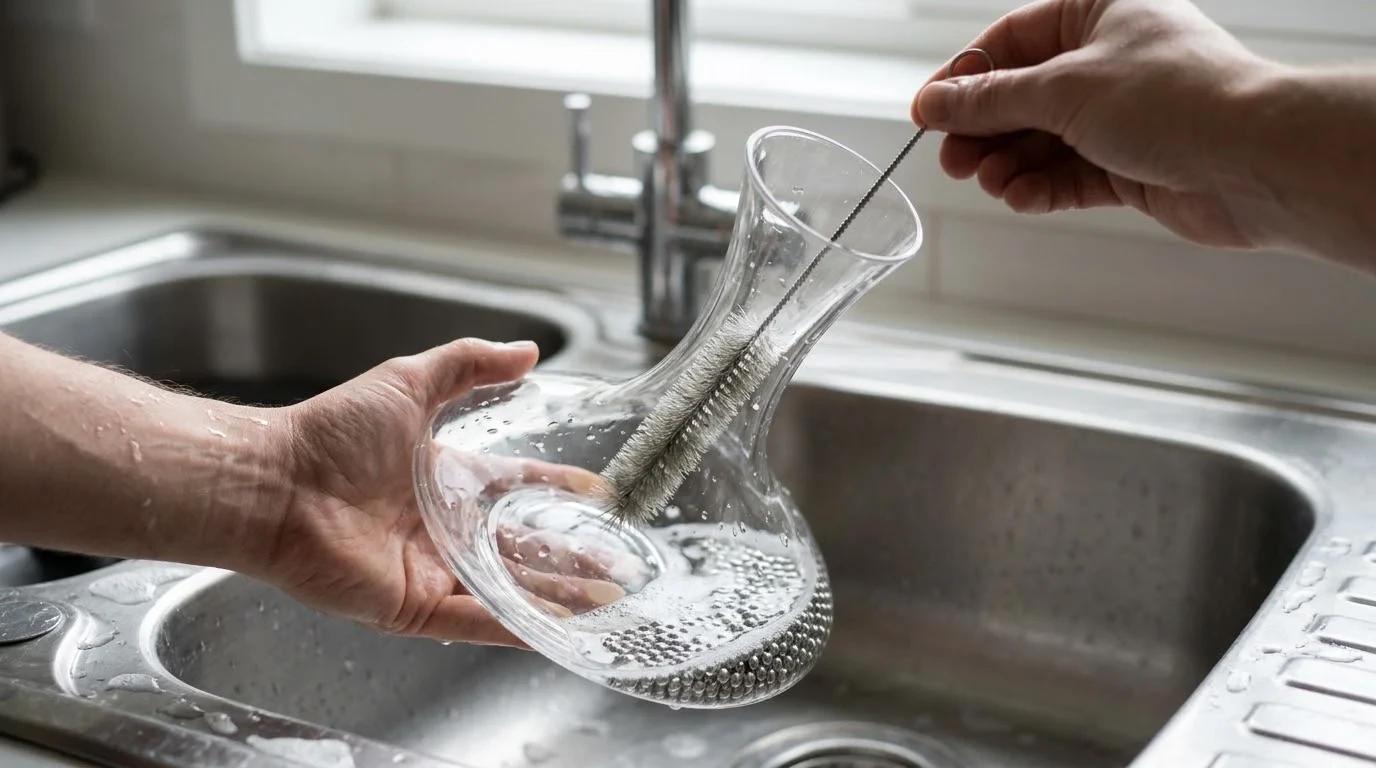
Weight is the clearest compromise. Several owners describe the glass as heavy or thick, and one says the plain look is not especially refined. That is a matter of preference and handling rather than a confirmed defect. Someone with limited grip strength, or anyone who regularly carries a full liter from a crowded refrigerator, may prefer a lighter carafe with a handle. A filled glass decanter should be lifted securely from the body rather than held only by its neck.
The simple styling can feel basic beside a cut-glass or sculptural decanter. If the goal is a dramatic centerpiece, this model may look too ordinary; Pasabahçe sells more decorative families with relief, color or more elaborate profiles. Cleaning is another small but real objection: one owner notes that the vessel needs washing after use. The listing says dishwasher-safe, but confirm that it fits your rack and keep it separated from heavy cookware so its rim does not knock against plates or glasses.
At least one buyer also mentions difficulty finding a matching lid. The listed package contents specify one decanter, not a stopper or cover, so do not assume a lid is included. That matters if the intended use is storing water or juice in the refrigerator rather than serving wine at the table. The product information also omits the bowl’s maximum width, neck opening and pouring-lip geometry, so buyers should not treat its capacity alone as proof of specialist aeration performance.
Who Should Buy and Who Should Skip
This 1-liter, 27-centimeter model is best for households that want one clear glass server for wine and everyday drinks. It suits casual dinners, small gatherings and people who value a dishwasher-safe listing more than a special stopper or ornate profile.
It is a reasonable choice for someone who serves a 750-milliliter bottle at dinner and wants to pour from a shared vessel rather than pass the bottle around the table. The spare capacity leaves room below the rim, and the clear glass makes the wine’s color visible to guests. It can also hold water or juice when wine is not on the menu, so the vessel need not be reserved for occasional entertaining. For a few people at the table, one liter is a flexible size without moving into oversized banquet serveware.
It also suits shoppers who prefer neutral tableware. Clear glass fits modern and traditional settings, and a simple vessel will not clash with patterned plates or colored stemware. Pair it with universal glasses or more tailored red wine glasses; the choice depends on what you usually pour. Our guide to Glassware Brands covers the differences to consider when coordinating a table setting.
Skip it if your priority is a statement piece, a very light vessel, a handle or a lid included in the box. It is also not the best-documented choice for buyers who want a specifically engineered aeration shape. The product listing gives capacity and outside dimensions but no maximum bowl width, neck opening or maker claim about oxygen exposure. Those missing details make it difficult to compare aeration performance with a broad-bottomed wine decanter designed around surface area. For older bottles, a clear vessel can help you see the wine as you pour, but a slow, controlled pour and a light behind the bottle are what help keep sediment out.
Tip: Before ordering, measure the cupboard or refrigerator shelf where you plan to store a 27-centimeter-tall vessel. Also confirm whether the package includes a lid; the 1-liter listing describes one decanter only.
How It Compares to Alternatives
The main difference between the 1-liter Pasabahçe decanter, the 940-milliliter Timeless and the 1.7-liter Celebration is not simply capacity: listed versions have different surface details, proportions and serving purposes. The basic model is the uncomplicated option, while the alternatives shift toward a decorative or larger-volume role.
LUSINI lists a Pasabahçe Timeless carafe with a 1,000-milliliter capacity and dimensions of 11.8 by 26.5 centimeters. It has an embossed exterior and is described as stable, heavy-quality and dishwasher-safe. Compared with the plain 1-liter decanter, it is close in capacity and height but offers a more textured surface. It is worth considering if you want the same general scale with extra detail; the simpler vessel has the cleaner appearance.
ETTC lists a separate Pasabahçe Timeless decanter at 940 milliliters and 27 centimeters high, made from glass and described as dishwasher-safe and food-safe. The capacity is only 60 milliliters below the 1-liter version, so the difference is minor for everyday servings. Match the listing to the exact product code rather than buying on the collection name alone, because similar Timeless pieces can be described as either carafes or decanters.
For larger gatherings, Wayfair’s Pasabahçe Celebration Glass Decanter Jug is listed at 1.7 liters, 27.5 centimeters high and 18 centimeters wide, with a published weight of 0.76 kilogram. It is also glass and dishwasher-safe, and its description presents it as suitable for wine, whiskey, water and juice. One owner says it accommodates a magnum bottle and pours to the last drop; another likes it for letting wine breathe. Those comments refer to the Celebration design, not the 1-liter model reviewed here.
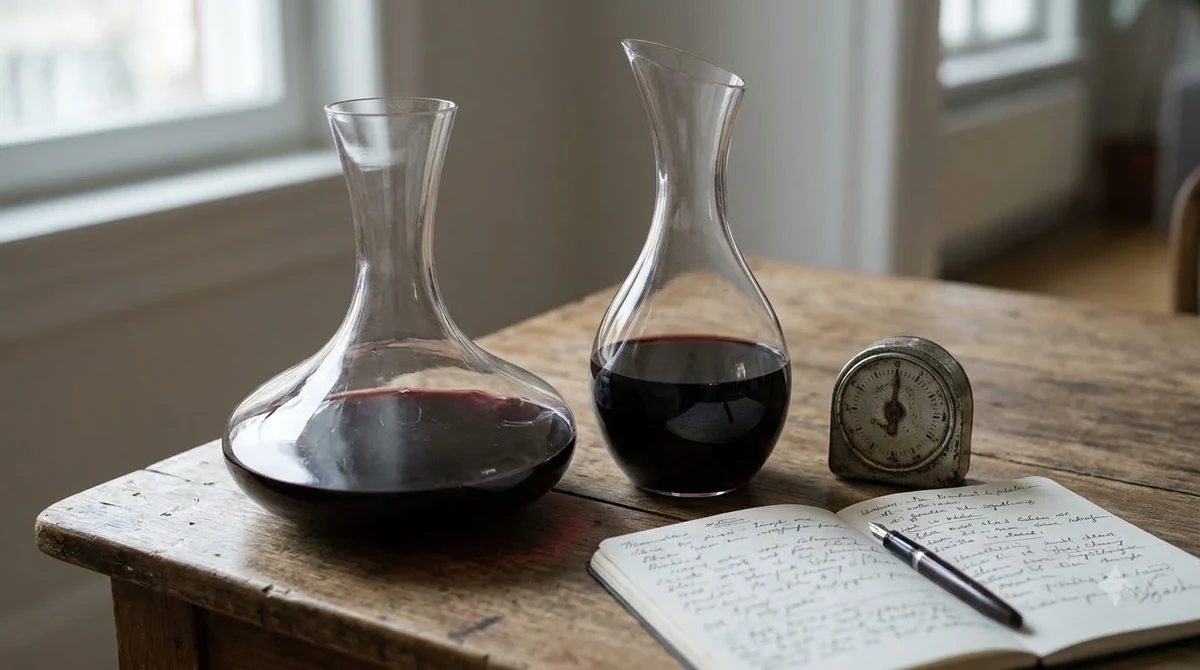
There is no need to compare these versions as if one is universally superior. The 1-liter decanter is a sensible everyday size; the Timeless pieces add texture and small dimensional differences; and the 1.7-liter Celebration jug is better suited to serving a larger group. Wine Folly gives young Cabernet Sauvignon and Merlot a starting decanting window of at least 60 minutes, while lighter reds such as Pinot Noir may need about 30 minutes. Its guide to decanting times by wine style emphasizes that the wine’s age and structure matter; choose the vessel for the number of guests and the wine for the timing.
Frequently Asked Questions
The answers below cover practical serving questions that come up after choosing a 1-liter glass decanter with a 27-centimeter profile. They focus on portion size, timing and wine styles rather than features that belong to other Pasabahçe models.
How much wine does a 1-liter decanter hold?
One liter is about 33.8 U.S. fluid ounces. A standard 750-milliliter wine bottle uses three-quarters of that capacity, leaving roughly 250 milliliters of space above the wine. That headroom makes pouring easier than filling the vessel to its brim.
How many glasses can I pour from one liter?
Using a standard 5-ounce wine pour, one liter holds about six full servings, with a little wine left over. A 750-milliliter bottle yields about five 5-ounce glasses, so the decanter has more capacity than a single standard bottle. Actual pours vary with glass size and how generously each guest is served.
How long should a young Cabernet Sauvignon sit in a decanter?
A young, structured Cabernet Sauvignon commonly benefits from 30 to 60 minutes of air before serving. Taste it after the first half hour rather than treating the clock as a guarantee, because vintage, winemaking and bottle condition affect how quickly it opens. A delicate older red usually needs a gentler approach and less time in open air.
Should an older red wine be decanted for a long time?
Not automatically. With an older bottle, decanting is often about leaving sediment behind rather than giving the wine hours of oxygen. Stand the bottle upright for a day or two when possible, then pour slowly and stop when sediment approaches the neck.
Can I use the decanter for chilled white wine or rosé?
Yes, provided the vessel is clean and chilled before service. Light whites and rosé are generally served around 45 to 50 degrees Fahrenheit, while fuller-bodied whites are commonly served around 50 to 55 degrees. Most aromatic whites do not need extended aeration, so use the decanter mainly as a serving vessel.
Overall, the Pasabahçe 1-liter glass decanter is a practical choice for straightforward wine and beverage service, especially if you prefer sturdy, clear glass to formal ornament. Its main limitations are the plain styling, weight and lack of an included lid, so confirm those details before choosing it over a more specialized design.
More in Wine Glasses
 Spiegelau Crystal Wine Glasses That Bring Clarity to Every PourUpdated Nov 21, 2026
 Zalto Crystal Wine Glasses: Are They Worth the Investment?Updated Nov 21, 2026
 Villeroy And Boch White Wine Glasses for a More Cohesive TableUpdated Nov 21, 2026
 Zalto Wine Glasses On Sale: Find the Right Denk’Art GlassUpdated Nov 21, 2026
 Zwiesel Glas Champagne Glasses: Features, Quality and Buying AdviceUpdated Nov 21, 2026
 Zwiesel Glas Decanter Review: A Durable, Elegant Choice for Wine ServiceUpdated Nov 21, 2026