

We may earn a commission when you buy through links on this page, at no extra cost to you. Learn more.
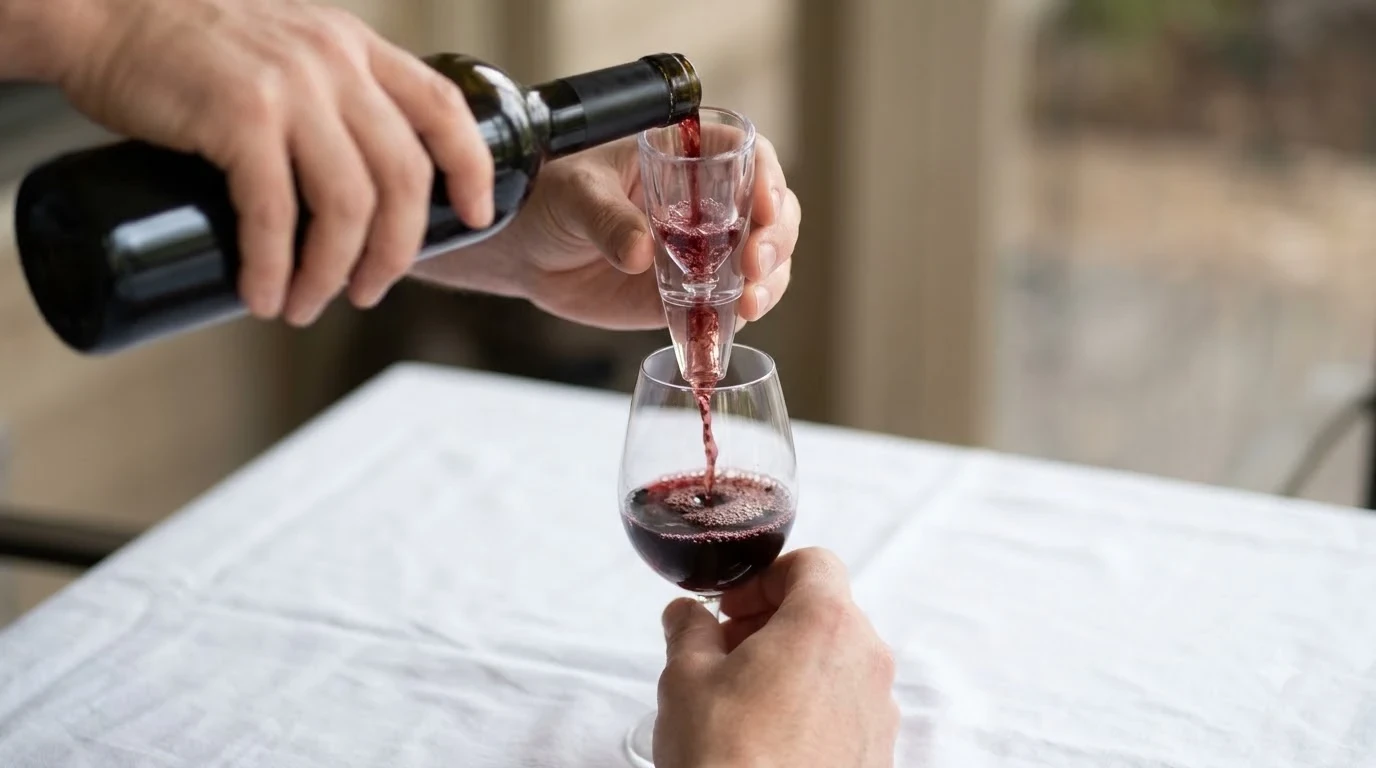
The oster wine aerator is a practical accessory for introducing air into wine as it pours, with Oster offering both a dedicated stand-mounted aerator and aerating pourers included in wine opener kits. Its appeal is straightforward operation rather than complicated controls or powered aeration. However, buyers should distinguish the older FPSTBW0015 aerator with stand from newer Oster wine kits, because their accessories, setup requirements, and intended uses differ.
Oster has offered several wine-serving accessories designed to make opening and pouring bottles easier. The dedicated aerator uses a stand to position the device above a glass, while newer combinations pair an aerating pourer with an electric corkscrew, foil cutter, and wine stoppers. Understanding these differences makes it easier to decide whether an Oster accessory fits your serving routine or whether a separate aeration system would be more useful.
Specs and Key Features
The Oster wine aerator range centers on simple wine-pouring equipment rather than a motorized system that processes an entire bottle. The older FPSTBW0015 is designed around a stand, an aerator, and accessories, while the newer 4-in-1 kit incorporates an aerating pourer into a broader wine-opening and storage package.
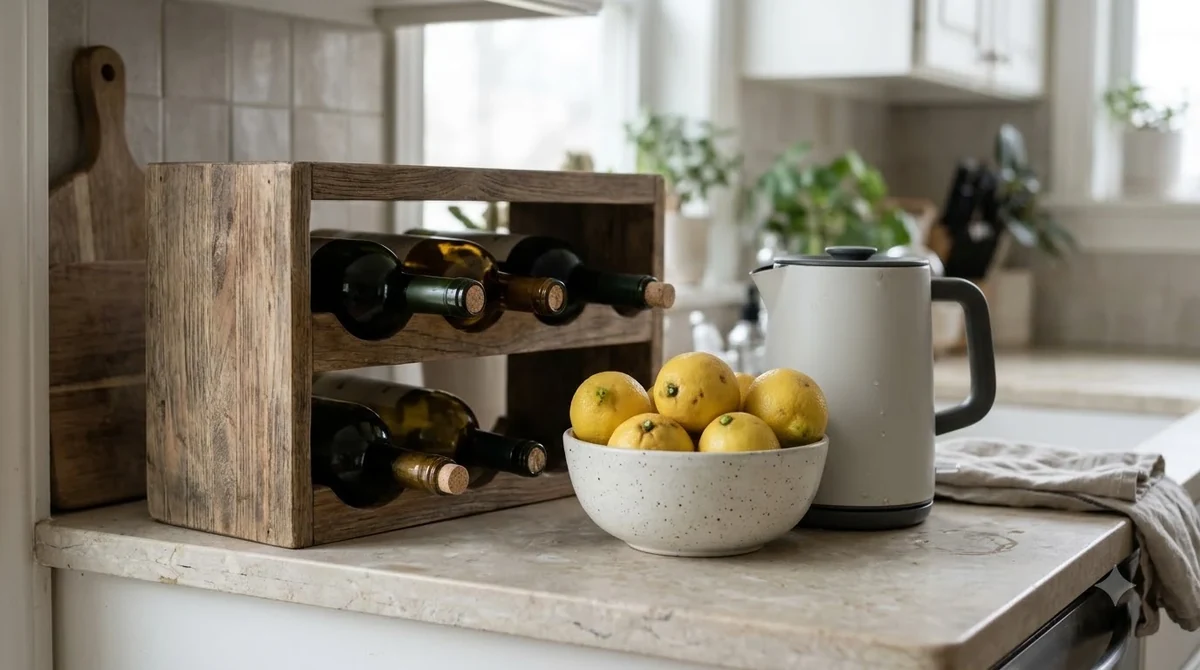
The FPSTBW0015 is particularly recognizable because its stand holds the aerator above the drinking glass. According to its quick-start instructions, the stand fits into a separate base, and the glass sits directly beneath the aerator. Wine passes through the device and into the glass during pouring. This arrangement gives the user a consistent serving position without requiring an electric motor, battery, or charging station.
The newer Oster 4-in-1 Wine Savoring Experience takes a different approach. Oster identifies its model as FPSTBWGS19, with a cordless rechargeable wine opener, one aerating wine pourer, two vacuum wine stoppers, and a foil cutter. The company also lists the kit dimensions as 5.51 inches long, 5.32 inches wide, and 14.96 inches high, with a listed weight of 2.4 pounds.
| Feature | FPSTBW0015 | 4-in-1 Wine Kit |
|---|---|---|
| Product format | Stand-mounted aerator set | Wine opener accessory kit |
| Aeration method | Pour-through aerator | Aerating pourer |
| Stand | Included | Not listed as a separate aerator stand |
| Electric opener | Not required | Rechargeable cordless opener |
| Foil cutter | Included | Included |
| Wine stoppers | Not identified as vacuum stoppers | 2 vacuum stoppers |
| Cleaning | Hand wash with mild soap | Follow the supplied kit instructions |
| Additional equipment | Velvet storage bag and wine collar | Electric opener charging equipment |
These are different product configurations, not interchangeable descriptions of one machine. The FPSTBW0015 is a dedicated pouring accessory, whereas the newer kit is intended to cover several stages of wine service. Buyers should identify the product reference before purchasing replacement accessories or looking for instructions.
Oster also advertises up to 30 bottle openings from a full charge for the rechargeable opener in its 4-in-1 kit. That figure applies to the electric corkscrew, not to the aerating pourer. The aerator itself does not need a separate electrical supply to perform its pouring function.
For the original equipment details, the Oster FPSTBW0015 quick-start instructions explain the stand assembly, glass positioning, pouring procedure, and cleaning requirements. These details are particularly useful when evaluating an older set found through a secondhand seller.
What Owners Like
The strongest practical advantage of the Oster aerator design is its uncomplicated operation. The dedicated FPSTBW0015 does not require a charging routine or electronic controls, and the newer 4-in-1 configuration adds several useful wine-serving accessories in one package.
With the stand-mounted version, the user places the aerator in its holder, positions a glass underneath, and pours wine through the opening. The design is easy to understand even for someone who has never used a wine aerator. There are no programmable settings, speed selections, or complicated preparation steps.
Another advantage is the integrated serving arrangement. The stand keeps the aerator in position while the wine enters the glass, which can be convenient when pouring at a dining table or preparing several glasses. The base also provides a defined location for the glass rather than requiring the user to hold the aerator independently.
The included accessories add practical value to the older set. The foil cutter stores in a compartment behind the stand, while the wine collar and wine pourer can be kept in the supplied velvet bag. This gives the different pieces designated storage locations instead of leaving small accessories scattered around a kitchen drawer.
The newer 4-in-1 kit offers a different convenience advantage. Its rechargeable opener, aerating pourer, two vacuum stoppers, and foil cutter cover several ordinary wine-service tasks. Someone who regularly opens bottles for dinner parties may appreciate having these items together rather than purchasing every accessory individually.
Oster’s product description also explains that the newer aerating pourer is intended to help enhance wine flavor while preventing spills. This combination of pouring and aeration is useful for people who prefer a straightforward bottle-top accessory over a separate stand-based arrangement.
There is also a difference in storage convenience between the two configurations. The older FPSTBW0015 has a dedicated base and stand, so it requires a suitable shelf or cupboard space. The newer kit consolidates its components into one package, although the charging equipment and accessories still need appropriate storage.
For people organizing a home wine-serving area, the older stand can function as a dedicated serving station. It may fit naturally on a countertop or a bar cart where glasses, openers, and other wine accessories are kept together.
Common Complaints
The main limitations to consider are product identification, cleaning restrictions, and the difference between the aerator and the electric opener. The older stand-mounted design also requires a suitable glass position, while the newer rechargeable kit introduces additional components that can develop problems independently of the pourer.
One important limitation is dishwasher compatibility. Oster’s FPSTBW0015 instructions specifically require rinsing the aerator after each use and washing it by hand with mild soap. The manufacturer explicitly states that this aerator is not dishwasher safe. Buyers who prefer putting every wine accessory into a dishwasher should consider this requirement before choosing the older model.
The stand arrangement also takes more counter or storage space than a simple bottle-top aerator. Its upright support and base are useful for positioning a glass, but they are additional components that need to be assembled and stored. Someone with a small kitchen may prefer an aerator that attaches directly to the bottle.
Another possible source of frustration is confusing the older FPSTBW0015 with Oster’s newer wine opener kits. The FPSTBW0015 uses a dedicated stand-mounted arrangement, while the current 4-in-1 configuration includes an aerating pourer as one part of a larger set. Their accessories should not be assumed to fit one another.
Owner feedback on Oster’s current rechargeable 4-in-1 kit also deserves attention, although it should not be mistaken for feedback about the standalone FPSTBW0015 aerator. Some reviews published on Oster’s product page describe charging failures, corks getting stuck, and problems with the electric opener mechanism.
For example, one owner describes a charging base that stopped charging the opener after approximately two years. Other published comments mention difficulty removing a stuck cork and inconsistent battery performance. These complaints concern the electric opening equipment rather than demonstrating a defect in the aerating pourer itself.
The distinction matters because an aerating pourer has fewer mechanical functions than an electric corkscrew. A problem with the charging base does not establish that the aerator cannot pour wine properly. Buyers should assess the component they actually need instead of treating every complaint about a combination kit as an aerator complaint.
Finally, the FPSTBW0015’s operating instructions require attention to the side openings. Covering those openings can interfere with the aeration process. This is a small operating detail, but it means users should avoid gripping the aerator in a way that blocks its air passages.
Who Should Buy and Who Should Skip
The Oster wine aerator is best suited to people who want a straightforward wine-serving accessory and understand which product configuration they are buying. It is less suitable for anyone expecting a powered machine, a replacement for traditional decanting, or a dishwasher-safe accessory.
Who should consider it
Casual wine drinkers who regularly pour individual glasses may appreciate the simplicity of the FPSTBW0015. Its stand-mounted arrangement makes the pouring process easy to repeat, and it does not require batteries or charging to operate the aerator.
People who entertain at home may prefer the dedicated stand because it creates an organized serving position. The foil cutter, wine collar, and pourer also make the older package more comprehensive than a single-purpose accessory.
Buyers replacing an existing Oster accessory should consider the product reference first. Someone who already owns the FPSTBW0015 and needs another aerator should search for the correct component rather than automatically buying an entirely different Oster wine opener kit.
People who prefer an all-in-one wine-opening set may find the newer 4-in-1 kit more appropriate. Its rechargeable opener, two vacuum stoppers, aerating pourer, and foil cutter provide a broader collection of equipment for regular bottle service.
Who should skip it
People who want a completely maintenance-free accessory should reconsider the older stand-mounted model. Its hand-washing requirement adds a small but recurring task after every use, and its components need to be stored properly between servings.
Buyers looking for a professional-style decanter should also consider a different category of equipment. An aerating pourer introduces air during the pour, while a decanter offers a larger vessel for holding wine and allowing it to interact with oxygen over a longer period.
Those who regularly serve mature Cabernet Sauvignon, Bordeaux blends, or other structured reds may prefer a traditional decanting arrangement when they want to separate sediment or give a wine additional time to develop in the glass. The Oster accessory should not be treated as a complete replacement for that process.
Likewise, buyers who want a powered aeration machine should understand that the FPSTBW0015 is not an electric wine aerator. Its operation depends on pouring wine through the device, not on a motor or an electronically controlled oxygen-delivery system.
Tip: Match the accessory to the wine and serving situation. A simple aerating pourer is convenient for everyday glasses, while a traditional decanter is more appropriate when a structured red needs extended air exposure or when an older bottle contains sediment.
How It Compares to Alternatives
The Oster aerator competes with several broad categories of wine-serving equipment rather than just other branded aerators. Bottle-top pourers, stand-mounted aerators, and traditional decanters each solve a slightly different serving problem.
A bottle-top aerator is generally the more compact option. It attaches directly to an open bottle and introduces air as wine flows through the spout. This approach is convenient when serving at a dining table because it does not require a separate stand or a designated glass platform.
The FPSTBW0015 takes a more structured approach. Its stand supports the aerator above the glass, and the base helps position the glass underneath the outlet. This can make pouring feel more controlled, but it also adds equipment that needs to be assembled and stored.
A traditional decanter serves a different purpose. Instead of passing wine through a compact accessory during pouring, it provides a larger vessel in which wine can remain exposed to air. This can be especially useful for young, full-bodied reds that benefit from additional aeration.
For example, a young Cabernet Sauvignon or Syrah may benefit from approximately 30 to 60 minutes of decanting. A quick-pour aerator offers a faster serving method, but it should not be assumed to produce exactly the same result as allowing wine to rest in a decanter.
Buyers comparing these options should consider the wine styles they usually serve. Pinot Noir generally has lower to medium tannin and higher acidity than Cabernet Sauvignon, while Merlot tends to have softer, medium tannins. The amount of aeration that seems useful can therefore differ with the wine and its age.
Those interested in a larger serving vessel can explore a decanter with aerator. This category combines the capacity of a decanter with an aerating feature, offering an alternative for people who prefer serving wine from a separate vessel.
The choice also depends on how much wine is being served. An aerator is convenient for individual pours and informal gatherings, whereas a decanter is more practical when several guests are sharing one bottle. Neither option automatically improves every wine, and personal preference remains important.
Another consideration is preservation. The aerator helps with the pouring process, but it does not replace a proper wine closure after opening. The newer Oster 4-in-1 kit includes two vacuum stoppers, which are intended to help preserve unfinished wine by reducing the air remaining in the bottle.
For readers building a larger collection of wine accessories, the Accessory Brands section provides another starting point for comparing equipment categories and identifying the features that matter most before choosing a particular product.
Setup, Use, and Cleaning
The FPSTBW0015 is designed around a simple three-step serving process. Correct assembly, glass positioning, and keeping the aerator openings clear are the main requirements for using the accessory as intended.
The following procedure follows the manufacturer’s quick-start instructions rather than assuming that every Oster aerator model uses identical hardware.
- Assemble the stand. Insert the upright stand into the base until it is properly seated. The base provides the platform for positioning the wine glass.
- Install the aerator. Place the aerator into the holder at the top of the stand. Make sure it is correctly positioned before pouring.
- Position the glass. Place the wine glass on the base with its opening centered directly beneath the aerator.
- Pour slowly. Direct wine into the aerator and allow it to flow through the device into the glass. Avoid pouring so quickly that the wine spills outside the receiving glass.
- Keep the openings clear. Do not cover the holes on either side of the aerator while using it. These openings are necessary for the intended aeration process.
- Rinse after serving. Rinse the aerator after each use to prevent remaining wine from drying inside its passages.
- Hand wash and store. Use mild soap for cleaning, dry the accessory appropriately, and return the smaller components to their designated storage locations.
Oster’s instructions specifically identify the foil-cutter compartment behind the stand and the velvet bag for storing the wine collar and wine pourer. Keeping those pieces together makes it easier to find them during the next serving session.
Cleaning deserves particular attention because wine residue can collect around small openings and pouring passages. A quick rinse immediately after serving is easier than leaving the accessory unused until the remaining wine has dried.
Do not put the FPSTBW0015 aerator in the dishwasher. The manufacturer’s instructions explicitly require hand washing with mild soap, so aggressive cleaning methods and dishwasher cycles are inappropriate for this product.
For the newer 4-in-1 kit, users should follow the instructions supplied with that specific configuration. The rechargeable opener, aerating pourer, and vacuum stoppers are separate components, and cleaning requirements for one piece should not automatically be applied to every other component.
Storage also affects convenience. The older stand-mounted design is best kept in a dry location where its upright support and base will not be knocked over. Smaller accessories should remain together in the supplied bag or their intended compartments rather than being stored loosely with other kitchen utensils.
Wine temperature is another part of good serving practice. Light reds are generally served around 55 to 60 degrees Fahrenheit, while full-bodied reds are typically served around 60 to 65 degrees Fahrenheit. A useful aerator cannot compensate for wine served at an unsuitable temperature.
Frequently Asked Questions
Does the Oster wine aerator work with white wine?
Yes, an aerating pourer can be used with white wine as well as red wine. However, many crisp white wines, including Sauvignon Blanc, are already refreshing and aromatic without extended air exposure. Serve light whites around 45 to 50 degrees Fahrenheit to preserve their freshness.
Can the Oster aerator be used with sparkling wine?
It is generally better to pour sparkling wine directly into an appropriate glass rather than use an aerator designed for still wine. Champagne, Cava, and Prosecco depend on their dissolved carbon dioxide for their characteristic bubbles. Excessive agitation can reduce their sparkle and change the drinking experience.
Does aerating wine remove sediment?
An aerator is not a reliable substitute for filtering sediment from an older bottle. Mature wines can develop deposits that should be separated by carefully pouring the wine into a decanter. Keeping the bottle upright before serving can help sediment settle toward the bottom.
How much wine should be poured into a standard glass?
A standard wine serving is approximately 5 ounces. A typical 750 ml bottle provides about five such servings, although the actual number depends on pouring size. Leaving enough room in the glass also makes swirling easier.
Can unfinished wine be stored in the refrigerator after aeration?
Yes. Still wine generally keeps for approximately 3 to 5 days in the refrigerator after opening when properly resealed. Sparkling wine usually has a shorter refrigerated storage window of approximately 1 to 3 days, and a suitable sparkling-wine stopper helps retain carbonation.
The Oster wine aerator is worth considering if straightforward pouring and uncomplicated operation are more important than electronic features. The FPSTBW0015 suits buyers who want a dedicated stand-mounted accessory, while the newer 4-in-1 kit makes more sense for those who also need an electric opener and wine-preservation accessories. Identify the exact configuration, consider its cleaning requirements, and choose the arrangement that best matches how you serve wine at home.
More in Wine Accessories
 Coravin Vs Vacu Vin: Choose the Right Wine Saver for Your BottlesUpdated Nov 21, 2026
 Zwilling Wine Stopper Review: Preserve Open Bottles LongerUpdated Nov 21, 2026
 Wine Enthusiast Wine Preserver Review: Features, Benefits and LimitationsUpdated Nov 21, 2026
 Wine Enthusiast Wine Stopper: An Easier Way to Reseal Open BottlesUpdated Nov 21, 2026
 Vintorio Wine Opener: Two-Step Cork RemovalUpdated Nov 21, 2026
 Zwilling Wine Aerator Review: Aerate, Pour, and Seal With One ToolUpdated Nov 21, 2026