

We may earn a commission when you buy through links on this page, at no extra cost to you. Learn more.
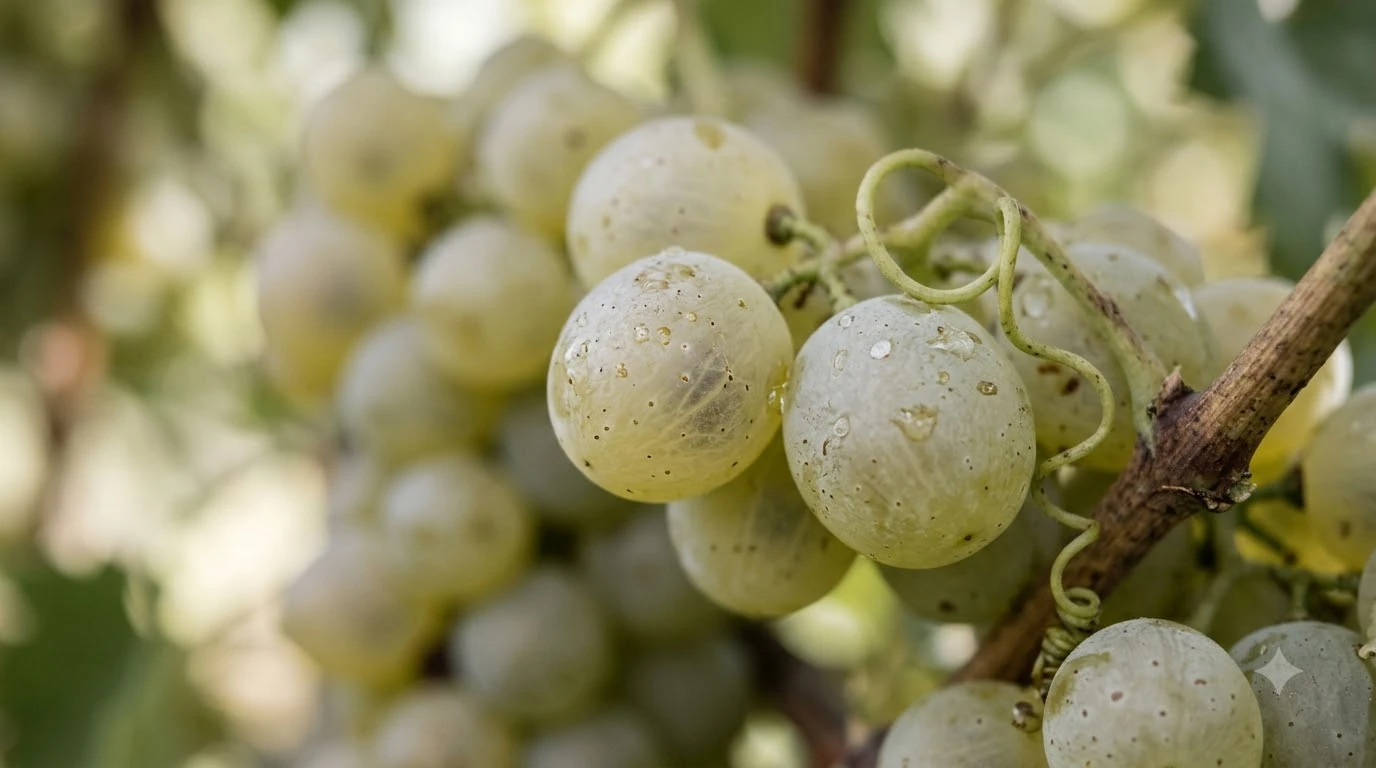
The ortega grape is a white wine variety bred in Germany in 1948 from a cross of Müller-Thurgau and Siegerrebe. It ripens early, produces wines with fine fruit and a peach-like bouquet, and is planted mainly in Rheinhessen and the Palatinate. Dry styles are usually served at 45 to 50 F, while sweeter styles do best slightly cooler, at 43 to 50 F. Its naturally low acidity makes it a better match for mild, sweet, or savory dishes than for sharp, acid-driven food.
If you have seen the name on a German wine list or an English shop shelf and wondered what it tastes like, this guide covers the essentials. The ortega grape is an unusual white because its aromas are generous while its acidity stays soft, which sets it apart from crisp whites such as Riesling. Knowing where it came from, how it grows, and how to serve it will help you choose a bottle with confidence and pair it well at the table.
What Is the Ortega Grape?
The ortega grape is a white variety bred in Germany and grown mainly for aromatic, fruit-forward wines. Its profile sits between a fresh, floral white and a rich, ripe dessert wine.
According to the German Wine Institute’s profile of the variety, Ortega is an early-maturing grape whose wines are characterised by fine fruit and a peachy bouquet. Early ripening is one of the main reasons growers plant it. In a cool-climate vineyard, the grape can reach ripeness before many other white varieties, which gives winemakers a dependable option when the season is short.
Ortega is not a household name, and that is part of its appeal for buyers who want something different from the usual Sauvignon Blanc or Pinot Grigio. If you are comparing it with other whites, the airen grape is a useful point of reference for a different white style. Ortega sits in a smaller niche, and most drinkers meet it on a single bottle rather than a full shelf of its own.
Breeding History and the Name Behind It
Hans Breider created the variety in 1948 at the Bavarian State Institute for Viticulture and Horticulture in Würzburg, crossing Müller-Thurgau with Siegerrebe. He named it after the Spanish philosopher José Ortega y Gasset, a choice that surprises many people who expect a German wine to carry a German name.
According to the German Wine Institute, Breider dedicated the new variety to the Spanish philosopher, so the name has nothing to do with the vineyard or the region. The Wein-Plus wine lexicon records the breeding number as Würzburg B 48-21-4 and notes that DNA analyses later confirmed the Müller-Thurgau and Siegerrebe parentage. Plant variety protection followed in 1981, which formally recognized the variety as distinct and protected.
The same lexicon points out that three other new varieties, Muscabona, Tamara and Thekla, came from the same two parents. That detail shows the Würzburg breeding program was working from one family of crosses to test different outcomes. For anyone reading a wine label, the parentage explains a lot about the glass. The German Wine Institute compares the bouquet directly to Siegerrebe, so the parent you are most likely to taste is the perfumed one.
Flavor, Aroma, and Body
Ortega wines are defined by fine fruit, a peachy bouquet, and a floral lift. Their body often feels rounder than their low acidity would predict, so they taste generous rather than sharp.
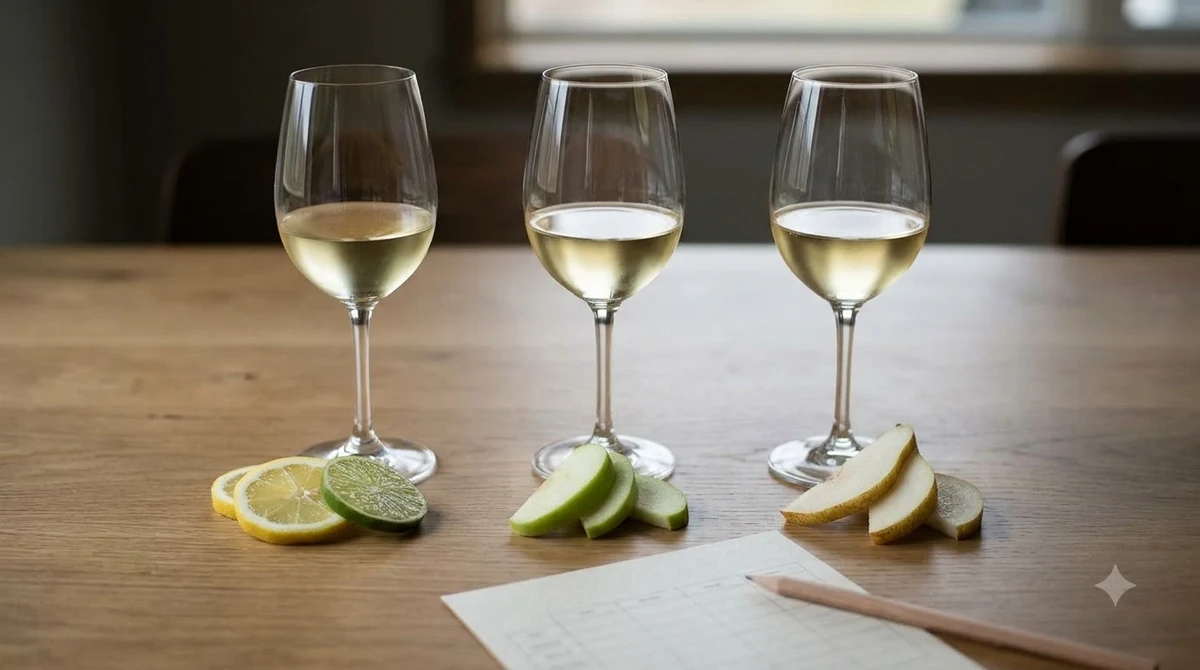
The most recognizable note is peach. The German Wine Institute describes the bouquet as fine and peach-like, and the Wein-Plus lexicon describes the wines as floral with a peach flavor. Think of a glass that opens on blossom and ripe fruit rather than the lemon and stone notes common in Riesling. The aromatic lift is what makes Ortega stand out on a tasting table, even when the wine itself is quiet on the palate.
Acidity is the defining structural trait. Wein-Plus describes the wines as rather low-acid, and Great British Wine says the variety is known for low acidity and high sugar levels when grown in England. The German Wine Institute adds that acidity on the vine often falls quickly in warm years, so a hot vintage can produce a softer, rounder wine than a cool one. That is useful when you taste: a plush, fleshy Ortega usually points to warmth in the growing season, while a crisper bottle suggests a cooler year or a more restrained winemaking choice.
Body depends on style. A dry Ortega tends to feel medium in weight and soft on the finish, while a sweeter Auslese-level wine has more viscosity and a lingering sweetness. Read the producer’s description on the label or the winery website, because the same variety can taste very different from one estate to the next.
Growing Ortega: Strengths and Weak Spots
Ortega ripens early and can reach high sugar levels even in difficult seasons, but it is vulnerable to spring frost and botrytis. Growers mainly plant it in Rheinhessen and the Palatinate.

The German Wine Institute notes that even in unfavourable years, the variety produces very high must weights, which is a major asset for a grower who needs ripeness in a short season. The same source reports a planted area of 351 hectares, with the cultivation mainly in Rheinhessen and the Palatinate. That is a niche footprint for a German white, and it helps explain why bottles can be harder to find outside Germany.
The weak spots are real. The Wein-Plus lexicon says the early-maturing vine is sensitive to spring frosts and susceptible to botrytis, or grey rot, and to coulure, a flowering problem in which berries fail to set. A grower who plants Ortega on a frost-prone site can lose part of the crop in a bad spring, so site selection matters more than it does with a hardier variety. Botrytis cuts both ways: in a damp autumn it can rot fruit before the sugar is ready, but a controlled attack concentrates sugar for sweet wines, which is why growers time their picks carefully.
In practice, growers who work with Ortega tend to favor slopes that drain cold air and avoid low frost pockets. Because the variety ripens early, its young growth can meet late spring cold, so a site that stays a degree or two warmer on cold nights is worth more than a fertile flat. Vineyard managers who get this right can produce consistent ripeness, while those who plant it in the wrong spot may see more variable crops from one year to the next.
The best Ortega wines are rare. According to the German Wine Institute, the top Ortegas play an important role almost exclusively in direct marketing, meaning the estate sells them from the cellar door rather than through distributors. If you want the top examples, plan to buy at the winery or from a shop that stocks estate bottlings, and expect limited availability.
Dry and Sweet Ortega Styles
Ortega shows up in two main styles: dry, still whites and sweeter wines made from very ripe fruit. The table below gives typical serving and pairing guidance for each, and the notes that follow explain how to read a label.
Dry Ortega is the more approachable style. Great British Wine says the variety is more widely used in dry still wines, both as a single-variety wine and in blends, and describes the wines as fruity and aromatic. A dry bottle lets the peach and floral notes lead, with low acidity reading as softness rather than sweetness, so it benefits from gentle serving temperatures and simple food.
Sweeter Ortega is where the variety shows its full range. According to the German Wine Institute, Ortega wines often reach Auslese level, which describes fruit picked at high ripeness. Great British Wine also notes that the English estate Denbies uses the variety in its sweet wines. Sugar balances the low acidity in these styles, which keeps the wine from feeling flat and gives it a long, syrupy finish.
| Style | Sweetness | Typical acidity | Serving temperature | Food matches |
|---|---|---|---|---|
| Dry, still Ortega | Dry | Low | 45 to 50 F | Roast chicken, pork with apple, soft creamy cheese |
| Sweet, Auslese-level Ortega | Sweet | Low | 43 to 50 F | Blue cheese, fruit tarts, peach desserts |
In short, dry Ortega suits everyday food, while sweeter styles belong with dessert or a cheese board. If you are unsure which you have, the sweetness on the label and the producer’s tasting notes are the quickest guide.
Ortega Grape Food Pairings
Pair Ortega with food that matches its sweetness and soft fruit, and avoid dishes built on sharp acid. Low acidity is the main limitation, so the best matches tend to be gentle, mildly sweet, or richly savory.
The first rule is sweetness. A wine should taste at least as sweet as the dessert it accompanies, or it will seem thin and sour next to the food. That is why a sweet Ortega works with fruit tarts, peach cobbler, or a light almond cake, while a dry Ortega belongs with savory courses. Blue cheese is a classic partner for a sweet Auslese-style bottle, because the sweetness softens the salt and sharpness of the cheese.
Matching Savory Dishes
Dry Ortega works better with roast chicken, pork with apple, or soft creamy cheeses, where the richness of the food matches the body of the wine. Those pairings let the peach fruit come forward without the food overpowering it.
The second rule is acidity. Ortega has less acid than many white wines, so acidic foods can make it taste flat. Tomato sauces, vinaigrettes built on lemon, and pickled vegetables all need a wine with equal or higher acidity, which points you toward Riesling or Sauvignon Blanc instead. For spice, a moderately hot dish with a touch of sweetness, such as a coconut curry, can work well because the wine carries its fruit into the heat, and Ortega has no tannin to amplify the burn.
Desserts and Cheese Boards
Sweet Ortega suits fruit-forward desserts where peach and apricot flavors are already present, such as a peach galette or poached pears. Cheese boards built around soft, mild cheeses also work, though blue and aged cheeses are the strongest matches because the sugar counters their salt. Avoid very bitter chocolate desserts, since heavy cocoa can overwhelm the wine’s delicate fruit and make the pairing feel dull.
Serving Temperature and Storage
Serve dry Ortega at 45 to 50 F and sweeter styles at 43 to 50 F, and keep the pour to about five ounces so a standard 750 ml bottle gives roughly five glasses. Opened still whites stay in good shape for three to five days in the fridge.
Temperature has a large effect on aroma. Served too cold, the peach and floral notes shrink, and the wine can taste closed and thin. Served too warm, the low acidity becomes more obvious and the sweetness can feel heavy. A dry bottle usually needs only a short time in the fridge before pouring, while a sweet Ortega benefits from cooling further, to the lower end of its range, before it reaches the table.
Glass shape matters too. A tulip-shaped glass concentrates peach and floral aromas, which suits Ortega well. A standard white wine glass with a moderate bowl works fine for dry bottles, while a smaller glass suits sweet Auslese-style wines, where a little goes a long way.
Store unopened bottles on their sides in a cool, dark place, close to 55 F if you can manage it. Once opened, a still white is best finished within three to five days, and a dessert-style bottle is best poured in smaller glasses so it lasts through the evening. Plan your servings to match the bottle size, since a sweet wine is usually enjoyed in smaller portions than a dry one.
Tip: Pour dry Ortega at 45 to 50 F and sweet Ortega at 43 to 50 F, using a five-ounce pour so the wine stays fresh across the bottle.
Frequently Asked Questions
Does the ortega grape have a spicy side?
Great British Wine describes the variety as fruity and aromatic, and says it can also show a notable spicy quality. That spice sits alongside the peach and floral notes rather than replacing them.
Where else is the ortega grape planted outside Germany?
According to Great British Wine, the variety was first planted in England in the early 1970s, and Biddenden in Kent was one of the first estates to plant it. Westwell, also in Kent, has occasionally used wild yeasts and amphora for fermentation. Those English examples show the grape can work with more than one winemaking approach.
Can you eat ortega grapes, or are they only for wine?
The Wein-Plus lexicon says Ortega is also used as a table grape, so the fruit has uses beyond the winery. That secondary role is a useful reminder that the grape is not only a winemaking variety.
Can an ortega wine age?
The Wein-Plus lexicon says the wines have ageing potential if they are matured appropriately, so the outcome depends on how the wine was made and stored. Storage conditions matter as much as the variety when a bottle is meant to keep. Ask the producer whether a bottle is intended for cellaring before you buy it for long storage.
Is the ortega grape resistant to mildew?
Yes. The Wein-Plus lexicon says the vine is resistant to both types of mildew, which is a practical advantage in damp growing seasons. That resistance does not protect it from spring frost or botrytis, which remain separate risks for growers.
The ortega grape is a niche German white that rewards buyers who want aromatic, low-acid wines with peach character. Match dry styles to gentle savory food, keep sweeter bottles for dessert or cheese, and serve both cool. For a broader look at how styles differ across the category, the Wine by Type guide is a useful next step, and the brachetto grape guide shows a sweeter red for comparison.
More in Wine Types & Grapes
 What Does Mourvèdre Taste Like? Flavor Profile, Regions, and PairingsUpdated Nov 20, 2026
 What Does Marsanne Taste Like? Flavors, Styles, and Food PairingsUpdated Nov 20, 2026
 What Does Malvasia Taste Like? Styles, Flavors, and Food PairingsUpdated Nov 20, 2026
 What Does Grenache Blanc Taste Like? Flavor Profile, Styles, and PairingsUpdated Nov 20, 2026
 What Does Garnacha Taste Like? Key Flavors, Styles, and Pairing TipsUpdated Nov 20, 2026
 What Does Fruit Wine Taste Like? A Complete Flavor and Style BreakdownUpdated Nov 20, 2026