


We may earn a commission when you buy through links on this page, at no extra cost to you. Learn more.
A mussels white wine recipe is one of the simplest ways to cook shellfish at home: the mussels are steamed in a covered pot with dry white wine, aromatics, and a little fat until the shells open. The wine provides acidity and steam, so the broth tastes bright rather than heavy. Most of the work is cleaning the shells and timing the steam, and the result is a pot of tender mussels with a broth good enough to spoon over bread.
This guide explains how the dish is built, which wine to choose, how to tell whether each mussel is safe to eat, and how to serve the broth. It is written for a home cook who wants a dependable method rather than a restaurant recipe with dozens of steps.
What goes into the pot
Classic moules marinières, the French version of the dish, starts with a handful of aromatics softened in butter or oil, then adds the mussels and a splash of white wine. Recipes vary, but the core list rarely changes: mussels, a dry white wine, shallot or onion, garlic, parsley, and a fat such as butter or olive oil. Lemon juice and black pepper usually come at the end.
The mussels should be the star. Look for shells that are closed or that close when tapped, and avoid any that smell strongly of the sea or feel unusually heavy and sealed, since those can hold mud or sand instead of meat. Buy enough for each person to have a generous portion as a main course, and plan on a little extra for shells that will be discarded.
| Component | Role in the broth | Practical note |
|---|---|---|
| Dry white wine | Adds acidity and steam | Choose something you would drink, such as a Sauvignon Blanc or an unoaked Chardonnay |
| Shallot or onion | Sweet base | Cook gently until soft before adding the wine |
| Garlic | Aroma | Add it for only a minute so it does not turn bitter |
| Butter or olive oil | Richness and body | Butter gives a rounder finish than oil alone |
| Parsley and lemon | Freshness at the end | Stir in after the mussels are off the heat |
How to cook the mussels step by step
Rinse the mussels under cold water and scrub off any grit. Pull away the fibrous beard that sticks out between the shells, and discard any mussel that is cracked or stays open when tapped. The cooking itself is quick: once the pot is covered, the mussels usually open within a few minutes, and the moment they do, they are done.
- Soften the shallot or onion in butter or oil over medium heat for several minutes, until translucent.
- Add the garlic and cook briefly, just until fragrant.
- Pour in the dry white wine, let it simmer for a minute, and then add the mussels.
- Cover the pot and steam over medium-high heat, shaking the pan once or twice, until the shells open.
- Lift out the opened mussels into a serving bowl, then finish the broth with parsley, a squeeze of lemon, and a little more butter if you like.
Leftover broth is worth keeping. Strain it through a fine sieve or a clean cloth to remove any sand, then refrigerate it and use it within a day or two as a base for soup, risotto, or a sauce for pasta. Do not reheat the mussels themselves, since they turn rubbery quickly.
Serve the broth in the pot or in bowls with the mussels. If some guests want something other than wine, a fall sangria recipe made with apples and pears is a seasonal alternative. Leave the pot at the table so guests can keep dipping bread into the liquid.
What to do with mussels that do not open
This is the step most home cooks worry about. The traditional rule is to throw away any mussel that stays closed after cooking, and many cooks still follow it. The advice is not entirely settled, though. The Wikipedia article on mussels describes steaming with white wine and herbs as a common method across Italy and Spain, and it notes that shells usually open when cooked. It also says live mussels will shut tightly when disturbed, so a mussel that stays open and unresponsive before cooking should be discarded.
A practical approach is to discard any mussel that was open and did not close before cooking, and to remove any that smell bad after cooking. For mussels that stay closed after steaming, a cautious cook may simply throw them out to avoid any risk. Serving only the mussels that opened is the simplest rule to follow at the table.
Wine to choose and how to serve it
The wine in the pot should be dry and crisp, because sweetness becomes cloying once the broth reduces. Sauvignon Blanc is the classic partner because its herbal and citrus notes match parsley and lemon. A light unoaked Chardonnay or a dry Muscadet also works well. Avoid heavily oaked wines, which make the broth taste woody.
Acidity matters more than fruit in this dish. A wine with high acidity keeps the broth lively, and it cuts through the richness of butter in the finished sauce. If you cannot find a crisp white, a dry rosé with clean fruit can be used in its place, though the broth will take on a faint pink tint.
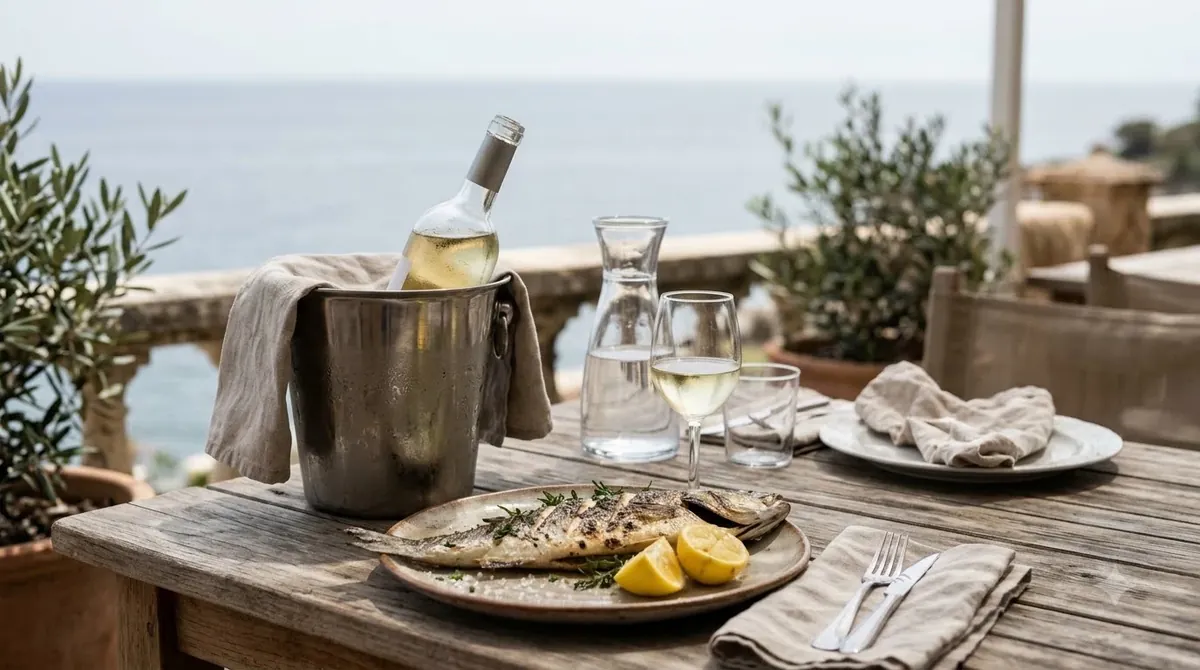
The same bottle can go on the table. Serve it chilled, in a white wine glass, and pour a glass before the mussels arrive. The aim is to keep the wine in the background of the dish rather than letting it dominate.
Variations that keep the method
Once the basic method is clear, the dish is easy to change. Some cooks add a spoonful of cream to the broth for a softer, richer sauce. Others add a pinch of chili flakes, a few strands of saffron, or a handful of cherry tomatoes that burst as the mussels steam. Fennel, celery, or leek can replace the shallot for a different sweetness. For a crowd, a lighter drink such as an apple cider sangria is an easy partner. Each change still relies on the same steps: soften the base, add wine, steam the shellfish, and finish with herbs.
Tip: Do not add salt to the broth until you have tasted it at the end. Mussels release their own salt, and the wine can concentrate it as the liquid reduces.
Frequently Asked Questions
Which white wine is best for mussels?
A dry, crisp white is the safest choice. Sauvignon Blanc, unoaked Chardonnay, and Muscadet are all common picks. Avoid sweet wines and heavily oaked bottles, since they change the flavor of the broth.
How long do mussels take to cook in white wine?
Once the pot is covered and steaming, the mussels open quickly, so check the pot often. Remove each one as it opens so the meat does not overcook and toughen.
Can I make a mussels white wine recipe without alcohol?
Yes. Replace the wine with a mix of low-sodium stock and a splash of lemon or white wine vinegar to keep some acidity. The broth will be milder, but the steaming method stays the same.
What should I serve with mussels in white wine?
Crusty bread is the traditional choice, because it soaks up the broth. A green salad with a sharp vinaigrette or a plate of fries also works well. Keep the side dishes simple so the shellfish stays the focus.
A good mussels white wine recipe rewards careful cleaning and short cooking. Once you have the method, try a few variations, and see the Wine Recipes & Cocktails guide for more ideas on pairing dishes with bottles.
More in Food & Wine Pairing
 Risotto With White Wine Recipe: Make a Creamy Dinner at HomeUpdated Nov 20, 2026
 Wassail With Wine Recipe for a Festive Spiced Holiday DrinkUpdated Nov 20, 2026
 Spritz Veneziano Recipe: Make a Classic Venetian Aperitivo at HomeUpdated Nov 20, 2026
 Summer Wine Punch Recipe for Easy Homemade EntertainingUpdated Nov 20, 2026
 Bishop Recipe: How to Make a Bright, Citrus-Forward Red Wine CocktailUpdated Nov 20, 2026
 Wine Cupcakes Recipe: Bake Rich Chocolate Cupcakes at HomeUpdated Nov 20, 2026