

We may earn a commission when you buy through links on this page, at no extra cost to you. Learn more.
Mount Veeder vineyards sit on steep hillsides in the Mayacamas range above Napa Valley, where elevation, volcanic soils and cool nights give the grapes a character that differs from the valley floor. The appellation was established in 1990 and covers more than 15,000 acres, with roughly 1,000 acres planted to vine. Cabernet Sauvignon is the signature grape, and most of the area’s vineyards sit on slopes that demand careful, close management.
This guide looks at the vineyards themselves: where they sit, what the land is made of, how the climate works on a hillside and which grapes grow best there. The focus is the vineyard, so you can understand why wines from this area taste the way they do before you look at any single bottle.
Where the Mount Veeder vineyards are
Mount Veeder is a mountain appellation on the western side of Napa Valley, in the Mayacamas range that separates the valley from the Sonoma side of the county. Its boundaries climb from the valley edge into the hills, and the land covered by the American Viticultural Area runs from around 400 feet at the southern end to about 2,200 feet near the northern apex. The highest point, Mount Veeder itself, reaches roughly 2,677 feet.
That elevation range matters. Vineyards at the top of the area sit well above the valley floor, where fog and heat behave differently. The appellation’s name honors Reverend Peter V. Veeder, and its boundaries were extended in 1993 to take in more land on the northern side.
The appellation is modest in output. The Wikipedia entry on Mount Veeder puts its share at roughly 1.3 percent of Napa Valley’s production, or about 40,000 cases per vintage. That scale is one reason the wines are often sought after by collectors who follow a single hillside label.
If you are still deciding which style you want, the Mount Veeder wine guide covers serving, pairing and buying, while the Wine Regions overview places Napa among other American growing areas.
Soils and slopes that shape the grapes
The soils here are mostly thin and volcanic. Reference descriptions of the appellation describe loams and clay loams, along with gravelly or stony sandy loams. These soils drain quickly and hold less water than the deep valley-floor soils, which pushes vines to put down deeper roots and often produces smaller clusters with concentrated flavor.
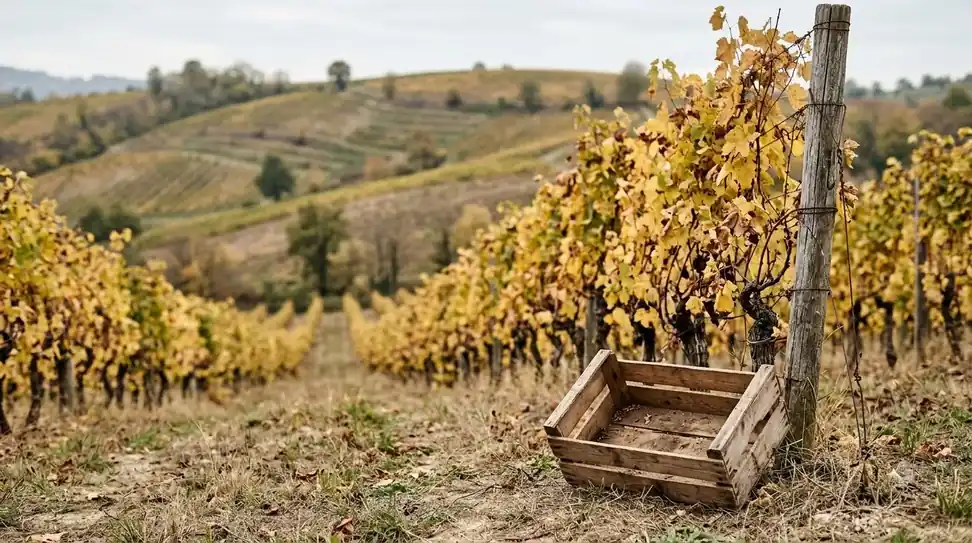
Many vineyards are planted on slopes, sometimes as steep as 30 degrees. Slopes increase sun exposure and improve drainage, both of which help ripen grapes in a cool climate. They also make the work harder. Tending steep ground is slower and more labor-intensive than working a flat block, and that cost is part of the reason these vineyards stay relatively small.
The climate on the mountain
The climate is cool and moist in winter and warm but dry in summer. Annual rainfall is often reported between about 25 and 65 inches, and the growing season is long, roughly 273 days. Nighttime temperature inversions are a key feature: cold air settles into the valley, while the higher vineyards stay warmer and are less prone to frost. That protection is one reason elevation can be an advantage here rather than a hazard. For a contrast with another cool-climate landscape, the Columbia Gorge vineyards guide shows how a very different geography shapes the grapes grown there.
Cooling matters as much as warmth. Cooler conditions slow ripening, so grapes hang longer on the vine, build flavor gradually and keep their acidity. The result is a long, even ripening period with a balance that many growers prize.
| Feature | Mount Veeder | Why it matters |
|---|---|---|
| Elevation | About 400 to 2,200 feet in the appellation | Higher vineyards stay warmer and avoid valley frost |
| Soils | Thin volcanic loams and gravelly sandy loams | Fast drainage and lower vigor |
| Slopes | Often steep hillsides | More sun exposure and better drainage |
| Growing season | About 273 days | Long, even ripening |
Grapes grown on Mount Veeder
Cabernet Sauvignon is the star of the area. Wine Folly describes the grape in general as dry and full-bodied, with black cherry, black currant, cedar and graphite notes and medium-high tannins, and it is the variety that most often comes to mind when people think of Napa. Wine Folly’s Cabernet Sauvignon guide is a useful starting point for understanding that style.
The appellation grows around sixteen varieties in total, according to the reference descriptions of the area. Chardonnay, Sauvignon Blanc, Zinfandel, Syrah and Merlot are among the other grapes planted. Growers often choose varieties by slope and aspect, so the vineyard map is as important as the grape list.
Mount Veeder Cabernet is often described with words such as briary, with firm tannins and herbal, floral aromatics beneath the dark fruit. Those descriptions are a useful guide for what to look for in the glass, though individual vintages and producers will always vary.
Tip: When a label says Mount Veeder, the grapes come from the mountain appellation rather than the valley floor. That is the clearest signal of the cooler, more concentrated style you can expect.
What to know before visiting the vineyards
Visiting mountain vineyards takes more planning than a flat valley tour. Roads are narrow and winding, and the terrain is steep, so a designated driver or a guided tour is a sensible choice. Tasting hours vary from winery to winery, and some estates keep limited schedules, so confirm each one’s hours and whether it requires an appointment before you go.
Plan the day around the vineyards rather than trying to fit them into a rushed valley route. Driving from the valley floor up into the hills takes time, and the best views and the most distinct tastings often come at the end of a relaxed afternoon rather than a crowded morning. If you are comparing several Napa areas, it helps to taste a valley-floor Cabernet and a mountain Cabernet back to back, so the difference in elevation and soil becomes easier to notice.
Weather can change quickly on the mountain. Fog can roll in and lift during the day, and summer afternoons can be warm while mornings stay cool. Layers and comfortable shoes are a good idea, and if you want the views, plan for clear mornings.
Frequently Asked Questions
How big is the Mount Veeder appellation?
The appellation covers more than 15,000 acres, and roughly 1,000 acres are planted to vine. Most of the land is hillside terrain, so the planted area is a small share of the total.
Why are Mount Veeder vineyards on slopes?
Slopes improve sun exposure and drainage, which helps grapes ripen in a cool, moist climate. The steep ground also makes the vines less exposed to valley-floor frost and fog pooling, though the work is more demanding.
What grape is Mount Veeder known for?
Cabernet Sauvignon is the best-known grape from the appellation. The area also grows Chardonnay, Sauvignon Blanc, Zinfandel, Syrah and Merlot, among other varieties.
Is Mount Veeder warmer or cooler than the valley floor?
It depends on the elevation. Higher vineyards often stay warmer at night because cold air settles into the valley, while the lower slopes can be cooler and foggier. The mix of elevations is part of what gives the appellation its range of styles.
Mount Veeder vineyards show how elevation, soil and slope can change a familiar grape. If you want to taste the result, look for bottles that name the appellation, and if you visit, plan for steep roads and changing weather.
More in Wine Regions
 Willcox Wine Trail: Discover Arizona’s High-Elevation Wine CountryUpdated Nov 20, 2026
 Yakima Valley Wine Region: Find the Best Styles to TryUpdated Nov 20, 2026
 Vosne Romanee Wine Tasting: Identify Aromas and Choose Better PairingsUpdated Nov 20, 2026
 Yakima Valley Wine Festival: Find the Best Seasonal Wine EventsUpdated Nov 20, 2026
 Wales Vineyards: Discover Cool-Climate Wines and Where to VisitUpdated Nov 20, 2026
 Yountville Wine Festival: Discover Napa Wines and Local FoodUpdated Nov 20, 2026