


We may earn a commission when you buy through links on this page, at no extra cost to you. Learn more.
The phrase moscato bianco wine refers to an aromatic white wine made from the Muscat Blanc à Petits Grains grape, best known in Italy for the gently sparkling, sweet wines of Moscato d’Asti. The variety can also make still wines, including dry versions, so the grape name alone does not tell you how sweet a bottle will be. Its signature profile leans toward orange blossom, honeysuckle, peach, and fresh grape, with acidity that keeps many sweet examples lively.
The key to understanding this wine is separating the grape from the regional names on the label. Moscato Bianco is the variety; Moscato d’Asti and Asti are two distinct Piedmontese wines made from it, with different levels of sparkle, sweetness, and alcohol. Knowing those distinctions makes it easier to choose a bottle for dessert, brunch, spicy food, or an aperitif.
What Moscato Bianco Wine Means
Moscato Bianco wine takes its name from Moscato Bianco, an Italian name for Muscat Blanc à Petits Grains. The grape belongs to the wider Muscat family, a group of aromatic varieties grown across Europe and beyond. Decanter identifies Muscat Blanc à Petits Grains as the variety behind Moscato d’Asti and notes that it is also known by names such as Muscat of Frontignan and Muskateller. The separate grape Muscat of Alexandria is related, but it is not the same variety.
The names “Muscat,” “Moscato,” and “Moscatel” can refer to different grapes or wine traditions. Moscato is associated with Muscat Blanc à Petits Grains, while Moscatel in Spain and Portugal often refers to Muscat of Alexandria. Muscadelle, despite the similar spelling, is unrelated.
The phrase often brings Moscato d’Asti to mind: a pale, fragrant wine with gentle bubbles and noticeable sweetness. Yet the grape is more flexible. Depending on region and winemaking, Moscato Bianco can become still or sparkling wine, ranging from dry to sweet while retaining its floral aroma.
Piedmont’s Historic Moscato Growing Area
The clearest reference point for Moscato Bianco is southern Piedmont in northwestern Italy, especially the hills around Asti, Alessandria, and Cuneo. The Moscato d’Asti DOCG production area includes 52 towns across those three provinces, according to the regional tourism organization for Langhe, Monferrato, and Roero. Historical records cited by that organization trace Moscato production in the Monferrato and Langhe areas to at least the 13th century; its Moscato d’Asti regional profile summarizes the appellation and its classic pairings.
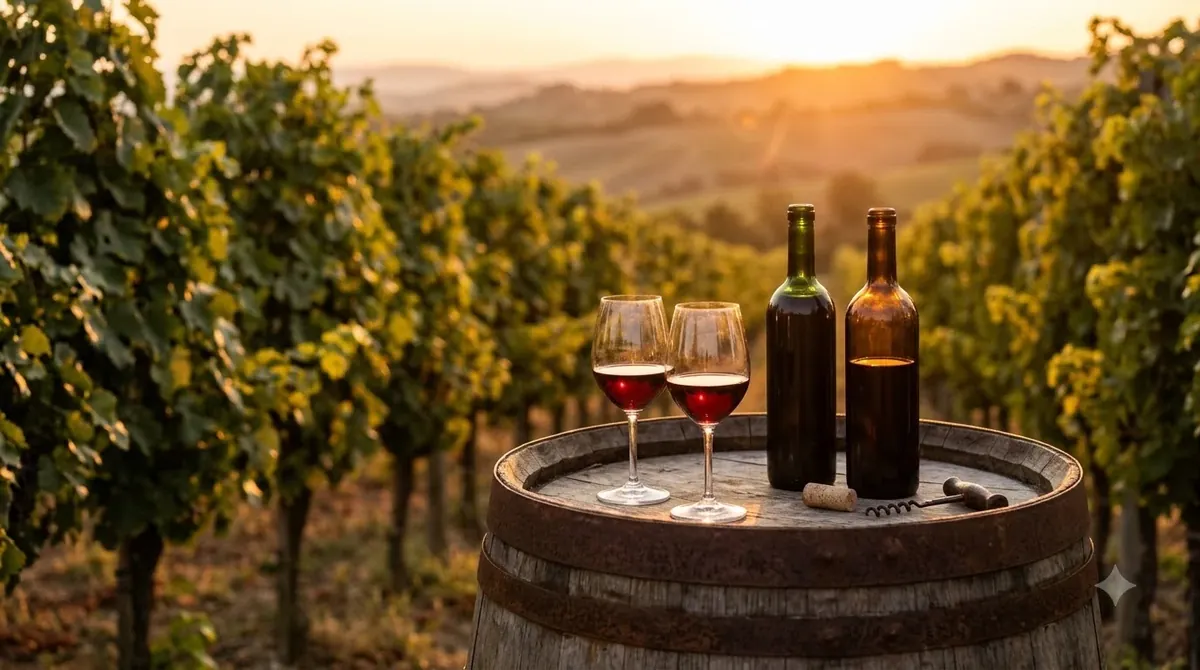
The Asti zone is a patchwork of hills and communities, including Canelli, and overlaps parts of the Langhe and Monferrato landscapes. Decanter reports that the DOCG area covers about 9,700 hectares across Asti, Cuneo, and Alessandria. Those place names connect a bottle to a defined production area, not simply to a grape.
Piedmont is known for structured reds such as Barolo and Barbaresco, but Moscato offers a contrasting style. Wine Enthusiast describes the region as shaped by cool mountain air, Mediterranean influences, and notable day-to-night temperature changes. Those conditions help preserve freshness; acidity gives the grape’s fruit and floral aromas definition.
How Moscato Bianco Becomes Wine
Winemaking choices determine whether Moscato Bianco becomes a lightly sparkling sweet wine, a fully sparkling wine, or a still white wine. For Moscato d’Asti, producers typically preserve some of the grape’s natural sugar by stopping fermentation before the yeast converts it all into alcohol. The result is a lightly fizzy wine with both sweetness and fresh acidity, rather than a dry wine with bubbles added later.
With the tank method, fermentation takes place in a sealed, pressurized vessel so carbon dioxide stays in the wine. The producer cools the tank to stop fermentation, then filters out the yeast before bottling. Wine Enthusiast puts typical Moscato d’Asti alcohol around 5 to 6 percent; its overview of Moscato styles also shows how the grape can be made dry, sweet, still, or sparkling.
Asti, the fuller sparkling counterpart, can be made at different sweetness levels. The denomination also permits drier expressions, including Brut and Extra Dry, while Moscato d’Asti is generally the sweeter, softer-sparkling style. Still Moscato Bianco takes another route: fermentation can run to dryness, leaving the floral and fruit aromas without the same residual sweetness. The table below gives a practical comparison; producer choices can create variation within each category.
| Style | Typical sweetness | Bubbles | Typical alcohol | Best use |
|---|---|---|---|---|
| Moscato d’Asti | Sweet | Light, frizzante | About 5–6% ABV | Fruit desserts, brunch, spicy dishes |
| Asti Dolce | Sweet | Fully sparkling | Often about 6–9% ABV | Celebrations, pastries, fruit |
| Asti Brut or Extra Dry | Dry to off-dry, depending on bottling | Fully sparkling | Can reach about 11–11.5% ABV when fermented dry | Appetizers, savory brunch, aperitif |
| Still Moscato Bianco | Dry to sweet | None | Varies by producer and style | Seafood, salads, fruit, cheese |
The legal category and producer’s style should guide your expectation more than the word “Moscato” alone. If you want the familiar, sweet wine with a light prickle, Moscato d’Asti is the clearest starting point. For a celebratory pour with a stronger stream of bubbles, choose Asti. For a dry white with Muscat perfume, look for a bottle that clearly identifies itself as still and dry rather than assuming every Moscato Bianco tastes sweet.
Aroma, Flavor, Sweetness and Structure
Moscato Bianco is prized for aroma before weight or power. Compared with Muscat of Alexandria, it typically has a more vivid floral perfume. Typical scents include orange blossom, honeysuckle, acacia, peach, apricot, pear, and fresh grape. Depending on the style, lemon, mandarin, sage, and honey may also appear. The fruit can seem ripe even in a wine that finishes crisp.

On the palate, sweet Moscato d’Asti often feels light-bodied, gently creamy from its bubbles, and juicy with peach or citrus flavors. Its sweetness is obvious, but acidity gives the wine a refreshing line and prevents the finish from feeling flat. A dry Moscato Bianco can show many of the same floral and stone-fruit aromas with a leaner, more savory impression. The grape’s aromatic signature remains; the amount of sugar changes the balance.
Sweetness and fruit aroma should not be confused. A wine can smell like ripe peaches and orange flowers while tasting dry, just as a sweet wine can retain lively acidity. Moscato Bianco is not defined by a single sugar level or texture. For a broader look at how these styles fit among white and sparkling wines, browse Wine by Type. For this grape in particular, the separate profile of the Moscato Bianco grape helps explain why the aromas can remain distinct across very different bottlings.
Moscato d’Asti and Asti Are Different Styles
Moscato d’Asti and Asti come from the same Piedmontese denomination and the same aromatic grape, but they are not interchangeable names. Moscato d’Asti is usually sweet, lower in alcohol, and gently sparkling. Asti is a fully sparkling wine, with a more forceful mousse and a range of sweetness levels that includes dry versions. The regional agricultural portal makes the distinction directly: “Asti” is reserved for the sparkling wine, while “Moscato d’Asti” names the white wine in its less-sparkling form.
The difference is especially clear in the glass. Moscato d’Asti tends to release a soft stream of bubbles and emphasize fresh grape, peach, and floral notes. Asti has a more energetic bead and can feel broader because of its higher pressure. Traditional Asti Dolce is sweet, but drier Asti bottlings can work with savory dishes where a sweet Moscato d’Asti might feel too rich. Decanter describes Moscato d’Asti as the sweeter, frizzante alternative to the more fully sparkling Asti.
Less common expressions include traditional-method Asti and the late-harvest Moscato d’Asti Vendemmia Tardiva. Outside Piedmont, Muscat Blanc à Petits Grains is used for wines such as Muscat de Beaumes-de-Venise and Muscat de Rivesaltes in France. The same grape can produce dry aromatic whites or sweet dessert wines, so the full designation is more informative than the word “Moscato” alone.
Serving Temperature and Food Pairings
Serve Moscato d’Asti well chilled, around 43–50°F, so its sweetness feels fresh and its gentle bubbles stay lively. Fully sparkling Asti can be served at 40–50°F. A dry, still Moscato Bianco fits the light-white range of 45–50°F. Chill the bottle in the refrigerator before serving, then pour modest portions into white-wine glasses or small tulip-shaped sparkling glasses that allow the aromas to gather without losing the wine’s lift.
For dessert, match the wine’s sweetness to the food: the wine should be at least as sweet as the dessert. Moscato d’Asti works with fruit tarts, peach desserts, berry shortcake, panna cotta, hazelnut cake, and simple pastries. It is also a natural partner for fresh fruit because the fruit flavors echo the wine’s own peach, pear, and citrus notes. A dessert that is much sweeter than the wine can make the wine taste thin or sharp, so choose a less sugary pastry or a sweeter bottling when serving a very sweet dish.
The style can also move beyond dessert. Moscato d’Asti’s sweetness can meet the heat of spicy dishes, including Indian curries and some spicy takeout, while its acidity refreshes the palate. It also pairs well with salty cured meats, soft or blue cheeses, and savory brunch dishes. Drier Asti is a better choice for crisp appetizers, fried foods, creamy pasta, and salads. With a dry still Moscato Bianco, try shellfish, grilled fish, or herb-forward vegetables; avoid pairing a highly aromatic wine with dishes that bury its delicate floral character.
Tip: Pair by sweetness and intensity, not just by color. For a sweet Moscato d’Asti, choose a dessert that is equally sweet or less sweet; for spicy food, keep the dish’s heat moderate and serve the wine cold.
Acidity matters just as much as sweetness. Foods with sharp citrus, vinegar, or tomato need a wine with equal or higher acidity, or the wine can taste dull beside the dish. Salt and fat can soften a wine’s sharper edges, which is why cured meats and cheese can work well with aromatic sparkling wines. General pairing principles are useful, but the final decision should account for whether the particular bottle is sweet, dry, still, or sparkling.
Buying, Storing and Enjoying a Bottle
Start by deciding which style you want rather than choosing on the word Moscato alone. For a classic sweet, lightly sparkling wine, look for Moscato d’Asti DOCG. For more persistent bubbles or a drier option, look for Asti and note whether the label says Dolce, Extra Dry, or Brut. For a still wine, seek a clear indication of dry or sweet style and the producer’s region. The name of the grape can appear on labels from outside Italy, so origin and designation help establish what is in the bottle.
Most Moscato d’Asti is made to be enjoyed young, while its fresh fruit and floral aromas are vivid. It is rarely bought for long cellar aging. Store an unopened bottle in a cool, dark place away from temperature swings, ideally around 55°F, and keep cork-finished bottles on their side for longer storage. For a practical storage timeline, read how long Moscato lasts unopened. The best window depends on the style, closure, and storage conditions, so avoid assuming that every sweet white improves with years in the bottle.
Once opened, keep the bottle cold and reseal it promptly. A sparkling stopper can help retain the fizz in Moscato d’Asti or Asti, but the bubbles will fade over time. Still Moscato Bianco can be closed with its original closure or a suitable wine stopper. Plan to finish opened still wine within 3–5 days and opened sparkling wine within 1–3 days for the freshest aromas and texture. Pour around 5 ounces per serving; a standard 750 ml bottle provides about five such glasses. The Italian word Moscato is commonly said “moh-SKAH-toh”; Bianco adds “bee-AHN-koh.” A short guide to pronouncing Moscato can help when ordering.
Frequently Asked Questions
Why is the grape called Muscat Blanc à Petits Grains?
The French name refers to the variety’s small berries, which are typically yellow-hued. Muscat of Alexandria, by contrast, has larger and darker berries, helping distinguish the two varieties in the vineyard.
Can dry Moscato Bianco have a richer texture?
Yes. Some richer dry Muscat wines use skin contact, barrel aging, or lees stirring to add texture and depth. Those cellar choices can make the wine feel fuller without turning it sweet.
Can Moscato Bianco grapes have colored skins?
Some mutations of Muscat Blanc à Petits Grains can be pink, red, or dark brown, even though the variety is usually associated with yellow-hued berries. The color variation is one reason the Muscat family includes several visually distinct forms.
Are there fortified wines made from the Muscat family?
Yes. Some Muscat wines are fortified with neutral grape spirit, often brandy, before fermentation is complete. Stopping fermentation preserves sweetness while increasing alcohol, as in examples from Muscat de Beaumes-de-Venise in France’s Rhône Valley.
What does DOCG mean on a Moscato d’Asti label?
DOCG stands for Denominazione di Origine Controllata e Garantita, Italy’s top traditional wine appellation category. The Asti designation received DOCG approval in November 1993, bringing defined production rules and geographic boundaries.
Moscato Bianco is much more than a single sweet, bubbly style: it is an aromatic grape that can produce everything from dry still whites to delicate dessert wines. Begin with Moscato d’Asti for gentle sparkle and sweetness, or choose Asti for a fuller mousse and a wider range of sweetness levels. Once you know the distinction, the grape’s floral character and bright fruit make it easy to match with the occasion and the food.
More in Wine Types & Grapes
 Zinfandel Sugar Content: Dry Red vs. White Zinfandel GramsUpdated Nov 21, 2026
 Best Zinfandel Substitute Options for Sipping and CookingUpdated Nov 21, 2026
 Zweigelt Food Pairing: Best Dishes, Cheeses, and Serving TipsUpdated Nov 21, 2026
 Zinfandel Tannins Explained: How Structure Shapes Every BottleUpdated Nov 21, 2026
 Zinfandel Sweetness Level: Dry Red vs. Sweet White Zin ExplainedUpdated Nov 21, 2026
 Xinomavro Food Pairing: Best Dishes, Styles, and Serving TipsUpdated Nov 21, 2026