

We may earn a commission when you buy through links on this page, at no extra cost to you. Learn more.
Montepulciano tasting notes most often describe a dry, deeply colored red with ripe cherry, plum, blackberry, savory spice, moderate acidity, and firm but manageable tannins. The grape is best known in Abruzzo, where its wines range from fresh, fruit-led bottles to concentrated reds shaped by oak and bottle age. Expect the exact balance to shift with vineyard location, harvest conditions, and winemaking.
Montepulciano is a useful grape to learn because its dark fruit and savory edges can feel generous without requiring an elaborate tasting vocabulary. The clues are in the fruit quality, the feel of the tannins, and whether oak adds a quiet frame or takes over the finish. This guide explains those signals and shows how to use them when choosing a bottle or pairing one with dinner.
What the Grape Tastes Like: Fruit, Flowers, and Savory Notes
Montepulciano typically combines dark and red fruit with a savory layer, producing a red that is ripe and expressive rather than perfumed or delicate. Cherry and plum are the most reliable starting points, while blackberry, raspberry, violet, pepper, and dried herbs appear according to the site and style.
Begin with the fruit. In a fresher example, look for tart red cherry, raspberry, and cranberry-like lift, sometimes with a crunchy impression similar to fresh plum skin. Riper fruit can move toward black cherry, blackberry, dark plum, and berry compote. These descriptors are not competing definitions: they describe different degrees of ripeness and different growing conditions. Decanter’s panel tasting of 105 Montepulciano wines found a spectrum from tangy raspberry and blueberry to dark cherry and fresh blackberry, with herbs, spice, and licorice also appearing in some wines.
Next, look for the savory details behind the fruit. Black pepper, dried oregano, wild herbs, tobacco, licorice, earth, and a faint meaty note can make the aroma feel more complex. A young, unoaked bottle will often keep these notes close to fresh fruit, while a more concentrated wine may show dried herbs, leather-like nuance, or earthy depth. The aroma should still feel connected: if vanilla, toast, or smoke dominates every other impression, oak may be masking the grape’s own character.
Floral notes can add another useful clue. Violet is common in descriptions of darker, ripe examples, while some cooler-site wines show a more lifted herbal or floral edge. The official Montepulciano d’Abruzzo DOC description calls for an intense ruby color with violet reflections, aromas of red fruit and spice, and a full, harmonious palate with light tannin. That legal description is a regional baseline, not a guarantee that every bottle will smell or feel identical.
Acidity, Tannin, Body, and Finish
Montepulciano is usually dry, with medium to full body, enough acidity to keep ripe fruit from feeling flat, and tannins that provide shape across the palate. Its structure can range from supple and easygoing to quite firm, so judge the interaction of acidity and tannin rather than assuming every bottle is heavy.
Acidity is often moderate, though fresher examples can feel brisk and lively. It makes the mouth water after a sip and helps the wine work with tomato-based food. The Abruzzo DOC specification sets a minimum total acidity of 4.5 grams per liter for the basic wine; that is a regulatory floor, not a promise that the wine will taste sharply acidic. Vineyard climate, harvest timing, and the balance of fruit and alcohol all affect how acidity is perceived.
Tannin is usually noticeable but can feel rounded when the fruit is ripe. In a lighter style, the grip may show mainly along the gums and on the finish. A concentrated red can leave a firmer, drying impression across the tongue and cheeks. This is one reason a rich Montepulciano can stand up to grilled meat, while a leaner bottle can pair well with sausage, tomato pasta, or roasted vegetables.
Body is commonly medium-plus to full, with alcohol and extract adding a sense of breadth. The finish often returns to cherry or plum, then leaves spice, herbs, or a slightly earthy note. Compare the texture with other reds: grenache tasting notes often emphasize a more fragrant fruit profile and softer-feeling tannins, while petit verdot tasting notes usually point to a more deeply structured, tannic style. Those contrasts help clarify where a particular Montepulciano sits on the spectrum.
Abruzzo’s Climate and the Differences Between Areas
Abruzzo gives Montepulciano a broad range of expressions because vineyards sit between the Apennines and the Adriatic Sea, with different elevations, exposures, and day-to-night temperature patterns. Chieti, Pescara, and Teramo are useful place names to recognize, but they should be treated as clues rather than guarantees of a single flavor profile.
Chieti, in the south of the region, includes many warmer, coastal-influenced vineyards. Wine Enthusiast’s regional overview notes that the province’s seaside climate often produces softer, fruit-forward, easy-drinking wines, although more powerful examples also exist. In the glass, that can mean plush cherry and plum, a rounded palate, and less obvious herbal or acidic tension. A generous fruit profile does not automatically mean sweetness: most red Montepulciano is made in a dry style.
Pescara and Teramo, in central and northern Abruzzo, can experience greater differences between daytime and nighttime temperatures. Those conditions can help grapes retain acidity during a long ripening season, producing reds with more lift, definition, and structure. Expect ripe cherry alongside crushed herbs or tobacco in some examples. The Colline Teramane area around Teramo is especially important for wines with concentration and depth, and it has its own DOCG designation.
The landscape also matters beyond a province name. The Apennines bring cooler air, while the Adriatic moderates temperatures nearer the coast; hillsides vary in altitude, aspect, and soil. Decanter describes the mountain and sea breezes as moderating summer heat and cooling vines at night. That broad influence helps explain why two wines carrying the same Montepulciano d’Abruzzo DOC name can feel different in freshness, tannin, and fruit intensity.
Winemaking Choices: Stainless Steel, Concrete, and Oak
Winemaking can shift Montepulciano from a bright, straightforward red to a dense wine with extra texture and savory complexity. Stainless steel and concrete tend to keep fruit in the foreground, while barrel aging can add spice, toast, and a broader impression of structure.
Stainless-steel fermentation and maturation preserve clear fruit aromas and a direct expression of the grape. These wines often show cherry, plum, and fresh herbal notes without obvious vanilla or toast. Concrete can also retain a sense of freshness while allowing a different texture to develop. In Decanter’s panel tasting, one favored wine spent nine months in concrete and did not see oak; roughly one third of the panel’s highly recommended wines were made without oak aging.
Oak is not automatically a flaw. A well-made, concentrated Montepulciano can absorb the flavor and structure of a barrel, adding cedar, baking spice, cocoa, or a gentle toasted edge. The panel’s top-scoring wine in that tasting spent 18 months in barrique. The judges’ concern was clumsy wood use: if the fruit lacks the concentration to support it, vanilla, smoke, and toast can dominate and leave the wine feeling disjointed.
Ageing time should be read together with producer style and fruit quality. A young, stainless-steel bottling is often intended to show its bright fruit early, while a selection from low-yielding vines may have enough concentration for a longer period in cask or bottle. Some oak-aged examples develop earthy, game-like notes with time; others retain primary fruit for years. Montepulciano does not need extended cellaring to show its character, so an older bottle is not automatically a better one.
How to Read the Label and Choose a Style
The label tells you whether you are looking at the grape in general or a wine tied to a particular place. Montepulciano d’Abruzzo DOC is the familiar regional name, while Colline Teramane DOCG identifies a more specifically delimited area in northern Abruzzo; the basic DOC requires at least 85% Montepulciano and allows up to 15% other permitted non-aromatic red grapes.
| Basic Montepulciano d’Abruzzo DOC measure | Specification | How to interpret it |
|---|---|---|
| Minimum Montepulciano in the blend | 85% | The wine may include other permitted red grapes. |
| Maximum share of other permitted red grapes | 15% | The blend remains predominantly Montepulciano. |
| Minimum natural alcohol by volume | 11.5% | This is the minimum natural strength stated for the base category. |
| Minimum alcohol at consumption | 12% | The finished wine must meet this minimum. |
| Minimum total acidity | 4.5 g/L | This is a legal threshold, not a sensory score. |
These figures describe the basic DOC category; they do not tell you whether the wine will be light or dense, fruit-led or oak-driven. The Colline Teramane DOCG has tighter grape-composition rules, and Wine Enthusiast describes its blend as at least 90% Montepulciano, with up to 10% Sangiovese. For a more detailed introduction to the broader categories and label language, see Wine by Type.
Also avoid a common naming trap. Montepulciano is a grape grown widely in central Italy, especially Abruzzo; Montepulciano is also a town in Tuscany. The famous Vino Nobile di Montepulciano from that Tuscan town is based primarily on Sangiovese, not on the Montepulciano grape. If you want the grape, look for the word Montepulciano in the variety or the appellation Montepulciano d’Abruzzo.
When comparing two bottles, start with producer and place, then look for cues such as “riserva,” “single vineyard,” or an indication of barrel maturation. These terms do not replace a taste, but they suggest a more deliberate selection or a different cellar approach. A fresh, unoaked red can be the better match for a weeknight tomato sauce; a concentrated, wood-aged example may be more at home beside a slow-cooked roast.
Serving Temperature, Food Pairings, and a Simple Tasting Method
Serve Montepulciano cool enough to keep its fruit lively and warm enough for its aromas to open. A lighter, unoaked bottle is best slightly cool, while a fuller, more tannic example can be served a little warmer; food with salt, fat, and savory depth generally makes the wine taste more balanced.
For a lighter, fruit-forward style, aim for about 55–60°F. For a fuller, more structured red, 60–65°F is a useful range. A bottle served too warm can seem alcoholic and soft, while one served too cold may mute cherry and spice and make tannins seem harder. If the room is warm, a short spell in the refrigerator can bring the wine into range before serving.
Food pairing is straightforward because dark fruit and moderate acidity suit familiar Italian flavors. Try tomato-based pasta, pizza with sausage, lasagna, grilled pork, beef, lamb, meatballs, roasted mushrooms, eggplant parmigiana, lentils with herbs, or peppers cooked with garlic and rosemary. Tomato has pronounced acidity, so a wine with enough freshness is important; a very flat red may taste dull beside a bright tomato sauce. Salt and fat soften tannin, making cured meats, aged cheeses, and grilled cuts useful partners. Avoid pairing a strongly tannic, high-alcohol bottle with very spicy chili dishes, since heat can make alcohol and tannin feel more aggressive; oily fish is also a less natural match for a tannic red, so choose a fresher white or rosé for that plate.
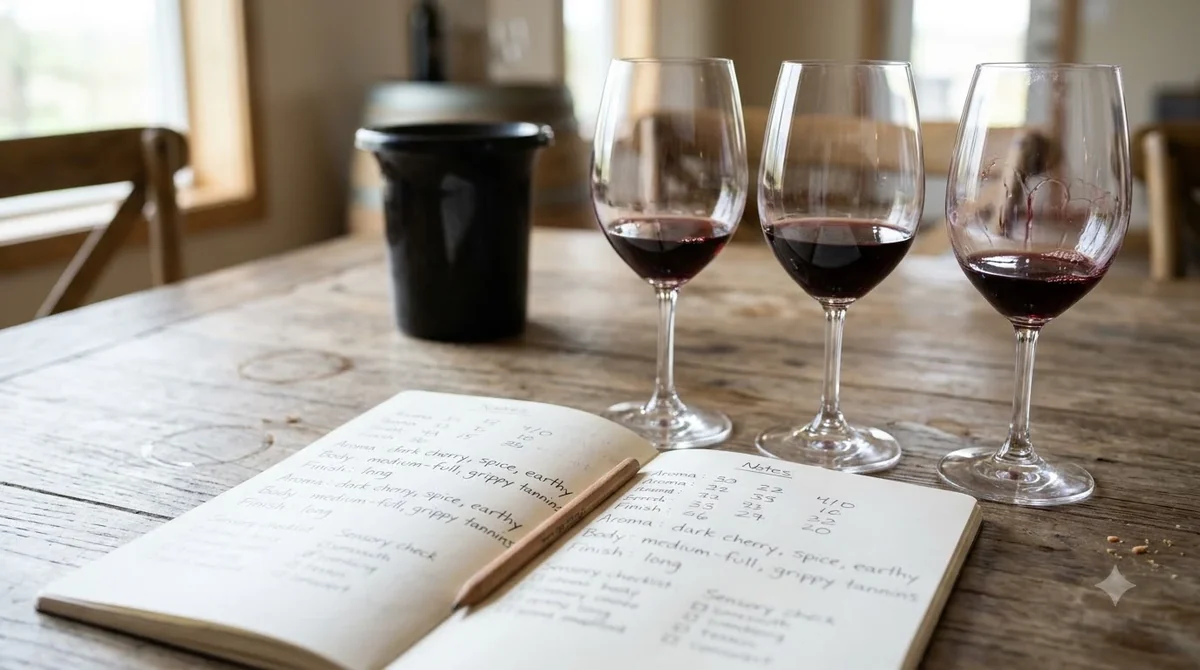
A simple tasting sequence helps keep your notes consistent. First, check the color: Montepulciano d’Abruzzo is commonly deep ruby, sometimes with violet at the rim. Next, smell for cherry, plum, blackberry, spice, and herbs. On the palate, assess whether acidity refreshes the fruit, whether tannin feels fine or firm, and whether the finish returns to fruit or turns mainly toward oak and earth. Use a standard 5-ounce pour so the wine has room in the glass and the bottle can be shared across the meal. If a young, full-bodied example feels tightly wound, give it 30–60 minutes in a decanter and taste again; lighter, fruit-first examples usually need less air. A final comparison with sancerre tasting notes can sharpen your sense of how a high-acid Loire white behaves differently alongside the same foods.
Tip: Taste the wine once before food, then again with a bite of salted salumi or a slice of tomato-topped pizza. Notice whether the salt and fat soften the tannin and whether the tomato makes the acidity seem sharper; those two changes reveal more about the wine’s balance than a long list of aroma terms.
Frequently Asked Questions
Does Montepulciano also make rosé?
Yes. Abruzzo’s Cerasuolo is made from Montepulciano, with the juice commonly macerated on the skins for about 8 to 18 hours before fermentation. The result is a vivid, cherry-toned wine with more body and succulence than many very pale rosés, and it is often served lightly chilled.
Is Montepulciano grown outside Abruzzo?
Yes. In the neighboring Marche region, it is a key grape in Rosso Conero DOCG and appears in Rosso Piceno blends. Plantings also exist in Molise, Puglia, Maremma, and Umbria, so the grape name alone does not identify Abruzzo as the origin.
Is Montepulciano the same grape as Sangiovese?
No. They are distinct varieties, even though both are grown in central Italy and can appear in the same blend. Sangiovese is the principal grape behind Vino Nobile di Montepulciano, which is why the town’s name can cause confusion with the Montepulciano grape.
How much wine is in a standard bottle?
A standard bottle contains 750 milliliters. At a 5-ounce pour, that works out to about five glasses, although the number of servings changes with the pour size and how much wine remains for cooking.
Does Montepulciano have other names?
Yes. Wine references also list Cordisco, Morellone, and Uva Abruzzese as names for the Montepulciano grape. Those synonyms refer to the same variety rather than separate grapes.
Montepulciano is easiest to recognize through its combination of dark fruit, savory spice, and a firm but adaptable structure. Start with a fresh, fruit-led Abruzzo red, then compare it with a more concentrated or oak-aged example to see how place and cellar choices shape the glass. Once those differences are clear, the grape becomes a dependable choice for pizza, pasta, grilled foods, and many relaxed meals.
More in Wine Types & Grapes
 What Does Mourvèdre Taste Like? Flavor Profile, Regions, and PairingsUpdated Nov 20, 2026
 What Does Marsanne Taste Like? Flavors, Styles, and Food PairingsUpdated Nov 20, 2026
 What Does Malvasia Taste Like? Styles, Flavors, and Food PairingsUpdated Nov 20, 2026
 What Does Grenache Blanc Taste Like? Flavor Profile, Styles, and PairingsUpdated Nov 20, 2026
 What Does Garnacha Taste Like? Key Flavors, Styles, and Pairing TipsUpdated Nov 20, 2026
 What Does Fruit Wine Taste Like? A Complete Flavor and Style BreakdownUpdated Nov 20, 2026