

We may earn a commission when you buy through links on this page, at no extra cost to you. Learn more.
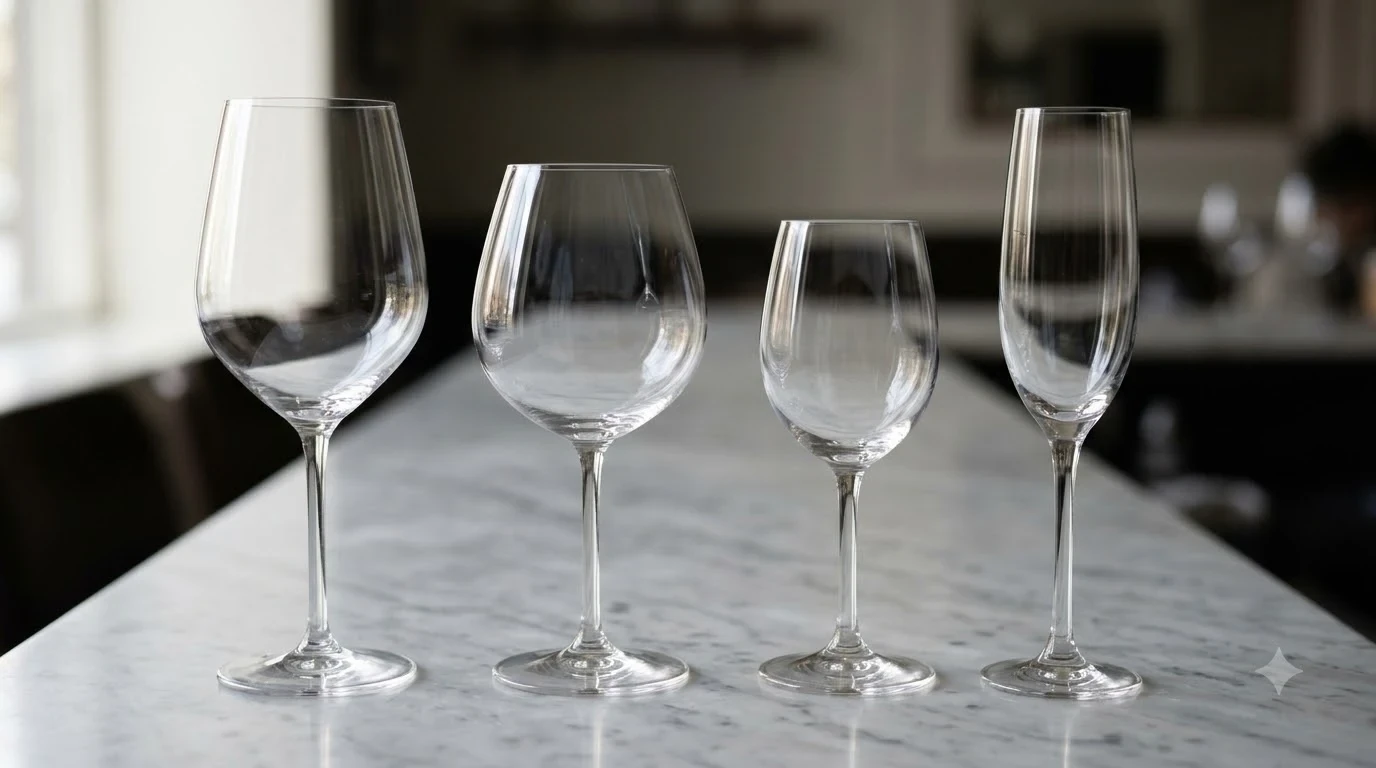
Mikasa crystal wine glasses are a good choice for buyers seeking attractive, reasonably practical stemware with elegant shapes, clear glass, and several lead-free crystal options. Collections such as Aline, Grace, and Lana offer different bowl proportions and capacities for serving red and white wines. Their main advantages are design variety and accessible everyday functionality, while the biggest considerations are collection-specific construction, rim fragility, and proper cleaning.
Mikasa has been associated with tabletop design for decades, and its wine glasses reflect that emphasis on coordinating appearance with practical use. The selection includes traditional stemware, contemporary silhouettes, and decorative designs, so choosing the right set requires more than simply looking for the word crystal. Material, capacity, bowl shape, stem length, and care instructions all affect whether a particular collection fits your household. This review examines the distinctions between notable Mikasa collections, what available customer feedback suggests, and which details deserve attention before buying.
Specs and Key Features: What Mikasa Crystal Wine Glasses Offer
Mikasa crystal wine glasses cover several styles rather than one standardized design. The Aline, Grace, and Lana collections illustrate how much bowl shape, capacity, and appearance can differ between sets carrying the same brand name.
The first distinction to understand is the material. Several Mikasa collections use lead-free crystal, including Aline, Grace, and Lana. However, older or discontinued Mikasa patterns may use traditional lead crystal. The Agena wine glasses, for example, are identified by Bed Bath & Beyond as lead-crystal stemware. Buyers should therefore avoid assuming that every vintage or replacement glass from Mikasa has the same composition.
The second distinction is capacity. A 15-ounce glass and a 22-ounce glass create noticeably different serving experiences. A larger bowl can provide more room for swirling red wine, while a smaller glass may be easier to handle and more convenient for compact storage.
| Collection or pattern | Material | Capacity | Notable characteristics |
|---|---|---|---|
| Aline white | Lead-free crystal | 16 oz | Curved silhouette and wide base |
| Grace white | Lead-free crystal | 18 oz | Tulip-shaped bowl with flared rim |
| Grace Bordeaux red | Lead-free crystal | 22 oz | Larger bowl for red wine |
| Lana white | Lead-free crystal | 15 fl oz | Traditional tall bowl and thin stem |
| Salerno | Lead-free crystal | 260 ml | Short stem and fluted detailing |
| Agena | Lead crystal | 9 oz | Decorative field-grass design |
These specifications come from individual product listings rather than a single universal Mikasa specification. In particular, the Salerno and Agena examples demonstrate why the distinction between older and newer collections matters. A vintage crystal pattern may have a completely different material composition from a contemporary lead-free set.
For buyers who want a more traditional appearance, Lana is an interesting option because of its tall bowl and slender stem. Aline takes a more contemporary approach with its unusual curves, while Grace provides a familiar tulip profile. The larger Grace Bordeaux glass is particularly relevant to people who prefer generous red-wine bowls.
For a broader comparison of materials, shapes, and construction, the guide to crystal wine glasses provides useful context for evaluating Mikasa against other glassware options.
What Owners Like About the Design and Drinking Experience
The strongest appeal of Mikasa stemware is its combination of decorative styling and usable proportions. The collections offer different visual personalities without requiring buyers to choose exclusively between formal occasion glasses and everyday drinking glasses.

Distinctive shapes without complicated styling
Aline is a good example of Mikasa’s contemporary design direction. Its white wine glasses have outward-flaring curves and a wide base, creating a distinctive appearance compared with conventional straight-sided stemware. Each glass measures 9 inches tall and has a 16-ounce capacity, giving it a substantial profile without moving into the very large capacities found in some red wine glasses.
Grace is a more traditional alternative. Its tulip-shaped white wine bowl flares toward the rim, creating a recognizable wine-glass silhouette. The 18-ounce capacity provides additional room compared with Aline’s 16-ounce version. For buyers who want matching red and white glasses, the Grace collection also includes a 22-ounce Bordeaux model.
Lana appeals to people who prefer a classic table setting. Its tall bowl and thin stem create a more delicate appearance, and its 15-ounce capacity is suitable for ordinary white wine servings. Its straightforward shape also makes it easier to coordinate with existing dinnerware and formal table accessories.
Practical capacities for different wines
Capacity is not the same as recommended serving volume. A glass advertised as holding 18 ounces should not be filled to its rim. A typical wine serving is approximately 5 ounces, leaving room for the aromas to collect and making it possible to swirl the wine without spilling.
The larger Grace Bordeaux glass offers more room around a red wine pour. This can be useful for Cabernet Sauvignon, Merlot, and other fuller-bodied reds that benefit from exposure to air. Aline and Lana provide more moderate capacities for people who prefer a less oversized glass.
The shape also influences how the wine reaches the drinker’s nose and palate. A bowl that narrows toward its opening concentrates aromas, while a more open profile allows easier access to the wine’s surface. These characteristics do not guarantee that one glass will improve every wine, but they explain why matching bowl proportions to drinking habits is worthwhile.
Customer feedback and design appeal
Available customer feedback provides some support for the emphasis on appearance and usability. On Mikasa’s official Aline product page, customer comments praise the distinctive shape and overall appearance. The feedback is positive, although the small number of comments is not enough to establish a broad consensus about long-term durability.
Wayfair’s Salerno listing provides another perspective. One customer appreciated the short-stem design and the fact that the glasses fitted into a dishwasher. Another liked their appearance but disliked the conspicuous gold Mikasa logo etched into the base. This is a useful reminder that decorative details can be a matter of personal preference rather than an automatic advantage.
Overall, the design range is one of Mikasa’s strongest selling points. Buyers can choose a contemporary curved glass, a classic tulip bowl, or a shorter decorative style instead of accepting a single standard shape.
Common Complaints and Potential Drawbacks
Mikasa’s crystal stemware has several practical limitations, particularly for households that prioritize maximum durability, uniform replacement availability, or completely maintenance-free cleaning. These concerns do not make the glasses poor choices, but they should influence purchasing decisions.
Crystal still requires careful handling
Crystal is not unbreakable simply because it has a refined appearance or a substantial feel. The rim is especially vulnerable to chipping, and the bowl and stem can be damaged by knocks against a sink, countertop, or neighboring glass.
Thin-stemmed designs such as Lana may be particularly unsuitable for people who frequently handle glassware roughly or have crowded dishwashing routines. This does not mean the glasses will break during normal use. It means that careful handling is part of owning fine stemware.
Buyers who regularly entertain large groups may prefer a more substantial design or keep a separate everyday set for informal gatherings. A collection of delicate crystal glasses is often better suited to controlled serving and storage than constant movement between crowded kitchen surfaces.
Dishwasher guidance can be confusing
Some individual Mikasa products are explicitly advertised as dishwasher safe. Aline, Grace, and Lana are examples of lead-free crystal collections whose product pages provide that designation. However, Mikasa’s general crystal-care guidance recommends hand washing.
These statements should be understood together rather than treated as contradictory. A product listing can identify a particular glass as dishwasher safe, while the brand’s general instructions still favor the more protective cleaning method for crystal stemware.
There is also a difference between a glass surviving an occasional dishwasher cycle and maintaining its original clarity over many years. Detergents, contact with other dishes, temperature changes, and movement during a cycle can gradually affect delicate glassware.
Older patterns may have different materials
Another potential problem is assuming that older Mikasa crystal is identical to newer lead-free collections. The Agena listing, for instance, identifies its four-piece set as lead crystal, while Aline is explicitly described as lead-free crystal.
This distinction matters when replacing a broken glass or purchasing vintage stemware. Similar appearance does not establish identical composition. Pattern names, product descriptions, and material specifications should be compared before combining different sets.
There may also be differences in decorative details. The Salerno customer feedback about the etched gold logo illustrates how a small manufacturing or branding feature can affect satisfaction even when the overall glass shape is attractive.
Finally, discontinued collections can make replacement more difficult. A buyer who wants a matching set for many years should consider whether additional pieces are readily available before committing to a particular design.
Who Should Buy Mikasa Crystal Wine Glasses and Who Should Skip Them
Mikasa is worth considering for buyers who value attractive table settings, clear crystal construction, and a choice of bowl sizes. It is less suitable for people who want inexpensive, highly resistant everyday tumblers or do not want to think about glassware maintenance.
Good choices for occasional entertaining
For dinner parties, holiday meals, and small celebrations, Mikasa offers several useful designs. Grace is particularly appealing for someone who wants a coordinated appearance across red and white wine service. Its 18-ounce white wine glass and 22-ounce Bordeaux glass provide two different proportions within a recognizable collection.
Aline is a better match for modern dining rooms and buyers who prefer something less conventional. Its 16-ounce white wine bowl and wide-base appearance create a more contemporary presentation. It can work well in casual dining settings as well as more carefully arranged tables.
Lana is suitable for buyers who prefer traditional stemware. Its 15-ounce capacity, tall profile, and thin stem create a classic look that works with many types of dinnerware.
Good choices for buyers replacing an existing collection
People replacing older Mikasa glasses may find the brand’s range useful, but matching the exact pattern is important. Similar-looking designs can differ in bowl size, height, stem proportions, and material.
Start with the pattern name and any identifying markings on the existing glass. Then compare dimensions and capacity with the replacement listing. If the old glass is lead crystal, do not automatically substitute a newer lead-free model without considering the difference in appearance and construction.
For more guidance on choosing a complete household set, the comparison of wine glasses covers the practical differences between everyday and more specialized designs.
Who should consider another type of glassware?
People who routinely place all their kitchen glassware into heavily loaded dishwashers may be happier with thicker, simpler drinking glasses. Even when a particular Mikasa model is dishwasher safe, crystal requires more attention than many ordinary glasses.
Likewise, households with limited cabinet space may find the taller Aline and Lana designs inconvenient. A shorter-stem or stemless design may be easier to store and less likely to collide with overhead shelves.
Buyers who want a completely uniform set for a restaurant or frequent large gatherings should also consider replacement availability. A discontinued collection can be frustrating when one glass breaks and an exact replacement becomes difficult to find.
Tip: Before buying a four-piece Mikasa set, measure the height of your cabinet shelves and dishwasher rack. Aline measures 9 inches tall, while the taller profile and delicate stems of traditional designs may require more clearance and careful placement.
How Mikasa Compares to Alternative Wine Glass Styles
Mikasa’s main appeal is its combination of decorative design and functional stemware proportions. Its collections should be compared with other crystal options according to material, bowl shape, and maintenance rather than brand recognition alone.
Lead-free crystal versus traditional lead crystal
Lead-free crystal is a practical starting point for buyers who want crystal-style clarity without intentionally selecting lead-containing glass. Mikasa’s Aline, Grace, and Lana examples fall into this category.
Traditional lead crystal is a different material category. The Agena listing identifies that older-style composition, so vintage buyers should pay particular attention to product identification. Lead-free crystal and lead crystal should not be treated as interchangeable labels.
For buyers comparing these materials, the dedicated guide to lead free crystal wine glasses explains the distinction and provides a broader basis for choosing appropriate stemware.
Traditional stemware versus stemless designs
Traditional stemware remains useful because it separates the hand from the wine bowl. This helps reduce heat transfer from the hand, particularly when serving chilled white wine. It also gives the drinker a natural place to hold the glass without touching the bowl.
Stemless glasses provide a different experience. Their lower profile is often easier to store and may feel more stable on a crowded table. However, holding the bowl transfers more warmth from the hand to the wine, and the design does not provide the same formal presentation as a traditional stemmed glass.
For households that entertain regularly, owning both styles can be sensible. Traditional Mikasa crystal stemware can be reserved for dinner parties, while simpler stemless glasses can handle casual gatherings and everyday drinks.
Specialized wine glasses versus universal shapes
Specialized glasses offer a more tailored shape for particular wine categories. A large Bordeaux-style bowl provides more space for swirling structured reds, while a smaller white wine bowl can be convenient for serving aromatic whites at cooler temperatures.
Universal wine glasses are more flexible. They reduce the number of different shapes a household needs to store and can serve several styles of wine adequately. Their convenience can outweigh the advantages of specialized bowls for people with limited cabinet space.
Mikasa’s different capacities allow buyers to choose between these approaches. The Grace Bordeaux glass is more specialized in presentation, while a moderate-capacity glass such as Lana can serve a broader range of occasions.
There is no requirement to own separate glasses for every grape variety. A thoughtfully chosen set of two or three shapes is generally more practical than a large collection of specialized stemware that rarely gets used.
Who Should Buy Each Mikasa Collection and How to Choose
The best Mikasa collection depends on whether appearance, capacity, storage, or replacement compatibility matters most. Comparing the actual product specifications is more reliable than choosing a set based only on its collection name.
Choose Aline for contemporary styling
Aline is a strong candidate for people who want a modern silhouette. The 16-ounce white wine glass features an outward-flaring design and a wide base, giving it a distinctive appearance without relying on elaborate decoration.
Its 9-inch height is an important practical consideration. Buyers should make sure the glasses fit their cabinets and dishwasher racks. The relatively generous capacity also allows room for a conventional wine pour without filling the bowl too close to the rim.
Choose Grace for coordinated red and white wine service
Grace is particularly useful when matching red and white wine glasses are a priority. Its 18-ounce white wine glass has a tulip-shaped profile, while the 22-ounce Bordeaux version provides a larger bowl for red wines.
The coordinated appearance makes it attractive for people who entertain and want their table settings to look consistent. Buyers who serve different wine styles regularly may appreciate having two distinct bowl sizes from the same collection.
Choose Lana for a traditional appearance
Lana offers a more conventional stemware profile. Its 15-ounce white wine glass has a tall, wide bowl and thin stem, making it a sensible choice for buyers who favor a classic wine-glass shape.
Its proportions are also relatively straightforward to coordinate with existing dinnerware. The main consideration is the thin stem, which calls for careful handling during washing, drying, and storage.
Check the exact pattern before ordering
Before purchasing, compare five details: material, capacity, height, bowl diameter, and number of glasses included. These specifications help prevent ordering a replacement that looks similar but feels noticeably different from the original.
For older Mikasa patterns, identify whether the glass is lead crystal or lead-free crystal. A replacement should match the original design as closely as possible, especially if the existing set has decorative details that are difficult to reproduce.
It is also useful to examine the base and stem in product photographs. Etched logos, decorative cuts, and unusual stem shapes can affect the overall appearance. A small detail that is barely visible in a listing photograph may be quite noticeable when the glasses are arranged on a dining table.
Finally, consider how often the glasses will be used. A delicate traditional glass may be perfect for a formal dinner but less practical as the only wine glass in a busy household.
Cleaning, Storage, and Long-Term Care
Proper care makes a meaningful difference to the appearance and lifespan of crystal stemware. Mikasa recommends hand washing its crystal, protecting the rim during storage, and taking additional precautions if a dishwasher is used.
Hand washing is the preferred approach
Use warm water, mild soap, and a soft cleaning method. Place a rubber mat in the sink to reduce the risk of damage if a glass slips from your hand. Remove rings and other jewelry before washing because metal can scratch or strike delicate crystal.
Wash one glass at a time rather than allowing multiple pieces to knock against each other. Avoid twisting the bowl and stem in opposite directions while cleaning. Supporting the bowl gently and washing the interior and exterior with controlled movements reduces unnecessary pressure.
After washing, dry the glass immediately with a soft, lint-free cloth or place it in a rubber-coated drying rack. This helps prevent water spots and reduces the time the glass remains exposed to potential knocks.
Using the dishwasher carefully
Some Mikasa crystal product listings identify individual models as dishwasher safe. If the specific product permits dishwasher cleaning, secure each piece in the top rack and ensure that neighboring dishes cannot strike it.
Use a mild liquid detergent rather than a particularly abrasive cleaning product. Mikasa warns that dishwasher detergents can create abrasive marks on fine crystal over time. Avoid overcrowding the rack, and allow the stemware to cool before removing it.
Glasses with 24-karat gold or platinum accents should always be hand washed according to Mikasa’s care instructions. Decorative finishes deserve special attention because the cleaning method that works for plain crystal may not be appropriate for embellished pieces.
Protecting the rim during storage
Storage is another important part of crystal maintenance. Mikasa recommends keeping glasses upright on a shelf or hanging them by their bases from a suitable stemware rack.
Do not store crystal upside down with the rim resting on a shelf. The rim is one of the most delicate areas of the glass and is particularly susceptible to chipping. Upright storage also makes it easier to see and inspect the rim before serving.
Allow sufficient space between neighboring glasses. A crowded cabinet can create small impacts when a glass is removed or returned to its position. Soft shelf liners may also help protect the bases from hard contact with shelving.
Removing mineral spots
Hard water can leave mineral deposits that make clear crystal appear cloudy. Mikasa recommends using a small amount of vinegar in water to help remove these spots. For patterned or grooved crystal, a small soft brush can help reach difficult areas.
After removing deposits, rinse the glass thoroughly and dry it with a soft cloth. Avoid aggressive scrubbing or harsh cleaning pads, as these can damage the surface and affect the appearance of the glass.
The manufacturer’s complete instructions are available in its Mikasa crystal care and frequently asked questions resource. Following those recommendations is a sensible approach for preserving both contemporary and older Mikasa stemware.
Frequently Asked Questions
Are Mikasa crystal wine glasses made in the United States?
The country of manufacture depends on the individual pattern rather than the brand’s American history. For example, the Agena listing identifies Slovenia as its country of origin. Buyers seeking a particular manufacturing location should investigate the specific collection instead of assuming all Mikasa glasses come from one country.
Can Mikasa crystal wine glasses be used for cocktails?
Many wine glasses can also serve spritzes, sangria, and other mixed drinks, provided the glass has suitable capacity and stability. A larger 22-ounce bowl such as the Grace Bordeaux model offers considerable room for a drink with ice and garnishes. However, a dedicated cocktail glass may be more convenient for drinks requiring extensive stirring or frequent handling.
Do Mikasa crystal glasses have a recycling symbol?
Recycling instructions depend on the material and local waste-processing facilities. Crystal glass should not automatically be placed in ordinary glass-bottle recycling because its composition and melting characteristics can differ from standard container glass. Check local recycling guidance before disposing of broken or unwanted stemware.
Can different Mikasa collections be mixed on one dining table?
Yes. Combining different collections can create an intentional mixed-glassware setting, particularly when the pieces share a clear finish or similar proportions. Aline and Grace, for example, offer different silhouettes that can create visual variety without introducing multiple glass colors.
What should buyers do if a Mikasa glass arrives damaged?
Photograph the damaged item and its packaging before attempting to clean or use it. Contact the retailer promptly with the order details and photographs, since replacement and return procedures depend on the seller’s policies. For older pieces purchased secondhand, confirm the seller’s return conditions before completing the transaction.
Mikasa crystal wine glasses are appealing options for buyers who want attractive stemware with a choice of traditional and contemporary designs. Aline, Grace, and Lana each serve different preferences, while careful attention to material, capacity, and cleaning requirements helps avoid purchasing the wrong collection. For most buyers, choosing the right bowl shape and a glass that fits their everyday routine will matter more than selecting the most elaborate design.
More in Wine Glasses
 Zwiesel Glas Champagne Flutes for Durable Everyday Sparkling WineUpdated Nov 20, 2026
 Vera Wang Crystal Wine Glasses: Design, Quality and Buying AdviceUpdated Nov 20, 2026
 West Elm White Wine Glasses: Compare Designs for Better Everyday Wine ServiceUpdated Nov 20, 2026
 Zalto Stemless Wine Glasses: Discover Their Distinctive DesignsUpdated Nov 20, 2026
 Viski Champagne Glasses That Match Your Style and Sparkling WineUpdated Nov 20, 2026
 Vista Alegre Decanter Review: Crystal Style and Wine ServiceUpdated Nov 20, 2026