

We may earn a commission when you buy through links on this page, at no extra cost to you. Learn more.
Medoc wine tasting is a way to compare Cabernet Sauvignon-led Bordeaux reds across eight appellations, from the structured wines of Pauillac and Saint-Estèphe to the finer, more aromatic style associated with Margaux. The key is to taste by place as well as by grape: soil, blend, vintage, and élevage all shape the glass. With a simple tasting sequence and a little context, even a first-time visitor can recognize the region’s main differences.
The Médoc sits on Bordeaux’s Left Bank, between the Gironde Estuary and the Atlantic coast. Its château-lined road, gravel terraces, and range of red-wine styles make it a rewarding region to study, whether you are visiting estates or comparing bottles at home.
Where the Médoc Sits and Why Its Appellations Matter
The Médoc is a peninsula north of Bordeaux, bordered by the Gironde Estuary to the east and the Atlantic Ocean to the west. The D2, often called the Route des Châteaux, runs for roughly 80 kilometers from the Bordeaux outskirts toward the northern end of the peninsula. The MICHELIN Guide’s Médoc route overview describes eight appellations along this route: Médoc and Haut-Médoc, plus Saint-Estèphe, Pauillac, Saint-Julien, Moulis-en-Médoc, Listrac-Médoc, and Margaux.
Distinguish the wider Médoc region from the specific Médoc appellation. The regional name describes the peninsula and its wine culture; the Médoc AOC is a legally defined designation that can apply across its prescribed area, even in places such as Pauillac, Moulis, or Saint-Julien. The official Médoc appellation body reports 5,560 hectares for the Médoc AOC, equal to 34 percent of the vineyard area it describes, and average production of 36 million bottles. Those figures do not represent all eight appellations combined. Across the route, the MICHELIN Guide counts nearly 16,000 hectares of vineyards.
Two broad appellations, Médoc and Haut-Médoc, sit alongside six village appellations with their own identities. A bottle labeled Pauillac is not simply a more prestigious version of generic Médoc: its origin points to a particular mix of soils, grapes, and local style. The 1855 Classification is historical context, not a tasting score; it ranks a group of estates, not every wine made in the Médoc or the precise character of a vintage. A flight that includes a classified château and a smaller Cru Bourgeois or Cru Artisan estate can show how different producers interpret the landscape. For a wider overview of French wine names, the site’s Wine Regions resource can help put appellations in context.
How Gravel, Clay, and the Main Grapes Shape the Wine
Médoc reds are generally blends, with Cabernet Sauvignon often leading and Merlot adding a rounder fruit profile. Cabernet Franc and Petit Verdot can contribute structure, spice, and complexity, while gravel, sand, clay, and limestone help explain why neighboring villages can produce wines with different textures.
Gravel is a defining feature of the Left Bank. Garonne and Pyrenean gravel occur across the broader landscape, and deep gravel beds are especially associated with well-drained vineyard sites. These stones shed excess water and can retain warmth, conditions that suit late-ripening Cabernet Sauvignon. Clay and limestone hold water differently and can favor other balances of varieties and texture. The official Médoc appellation profile identifies Garonne gravel, Pyrenean gravel, and clay-limestone among the area’s soils, while emphasizing their diversity across the large appellation.
Cabernet Sauvignon usually gives a Médoc blend its backbone: firm tannins, blackcurrant or cassis notes, and a savory character that may develop toward cedar or tobacco. Merlot generally contributes softer tannins, plum and red-fruit flavors, and a fuller middle palate. Cabernet Franc can add floral or herbal lift, while Petit Verdot may bring darker color, spice, and extra structure. Instead of asking only which grape you can identify, consider what role each variety plays in the finished blend.
Oak aging also shapes the wine. France’s national appellation institute, INAO, says Médoc reds are generally made from several grape varieties and require at least six months of aging in oak casks to soften their structure. Oak may contribute vanilla, toast, cedar, or baking-spice notes, but these should not overwhelm the fruit. The INAO Médoc appellation profile provides the official description of grape varieties, aging, and origin. Médoc is not uniformly massive or austere: the regional body describes both full-bodied wines suited to aging and more subtle, fruit-forward examples intended to be enjoyed younger.
How to Taste a Médoc Red Step by Step
A structured tasting makes regional differences easier to notice. Use the same glass shape, serving temperature, and tasting order for each wine, then assess appearance, aroma, acidity, tannin, body, and finish rather than relying on one impression.
Begin with color. Tilt the glass over a white surface and look at the rim as well as the center. A young Médoc red may show ruby or purple tones, while bottle age can move the color toward garnet and eventually brick. Color is only a clue, not a precise age test: blend, extraction, and storage conditions also affect appearance. Next, smell before swirling, then swirl gently and smell again. Start with broad families such as red fruit, dark fruit, floral notes, herbs, spice, earth, and oak. Blackcurrant, blackberry, and plum are useful reference points; cedar, tobacco, graphite, and dried herbs may become more apparent as a wine develops.
Take a small sip and let it cover the palate. Tannin feels like a drying grip on the gums and cheeks; acidity creates freshness and salivation; body describes the wine’s weight. Ask whether the fruit is ripe or tart, whether the tannins are fine or grippy, and whether the finish fades quickly or persists. Compare wines side by side rather than relying on memory. Pour about 2 ounces of each for a focused comparison, begin with younger or lighter examples, and move toward more concentrated, tannic wines. Keep water nearby and take breaks between flights.
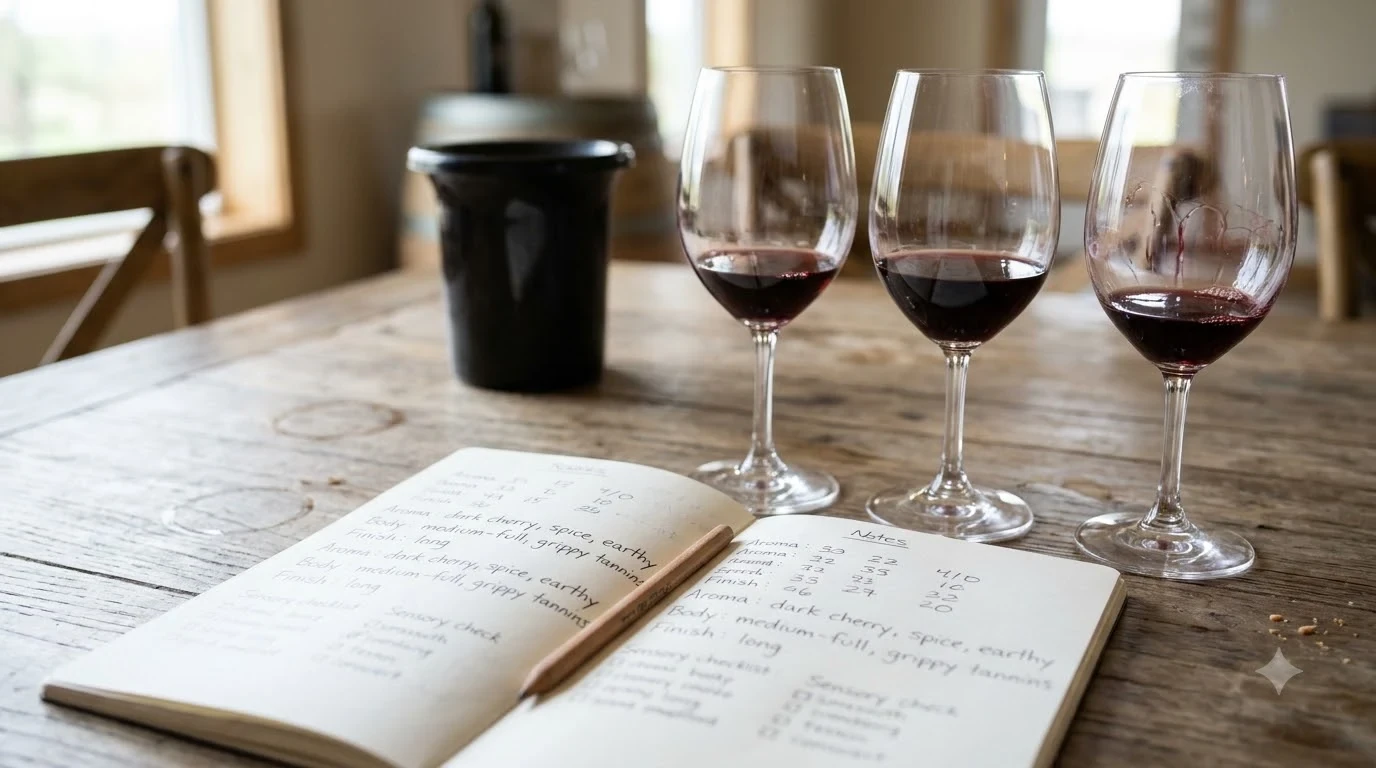
Tip: For a useful three-wine flight, compare a Médoc or Haut-Médoc bottling with a Margaux and a Pauillac. Keep the serving temperature and glassware consistent, and write down one difference in fruit, one in tannin, and one in the finish for each wine.
Temperature matters because cold can mute aroma and warmth can make alcohol seem more prominent. Serve full-bodied reds around 60–65°F and lighter reds closer to 55–60°F. If a young, full-bodied bottle feels closed or especially firm, allow it 30–60 minutes in a decanter and return to it as the aromas develop. Older bottles may need gentler handling because extended aeration can make delicate aromas fade.
Compare the Eight Médoc Appellations in the Glass
The eight appellations offer a framework, not a promise that every bottle will taste alike. Margaux is associated with finesse and floral red-fruit notes, Pauillac with Cabernet-driven depth, and Saint-Estèphe with especially firm structure; Médoc and Haut-Médoc cover broader areas and a wider range of styles.
| Appellation | Appellation type | Useful tasting expectation | What to compare |
|---|---|---|---|
| Médoc | Regional (2 total) | Red and black berries, licorice, sometimes roasted coffee with age | Blend balance and freshness versus structure |
| Haut-Médoc | Regional (2 total) | Blackberry, redcurrant, licorice, sometimes mint | Fruit clarity and tannin feel |
| Margaux | Village (6 total) | Raspberry, cherry, redcurrant, floral and spice notes | Texture, fragrance, and finesse |
| Pauillac | Village (6 total) | Black cherry, cassis, licorice, incense, dense structure | Cabernet intensity and length |
| Saint-Julien | Village (6 total) | Blueberry, blackberry, blackcurrant, prune, tobacco | Firm structure and polished tannin |
| Saint-Estèphe | Village (6 total) | Blackcurrant, violet, mocha, spice, firm tannin | Power, grip, and how the wine opens |
| Moulis-en-Médoc | Village (6 total) | Elegant intensity, round texture, evolving complexity | Supple texture and concentrated fruit |
| Listrac-Médoc | Village (6 total) | Blackberry, redcurrant, licorice, leather, sweet spice | Merlot character and clay-limestone expression |
These are tendencies, not tasting guarantees. The Margaux Médoc tourist office describes Margaux through raspberry, cherry, redcurrant, and floral or spicy notes, while Pauillac is denser, with black cherry, licorice, cassis, and incense. It characterizes Saint-Estèphe as particularly tannic, with blackcurrant, violet, mocha, and spice, and Saint-Julien as combining powerful structure with fine, velvety tannins.
Individual estates make the differences more concrete. Château Giscours in Margaux sits on three gravel rises and is associated with aromatic subtlety and aging potential. In Saint-Julien, Château Branaire-Ducru has deep gravel over clay and vinifies nearly 80 plots separately, while Château Beychevelle combines gravel, sand, and clay close to the Gironde. Pauillac’s Château Pontet-Canet is on Günzian gravels over clay-limestone, a setting well suited to Cabernet Sauvignon. To compare beyond Bordeaux, use the same method with Bolgheri wine tasting, where Cabernet-led blends also appear, or Willcox wine tasting, which offers a very different growing environment.
Plan a Château Visit Along the Route des Châteaux
The Médoc route is best approached as a series of focused stops rather than a race to visit as many estates as possible. The D2 runs for about 80 kilometers, so two or three booked visits in one day can leave room for vineyard views, lunch, and a careful tasting without rushing every appointment.
Choose visits that answer different questions. A Margaux estate such as Château Giscours can help explain gravel terraces, Cabernet Sauvignon, and aromatic finesse. Château Branaire-Ducru or Château Beychevelle in Saint-Julien can show how producers handle parcel differences and balance structure with approachability. In Pauillac, Château Pontet-Canet provides a useful conversation about gravel soils, biodynamic farming, and cellar choices; farther north, Château Cos d’Estournel or Château Calon Ségur can help illustrate Saint-Estèphe’s structured style.
Contact each estate before setting out. Visitor availability, languages, tour formats, and tasting lineups vary, and a château’s name on a bottle does not mean its doors are open for walk-ins. Ask whether the visit includes a vineyard walk, cellar tour, barrel room, or tasting of current or older vintages; confirm the duration, start time, group size, and accessibility. Plan transportation before tasting: the route passes through rural roads and tasting several wines can impair driving even when the pours are modest. Arrange a designated driver, private transport, or another plan that avoids driving after visits. The regional tourist guide lists châteaux, cellars, food, lodging, and vineyard events, making it a practical starting point for an itinerary. For a contrast with another French region, the site’s Alsace wine tasting resource covers a style where varietal character and aromatic precision often take a more prominent role than Médoc’s blends and tannic structure.
Serve, Pair, and Store Médoc Wine with Confidence
Médoc reds work best when food and temperature respect their tannin and structure. Full-bodied examples are generally most expressive around 60–65°F, and dishes with protein, fat, and savory depth can soften the impression of firm tannins.
Classic pairings include grilled steak, roast lamb, duck breast, venison, and slow-cooked beef. Their savory flavors and protein complement Cabernet-led blends, while fat can make firm tannins feel less astringent. For a vegetable-focused meal, try grilled mushrooms, lentils with herbs, or roasted eggplant; their earthy notes suit darker fruit and herbal character. A younger Pauillac or Saint-Estèphe with firm tannins can work with a fatty cut of beef or lamb, while a more supple Margaux or mature Saint-Julien may suit duck or mushroom dishes. Avoid pairing a highly tannic red with delicate oily fish, where tannin can clash with the fish’s texture and flavor. Very hot chili heat is also a less reliable partner because alcohol and tannin can make the burn feel stronger.
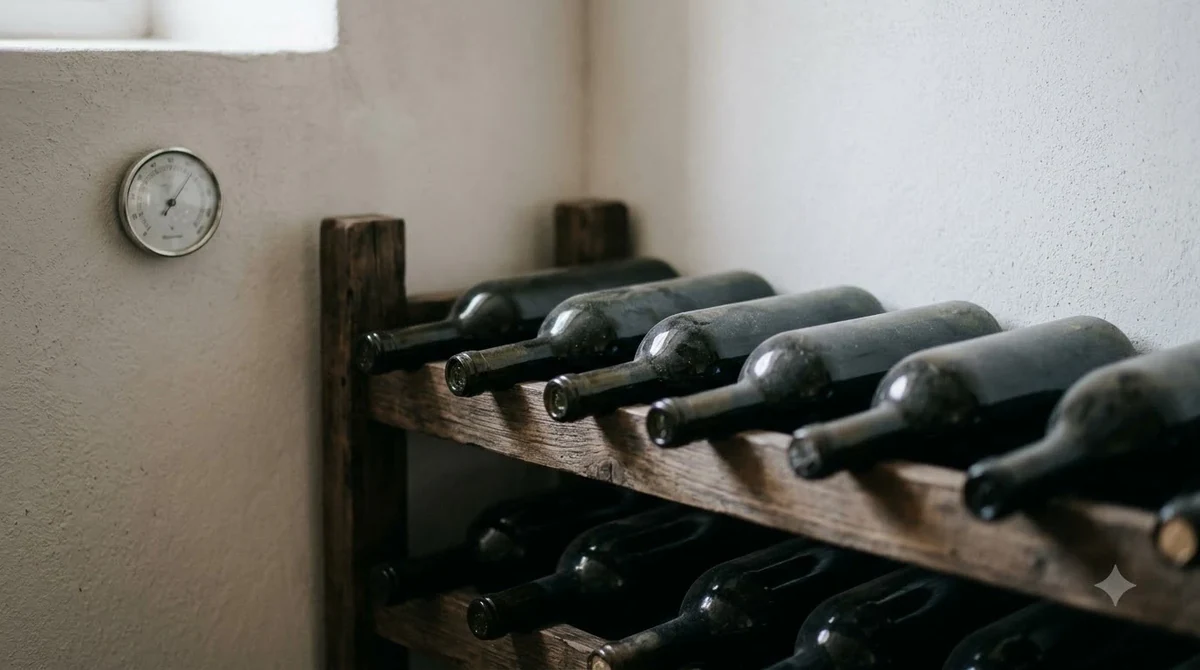
Open full-bodied young reds ahead of the meal if they seem tight. Decanting for 30–60 minutes can help a young, tannic bottle show more aroma and a less severe texture, although every wine responds differently. Pour about 5 ounces per glass; a standard 750-milliliter bottle provides roughly five such servings. Store unopened bottles on their sides in a cool, dark place near 55°F, with steady temperature and limited vibration. After opening, recork the bottle and refrigerate it; most still wines keep for about three to five days, with fruit and freshness gradually fading. Bring a red back toward its serving temperature before pouring again.
Frequently Asked Questions
Is Médoc the same as Bordeaux?
The Médoc is one of Bordeaux’s Left Bank districts, not a synonym for every Bordeaux wine. Bordeaux also includes areas east and south of the city whose soils, grapes, and styles differ from those of the Médoc. A Bordeaux label alone does not tell you that the wine comes from the Médoc.
Does Médoc have appellation requirements?
Yes. An AOC is governed by published specifications covering its geographic area and production rules. France’s INAO oversees appellation recognition and publishes the specifications that define each designation.
What does Cru Bourgeois mean on a Médoc label?
Cru Bourgeois is a classification category used for eligible Médoc estates outside the 1855 Grand Cru Classé list. It is not a separate appellation, so a Cru Bourgeois wine still carries its geographic appellation, such as Médoc or Haut-Médoc. The category helps identify participating estates but does not replace tasting the wine itself.
Can visitors taste white wine in the Médoc?
Yes, although red wine is the region’s best-known style. Some Médoc estates also produce dry whites, often using Sauvignon Blanc and Sémillon, and local tourism sources describe them as lively and aromatic. Ask an estate in advance whether a white wine is included in its tasting lineup.
Does an 1855 classification guarantee that a bottle is ready to drink?
No. The classification ranks estates, not the drinking readiness of a particular vintage. A classified wine can still be youthful and tannic, while a mature bottle from a less famous producer may already be at a pleasing stage. Vintage, storage, and personal preference matter more than rank alone when deciding when to open it.
Good Médoc tasting is built on comparison: look at the appellation, identify the blend, and notice how fruit, tannin, and finish change from one glass to the next. Whether you taste three bottles at home or visit estates along the D2, a little structure helps the region’s range of styles come into focus.
More in Wine Regions
 Willcox Wine Trail: Discover Arizona’s High-Elevation Wine CountryUpdated Nov 20, 2026
 Yakima Valley Wine Region: Find the Best Styles to TryUpdated Nov 20, 2026
 Vosne Romanee Wine Tasting: Identify Aromas and Choose Better PairingsUpdated Nov 20, 2026
 Yakima Valley Wine Festival: Find the Best Seasonal Wine EventsUpdated Nov 20, 2026
 Wales Vineyards: Discover Cool-Climate Wines and Where to VisitUpdated Nov 20, 2026
 Yountville Wine Festival: Discover Napa Wines and Local FoodUpdated Nov 20, 2026