

We may earn a commission when you buy through links on this page, at no extra cost to you. Learn more.
Margaret River wine comes from a small coastal region in Western Australia, known mainly for Cabernet Sauvignon and Chardonnay grown in a Mediterranean climate. The region sits about three hours south of Perth, and its vineyards are shaped by ocean air and free-draining soils. For American buyers, understanding the region helps you choose bottles with more confidence.
This guide explains what makes Margaret River wine distinctive, which grapes and styles to look for, and how to find and store these bottles from the United States. If you are new to Australian wine, the sections below give you a clear starting point before you shop.
What Is Margaret River Wine?
Margaret River wine is wine made from grapes grown in the Margaret River wine region, a peninsula in the southwest corner of Western Australia. The region is small compared with many famous wine areas, yet it has built a reputation for premium red and white wines. Its best-known bottles are Cabernet Sauvignon and Chardonnay.
The Wine Folly regional guide to Margaret River credits ocean currents, isolated geography, a Mediterranean climate and ancient soils for the quality of the wines. Those four factors explain most of what you will read about the region, and they also explain why the wines taste different from those of California or Bordeaux.
The region is young in winemaking terms. Vines were first planted here in 1967, which is recent compared with long-established European areas. Despite that short history, the region now has a large number of producers, and many of them focus on small, carefully managed vineyards.
Where Margaret River Is and How Its Climate Shapes the Wine
Margaret River sits at about 34 degrees south, roughly three hours by road south of Perth. Its geography is the first thing to understand, because the ocean shapes the climate on almost every side of the vineyards.
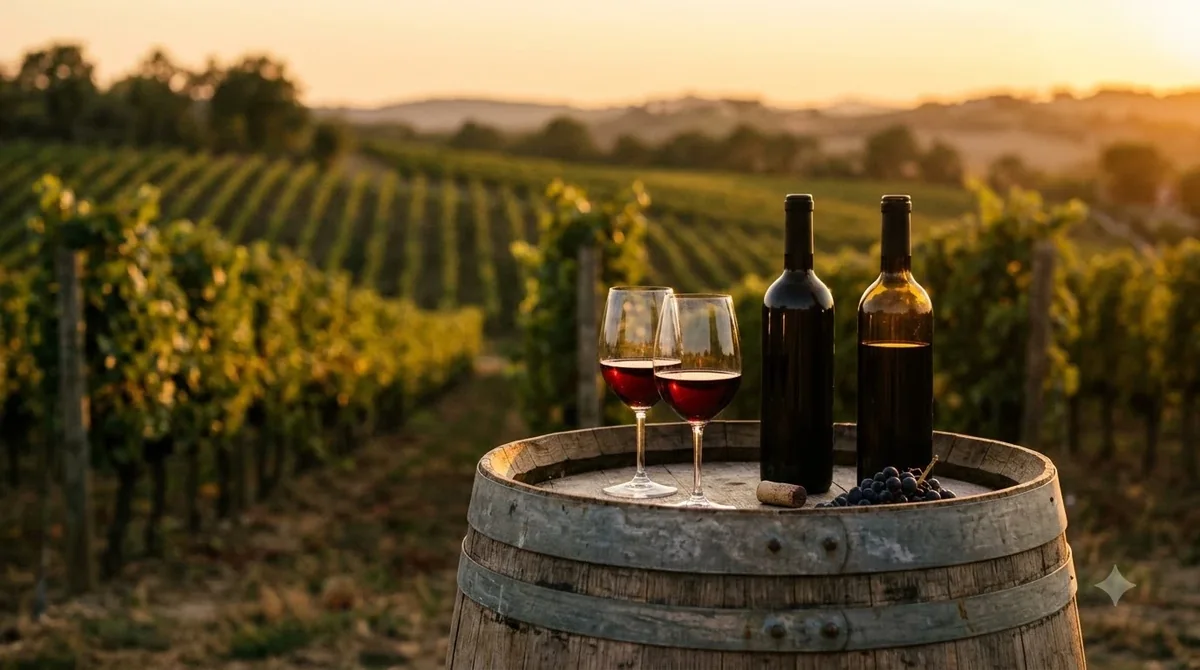
The peninsula is narrow. According to Wine Folly, it measures about 68 miles from north to south and 17 miles from east to west. Water surrounds it on three sides, so cooling ocean influence reaches most vineyards. This moderates the heat of a Mediterranean climate and gives grapes a longer, steadier ripening period.
Soil is just as important. Most of the best vineyards sit on free-draining ironstone gravels locally known as Forest Grove soils. These gravels hold heat, which helps grapes ripen, and they drain well so vines do not sit in water. The region also has other soil types, so two vineyards a few miles apart can produce noticeably different wines.
Winemakers and writers often describe six unofficial sub-regions based on climate and soil differences. Yallingup is warmer and suits riper styles, while Wilyabrup is widely regarded as one of the top sites. Karridale, at the southern end, is the coolest and tends to produce fresher, grassier wines. There are no official boundaries, so check a producer’s website or label if the vineyard location matters to you.
Key Grape Varieties Grown in Margaret River
Cabernet Sauvignon and Chardonnay lead the plantings, and they define the region’s reputation. Sauvignon Blanc, Semillon and Shiraz are also widely grown, giving the region a broader range of styles than its size suggests.
| Grape variety | Wine color | What to expect from Margaret River |
|---|---|---|
| Cabernet Sauvignon | Red | The region’s signature red, with fuller styles in warmer areas and fresher styles in cooler southern vineyards |
| Chardonnay | White | A core white variety, with some of the finest examples linked to Wilyabrup |
| Sauvignon Blanc | White | Fresher, grassier styles, especially from the cooler south |
| Semillon | White | A white variety grown across the region, often made in a crisp, dry style |
| Shiraz | Red | A red variety planted in the region alongside Cabernet Sauvignon |
Harvest timing matters for buyers. Per the Wine Folly regional facts, harvest begins in February and runs until late April. Grapes ripen at different times depending on the variety and the sub-region, so the harvest window can vary from one vineyard to the next.
The region’s vines are also Phylloxera free, and most are planted on their own roots rather than on grafted rootstock. Producers describe this as a point of pride, and it is one reason the region’s wines are often discussed in terms of purity of fruit.
Signature Margaret River Wine Styles
Margaret River wines are known for clear fruit, balance and a sense of place. Reds made from Cabernet Sauvignon tend to show dark fruit and structure, while the best Chardonnay balances ripe fruit with freshness from the ocean-influenced climate. The style depends heavily on the sub-region and the winemaker.
Cabernet styles range widely. Vineyards in warmer areas such as Yallingup can give riper, more generous wines. Cooler sites, including those toward Wallcliffe, are associated with fresher Cabernet that many drinkers find more restrained. If you prefer a lighter red, look for producer notes that mention cooler sites or fresher character.
Chardonnay is the region’s most celebrated white. Wilyabrup Chardonnay is often praised for precision and depth, while Chardonnay from the treeline areas near Treeton can show a different, sometimes softer character. Sauvignon Blanc from Karridale tends toward a crisp, grassy profile. Reading the back label for the variety and sub-region gives you a fair preview of the style.
Notable Margaret River Wineries and Brands
Vasse Felix is the region’s founding estate, established in 1967, and it remains a major visitor destination with a restaurant, cellar door and museum. Cullen, Moss Wood and Cape Mentelle are other names that appear again and again in regional guides. These producers helped build the region’s international reputation.
Newer and smaller estates are also worth knowing. Voyager Estate, Passel Estate, Cherubino and Mr Barval Fine Wines are often named when travelers talk about the region’s newer producers. Tourism Western Australia notes that the region has around 100 cellar doors, so you have many options.
If you want to explore further, our guide to margaret river wineries profiles producers in more detail. Tourism Western Australia’s Margaret River wine region page also lists tasting experiences and visiting options for planning a trip.
Food Pairings for Margaret River Wines
Margaret River wines pair well with the region’s produce, which includes fresh seafood, cured meats and local vegetables. The general rule is to match intensity: lighter white wines with delicate dishes, and fuller reds with richer foods.
Chardonnay with a fuller style works with roast chicken, creamy pasta or grilled fish with butter sauce. Fresher, grassy Sauvignon Blanc suits oysters, shellfish and goat cheese. Cabernet Sauvignon pairs naturally with grilled beef, lamb and aged hard cheeses, since its structure handles fat and char well.
For a simple home dinner, pick a Cabernet from a cooler sub-region and serve it with a roast or hearty stew. Enjoy these wines in moderation and with food, and drink responsibly.
Tip: Serve Cabernet slightly cooler than room temperature and open the bottle a short time before dinner. Check the producer’s guidance on the label or website for the best serving temperature.
Buying and Storing Margaret River Wine in the US
Finding Margaret River wine in the United States takes some searching. Many bottles are sold through importers, specialty wine shops and online retailers that carry Australian labels. Availability changes often, so check several retailers rather than relying on one shelf.
Read the label carefully. Look for the producer, the vintage year and the words Margaret River, since a bottle labeled only Western Australia may come from a different area. If you want to compare with other regions, our guide to russian river valley wineries offers a useful contrast in cool-climate California producers.
Storage is simpler than many people expect. Keep bottles in a cool, dark and stable spot away from heat and strong vibrations. Check the producer’s storage advice for any bottle you plan to age, because cellaring needs vary by style. Most everyday Margaret River whites and reds are made to drink within a few years.
Frequently Asked Questions
Where is Margaret River located?
Margaret River is a wine region in the southwest of Western Australia, about three hours south of Perth. It sits on a narrow peninsula with ocean on three sides, which strongly influences the climate and the wines produced there.
What is Margaret River best known for?
The region is best known for Cabernet Sauvignon and Chardonnay. It also produces Sauvignon Blanc, Semillon and Shiraz. Many guides consider its top Cabernet and Chardonnay to be among the finest made in Australia.
Is Margaret River wine easy to find in the US?
Availability depends on your state and retailer. Many shops carry Australian wines, but selection changes often. Check specialty wine shops, importers and online retailers, and confirm that a bottle is labeled Margaret River before you buy.
How should I store Margaret River wine at home?
Store bottles in a cool, dark place with steady temperatures and little vibration. Check the producer’s guidance for bottles you plan to age. Most everyday bottles are best enjoyed within a few years of purchase.
Margaret River wine rewards curiosity, whether you start with a Chardonnay from Wilyabrup or a fresher Sauvignon Blanc from the south. To build a broader understanding of Australian and global regions, explore our Wine Regions section next.
More in Wine Regions
 Willcox Wine Trail: Discover Arizona’s High-Elevation Wine CountryUpdated Nov 20, 2026
 Yakima Valley Wine Region: Find the Best Styles to TryUpdated Nov 20, 2026
 Vosne Romanee Wine Tasting: Identify Aromas and Choose Better PairingsUpdated Nov 20, 2026
 Yakima Valley Wine Festival: Find the Best Seasonal Wine EventsUpdated Nov 20, 2026
 Wales Vineyards: Discover Cool-Climate Wines and Where to VisitUpdated Nov 20, 2026
 Yountville Wine Festival: Discover Napa Wines and Local FoodUpdated Nov 20, 2026