

We may earn a commission when you buy through links on this page, at no extra cost to you. Learn more.
Malbec sugar content is usually low because most bottles are fermented as dry red wines, leaving only a small amount of residual sugar. A practical expectation is about 1 to 4 grams per liter, or roughly 0.15 to 0.6 gram in a 5-ounce glass. The exact figure depends on the producer and bottling, and rich plum or blackberry flavors do not by themselves mean a wine is sweet.
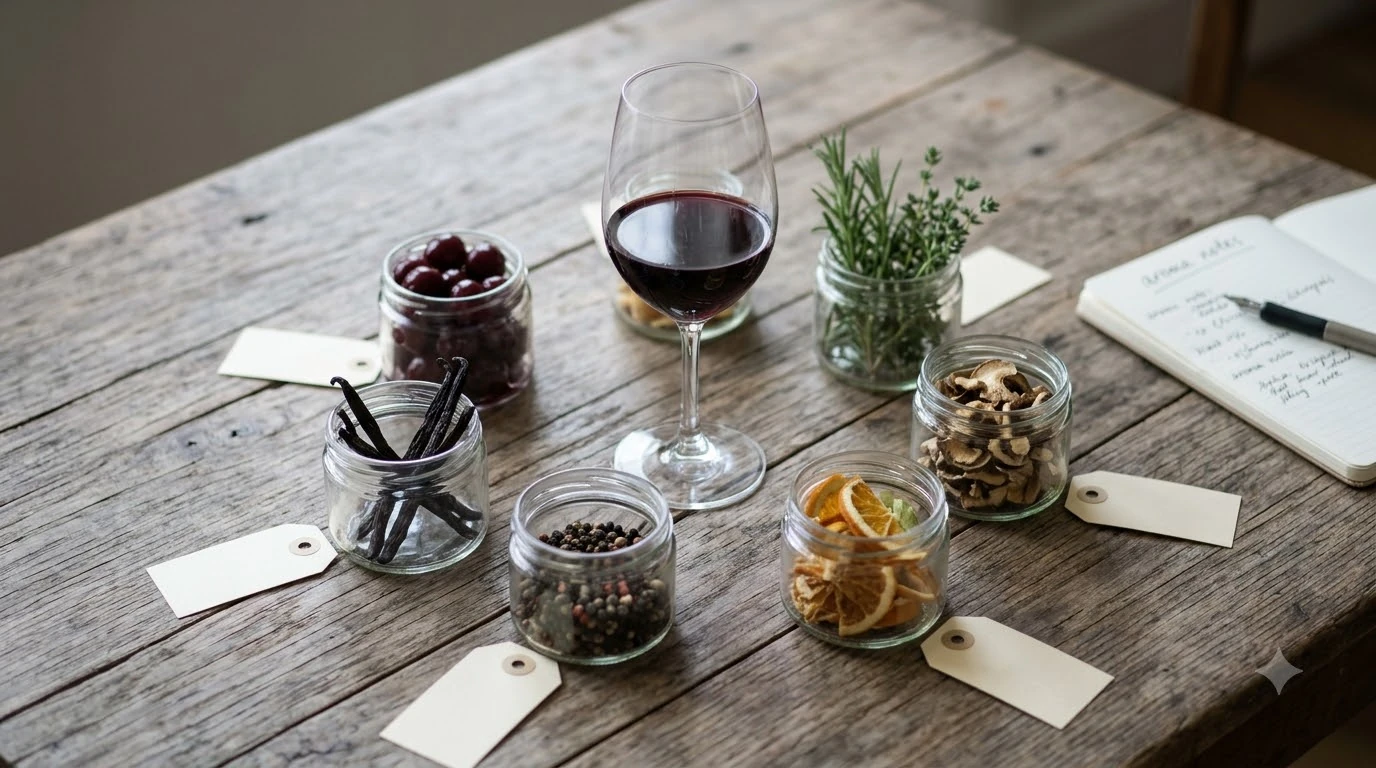
Malbec often tastes generous and ripe, with flavors that suggest black cherry, plum, blackberry, and sometimes cocoa or vanilla. Those impressions can make the wine seem sweeter than its measured sugar level. The useful number is residual sugar, not the amount of natural sugar that was present in the grapes before fermentation.
Malbec Sugar Content by Glass and Bottle
Most Malbec sold as a conventional dry red contains only a few grams of residual sugar per liter. As a simple guide, 1 to 4 grams per liter works out to around 0.15 to 0.6 gram in a standard 5-ounce pour, although a particular wine can fall outside that range.
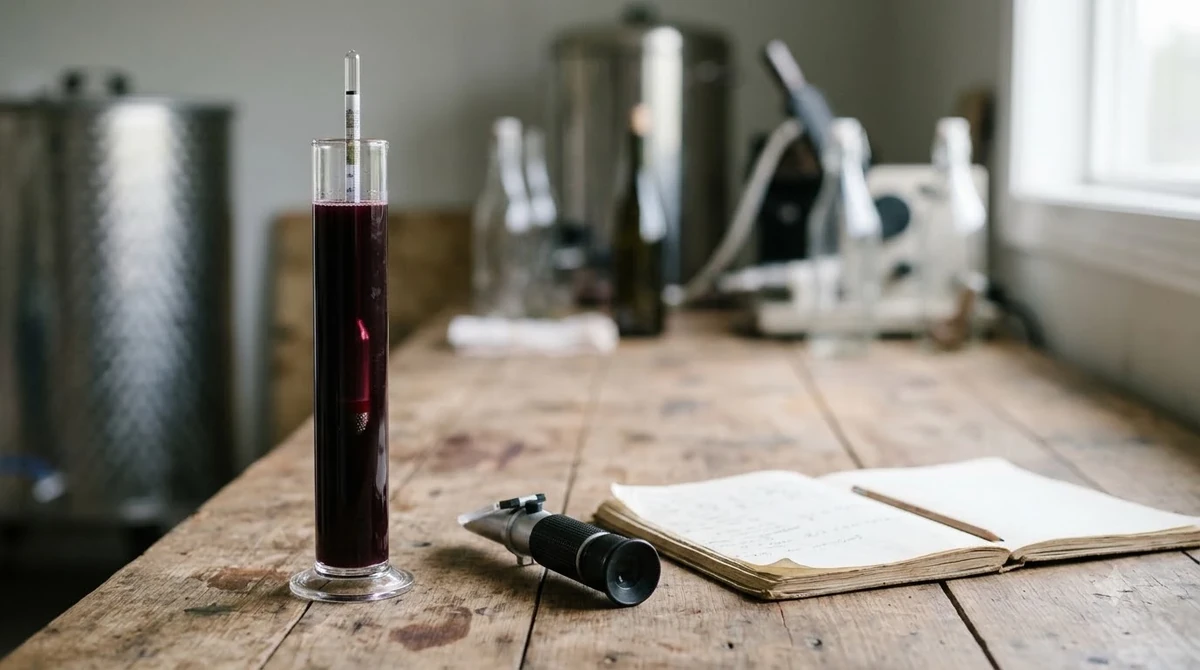
Residual sugar, often shortened to RS, is the grape sugar left after fermentation. Yeast converts much of the grape juice’s glucose and fructose into alcohol and carbon dioxide; the portion that remains is measured in grams per liter. This is different from the natural sugar in fresh grapes, which is much higher before fermentation begins. A technical sheet for Land of Malbec Red Malbec, made from 100 percent Malbec in Mendoza, reports 2.50 grams per liter of residual sugar and 5.80 grams per liter of total acidity. That is a real-world example of a low-sugar dry Malbec, not a guarantee for every bottle.
Decanter’s explanation of residual sugar describes the European still-wine category of dry as up to 4 grams per liter, with an allowance up to 9 grams per liter when acidity is high enough to balance the sugar. The precise legal terms and labeling rules are not identical in every market, so a sweetness word on a label does not replace a producer’s technical analysis. A 750-milliliter bottle contains just over five standard 5-ounce servings; at 1 to 4 grams per liter, the whole bottle contains about 0.75 to 3 grams of residual sugar. That is a small amount spread across the bottle, which is why a dry Malbec can taste plush and fruit-forward without being a sweet wine.
Residual Sugar Is Different From Fruit Flavor
Sweetness is a measurable component of wine, while fruitiness is an aroma and flavor impression. Malbec can smell like ripe plums or blackberries and still have very little residual sugar.
The distinction matters because our brains interpret ripe fruit aromas as familiar sweet foods. A wine with dark cherry, blueberry, raisin, or vanilla notes may seem round and sweet even when fermentation has consumed nearly all of its grape sugar. Oak can add aromas associated with vanilla, toast, coffee, or baking spice, further shaping the impression without necessarily adding sugar to the finished wine.
Acidity and tannin also affect the way sweetness is perceived. Decanter explains that high acidity can make a wine feel fresher and less sweet, while tannins and other elements can influence the impression of dryness. Wine Enthusiast notes that many tasters do not detect sweetness below about 4 to 5 grams per liter, and that a red wine with tannin can seem dry even at a higher residual-sugar reading. Two Malbecs with similar laboratory numbers may therefore taste different: one may have fresher acidity and firmer structure, while another seems softer because of riper fruit, alcohol, or oak-derived aromas.
When describing a wine, separate the words used for its aroma from those used for its sweetness. “Ripe plum,” “blackberry,” and “vanilla” describe flavors; “dry,” “off-dry,” and “sweet” describe the balance and amount of residual sugar. This vocabulary makes it easier to compare Malbec with Merlot, Cabernet Sauvignon, or a genuinely sweet red style.
Fermentation and Growing Conditions Shape the Final Wine
The grape variety does not set the finished wine’s residual sugar by itself. The amount left in the bottle depends on the sugar in the grape juice at harvest, how fermentation proceeds, and whether the winemaker chooses to stop fermentation while sugar remains.
In a typical dry Malbec, fermentation continues until most fermentable sugar has been consumed. When yeast has finished its work, the wine is clarified, matured if desired, and prepared for bottling. A winemaker making a sweeter style can instead interrupt fermentation or use a different production approach to retain sweetness, but that is not the norm for everyday dry Malbec.
Growing conditions influence the raw material and the style, not a fixed sugar number. The WSET describes Argentina’s lower-altitude Malbecs as often fuller-bodied and richly fruited, while higher-altitude versions can be fresher, more elegant, and more floral. Within Mendoza, Luján de Cuyo vineyards are commonly planted around 900 to 1,100 meters above sea level, while parts of the Uco Valley reach about 1,500 meters. WSET notes that cool nights in the Uco Valley help preserve acidity alongside fresh fruit and floral qualities, which can make the wine feel taut and refreshing even when its fruit aromas are ripe.
For more detail, WSET’s Malbec overview describes how origin and altitude shape the grape’s style. A sunny, ripe-fruited Malbec and a fresher high-altitude Malbec can both be dry, even though their aromas and mouthfeel differ.
How to Calculate Sugar in a Pour
Residual sugar is usually reported in grams per liter, but most people drink wine by the glass. Converting the number to a 5-ounce pour or a full 750-milliliter bottle makes the measurement easier to understand.
For the table below, a 5-ounce serving is treated as approximately 148 milliliters. Multiply the RS figure in grams per liter by 0.148 to estimate the amount in one glass, or by 0.75 to estimate the amount in a standard bottle.
| Residual sugar | In a 5-ounce glass | In a 750-mL bottle |
|---|---|---|
| 0 g/L | 0 g | 0 g |
| 1 g/L | 0.15 g | 0.75 g |
| 2 g/L | 0.30 g | 1.50 g |
| 4 g/L | 0.59 g | 3.00 g |
| 6 g/L | 0.89 g | 4.50 g |
| 9 g/L | 1.33 g | 6.75 g |
The rows are conversion examples, not a claim that every Malbec has one of these exact measurements. They show why a difference of a few grams per liter translates into a fraction of a gram in one glass. A wine at 2 grams per liter has about 0.30 gram in a 5-ounce pour, while a wine at 9 grams per liter has about 1.33 grams. If a winery lists 3 grams per liter, that becomes about 0.44 gram in a 148-milliliter glass and 2.25 grams in a 750-milliliter bottle.
Numbers may be reported to different levels of precision. A producer might list 2.5 grams per liter, while another rounds a similar result to 3 grams per liter. The calculation tells you the amount of residual sugar, not how sweet the wine will taste; acidity, tannin, alcohol, fruit character, and serving temperature all contribute to perception. A small numerical difference is often less important to the tasting experience than the wine’s overall balance.
Malbec Compared With Merlot, Port, and Other Wines
Malbec is usually a dry table wine, so it belongs closer to Merlot or Cabernet Sauvignon than to a dessert wine. The grape name alone does not guarantee a sweetness level, but the style most commonly bottled as Malbec is dry and fruit-forward.
Merlot is also commonly made dry, though its softer tannins and plum-like fruit can give it a round impression. A comparison of Merlot sugar content is useful because it shows why grape variety and residual sugar are separate questions. Both wines can be low in sugar while differing in tannin, acidity, body, and aroma. Cabernet Sauvignon generally has higher tannin than Malbec, while Pinot Noir usually has lower-to-medium tannin and higher acidity; these structural differences affect the feel of a wine but do not establish its sugar number.
Port is a different category. It is fortified, and fermentation is commonly stopped by adding grape spirit while some grape sugar remains, creating a much sweeter style than a typical dry Malbec. The explanation of Port sugar content helps put that contrast in perspective: sweetness is a deliberate part of the style, not a defining feature of all red wine. For a broader comparison of grapes and styles, the Wine by Type overview provides a useful starting point.
Alcohol is another separate measurement. A ripe, full-bodied Malbec can feel warm or rich because of its alcohol and texture, not because it contains much sugar. The guide to Malbec alcohol content addresses that other part of the wine’s profile; residual sugar and alcohol should not be treated as interchangeable figures. A red blend that includes Malbec may also be made in a different style from a 100 percent varietal bottling, so compare the producer’s information rather than relying on the grape name alone.
Serving and Pairing Malbec Without Mistaking Sweetness
Serve a full-bodied Malbec at about 60 to 65 degrees Fahrenheit so its fruit, acidity, and tannins remain in balance. Pairing it with grilled beef, lamb, roasted vegetables, or aged cheese makes more sense than choosing food based only on the wine’s ripe-fruit aromas.
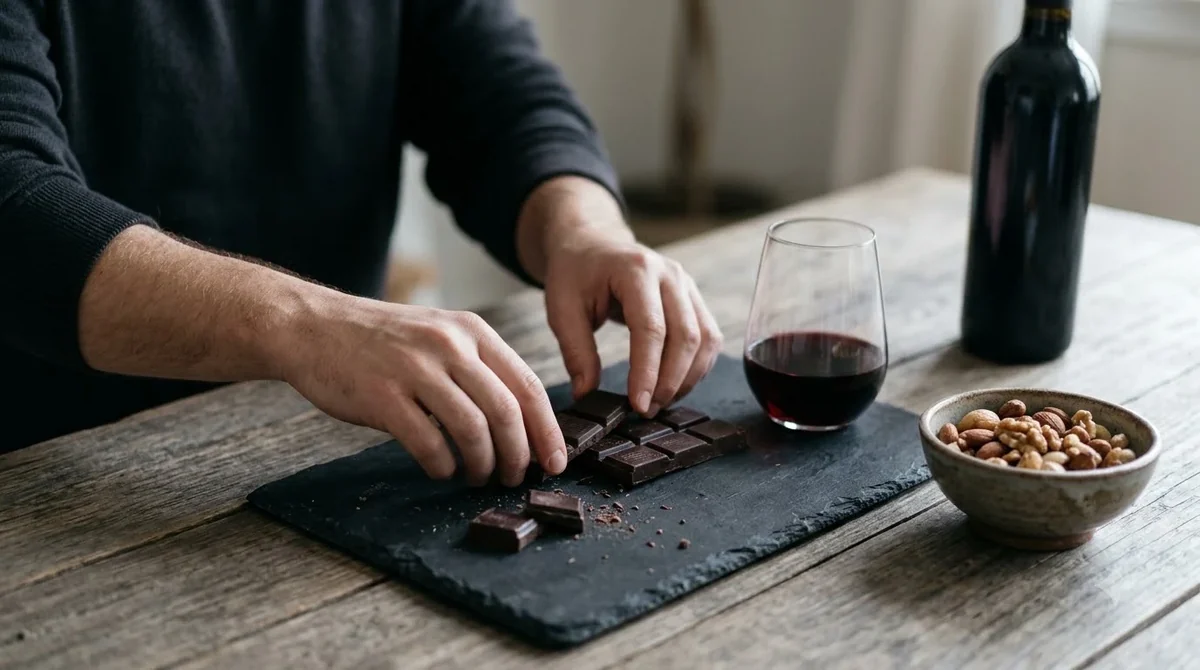
Malbec’s dark-fruit profile and moderate-to-firm tannin make it a natural partner for grilled or roasted meat. Salt and fat soften the perception of tannin, so a steak with a little marbling, lamb chops, or a burger can make the wine feel smoother. The wine’s fruit notes also work with charred vegetables, mushrooms, lentils, and dishes seasoned with black pepper or herbs.
Think about the food’s intensity as well as its sweetness. A delicate white fish can be overwhelmed by a structured red, and oily fish can clash with tannic reds. Very spicy dishes can make alcohol and tannin seem more pronounced, so a chile-heavy meal is often easier with a softer, lower-alcohol wine than a powerful Malbec. For a sweeter sauce or glaze, choose a wine that does not taste drier than the food; a fruit preserve or sweet barbecue glaze can make a bone-dry red seem more austere.
Tip: If Malbec tastes softer and sweeter than expected, try it with a salty, fatty food such as grilled steak or aged cheese. The food can soften the wine’s tannins, while serving it near 60 to 65 degrees Fahrenheit keeps the fruit and structure in view.
Pouring a standard 5-ounce serving also makes comparisons easier from one bottle to the next. If you are tasting two Malbecs side by side, keep the glass size and serving temperature similar. For storage, keep unopened bottles on their sides in a cool, stable place near 55 degrees Fahrenheit, away from sunlight and heat. Once opened, reseal the bottle and refrigerate it; a still red wine is generally best used within 3 to 5 days. Bring the remaining wine back toward serving temperature before pouring.
Frequently Asked Questions
These five answers cover details that can be confusing even after you understand the usual low sugar level in dry Malbec. They address fermentation chemistry, bottle stability, and why a single technical reading does not tell the whole story.
Does decanting change the sugar level in Malbec?
No. Decanting exposes the wine to oxygen and can change its aromas and texture, but it does not remove dissolved residual sugar. A lab analysis of the wine would report essentially the same sugar concentration before and after it is poured into a decanter.
Why can fructose affect sweetness more than glucose?
Grape juice contains both glucose and fructose, but fructose tastes sweeter and usually ferments more slowly than glucose. That difference helps explain why the small amount of sugar remaining after fermentation can influence the wine’s sweetness impression, even when the total quantity is low.
Can residual sugar cause a bottled Malbec to ferment again?
Yes, if fermentable sugar and viable yeast or other microbes remain in the bottle, fermentation can restart and produce gas or unwanted flavors. Wineries manage this risk by ensuring fermentable sugar is consumed or by removing yeast through sterile filtration before bottling.
Can a winemaker sweeten a dry red wine after fermentation?
Some finished wines are sweetened before bottling with preserved grape juice or another permitted grape-based addition. That practice is different from leaving sugar behind during fermentation, and it is one reason two wines made from the same grape can have noticeably different sweetness levels.
Can a Malbec with 4.82 grams per liter still taste dry?
Yes. One San Rafael Malbec technical sheet lists 4.82 grams per liter of residual sugar alongside 5.25 grams per liter of acidity. That example shows how acidity can balance a measurement that sits above the basic 4-gram dry threshold used in European still-wine categories.
For most drinkers, the main takeaway is straightforward: a typical dry Malbec contains only a small amount of residual sugar, even when its fruit tastes rich and ripe. Use grams per liter when a producer publishes the figure, then consider acidity, tannin, alcohol, and serving temperature to understand how the wine will taste in the glass.
More in Wine Types & Grapes
 What Does Mourvèdre Taste Like? Flavor Profile, Regions, and PairingsUpdated Nov 20, 2026
 What Does Marsanne Taste Like? Flavors, Styles, and Food PairingsUpdated Nov 20, 2026
 What Does Malvasia Taste Like? Styles, Flavors, and Food PairingsUpdated Nov 20, 2026
 What Does Grenache Blanc Taste Like? Flavor Profile, Styles, and PairingsUpdated Nov 20, 2026
 What Does Garnacha Taste Like? Key Flavors, Styles, and Pairing TipsUpdated Nov 20, 2026
 What Does Fruit Wine Taste Like? A Complete Flavor and Style BreakdownUpdated Nov 20, 2026