

We may earn a commission when you buy through links on this page, at no extra cost to you. Learn more.
Magic chef wine fridge parts include replacement door gaskets, shelves, fans, handles, temperature sensors, lighting assemblies, and electronic controls, but the correct components depend on your cooler’s exact model number. Magic Chef produces several wine cooler designs, including single-zone and dual-zone models, so parts that look similar are not automatically interchangeable. Identify the appliance before ordering, compare the manufacturer’s part information with the replacement listing, and investigate the underlying problem before purchasing anything. This approach helps avoid incompatible components and unnecessary repairs.
A Magic Chef wine refrigerator can often remain useful for years when a worn door seal, damaged shelf, faulty fan, or other replaceable component is addressed properly. However, finding replacement parts can be challenging for older models, particularly when manufacturers discontinue original components. This review examines the parts commonly associated with Magic Chef wine coolers, explains what to verify before ordering, and evaluates the practical considerations involved in repairing an existing appliance.
Specs and Key Features of Magic Chef Wine Fridge Parts
Magic Chef wine coolers use several distinct components to maintain temperature, circulate air, protect bottles, and keep the cabinet sealed. The MCWC44DZ provides a useful example because its owner documentation includes an illustrated parts identification diagram and specific troubleshooting information.
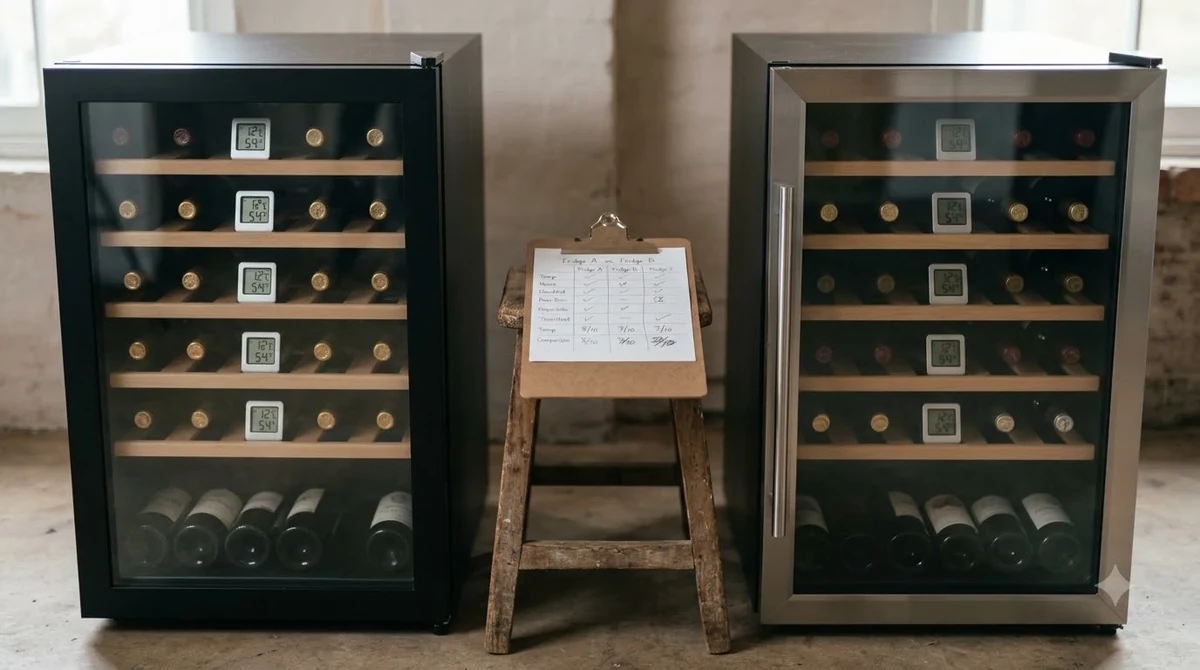
The MCWC44DZ is a 44-bottle dual-zone cooler measuring 23.4 inches wide, 34.4 inches high, and 24.4 inches deep. Its upper compartment holds up to 16 bottles, while its lower compartment accommodates up to 28. Those details matter because replacement shelves, fans, sensors, and door components must correspond to the correct compartment and appliance design.
The following table summarizes identifiable components and their functions. It uses the MCWC44DZ documentation and Sears PartsDirect’s general Magic Chef replacement-parts information rather than assuming every Magic Chef refrigerator uses identical hardware.
| Component | Primary function | Typical reason for replacement |
|---|---|---|
| Door gasket | Seals the cabinet against warm outside air | Cracking, deformation, or poor sealing |
| DC circulation fan | Moves cooling air through the compartment | Fan failure or abnormal operation |
| Wine shelf | Supports bottles inside the cabinet | Bent, broken, or missing shelf |
| Door handle | Provides a secure opening point | Cracked or damaged handle |
| Interior light assembly | Illuminates the wine compartment | Failed lighting component |
| Temperature sensor | Measures compartment temperature | Sensor error or inaccurate readings |
| Control board | Manages electronic appliance functions | Confirmed electronic control failure |
| Glass door | Provides access and protects stored bottles | Broken or damaged glass assembly |
| Hinge assembly | Supports door movement and alignment | Damaged hinge or mounting hardware |
These components are not equally easy to replace. A removable shelf is generally more straightforward to identify than a control board or temperature sensor. Electrical components also require greater care because an incorrect installation can create additional faults or electrical hazards.
For a concrete availability example, Sears PartsDirect lists 22 parts for the MCWC44DZ. Its catalog includes components such as wire shelves, door glass, a hinge, a lamp shield, and lighting-related parts. However, several listings explicitly indicate that the manufacturer no longer produces the component and has no substitute available. This makes checking current stock and substitution information an essential part of the buying process.
The distinction between a model-specific component and a generic replacement is important. A shelf might have a similar shape to another model’s shelf but use different mounting dimensions. A circulation fan might look identical while having different electrical connections or operating characteristics.
For additional wine-storage equipment comparisons, the wine appliance reviews section provides a useful starting point for evaluating different types of storage equipment.
What Owners Like About the Available Replacement Components
The main advantage of repairing a Magic Chef wine cooler is that several common problems involve identifiable physical components rather than necessarily requiring replacement of the entire appliance. Door seals, handles, shelves, and lighting components are particularly useful categories to investigate when the cabinet and cooling system remain functional.
Door gaskets are among the most practical replacement components. Sears PartsDirect explains that the door seal prevents warm air from entering the cabinet when the door is closed. When the seal becomes damaged or loose, the refrigerator may struggle to maintain its temperature. A suitable replacement can restore the seal without requiring a complete door assembly.
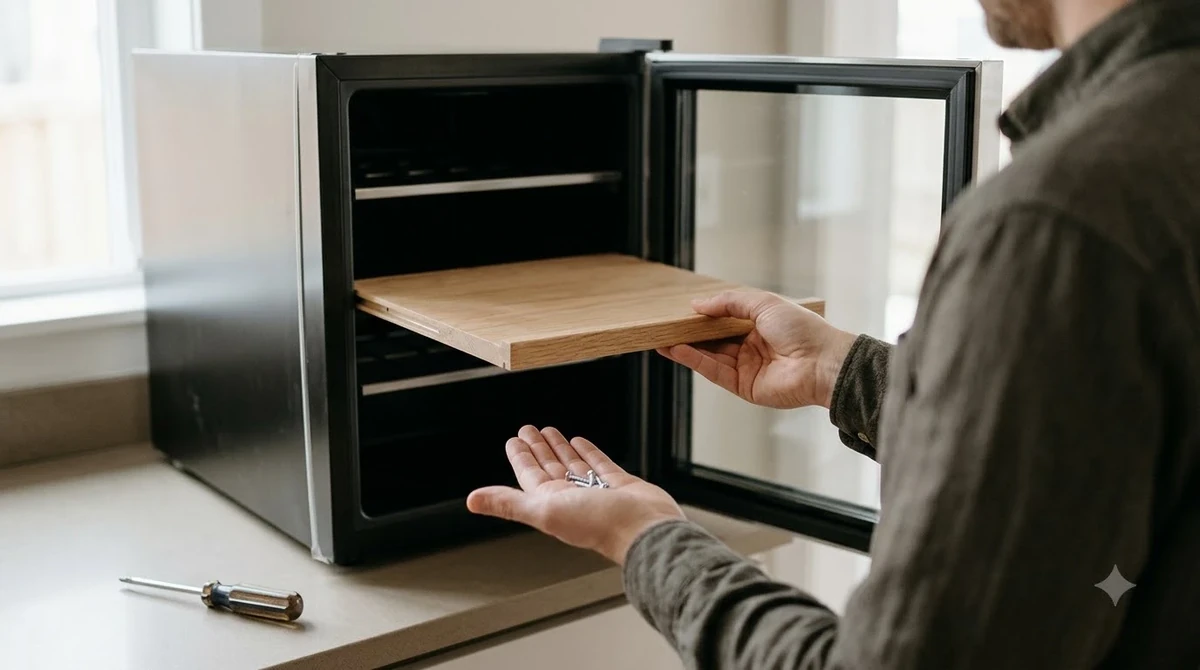
Shelves offer another practical repair opportunity. A missing or damaged wine rack can reduce the cooler’s usefulness even if its refrigeration system still works. The MCWC44DZ manual identifies removable shelves and provides instructions for removing and reinstalling them. This is helpful when cleaning, rearranging storage, or accommodating bottles with larger dimensions.
Replacement fans and lighting assemblies
Circulation fans are important because air movement helps distribute cooling throughout the compartment. A failed fan can create uneven temperatures or prevent normal operation. Sears PartsDirect specifically recommends replacing a circulation fan when it receives current from the control board but does not operate.
Lighting components are another relatively easy problem to recognize. A dark interior does not necessarily indicate a refrigeration failure. Sears identifies LED assemblies as replacement items and explains that a lighting assembly may require replacement if it receives electrical current but does not illuminate.
Handles and hinge components
Handles and hinges can also be worthwhile repairs. A damaged handle makes daily access inconvenient, while a faulty hinge can interfere with door alignment. The MCWC44DZ manual includes a door-reversal procedure involving the upper hinge assembly, lower hinge plank, hinge pin, and plug buttons. This illustrates why the complete hinge arrangement matters when selecting hardware.
For owners who regularly entertain, a functioning cooler is particularly useful for keeping sparkling wine and white wine ready to serve. A working interior light and properly aligned door also make the appliance more convenient during normal kitchen use.
For example, a dual-zone unit can keep sparkling wine around 40 to 50 degrees Fahrenheit and fuller-bodied whites around 50 to 55 degrees Fahrenheit. Maintaining proper air circulation and an effective door seal helps the appliance perform its intended storage function.
Common Complaints and Replacement-Part Availability
The biggest drawback when shopping for Magic Chef wine fridge parts is inconsistent availability across different model generations. A replacement may appear in a parts catalog but still be discontinued, unavailable, or unsupported by an approved substitute.
The MCWC44DZ provides a clear example. Sears PartsDirect lists 22 components for this model, but its catalog identifies several parts as no longer manufactured without replacement alternatives. Listed examples include an evaporator fan blade, door glass, wire shelves, lamp shield, hinge, and lighting-related components.
This is an important limitation for anyone repairing an older wine cooler. A complete catalog does not guarantee that every listed component can still be purchased. Availability can also change, so a part’s appearance in a search result should not be treated as confirmation that it is currently obtainable.
Model compatibility can be confusing
Magic Chef uses different model identifiers across its product range. Sears PartsDirect separately lists the MCWC45A, MCWC50DST, MCWC44DSZ, MCWBC77DZC, MCWC77DZC, and MCWC44DZ. These are distinct model listings, not interchangeable versions of one universal refrigerator.
Even models with similar names can differ in cabinet dimensions, shelf arrangements, cooling components, control systems, and door construction. A part listed for the MCWC44DZ should not automatically be ordered for an MCWC50DST simply because both products carry the Magic Chef name.
Electrical repairs are more complicated
Electronic controls and cooling components create another challenge. A wine cooler that stops cooling may have a faulty sensor, circulation fan, control board, compressor, or another refrigeration-system problem. Replacing the first suspicious component without diagnosis can waste time and leave the original fault unresolved.
The MCWC44DZ manual identifies four electronic error codes:
- E1: Upper-zone temperature sensor error.
- E2: Lower-zone temperature sensor error.
- E3: Upper-zone DC electric fan error.
- E4: Lower-zone DC electric fan error.
The manual recommends contacting customer service for these errors and specifically advises against attempting to repair the unit yourself. These codes are useful diagnostic clues, but they do not establish that a particular replacement component will solve the problem.
Another complaint involves replacement shelves and door seals that are difficult to match. Measurements alone are not always sufficient. Mounting tabs, shelf depth, door contours, gasket attachment methods, and other design details can differ between models.
When original components are discontinued, an aftermarket alternative may be worth investigating, but compatibility should be confirmed rather than assumed. For electrical parts, the voltage, connector arrangement, operating specifications, and approved application are especially important.
Who Should Buy Replacement Parts and Who Should Skip Them
Buying Magic Chef replacement parts makes the most sense when the appliance has a clearly identified, replaceable problem and the cabinet and refrigeration system remain in serviceable condition. It is less attractive when several expensive components have failed or the required original parts are unavailable.
Owners with a broken shelf, damaged handle, loose door seal, or missing accessory are generally good candidates for a component-level repair. These problems can often be investigated without immediately replacing the appliance.
Good candidates for replacement parts
A replacement shelf is a sensible purchase when the existing rack is bent or missing and the refrigerator otherwise maintains a stable temperature. The same applies to a damaged handle or an identifiable door-sealing problem.
A replacement gasket is especially worth considering when the cooler runs normally but warm air enters through a poorly sealed door. The MCWC44DZ troubleshooting guide specifically identifies a defective gasket as one possible cause of excessive internal temperature.
Lighting components are also reasonable candidates when the cooling system operates normally but the interior remains dark. The important distinction is determining whether the problem involves the bulb or LED assembly, wiring, power supply, or electronic control.
When replacement is less attractive
Skip a speculative parts purchase if the cooler has multiple unexplained electrical faults, persistent compressor problems, or severe cabinet damage. A replacement control board can be expensive and may not solve a problem originating elsewhere in the appliance.
Also reconsider repairs when the original component has been discontinued and no verified substitute exists. Searching for an undocumented alternative can become more expensive than purchasing another appliance, particularly if labor and repeated troubleshooting are involved.
The age and condition of the refrigerator matter as well. A cooler with a functioning compressor, intact door, clean interior, and one damaged shelf is a different repair proposition from an appliance with a leaking refrigeration system and failed electronics.
Tip: Before ordering anything, photograph the appliance’s model and serial-number label, take a picture of the damaged component, and record any printed part number. Compare those details against a model-specific parts diagram. For electronic components, have a qualified technician confirm the fault and compatibility before installation.
For owners who use their cooler primarily for entertaining, the decision should also account for how much storage capacity is needed. A replacement appliance may be more practical if the existing unit has become unreliable and no suitable components remain available.
A working wine cooler can support a range of serving occasions, from chilled sparkling wine for an Aperol Spritz recipe to white wine served alongside dinner. However, the convenience of preserving an existing appliance depends on finding the correct component rather than simply finding something that looks similar.
How Magic Chef Parts Compare to Alternative Repair Options
Magic Chef replacement components are best evaluated through model-specific documentation and parts diagrams rather than brand name alone. Sears PartsDirect offers a broad catalog organized by Magic Chef model, while the appliance manual provides the technical information needed to identify the original component and understand its function.
These resources serve different purposes. A manual explains the appliance’s construction, operating features, and troubleshooting procedure. A parts catalog helps identify individual components and determine whether replacements are listed.
Original model-specific replacement components
An original component designed for the exact model is generally the most straightforward option. It is intended to match the appliance’s original mounting arrangement and operating specifications.
For a model such as the MCWC44DZ, a model-specific parts listing can help distinguish the wine shelves, hinge hardware, lighting components, and door glass. This reduces the risk of confusing visually similar components from another Magic Chef product.
However, original components are not necessarily available indefinitely. The discontinued listings in the MCWC44DZ catalog demonstrate why availability must be confirmed before planning a repair around an original part.
Verified aftermarket components
Aftermarket parts may offer an alternative when an original component is unavailable. They can be particularly useful for simpler physical items such as handles, shelves, and certain seals, provided the replacement is specifically confirmed for the appliance.
For fans, sensors, and electronic controls, compatibility requires more than matching external dimensions. Electrical characteristics, connector positions, operating specifications, and mounting arrangements all matter.
A seller should be able to identify the supported Magic Chef model numbers and explain whether the item replaces a particular original part number. If that information is missing, the purchase carries unnecessary uncertainty.
Professional repair versus do-it-yourself replacement
Simple visual inspections and basic cleaning are appropriate starting points for many owners. However, electrical diagnosis and refrigeration-system repairs require suitable training and equipment.
The MCWC44DZ manual explicitly instructs owners to contact customer service for E1 through E4 errors. This is particularly relevant because those codes involve temperature sensors and DC electric fans rather than ordinary shelf or door-handle problems.
The best approach is to compare the cost of a verified component, professional labor, and the expected remaining usefulness of the appliance. A relatively simple mechanical repair may make good sense, while an uncertain electronic repair on an aging unit may not.
For additional technical details, consult the Magic Chef HMWC44DZ owner’s manual, which includes the illustrated parts diagram, operating instructions, troubleshooting codes, and warranty information.
For broader entertaining ideas, the chicken Marsala recipe is another example of a meal that can accompany a thoughtfully selected wine. A properly functioning refrigerator makes it easier to keep the appropriate bottles ready without sacrificing storage organization.
How to Choose the Correct Magic Chef Replacement Component
Successful parts shopping starts with accurate identification and a clear understanding of the failure. The following process helps reduce ordering mistakes and separates simple maintenance problems from faults that require professional attention.
- Find the complete model number. Locate the appliance identification label and record the complete model designation. Do not rely on the Magic Chef logo, bottle capacity, or general product description alone.
- Record the serial number. Keep the serial number available when contacting a parts supplier or customer service representative. It can help distinguish production variations within a product family.
- Identify the damaged component. Photograph the existing shelf, gasket, fan, handle, or other component. Record any printed identification numbers and note its location inside the appliance.
- Consult the correct owner manual. Find the parts identification diagram and troubleshooting section for the exact model. The HMWC44DZ manual, for example, identifies nine major component categories in its illustrated parts section.
- Compare the replacement listing. Confirm that the seller specifically supports your model number. Check dimensions, mounting points, connectors, and the listed replacement part number.
- Confirm availability and substitution status. Ask whether the component is actually in stock, discontinued, or replaced by another approved part. Do not assume a catalog entry means the component can still be purchased.
- Choose the appropriate repair method. Replace straightforward mechanical components only when the procedure is understood and safe. Have a qualified technician handle electrical diagnosis, compressor work, and other complex repairs.
Check the symptoms before ordering
A refrigerator that feels warm does not automatically need a new compressor. The MCWC44DZ troubleshooting guide identifies several possible causes, including an incorrectly adjusted temperature control, a door left open, a poorly sealing gasket, and insufficient time after reconnecting the appliance.
The manual states that a recently disconnected unit may require four hours to cool completely. This is a useful reminder to allow the appliance to stabilize before assuming a cooling component has failed.
Similarly, condensation does not automatically indicate a failed refrigeration system. A partially open door or damaged seal can allow warm, moist air to enter the cabinet and produce moisture on interior surfaces.
Check the easy explanations first. Confirm that the door closes fully, the gasket is clean, the appliance is level, and ventilation openings are not obstructed. If the problem persists, use the model’s troubleshooting instructions and seek appropriate service.
Compare the complete repair cost
Before buying a component, consider the total repair rather than the part alone. A replacement shelf may require little additional work, while an electronic control board may involve diagnosis, installation, and further testing.
Also consider whether the replacement will restore the appliance’s original function. Replacing a damaged handle does not solve a separate cooling problem, and replacing a temperature sensor will not necessarily correct a failed control board.
A repair is most attractive when the fault is confirmed, the replacement is compatible, and the remaining appliance components are in good condition. When those conditions are not met, replacing the entire wine cooler may be a more dependable decision.
Frequently Asked Questions
Where can I find the model number on a Magic Chef wine fridge?
Look for the manufacturer’s identification label on the appliance cabinet, often around the rear or side area. Some models place identification information in locations that are easier to inspect after carefully moving the appliance. Record the complete model and serial numbers rather than relying on the capacity printed in a product description.
Are Magic Chef wine cooler parts interchangeable with beverage cooler parts?
Not necessarily. Wine and beverage coolers can share certain general component categories while using different shelves, interior layouts, and electrical assemblies. The MCWC50DST and MCWBC77DZC, for example, are identified as separate products in Sears PartsDirect’s catalog. Confirm the exact supported model before purchasing a replacement.
Can a Magic Chef wine fridge operate without its interior light?
A failed interior light does not automatically mean the refrigeration system has stopped working. Lighting and cooling perform different functions, although their electrical controls may share parts of the appliance’s circuitry. If the cooler maintains its temperature normally, investigate the lighting circuit separately rather than assuming the compressor needs replacement.
Why does a Magic Chef wine cooler make a clicking sound after replacement?
A clicking sound can have several possible causes, including switching components, a starting device, or a problem involving the compressor. A single sound does not identify the failed part. If clicking repeats while the cooler fails to maintain temperature, disconnect the appliance if unsafe operation is suspected and arrange a qualified inspection.
Can I use a universal gasket on a Magic Chef wine refrigerator?
Only if the replacement is specifically confirmed to fit the model and reproduce the original sealing arrangement. Gasket dimensions, attachment methods, corner shapes, and compression characteristics can vary. A poorly fitting universal seal can allow warm air into the cabinet even if its overall length appears correct.
Magic Chef wine fridge parts can make an existing cooler useful again, particularly when the problem involves a damaged shelf, door seal, handle, or lighting component. The most reliable purchasing decision starts with the complete model number, the correct parts diagram, and confirmation that the replacement is genuinely compatible and available. For complicated electrical or refrigeration faults, professional diagnosis is a better investment than guessing which component to replace.
More in Model Reviews
 Magic Chef 44 Bottle Wine Cooler Review for Flexible StorageUpdated Nov 21, 2026
 Whynter 164 Bottle Wine Cooler Review: Capacity, Features, and FitUpdated Nov 21, 2026
 Insignia NS WC16BK6 Review: Compact 16-Bottle Wine StorageUpdated Nov 21, 2026
 Wine Enthusiast Electric Blue Omega Review: Opening, Pouring, and Preserving Made EasierUpdated Nov 21, 2026
 Koolatron 20 Bottle Wine Cooler Review: Features, Fit, and PerformanceUpdated Nov 21, 2026
 NewAir AWC 330E Review for Home Wine StorageUpdated Nov 21, 2026