

We may earn a commission when you buy through links on this page, at no extra cost to you. Learn more.
Low sugar dry red wine is a red wine fermented to leave very little residual sugar, so it tastes dry rather than sweet. A useful starting point is no more than 4 grams of residual sugar per liter, the standard dry-wine limit in the OIV’s international classification. The grape name alone cannot guarantee a number, but classic dry styles such as Pinot Noir, Cabernet Sauvignon, Merlot, and Sangiovese are practical places to begin.
Choosing a bottle gets easier once you separate three ideas that often get mixed together: residual sugar, ripe fruit flavor, and tannin. A red can smell like cherries or blackberries without tasting sugary, while another can leave your mouth feeling dry because of tannins even though its sugar level is a separate matter. This guide explains the numbers, shows which grapes suit different preferences, and gives you a practical way to ask for the style you want.
What Low Sugar Dry Red Wine Means on a Label
For still wine, “dry” is a sweetness category, not a promise that the wine contains absolutely no sugar. The OIV defines dry wine as containing up to 4 grams of glucose and fructose per liter, with an allowance up to 9 g/L when acidity is high enough to balance the sugar.
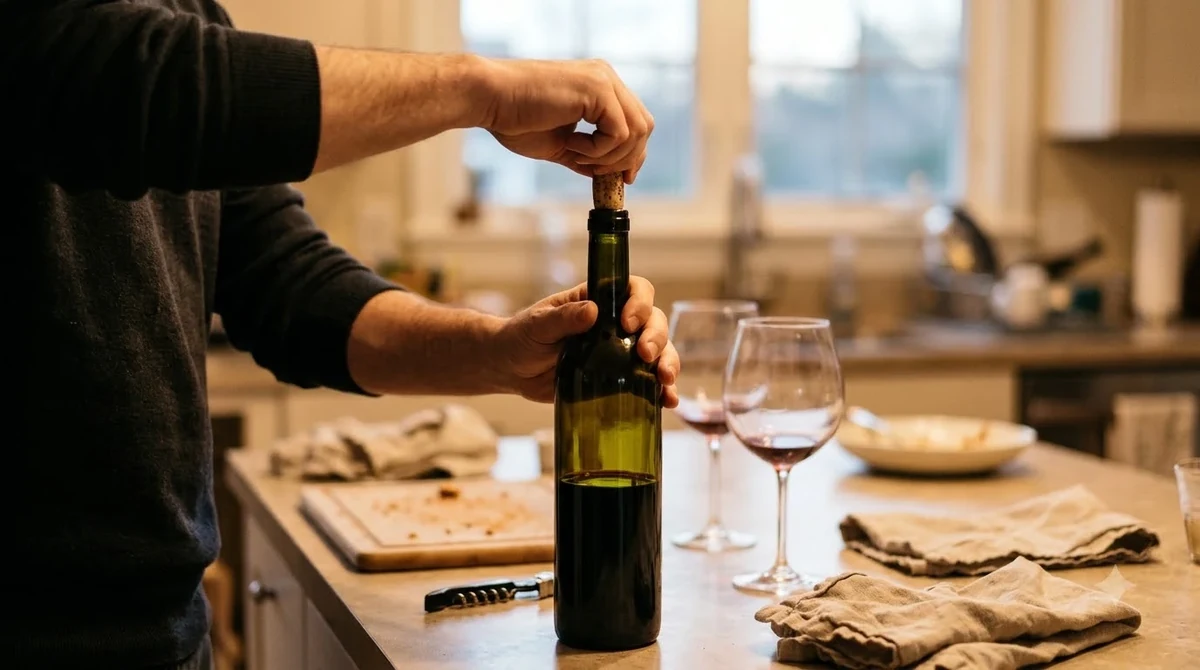
Residual sugar, often shortened to RS, is the sugar remaining after fermentation. The OIV’s classification uses glucose plus fructose, the principal sugars that yeast consumes during fermentation. Its standard provides a useful common language when comparing bottles from different countries, even though shoppers may not see a residual-sugar figure printed on a U.S. wine label. That 4 g/L benchmark translates into roughly 0.6 gram of sugar in a 5-ounce pour, because 5 fluid ounces is about 0.148 liter. At the acidity-adjusted upper limit of 9 g/L, the same pour would contain about 1.3 grams. Those are calculations from the OIV thresholds, not a claim that every bottle labeled dry has the same amount.
| OIV still-wine category | Residual sugar | How to read it |
|---|---|---|
| Dry | Up to 4 g/L; up to 9 g/L with the required acidity | Little sweetness; the most useful target for this search |
| Medium dry | Above the dry limit to 12 g/L; up to 18 g/L with the specified acidity | More residual sugar than the dry category |
| Semi-sweet | Above the medium-dry limit and up to 45 g/L | Noticeably sweeter in many styles |
| Sweet | At least 45 g/L | A sweet-wine category, not a typical dry table red |
Labeling practices differ by market, so the producer’s technical sheet is useful when you need a specific number. The precise international wording appears in the OIV’s wine-sweetness standard.
How Fermentation Determines Residual Sugar
Wine begins as sweet grape juice, and yeast converts grape sugars into alcohol and carbon dioxide during fermentation. When fermentation runs to completion, most fermentable sugar is consumed; a winemaker can also choose to stop fermentation earlier or make other cellar decisions that leave more sweetness in the finished wine.
A low-sugar red is primarily a winemaking outcome, not a property guaranteed by its grape. Cabernet Sauvignon, Merlot, Zinfandel, and blends can all be fermented dry or made in sweeter-tasting styles. The grape’s ripeness supplies the starting sugar; fermentation determines how much remains.
Residual sugar is measured in grams per liter. Both 1 g/L and 4 g/L fall within the OIV dry category, and Decanter notes that finished wines rarely fall below 1 g/L because yeast cannot consume every type of sugar. “Zero sugar” is therefore a stricter claim than most shoppers need when they simply want an unsweet red.
Why grape variety is only a starting point
Grape variety is a better guide to flavor, acidity, body, and tannin than to a laboratory sugar result. A crisp Sangiovese and a plush red blend can both be dry but feel very different. Pair the sweetness request with style language such as “dry, not jammy” or “dry with firm tannin and dark fruit.”
Dry fermentation can also support stability. Wine Enthusiast quotes winemakers who explain that residual sweetness can make a wine more susceptible to bacterial activity; this does not mean every wine with measurable sugar is faulty.
Why Fruity Flavor and Tannins Can Mislead
Fruit flavor is not the same as sugar, and a drying sensation is not proof of low residual sugar. Raspberry, cherry, plum, and blackberry aromas can be vivid in a dry red, while tannins can make the cheeks and gums feel grippy or dry without telling you how many grams of sugar are in the wine.
Wine Enthusiast’s explanation of dry red wine draws a clear line between sweetness and astringency: the mouth-drying effect comes from tannin, not from a wine being “dry” in the residual-sugar sense. Tannins are compounds extracted from grape skins, seeds, and stems, with oak also contributing in barrel-aged wines. Their texture may seem silky, plush, firm, or coarse depending on grape, growing conditions, ripeness, and cellar choices.
Fruitiness can suggest sweetness even when a wine is technically dry. A warm-climate red with ripe black fruit, higher alcohol, and generous oak may seem sweet-fruited without containing much residual sugar; acidity can sharpen the impression in the opposite direction. Fresh cherry flavor is not, by itself, a reason to reject a dry wine. Do not use alcohol percentage as a shortcut for dryness: some high-alcohol dessert wines are distinctly sweet. A mouth-drying Cabernet is not necessarily lower in sugar than a softer Pinot Noir. The most dependable comparison is the producer’s residual-sugar figure or a clear sweetness statement backed by technical information.
Tip: When asking for a low-sugar red, say “dry in residual sugar, but I enjoy ripe fruit” or “dry and savory, not jammy.” That tells the wine seller whether you mean sweetness, fruit intensity, or tannin.
Red Grapes to Shop for Different Dry Styles
Most familiar table-red grapes are commonly fermented dry, but they offer very different structures. Choose a variety for the texture and flavor you enjoy, then confirm the producer’s sweetness level if the exact residual-sugar number matters to your purchase.
Pinot Noir for lighter body and softer tannin
Pinot Noir is a useful starting point for a lighter-feeling dry red. It often shows cherry, raspberry, cranberry, and earthy notes, with low-to-medium tannin and bright acidity. Burgundy, Oregon, and California’s Russian River Valley offer cooler-climate examples, while warmer sites can produce riper fruit. Region still does not set the sugar level by itself.
Merlot for a rounder, softer texture
Merlot usually brings medium tannin, supple texture, and plum, black cherry, or blackberry flavors. Decanter notes that it is usually fermented dry, although ripe fruit can suggest sweetness. Bordeaux’s Right Bank, especially Saint-Émilion and Pomerol, is a classic reference point; Chile and California also make accessible styles. Try Merlot for Cabernet-like dark fruit with a softer mouthfeel.
Cabernet Sauvignon for structure
Cabernet Sauvignon typically has firm, high tannin, dark-currant flavors, and structure for rich food. Bordeaux, Napa Valley, Coonawarra, and Margaret River are useful region names, though climate and winemaking alter the weight. Look for a dry producer style rather than assuming tannin confirms low sugar. Our guide to low sugar cabernet sauvignon focuses on that buying question.
Sangiovese, Syrah, and other options
Sangiovese, the principal grape in Chianti, brings bright acidity and savory cherry, making it a good match for tomato dishes. Syrah is often darker and fuller, with black pepper and more tannin; Northern Rhône Syrah and Australian Shiraz show its range. Gamay and Barbera are useful for red-fruit freshness and less assertive tannin. These are style clues, not sugar guarantees.
As a shortcut, think Pinot Noir for lighter texture, Merlot for softness, Cabernet Sauvignon for structure, Sangiovese for acidity, and Syrah for darker fruit. Confirm the producer details rather than treating any grape as a sugar-free category.
How to Read Bottles and Buy with Confidence
A useful bottle check combines the producer’s description, the region and vintage, and any technical information available from the winery. A front label may say “dry,” but it rarely communicates the exact residual-sugar measurement; a winery’s product page or technical sheet may be more specific.
Look for wording such as “dry,” “fully fermented,” or a residual-sugar number in g/L. Compare a stated figure with the OIV’s 4 g/L benchmark and its acidity allowance to 9 g/L. Words such as “jammy,” “sweet-fruited,” “plush,” and “smooth” describe flavor or texture, not necessarily sugar. Read alcohol percentage as a clue to body and warmth, not sugar. A 12.5% red may feel lighter than a 15% red, but either can be dry. Region and vintage suggest ripeness; they do not replace technical data. Ask the shop to request a precise g/L figure from the winery rather than assuming “dry” means exactly zero.
Ask questions that make the answer useful
Ask: “Is this fermented dry, and do you have the residual sugar in grams per liter?” Then add a preference: bright cherry and high acidity, softer tannins, or Cabernet’s firmer structure. That gives the seller a clearer target than “low-sugar red” alone.
Do not confuse other label language with sweetness. “Reserve,” “estate,” “old vine,” “single vineyard,” and “barrel aged” are not sugar measurements. “Dry-farmed” describes vineyard water management, while organic or biodynamic certification does not establish how much sugar remains after fermentation. A blend is not automatically sweeter or drier than a single-variety wine. A Bordeaux-style blend may combine Cabernet Sauvignon, Merlot, Cabernet Franc, and Petit Verdot; proportions shape aroma and structure, while fermentation determines the finished sugar level. Do not try to calculate residual sugar from the grape list.
Shopping across colors can also help define your preferences. A dry rosé is a different style from a red, but it can be a useful alternative when you want red-fruit flavor and a lighter body; see our guide to low sugar rose. If you are comparing sweet aromatic wine instead, our guide to low sugar moscato covers a very different category. For broader label and style questions, the Wine Buying Guides section can help you build a more specific shortlist.
Serving and Pairing a Dry Red
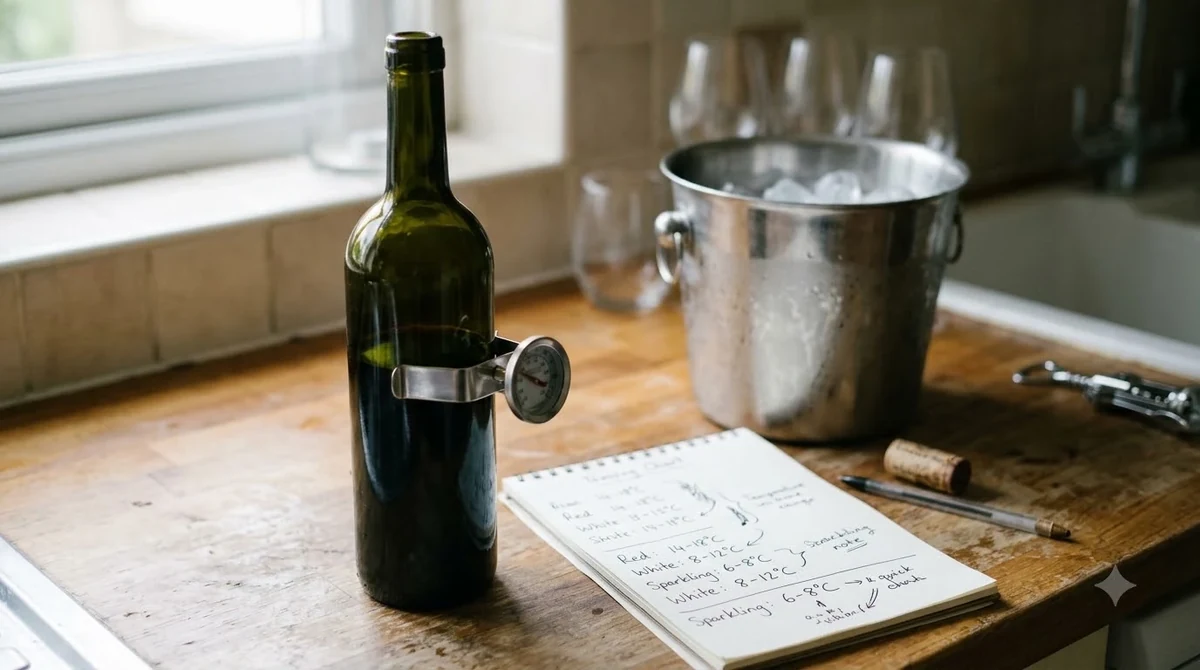
Serving temperature changes how fruit, acidity, alcohol, and tannin come across, but not the bottle’s residual-sugar figure. Serve lighter reds such as Pinot Noir at 55–60°F and fuller Cabernet Sauvignon or Syrah at 60–65°F.
Salt and fat soften tannin, which helps Cabernet Sauvignon or Syrah pair with grilled beef, lamb, aged cheddar, or buttered mushrooms. Pinot Noir’s lighter tannin and bright acidity suit roast chicken, salmon, duck, and earthy mushrooms. Sangiovese’s acidity works with tomato sauce, pizza, and herb pasta.
Acidic food needs wine with equal or higher acidity; tomato-rich pasta generally suits lively Sangiovese better than a low-acid, heavy red. Chili heat is amplified by alcohol and tannin, so a high-alcohol Cabernet can make a spicy dish feel hotter. Choose a softer, lower-alcohol red for strongly spiced food.
Pour about 5 ounces at a time; a 750 ml bottle holds roughly five standard pours. A young, full-bodied red may benefit from 30–60 minutes in a decanter. A lighter Pinot Noir usually needs less intervention. Refrigerate opened still red wine and aim to finish it within 3–5 days. Store unopened bottles on their side near 55°F, away from sunlight and temperature swings.
Frequently Asked Questions
These answers cover common label questions that can complicate a search for dry red wine. In particular, sparkling-wine terms such as Brut and Extra Dry follow a different scale from still red wines, and they should not be used as shorthand for a red’s residual sugar.
Is “Brut” the same as dry on a red wine label?
No. Brut is a regulated sweetness term for sparkling wine, not a standard descriptor for still red wine. Decanter lists Brut at up to 12 g/L, while Extra Dry sparkling wine is 12–17 g/L and is actually sweeter than Brut. For a still red, ask for its residual sugar in g/L instead.
Does dry-farmed wine mean it has less residual sugar?
No. Dry farming means the vineyard relies on rainfall and stored soil moisture rather than routine irrigation. It does not establish a finished-wine sugar figure, and two dry-farmed wines from different vineyards can be fermented to different sweetness levels.
Can an older bottle become lower in sugar as it ages?
Do not assume so. Once fermentation and bottling are complete, bottle age is not a reliable way to lower residual sugar; age can instead change aroma and soften the perception of tannin. A 10-year-old Cabernet is not automatically drier in sugar than a recently released vintage.
Does barrel aging make a red wine sweeter?
Barrel aging can add vanilla, toast, spice, and a richer impression, which some drinkers interpret as sweetness. Oak can also contribute tannin, but those aromas and textures are not the same as residual grape sugar. A barrel-aged Rioja or Napa Cabernet can still be fermented dry.
Can a wine labeled “zero sugar” still contain traces of sugar?
Possibly, depending on the producer’s definition, analytical method, and rounding rules. Decanter notes that finished wine rarely falls below 1 g/L because some sugars are not consumed by yeast. Ask for the actual laboratory result and its reporting precision if a precise trace amount matters to your comparison.
The best low-sugar dry red is one that pairs a genuinely dry finish with the texture and flavors you enjoy. Use 4 g/L as a clear benchmark, treat grape names as style clues rather than guarantees, and ask for the producer’s residual-sugar figure when precision matters. With those habits, you can choose confidently among lighter Pinot Noir, softer Merlot, structured Cabernet Sauvignon, and savory Sangiovese.
More in Wine Buying Guides
 Riesling Gift: Choose a Bottle They’ll LoveUpdated Nov 21, 2026
 Sweet Red Wine Gift: Choose a Bottle They’ll LoveUpdated Nov 21, 2026
 Malbec Gift: How to Choose a Memorable Bottle for Any OccasionUpdated Nov 21, 2026
 Sherry Gift Ideas That Match Every Wine LoverUpdated Nov 21, 2026
 Moscato Gift: How to Choose a Sweet Wine They’ll LoveUpdated Nov 21, 2026
 Merlot Gift: How to Choose a Bottle They’ll AppreciateUpdated Nov 21, 2026