

We may earn a commission when you buy through links on this page, at no extra cost to you. Learn more.
Libbey champagne flutes are a practical choice for anyone who wants attractive, functional sparkling-wine glasses without investing in delicate luxury stemware. The brand offers several styles, including traditional 6-ounce and 7.5-ounce flutes, decorative ribbed designs, and convenient 8-ounce stemless options. Their strengths include accessible designs, useful capacities, and dishwasher-safe options, although durability and construction vary between collections.
Libbey has a broad glassware selection covering everyday entertaining, home bars, restaurants, and special occasions. Its champagne flutes range from simple, traditional silhouettes to textured glasses designed to make a statement on the table. Choosing the right version means looking beyond appearance: bowl shape, capacity, stem construction, cleaning requirements, and intended use all affect the experience. This review examines the available designs and explains which type makes the most sense for different households.
Specs and Key Features
Libbey champagne flutes offer several capacities and construction styles, with options for both traditional sparkling-wine service and casual entertaining. The Entertaining Essentials set is a useful starting point for home buyers, while the Linear and Domaine collections offer alternatives with different proportions and visual details.
One important distinction is that Libbey does not sell every flute through the same retail channel. Some products are presented in consumer sets, while others appear in the food-service catalog with case quantities of 12. Those differences matter when comparing individual designs, especially if the goal is to buy six matching glasses rather than a restaurant-sized supply.
| Product | Capacity | Height | Construction or feature |
|---|---|---|---|
| Entertaining Essentials Flute | 8 oz | 9.25 in | Traditional stemmed flute |
| Linear Flute, item 7403 | 7.5 oz | 9.19 in | Vertical facets and Safedge Rim lifetime guarantee |
| Domaine Flute, item 8995 | 6 oz | 8.88 in | Slender, two-piece stemware |
| Stemless Flute, item 228 | 8.5 oz | 5.75 in | Stemless construction and Safedge Rim Guarantee |
These specifications come from Libbey’s consumer product listing and food-service product pages. The Entertaining Essentials version is supplied as a set of six, whereas the Linear and Domaine food-service versions are listed in cases of 12. The capacities represent the glasses’ stated volumes, not recommended serving quantities. A standard 5-ounce sparkling-wine pour leaves room for bubbles and is smaller than the nominal capacity of each model.
Material and construction also deserve attention. The consumer Entertaining Essentials product is described as lead-free and dishwasher-safe. The Linear model is made from glass and has a documented rim guarantee. The Domaine model is described as two-piece stemware, which is a useful distinction for buyers comparing traditional glass construction.
For a closer look at the manufacturer’s consumer specifications, visit the Libbey Entertaining Essentials flute product page.
What Owners Like About Libbey Champagne Flutes
Appearance, versatility, and everyday practicality are recurring strengths associated with Libbey champagne flutes. Customer feedback on decorative models also highlights the visual appeal of textured glass, while the manufacturer’s product descriptions emphasize functionality for sparkling wine, cocktails, and casual celebrations.

The Libbey Paneled Ribbed Champagne Flute is a good example of the brand’s decorative direction. Its paneled appearance gives the glass a more distinctive look than a plain cylindrical flute. Customer feedback summarized by Joss & Main frequently praises the appearance, substantial feel, and decorative character of this design. Some reviewers describe the glasses as well-made and sturdy, making them appealing for entertaining rather than simply storing away for formal occasions.
The Entertaining Essentials collection appeals to buyers who prefer a straightforward glass without decorative detailing. Its 8-ounce capacity offers more room than the 6-ounce Domaine Flute, and the set of six provides a consistent arrangement for small gatherings. Libbey also identifies this design as suitable for mimosas and desserts, which gives it some flexibility beyond Champagne service.
The Linear Flute has a different appeal. Its vertical facets create a textured appearance that catches light and adds visual interest to a table setting. Libbey specifically describes the pattern as creating a three-dimensional pleated effect. This can make the glass feel more decorative without relying on colored glass or elaborate ornamentation.
Another positive feature is the variety of shapes available. A household that prefers conventional stemware can choose a taller flute, while someone who wants a shorter glass can consider the stemless version. This selection makes it easier to match glassware with a home bar, dining room, or casual brunch setup.
Versatility is particularly useful for people who serve several sparkling drinks. Champagne, Prosecco, Cava, and sparkling rosé can all be served in a conventional flute. The same glass can also accommodate a mimosa or a sparkling cocktail. Buyers who want a coordinated collection can explore the broader champagne flutes selection before deciding whether a traditional or decorative design suits their table.
However, positive appearance feedback should not be confused with proof that every Libbey model has identical durability. Glass thickness, stem construction, shape, and handling requirements differ. The Paneled Ribbed model, Linear Flute, and Domaine Flute should be evaluated as separate products rather than treated as interchangeable versions of one glass.
Common Complaints and Potential Drawbacks
The main concern with Libbey champagne flutes is the possibility of breakage around delicate stems and rims. Some customers also have different expectations about glass weight, size, and overall sturdiness, so the right model depends partly on whether appearance or everyday handling is the priority.
Customer feedback for the Paneled Ribbed Champagne Flute illustrates this difference in expectations. Many reviewers appreciate its substantial feel and attractive design, but a complaint summarized on Joss & Main mentions a stem breaking easily. This does not establish a widespread defect, but it demonstrates why decorative stemware should still be handled carefully.
Traditional flutes have a relatively narrow bowl and a long stem. That combination looks elegant but creates a more delicate handling point than a short tumbler. Picking up a flute by its stem rather than gripping the bowl is a sensible habit. It also helps avoid warming chilled sparkling wine with the hand.
Another possible drawback is capacity confusion. A glass advertised as 8 ounces does not mean that an 8-ounce pour is appropriate for Champagne. Filling a flute close to its rim leaves little space for foam and increases the chance of spilling. A measured 5-ounce serving is generally more practical, especially when opening a bottle for several guests.
Some buyers may also find that a flute is less versatile for evaluating complex sparkling wines than a larger tulip-shaped glass. The narrow opening helps maintain visible bubbles, but it provides less room for aromas to develop. People who regularly drink vintage Champagne or aromatic sparkling wines may prefer a wider bowl for more detailed appreciation.
Storage can be another issue. Traditional flutes are tall, so they may not fit comfortably in every kitchen cabinet or dishwasher rack. A 9.25-inch glass needs more vertical clearance than a 5.75-inch stemless option. Buyers with limited storage should measure their shelves and dishwasher before choosing a large set.
Finally, the appearance of a glass does not automatically establish its resistance to thermal shock, chipping, or impact. Dishwasher-safe labeling is useful, but it should not be interpreted as permission to expose the glass to sudden temperature changes or careless loading. Even sturdy everyday glassware benefits from sensible handling.
Who Should Buy Libbey Champagne Flutes and Who Should Skip Them
Libbey champagne flutes are best suited to households that want functional glassware for celebrations, brunches, and occasional sparkling-wine service. Buyers who prioritize premium hand-finished crystal, extremely thin rims, or specialized tasting shapes may prefer a different category of glassware.
Who should consider buying them?
Everyday entertainers: People who host family dinners, birthday parties, and weekend brunches can benefit from a matching set of six. The Entertaining Essentials design is particularly practical because its 8-ounce capacity works for Champagne and mimosas, while its dishwasher-safe construction reduces routine cleanup.
Buyers who like decorative glassware: The Paneled Ribbed design is worth considering for people who want their tableware to contribute to the overall presentation. Its textured appearance makes it suitable for celebrations where glassware is part of the table arrangement. It can also complement vintage-inspired table settings.
Home bar owners: The Linear Flute offers a distinctive appearance for sparkling cocktails and other carbonated drinks. Its vertical facets make it visually different from plain stemware, and its 7.5-ounce capacity is practical for controlled pours.
People with limited storage: The Stemless Flute is a useful alternative for households that dislike long stems or have limited cabinet clearance. At 5.75 inches tall, it is considerably shorter than the 9.25-inch Entertaining Essentials flute.
Who should skip them?
Collectors looking for exceptionally thin, lightweight crystal with refined hand-finished details may find Libbey’s more practical designs less appealing. A restaurant-quality glass can perform well for everyday service without delivering the same tactile experience as premium crystal.
People who regularly serve expensive vintage Champagne may also prefer a dedicated tulip-shaped glass. Its wider bowl provides more room for aromas than a narrow traditional flute. This is especially relevant for drinkers who prioritize examining the wine’s aromatic character rather than simply preserving a tall column of bubbles.
Anyone who frequently breaks stemware should consider a stemless design or a shorter, more substantial glass. The shorter construction removes the long stem as a potential breakage point, although the bowl itself can still chip or crack if dropped.
Buyers should also avoid purchasing a restaurant case of 12 simply because the product looks similar to a consumer set of six. Food-service packaging and retail packaging are different purchasing arrangements. Confirming the actual number of pieces is important before placing an order.
Tip: For a first set, prioritize a six-piece consumer package, an approximately 8-ounce capacity, and a dishwasher-safe description. If you prefer a more decorative look, compare the paneled and Linear designs separately rather than assuming their construction is identical.
How Libbey Champagne Flutes Compare to Alternatives
Libbey’s range is strongest in practical, accessible glassware with several useful shapes. Its traditional flute, decorative stemware, and stemless options cover different entertaining needs, while other types of champagne glassware may be more suitable for people who prioritize aroma development or a particular serving style.
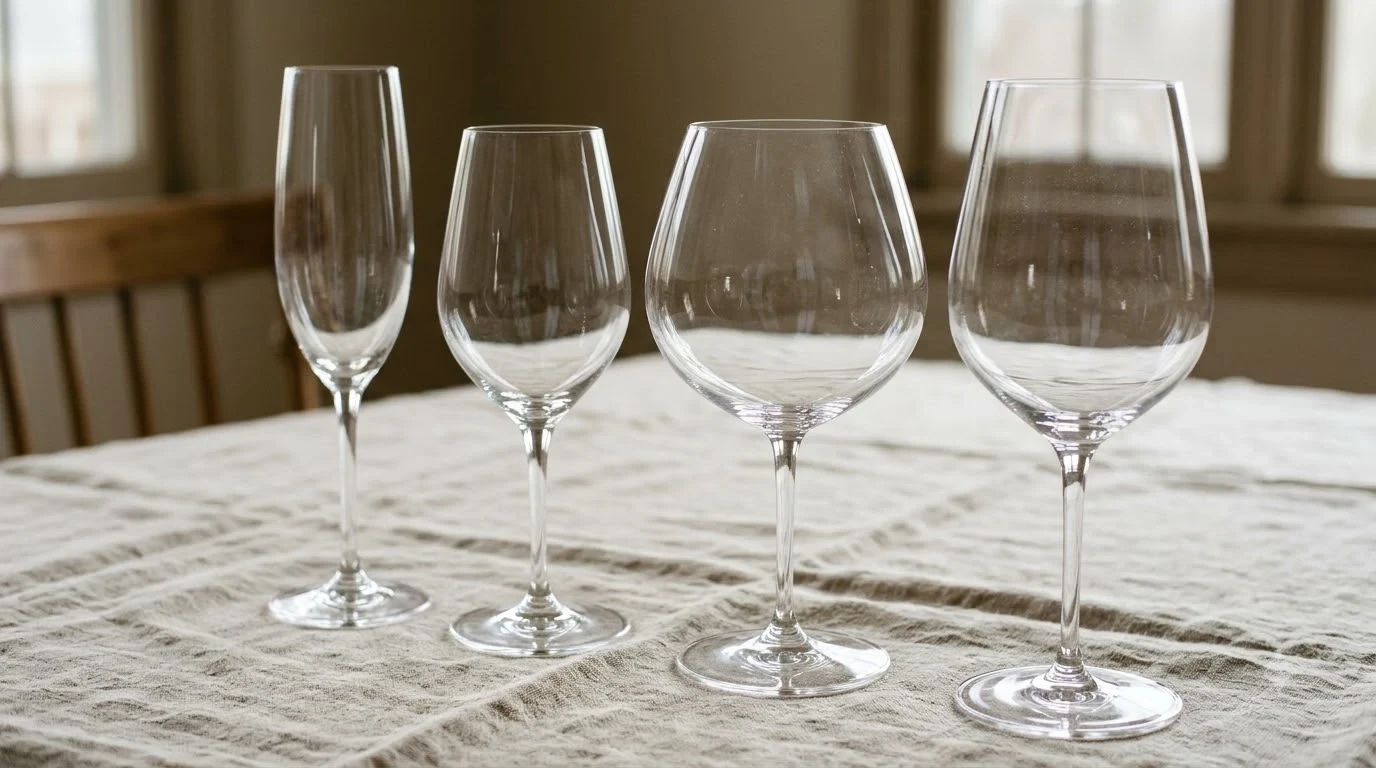
The first comparison is between a conventional flute and a tulip-shaped sparkling-wine glass. A flute has a narrow bowl that makes rising bubbles easy to see and creates a classic celebratory presentation. A tulip glass has a wider bowl that gradually narrows toward the rim, giving aromas more room to develop while still retaining some of the visual character of sparkling wine.
The second comparison is between stemmed and stemless construction. Traditional stemware keeps the hand away from the bowl, helping maintain the drink’s serving temperature. Stemless glasses are easier to handle casually and require less vertical cabinet space, but holding the bowl can warm the wine more quickly.
Coupe glasses offer another distinct alternative. Their wide, shallow bowls provide a vintage presentation and work particularly well for certain sparkling cocktails. However, the broad opening allows carbonation to escape more quickly than a narrow flute. A coupe is therefore more of a style choice than a direct functional replacement for a traditional Champagne flute.
Libbey’s own catalog demonstrates this distinction by including both flutes and coupe glasses. Its flute selection includes the Rivere at 8.75 ounces, the Prism at 8.25 ounces, and the Contour at 8 ounces. The Virtuoso Coupe, by comparison, is listed at 6.75 ounces. These differences show that bowl shape and intended presentation are important considerations beyond the brand name.
For shoppers comparing different glass manufacturers, the Glassware Brands resource can help identify other options. The best champagne glass comparison is also useful for buyers who are undecided between a traditional flute, tulip, and coupe.
Flute versus tulip glass
A flute is a natural choice for parties and occasions where presentation matters. The tall shape creates an attractive line of bubbles and works well with a standard 5-ounce serving. A tulip glass is more suitable for drinkers who want to examine the aromas of Champagne, particularly when serving a complex wine that deserves more attention.
Stemmed versus stemless
Stemmed Libbey flutes are the more traditional choice for formal meals and celebratory toasts. Their long stems provide a convenient grip, although they require more careful storage. Stemless models are more relaxed and easier to place on crowded tables, but they lack the same classic appearance.
Flute versus coupe
A coupe offers a wide opening and a shallow bowl, making it attractive for retro-inspired celebrations and sparkling cocktails. A flute is more suitable for preserving the visual display of carbonation. Buyers who serve Champagne frequently will generally find a conventional flute more practical, while occasional cocktail drinkers may appreciate the coupe’s distinctive silhouette.
For a broader comparison of glass shapes and their intended uses, the wine glasses guide can help clarify which type belongs in a home collection.
Frequently Asked Questions
Are Libbey champagne flutes made in the United States?
Country of origin can differ between Libbey products and collections. The Entertaining Essentials consumer listing identifies its product dimensions with the United States as the country of origin. Buyers comparing other Libbey flute designs should review the individual product listing because one model’s origin should not be assumed to apply to the entire range.
Can Libbey champagne flutes be used for sparkling cocktails?
Yes. Libbey identifies several flute designs as suitable for more than traditional Champagne service. The Linear Flute is also recommended for sparkling wines and seltzers, while the Entertaining Essentials design is intended for mimosas and desserts. The narrow opening is particularly useful for drinks where maintaining visible carbonation is desirable.
Do Libbey champagne flutes come with replacement parts?
Traditional glass flutes are complete glass products rather than assemblies with separately replaceable components. A broken stem or bowl generally means replacing the entire glass. Buyers who need replacement pieces should look for the exact pattern and item number rather than assuming a visually similar flute will match an existing set.
Can Libbey champagne flutes be used for hot drinks?
Traditional champagne flutes are designed for cold beverages and should not be treated as heat-resistant drinkware. Sudden temperature changes can create stress in ordinary glass and increase the chance of breakage. For hot beverages, a glass specifically identified as suitable for hot service is a more appropriate choice.
What is the difference between Libbey’s Safedge and ordinary glass rims?
Safedge is Libbey’s named rim-protection guarantee on selected products. The manufacturer identifies the Linear Flute and Stemless Flute as products carrying Safedge protection. The presence of this feature should not be interpreted as making the entire glass unbreakable or immune to damage from drops and impacts.
Libbey champagne flutes make sense for buyers who want attractive, functional glassware for everyday celebrations and occasional sparkling-wine service. The Entertaining Essentials set is a sensible starting point for most households, while the Linear and stemless designs offer useful alternatives for different preferences. Choose according to capacity, shape, storage space, and handling needs rather than appearance alone.
More in Wine Glasses
 Zwiesel Glas Champagne Flutes for Durable Everyday Sparkling WineUpdated Nov 20, 2026
 Vera Wang Crystal Wine Glasses: Design, Quality and Buying AdviceUpdated Nov 20, 2026
 West Elm White Wine Glasses: Compare Designs for Better Everyday Wine ServiceUpdated Nov 20, 2026
 Zalto Stemless Wine Glasses: Discover Their Distinctive DesignsUpdated Nov 20, 2026
 Viski Champagne Glasses That Match Your Style and Sparkling WineUpdated Nov 20, 2026
 Vista Alegre Decanter Review: Crystal Style and Wine ServiceUpdated Nov 20, 2026