

We may earn a commission when you buy through links on this page, at no extra cost to you. Learn more.
Lebanon wine is made mostly in the Bekaa Valley, a high, dry plateau between two mountain ranges, and the country’s reds are its best-known style. Lebanese producers blend international varieties such as Cabernet Sauvignon and Syrah with older vines and local grapes, and many wines carry the country’s long winemaking history. The best bottles tend to be full-bodied reds with ripe fruit, savory notes, and enough structure to age.
This guide covers where Lebanese wine comes from, the history behind its best-known estates, how the wines taste, and how to serve and pair them. If you want to compare it with other regions, the Wine Regions section explains how climate and altitude shape style across different countries.
Where Lebanese Wine Comes From
Most Lebanese vineyards sit in the Bekaa Valley, a long valley between the Lebanon and Anti-Lebanon mountain ranges. According to the Château Musar history, the Bekaa’s vineyards sit at high altitude with a dry climate and limestone soils. That combination lets grapes ripen slowly, which many producers credit with giving their wines depth and length.
Some wineries are located elsewhere, even when their vines are in the Bekaa. The same Musar history describes the estate’s winery as sitting on the Mediterranean side of the mountains, which means the vineyards and cellar can be a long drive apart. That distance is one reason it helps to know where each wine is grown when you read a label.
The Bekaa is also a wide landscape with large plots of vines and orchards, and the contrast between hot days and cooler nights is part of what growers rely on. Those temperature swings help the grapes keep their acidity, which is important for wines that are meant to age. Winemakers in the region often talk about the balance between ripeness and freshness as the central challenge of the vintage.
A Short History of Lebanese Wine
Lebanon has a long winemaking tradition, and modern estates trace their roots to the nineteenth and twentieth centuries. Château Ksara, one of the country’s best-known wineries, dates its founding to 1857, when Jesuit monks took over a plot between Tanail and Zahle. The estate’s cellars include a network of old tunnels that keeps a steady temperature and humidity, and it has been used to age premium wines.
Château Musar began in 1930 when Gaston Hochar planted his first vineyards after returning from Bordeaux. His son Serge became winemaker in 1959 and led the estate for nearly half a century. The Hochar family’s approach, which the estate describes as patience and respect for nature, shaped the house style that many drinkers now associate with Lebanon.
Ksara and Musar are only two of the country’s producers. Other wineries in the Bekaa and along the coast make their own mix of reds, whites, and rosés, and they are worth exploring once you know the basics.
Visitors who want to learn more about the country’s wine can often visit the cellars of larger estates. Tours usually cover the history of the house, the vineyards, and the way the wines are made, and they give a useful sense of the scale of the industry.
The Grapes and Wine Styles
Lebanese reds often lean on international varieties. Cabernet Sauvignon, Syrah, Merlot, and Cinsault are common, and they are usually blended to balance ripe fruit with structure. Many estates also grow local grapes, which give their wines a regional character that is hard to find elsewhere. Some producers use Bordeaux-style blends, while others favor Rhône-style reds with more spice and herb.
White wines are less common but still important. Crisp, dry whites made from Chardonnay and Sauvignon Blanc are found in several cellars, and rosés appear on many restaurant lists in warm months. Because the country’s producers vary widely in style, tasting a few bottles from different estates gives a clear sense of the range.
Local grapes deserve a closer look, even if they are harder to find outside the country. Indigenous varieties often produce wines with savory, herbal notes and a texture that differs from international blends. Ask a sommelier or shop staff to point out a bottle that uses a local grape if you want to taste something distinct.
| Style | Typical grapes | Typical flavors | Best served with |
|---|---|---|---|
| Bordeaux-style red | Cabernet Sauvignon, Merlot | Blackcurrant, cedar, dark fruit | Grilled lamb, roast beef |
| Rhône-style red | Syrah, Cinsault, Grenache | Dark cherry, pepper, herbs | Kebabs, spiced stews |
| Dry white | Chardonnay, Sauvignon Blanc | Citrus, white flowers, mineral notes | Mezze, grilled fish, salads |
| Rosé | Cinsault, Grenache | Red berries, dry finish | Mezze, summer grilled dishes |
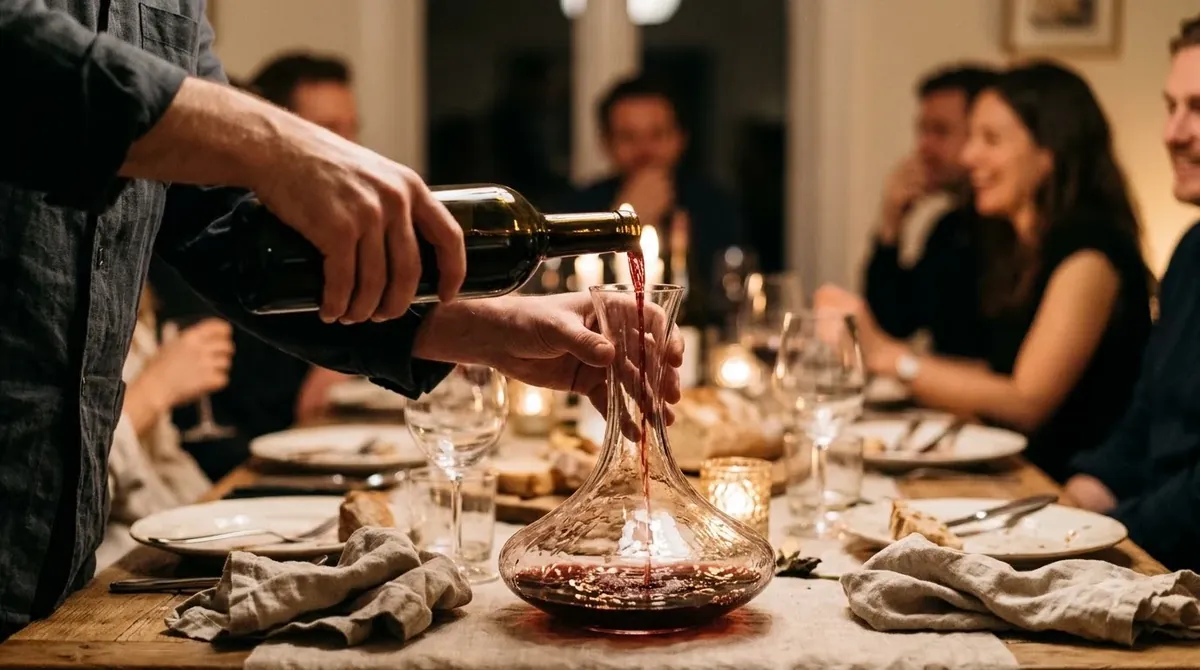
Tip: Many Lebanese reds show their best after a short decant. Older bottles from long-lived estates often need more time in the glass before they open up.
How to Serve Lebanese Wine
Serve red wines slightly cooler than room temperature, around 15 to 18 degrees Celsius, so the fruit and savory notes stay balanced. Whites and rosés should be chilled but not cold, especially when the wine has more texture. A large red glass lets the aromas develop, while a smaller glass suits lighter rosé.
For bottles from estates that age their wines, give them time in the glass before judging. A young red can taste tight at first and open up over an hour, while a mature bottle may need less time and more gentle pouring to show its texture.
Temperature matters with rosé too. A rosé that is too cold can taste thin, while one that is too warm can lose its fresh fruit. A short time in the fridge before serving usually gives the best balance.
Food Pairing Ideas
Lebanese food is built on grilled meats, herbs, olive oil, and mezze, which makes local wines easy to pair at home. Full-bodied reds match grilled lamb, kebabs, and roast beef. Rhône-style blends suit spiced stews and dishes with cumin, sumac, and warm spices.
Whites and rosés are good with mezze such as hummus, tabbouleh, and grilled halloumi. Fresh herbs and lemon pair well with crisp whites, while rosé works with a wide range of small plates. When you are unsure, match the wine’s weight to the dish’s richness.
Mezze is a natural format for sharing wine. Several small plates on the table let each guest try a red and a white, and the wines can change as the meal moves from cold dishes to grilled ones.
Buying and Storing Lebanese Wine
Lebanese wines are often sold through specialty shops and wine bars. When you shop, check the producer’s name, the vintage, and the grape or blend listed on the label. Many estates publish tasting notes on their websites, which help you compare styles before you buy.
Store bottles on their side in a cool, dark place. Aging estate reds are worth keeping for several years if you enjoy mature wines, but check the producer’s advice before laying down a bottle for a long period.
Keep bottles away from heat and light, and avoid storing them near appliances that warm up. Consistency matters more than exact temperature, so a steady cool room is usually better than a warm spot that changes through the day.
Frequently Asked Questions
What is Lebanon wine best known for?
Lebanon is best known for full-bodied reds made in the Bekaa Valley, often blended from international varieties like Cabernet Sauvignon and Syrah.
Is Château Musar the best-known Lebanese wine?
Château Musar is one of the country’s most widely recognized estates, and it is often the first Lebanese wine people try. Château Ksara is another well-known producer.
Are Lebanese wines good for aging?
Some estate reds are built to age, especially from producers with long histories. Check the producer’s notes for each bottle’s drinking window.
What food goes well with Lebanese red wine?
Grilled lamb, kebabs, and spiced stews match Lebanese reds well. A Rhône-style blend also suits dishes with cumin and sumac.
Lebanese wine rewards people who like full-bodied reds with a sense of place. Start with a Bekaa red, then try a white or rosé to see the range. For another region with a long history and a strong sense of place, the Hunter Valley wine guide covers a very different climate and style.
More in Wine Regions
 Willcox Wine Trail: Discover Arizona’s High-Elevation Wine CountryUpdated Nov 20, 2026
 Yakima Valley Wine Region: Find the Best Styles to TryUpdated Nov 20, 2026
 Vosne Romanee Wine Tasting: Identify Aromas and Choose Better PairingsUpdated Nov 20, 2026
 Yakima Valley Wine Festival: Find the Best Seasonal Wine EventsUpdated Nov 20, 2026
 Wales Vineyards: Discover Cool-Climate Wines and Where to VisitUpdated Nov 20, 2026
 Yountville Wine Festival: Discover Napa Wines and Local FoodUpdated Nov 20, 2026