


We may earn a commission when you buy through links on this page, at no extra cost to you. Learn more.
The le creuset wine opener review verdict is straightforward: the Le Creuset Table Model Corkscrew is a compact, self-pulling manual opener that makes everyday cork removal simple with a steady continuous twist. Its triple-coated stainless-steel screw and bottle-centering guides are strong design points, while its plastic body and lack of a foil cutter are meaningful trade-offs. It suits home wine drinkers who want a reusable, uncomplicated tool, not anyone seeking a lever opener or an all-in-one wine key.
This review focuses on the Table Model Corkscrew, the black, twist-operated design often called the original Screwpull-style opener. It is easy to confuse with Le Creuset’s separate lever corkscrews and folding waiter’s friend, but those tools work differently. The distinction matters: the Table Model uses a guided screw and a continuously turning handle, so the cork rises as the handle turns instead of being lifted by a lever arm.
Specs and Key Features
The Table Model’s appeal rests on a simple mechanism rather than a collection of extras: center it over the bottle, turn the handle, and let the screw draw the cork out. Le Creuset specifies a hand-sharpened, triple-coated stainless-steel screw, flared ends, and cork guides intended to keep the cork moving vertically.
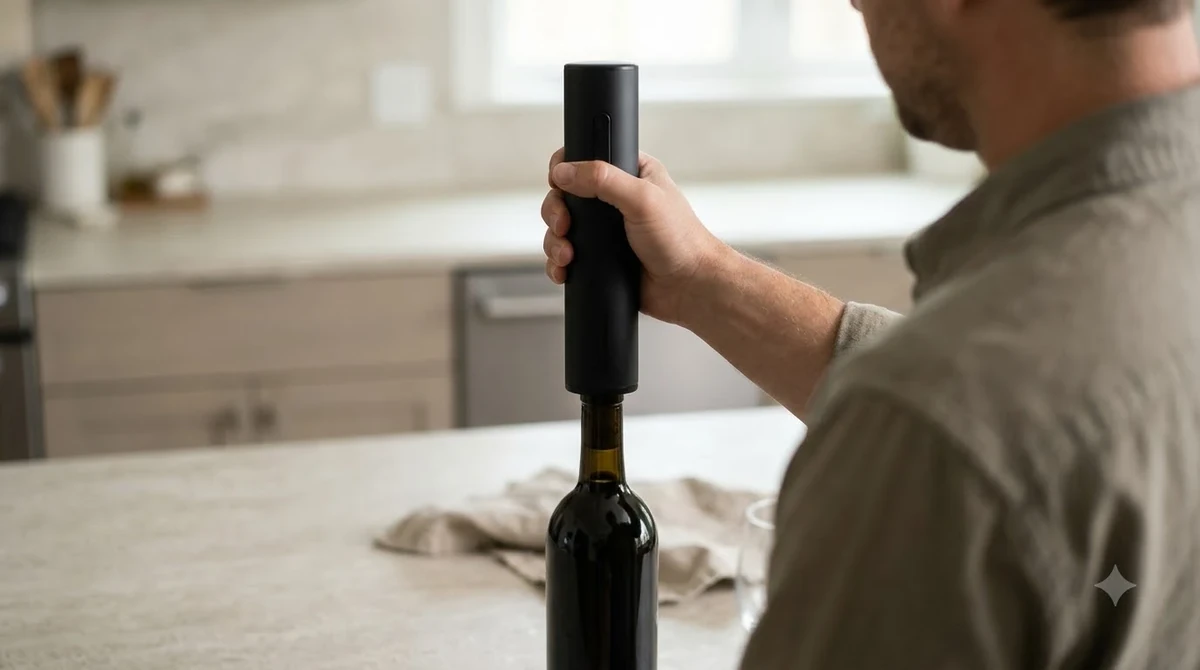
| Specification | Le Creuset Table Model Corkscrew |
|---|---|
| Product name | Table Model Corkscrew |
| SKU | 49052000140001 |
| Color | Shiny Black |
| Exterior dimensions | 5.7 × 3.0 × 1.0 inches |
| Piece count | 1 |
| Screw | Hand-sharpened, triple-coated stainless steel |
| Design details | Flared ends and cork guides |
| Cleaning | Hand wash |
| Country of origin | China |
| Warranty shown by Le Creuset | 5 years |
The size is a useful part of the design. At 5.7 inches long and 3 inches wide, the opener has enough body to sit over a bottle neck without taking up the storage space of a countertop lever model. Its one-piece listing also makes clear that the standard Table Model is a single opener, not a set with a separate foil cutter or display stand. Retail listings describe its body as plastic; the metal component that enters the cork is the coated stainless-steel screw. That division explains why it is light in the hand but does not feel like a solid-metal bar tool.
The screw coating and the guide system are the functional details to notice. A corkscrew that enters at an angle can tear a cork, leave fragments behind, or make the final extraction feel jerky. The Table Model’s internal guides are designed to keep the worm centered as it turns, while the flared base accommodates different bottle-neck shapes. Those are manufacturer-stated design aims rather than a guarantee that every damaged or unusually brittle cork will come out whole. Le Creuset lists hand washing and a five-year warranty for this model, so treat it as a manual kitchen tool rather than a dishwasher-safe utensil.
What Owners Like
The most consistent positive theme in owner comments is ease: users like being able to turn the handle without pulling hard on the cork. The continuous-turn system removes the leverage step required by a waiter’s corkscrew, and long-term users describe the table and pocket formats as dependable for ordinary bottles.
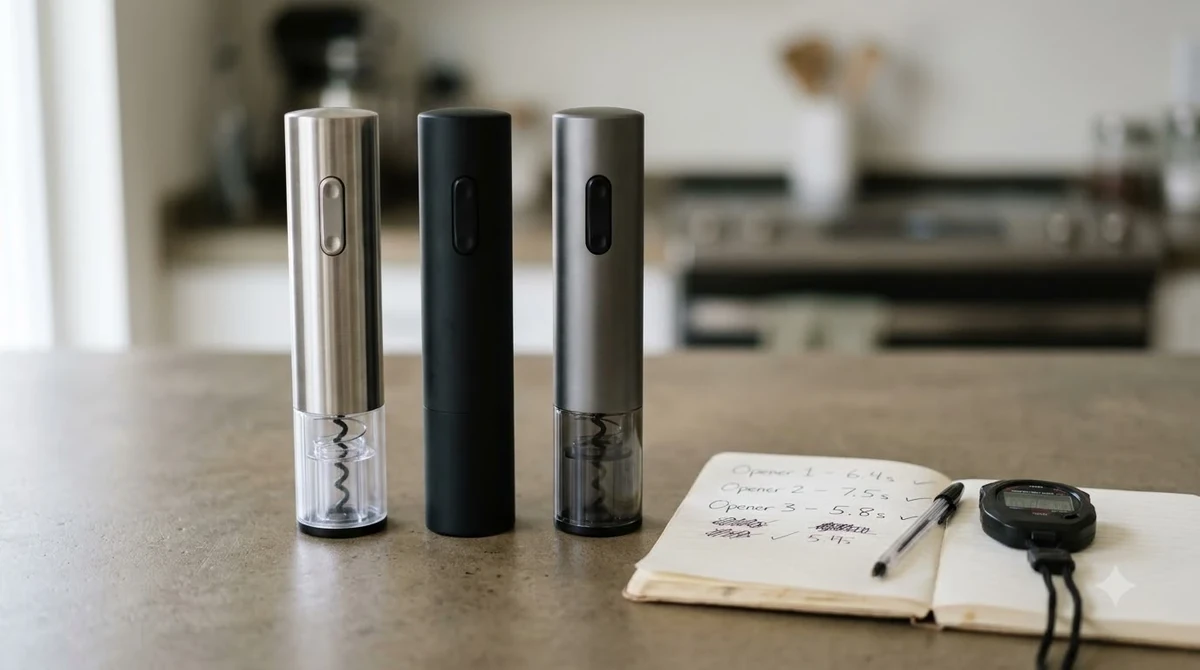
At IWA Wine, one customer describes the Table Model as easy to turn and remove corks with, while another says the classic table and pocket versions have remained in use for more than 25 years. A separate reviewer credits the narrow screw with avoiding cork breakage on younger bottles and says a two-prong Durand opener is preferable for very old bottles such as older Bordeaux and Barolo. These are individual owner experiences, not a promise that every cork will behave the same way, but they illustrate where the format earns loyalty: routine opening, predictable movement, and a familiar technique.
There is also a useful independent long-term account. A Serious Eats editor reports using the Table Model for around three years and hundreds of bottles, despite initially questioning its plastic construction. The reviewer describes placing the cage over the bottle neck, twisting until the screw is fully engaged, and continuing to turn so the cork rises out. The wide finger rest at the top of the worm gives the hand a defined place to grip, rather than asking the user to twist a narrow metal knob. That report supports the idea that a simple body can perform well over time, even if it does not provide the substantial feel of a metal lever tool.
Another point in its favor is that the user does not need to learn a multi-stage pull. A double-hinged waiter’s corkscrew asks the user to brace one notch against the bottle lip, lift, reposition, then finish the extraction. The Table Model avoids that two-stage sequence. New users still need to keep it square on the bottle and turn with control, but the motion is easier to explain and repeat: line it up, rotate, and let the screw do the lifting. For a household where several people open wine but not everyone is confident with a wine key, that uncomplicated action is a practical advantage.
Common Complaints
The clearest compromises are the plastic body and the missing foil cutter. Both are meaningful if you expect a heavy, all-metal accessory or want one tool to handle every step from capsule removal to cork extraction.
Good Housekeeping’s wine-opener comparison included the Le Creuset Original Table Model among the alternatives that did not make its final picks. Its testers liked the five-inch spiral worm for longer corks, but some were uneasy about the plastic body and worried it might break during extraction. The evaluation also notes that the opener does not include a foil-capsule cutter. That is a concern about perceived durability, not evidence that the body routinely breaks; the long-term Serious Eats account provides a counterexample of extended use. Still, buyers who prefer a metal frame may be happier with another format.
The lack of a foil cutter is the more definite everyday inconvenience. If the bottle has a capsule, you need a separate foil cutter or a suitable small knife before using the corkscrew. That adds a second item to the drawer and a small extra step at the table. It may not matter if most of the bottles you buy have a simple tear strip or little covering, but anyone who opens wine for guests will notice the omission more often. A user review at IWA Wine specifically wishes the design included a foil cutter, which reinforces that this is a real ownership consideration rather than a theoretical specification.
The plastic construction also changes the character of the tool. It keeps the design light and leaves the screw mechanism easy to handle, but it will not deliver the dense, metal-on-metal impression some buyers associate with premium barware. If a cork is extremely dry, fractured, or crumbly, no ordinary screw opener can remove the risk of pieces breaking away. A very old cork deserves a more specialized approach, and one long-time IWA Wine customer says they switch to a Durand for older Bordeaux and Barolo. This is a limitation of matching the tool to the cork, not a claim that the Table Model fails on normal bottles.
Tip: If the bottle has foil, remove the capsule cleanly before setting the opener in place. Center the guide over the neck, keep the bottle steady on a flat surface, and turn without forcing the handle if the screw stops moving normally.
Who Should Buy and Who Should Skip
The Table Model makes the most sense for home drinkers who open still wine regularly and value a simple, repeatable motion over a metal-heavy build. It is especially appealing for a kitchen drawer, dining room sideboard, or casual tasting setup where one person may open a bottle one night and another person the next.
Buyers who mostly open younger everyday wines with sound natural corks are the natural audience. The continuous-turn action is straightforward, the guide system helps keep the screw aligned, and the five-year manufacturer warranty gives the standard model a defined coverage period. The compact footprint also suits homes that do not have room for a bulky lever opener on the counter. For those who already use a separate foil cutter, the missing accessory may barely register as a drawback.
Skip it if your first priority is a metal-bodied tool, a built-in foil blade, or fast service across a long line of bottles. The plastic body is central to the design, not a removable panel or optional trim, and the product is sold as a one-piece corkscrew. A restaurant staff member or frequent host opening many bottles in succession may prefer a lever mechanism that reduces repetitive turning. A collector who often opens bottles with brittle, aged corks should also keep a two-prong or specialist opener available rather than asking a standard screw to solve every cork condition.
It is also not the right purchase for someone who wants one compact opener for a picnic bag, travel kit, and kitchen drawer. The Table Model is small compared with a lever machine, but its broad body is not as pocketable as a folding waiter’s friend. The site’s wine bottle opener keychain overview covers a much smaller carry format, while the broader Accessory Brands section helps place wine tools alongside other entertaining gear. Those are different use cases: portability favors a slim tool, while steady tabletop operation favors a centered frame.
How It Compares to Alternatives
The Table Model sits between a pocket wine key and a larger lever opener: it is guided and easy to repeat, but still requires the user to turn the handle for the full extraction. The most useful comparison is not a contest over brand prestige; it is which mechanism best matches the way you open bottles.
Good Housekeeping named the Pulltap’s Double-Hinged Waiter’s Corkscrew its best overall pick in its comparison of 28 openers. A waiter’s corkscrew is slimmer and easier to carry, and its hinged support lets the user pull the cork in two stages. It does require a little practice and arm strength, which is why the Le Creuset can feel simpler to newcomers. The same comparison lists the Le Creuset Table Model as an alternative, noting the long five-inch worm but raising concern about the plastic body and absent foil cutter. For a user who already knows how to work a wine key, Pulltap’s is the more versatile pocket tool; for a user who dislikes levering, the Table Model’s one-direction turning motion is more intuitive.
Le Creuset’s own One-Step Waiter’s Friend is a more complete pocket-style alternative. The manufacturer lists a stainless-steel body, a foldable foil-cutter blade, a built-in bottle opener, dimensions of 5.0 × 1.4 × 0.6 inches, and a five-year warranty. It is a better fit for someone who wants three functions in one folding tool, but it still uses a waiter-style leverage action rather than the Table Model’s self-pulling guide. The le nez du vin collection is not an opener alternative at all; it is a separate wine-aroma learning accessory for readers building out a tasting setup.
A vertical lever model such as the Rabbit Vertical Lever Corkscrew is the opposite choice. Good Housekeeping describes that style as a two-motion process: push down to drive the screw in, then lift to remove the cork. That can be faster for opening several bottles, but lever tools take more storage space and are less convenient to carry. For readers interested in another Le Creuset wine tool, the company also sells its separate lever and Trilogy families; those should not be confused with the Table Model simply because they share the same brand name. The Serious Eats account of the Table Model is useful context for its long-term everyday appeal, while Good Housekeeping’s comparison explains why buyers may prefer a different body style or an included foil cutter.
Frequently Asked Questions
These answers cover practical details that can be easy to miss when comparing a Table Model with other Le Creuset openers. The exact version matters, especially when checking compatibility, dimensions, or warranty coverage.
Does the Le Creuset Table Model work with synthetic corks?
IWA Wine describes the Table Model as suitable for natural and synthetic corks. That is a retailer description rather than a model-specific instruction reproduced on the current U.S. manufacturer page, so treat it as useful product guidance and avoid forcing the screw if a closure resists normal turning.
How much does the Table Model weigh?
IWA Wine lists the item at 0.5 pound. Le Creuset’s U.S. specification does not publish a weight, so treat the retailer’s figure as a catalog listing rather than a manufacturer-confirmed weight for the unboxed opener.
Does the five-year warranty cover normal wear?
Le Creuset’s U.S. wine-accessory warranty covers eligible defects in materials and workmanship, but excludes normal wear and tear, maintenance, abuse, and commercial use. The warranty starts from the original owner’s purchase date, including when the item was received as a gift.
Why do some listings call it the TM-110?
Le Creuset Singapore uses the name TM-110 Classic Table Model for its self-pulling table opener. That regional page describes the helical screw as Teflon-coated, while the current U.S. listing describes a hand-sharpened, triple-coated stainless-steel screw; check the regional model details when comparing listings.
What should I use for a very old bottle with a fragile cork?
One IWA Wine customer says they use a Durand for wines more than 15 years old, including older Bordeaux and Barolo. That is a personal practice rather than a universal age cutoff, but it shows why collectors often keep a specialist opener alongside a daily corkscrew.
The Le Creuset Table Model Corkscrew is a strong choice for uncomplicated, everyday opening if its plastic body and separate-foil-cutter requirement suit your preferences. Its guided self-pulling design is the main reason to buy it; choose a waiter’s friend, lever opener, or specialist tool instead when portability, speed, or fragile old corks matter more.
More in Wine Accessories
 Coravin Vs Vacu Vin: Choose the Right Wine Saver for Your BottlesUpdated Nov 21, 2026
 Zwilling Wine Stopper Review: Preserve Open Bottles LongerUpdated Nov 21, 2026
 Wine Enthusiast Wine Preserver Review: Features, Benefits and LimitationsUpdated Nov 21, 2026
 Wine Enthusiast Wine Stopper: An Easier Way to Reseal Open BottlesUpdated Nov 21, 2026
 Vintorio Wine Opener: Two-Step Cork RemovalUpdated Nov 21, 2026
 Zwilling Wine Aerator Review: Aerate, Pour, and Seal With One ToolUpdated Nov 21, 2026