

We may earn a commission when you buy through links on this page, at no extra cost to you. Learn more.
A laguiole wine opener is a traditional French-style sommelier corkscrew that combines a folding corkscrew, foil-cutting blade, and bottle-opening lever in an elegant, compact design. It appeals to wine enthusiasts who value careful construction, distinctive handle materials, and a traditional approach to opening bottles. However, Laguiole describes a knife-making tradition rather than one universal manufacturer, so craftsmanship, materials, and performance vary between makers.
A quality wine opener should do more than look attractive on a serving table. Its spiral should enter the cork cleanly, its lever should provide stable support against the bottle lip, and its folding mechanism should remain comfortable to operate. Laguiole sommelier knives bring these practical requirements together with French cutlery details, including decorative springs, distinctive handle shapes, and the recognizable bee emblem. This review examines their construction, everyday usability, potential drawbacks, and the details worth checking before choosing one.
Specs and Key Features
A Laguiole sommelier knife is best understood as a combination of traditional cutlery craftsmanship and practical wine-opening hardware. The most important components are the corkscrew spiral, extraction lever, foil knife, folding mechanism, and handle.
There is no single specification sheet covering every Laguiole wine opener. Different makers offer their own designs, and even products within one manufacturer’s collection can use different handle materials and finishes. Two useful reference points are the Forge de Laguiole original sommelier knife and the Château Laguiole Classic. The Forge de Laguiole sommelier knife specifications illustrate the combination of a five-turn spiral, specialized lever, and natural handle materials.
| Specification | Manufacturer example | What it means |
|---|---|---|
| Corkscrew spiral | 5 turns | Gradual penetration into the cork |
| Château Laguiole Classic length | 11.4 cm closed | Compact folding storage |
| Château Laguiole Classic weight | Approximately 90 g | Portable sommelier-style construction |
| Château Laguiole Classic body and lever | Sandvik 12C27 stainless steel | Corrosion-resistant metal construction |
| Forge de Laguiole lever | Patented operating principle | Designed for resistance during repeated use |
| Foil cutter | Sharpened or serrated blade, depending on model | Removes the capsule around the bottle neck |
| Handle options | Wood, horn, bone, and other materials | Different appearance, texture, and care requirements |
| Storage accessories | Leather case on selected Forge de Laguiole models | Protects the folded opener between uses |
The five-turn spiral is an especially important specification. Forge de Laguiole describes its conical design as suitable for delicate corks, including those found in older vintage wines. A gradual spiral can help distribute the penetration more evenly than an aggressively driven screw, although the condition of the cork and the user’s technique remain important.
The lever deserves equal attention. A well-designed lever provides a stable contact point against the bottle lip, allowing the user to extract the cork through controlled movement rather than relying entirely on arm strength. Forge de Laguiole describes its lever as a heated, cast-metal component developed for resistance during intensive use. Château Laguiole specifies Sandvik 12C27 stainless steel for the body and lever of its Classic model.
Handle construction is another major distinction. A wine-stock handle, briar wood, ebony, horn, or bone can give the same basic opening mechanism a very different appearance. Natural materials also vary in grain, color, and surface pattern, meaning two examples of the same model may not look identical.
For buyers, the practical conclusion is straightforward: examine the specifications of the individual model rather than assuming every Laguiole opener has the same dimensions, weight, steel, or mechanism.
What Owners Like
The strongest appeal of a Laguiole wine opener is its combination of useful opening functions and carefully finished construction. Buyers looking beyond a disposable or inexpensive corkscrew often appreciate the folding format, distinctive materials, and attention to mechanical details.
The traditional sommelier format is one of its most practical advantages. The folding blade cuts the foil, the spiral enters the cork, and the lever helps lift it from the bottle. These three functions eliminate the need to keep separate opening tools nearby. For someone who regularly serves wine at home, this compact arrangement makes sense on a dining table or bar cart.
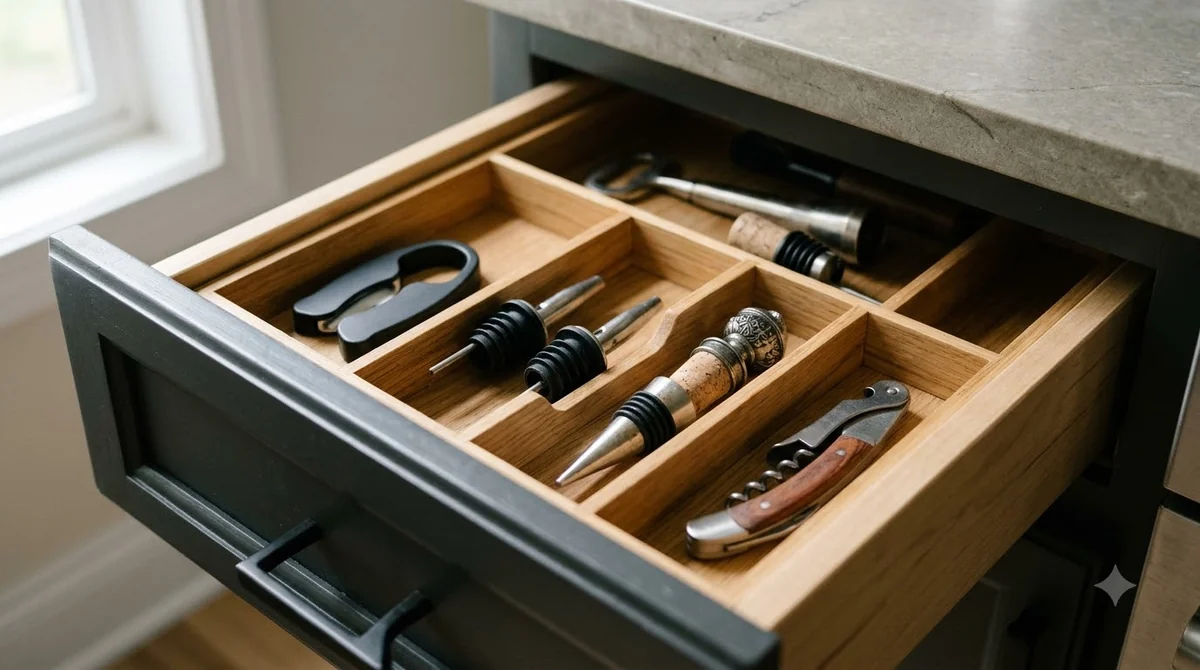
The folding design also makes storage easier. Unlike a large winged corkscrew or electric opener, a sommelier knife closes into a relatively small package. The Château Laguiole Classic, for example, measures 11.4 centimeters when closed. That compact size makes it convenient to place in a kitchen drawer, wine accessory case, or serving station.
The spiral design is another attractive feature. Forge de Laguiole uses a five-turn conical spiral, describing it as particularly useful for delicate corks. Older corks can be fragile, and an opening tool that allows gradual penetration is appealing to collectors and people who occasionally open mature bottles. No corkscrew can guarantee an intact old cork, but controlled insertion is preferable to forcing a screw through it.
Handle craftsmanship provides much of the product’s individual character. Forge de Laguiole offers handles made from selected natural materials, with individual pieces shaped by its knife makers. Its wine-stock handle is a particularly distinctive example for wine enthusiasts because it gives the opener a material connection to winemaking. Other available materials include precious woods, horn, and bone.
Château Laguiole’s briar handle provides another example. Briar is valued for its distinctive flame-like grain, and the pattern changes between individual pieces. This makes the opener feel more like a crafted personal accessory than a generic kitchen utensil.
Decorative details also contribute to the appeal. The bee emblem and guilloché spring are recognizable features associated with the traditional Laguiole aesthetic. These details do not extract corks by themselves, but they distinguish the design from ordinary stamped-metal openers.
Finally, a well-finished sommelier knife can make a thoughtful gift. Its usefulness is easy to understand, while the handle material, polished metal, and presentation case give it a more personal character. For someone who enjoys entertaining or collecting wine accessories, this balance of appearance and function can be particularly attractive.
Common Complaints and Limitations
A Laguiole wine opener is not automatically the right choice for every wine drinker. Its traditional folding mechanism, natural materials, and handcrafted details can introduce practical limitations that inexpensive or specialized alternatives avoid.
The first concern is variation between manufacturers. Laguiole is not one universal manufacturer or a guarantee of identical production standards. Several companies produce Laguiole-style sommelier knives, and the quality of their materials, assembly, finishing, and mechanisms can differ considerably.
This distinction matters because a decorative bee or a curved handle does not independently establish the quality of an opener. Buyers should identify the actual maker and look for specific manufacturing information. A product listing that simply says Laguiole may provide too little information to judge the construction accurately.
The second limitation is the folding mechanism. A sommelier knife requires the user to open the blade and lever, position the spiral, and control the extraction process. Someone accustomed to a lever-operated countertop opener may find this technique less convenient at first. The small size can also be less comfortable for people who prefer large handles or have difficulty manipulating compact mechanisms.
Natural handles require additional care. Wood and horn can be sensitive to excessive moisture, heat, and prolonged exposure to water. A natural wood handle may also develop changes in color or surface appearance over time. These characteristics are not necessarily defects, but they do mean that a Laguiole opener is not a dishwasher-friendly kitchen utensil.
The foil-cutting blade requires attention. A sharp blade can cut capsules neatly, but it introduces an additional handling consideration. Users need to open and close it carefully, keep fingers away from the cutting edge, and store the opener with the blade folded away after use. This is particularly important in households where children may access kitchen drawers.
Price and perceived value can also be difficult to assess. Without a consistent manufacturer, material specification, or production standard, the Laguiole name alone does not explain why one opener costs more than another. Decorative finishing may contribute to the purchase decision, but it should not replace an examination of the spiral, lever, hinge, and handle assembly.
Another potential frustration is the learning curve. A two-stage lever requires controlled repositioning, and the corkscrew must remain straight during extraction. Pulling sideways or applying excessive force can damage the mechanism or break a fragile cork.
For buyers who open bottles only occasionally, a simpler waiter’s corkscrew may provide everything necessary. The extra craftsmanship of a Laguiole model is most valuable when the owner appreciates the materials, design, and ritual of using it.
Who Should Buy and Who Should Skip
A Laguiole wine opener makes the most sense for someone who appreciates traditional French cutlery and wants a compact, reusable wine-opening tool. It is especially appealing to regular wine enthusiasts who value handle materials, mechanical construction, and presentation as much as basic functionality.
Who should buy one
Frequent home wine drinkers are a natural audience. If opening a bottle is part of regular dinners, weekend gatherings, or entertaining, a folding sommelier knife provides a convenient combination of tools. Its foil blade, five-turn spiral on selected models, and lever make it suitable for routine bottle service.
Collectors of wine accessories may appreciate the individual character of natural handles and decorative metalwork. A briar, ebony, horn, or wine-stock handle can make an opener a distinctive addition to a collection. Different finishes and materials also provide opportunities to choose an accessory that complements existing glassware and serving equipment.
Experienced wine servers may appreciate the traditional waiter’s format. The compact construction is easy to carry, and the two-stage lever can provide controlled cork extraction when used correctly. Someone who regularly serves different bottle formats may prefer this familiar arrangement over a bulky mechanical opener.
Gift buyers can also consider the category. A sommelier knife with an attractive natural handle and protective case is a practical present for a wine enthusiast, especially when the maker offers personalization or presentation packaging.
Who should skip one
People who prioritize speed and simplicity may prefer an electric wine opener or countertop lever opener. These alternatives can require less hand coordination, particularly when opening several bottles in succession.
Buyers who want minimal maintenance may be better served by a straightforward stainless-steel corkscrew with fewer natural materials. A Laguiole knife requires attention to its hinge, blade, and handle, and its maintenance instructions may prohibit soaking or dishwasher cleaning.
People with limited hand dexterity should consider the folding blade, compact grip, and lever movement before purchasing. The traditional format is functional, but it is not necessarily the easiest design for every user.
Occasional wine drinkers on a practical budget may not benefit enough from the decorative details to justify choosing a premium handcrafted accessory. A dependable basic waiter’s corkscrew can open a bottle perfectly well without the additional material and finishing considerations.
The most important question is whether the owner will appreciate the entire product rather than only its ability to remove a cork. If craftsmanship and design matter, a quality Laguiole model has a clear appeal. If convenience is the only priority, simpler equipment may be more appropriate.
How It Compares to Alternatives
Laguiole sommelier knives occupy a particular position between ordinary waiter’s corkscrews and more specialized mechanical wine openers. Their defining advantage is the combination of a traditional folding format, carefully finished materials, and a functional lever mechanism.
A conventional waiter’s corkscrew follows a similar operating principle. It generally includes a small foil knife, spiral, and hinged lever, but construction and finishing are usually more utilitarian. This makes the standard design a sensible option for restaurant service, travel, or everyday use where appearance is less important than affordability and straightforward operation.
A winged corkscrew uses two rising arms to help extract the cork. Turning its central handle drives the spiral into the cork, and pressing the arms down pulls the cork upward. This format can feel easier for beginners, although the tool is generally larger than a folding sommelier knife.
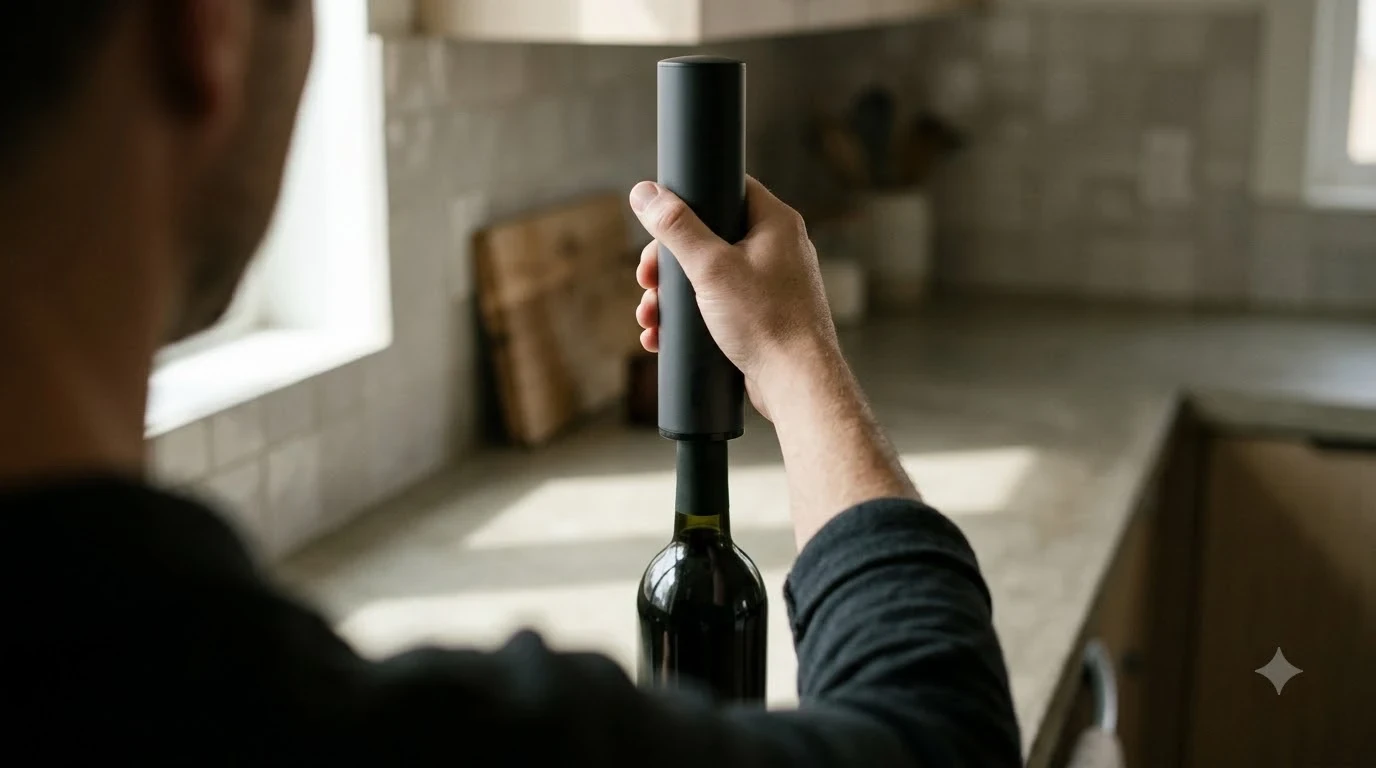
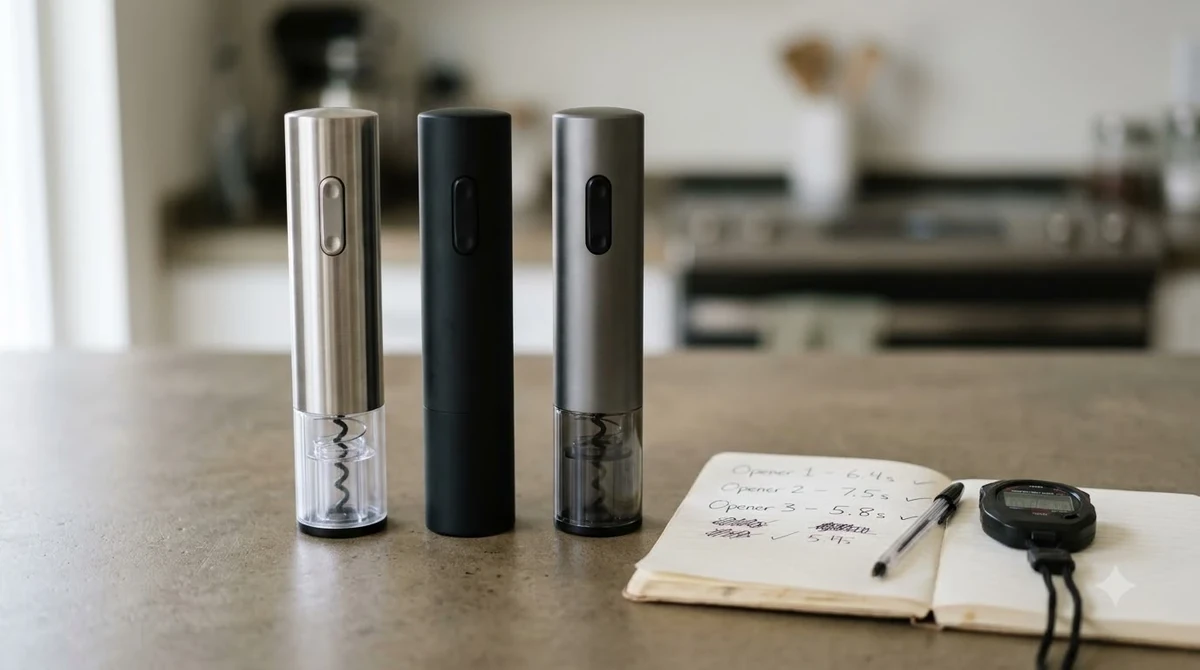
An electric wine opener uses a powered mechanism to remove corks. It is particularly convenient for people who open multiple bottles during a gathering or dislike manual extraction. However, it requires a power source or charged battery and does not provide the same traditional hand-operated experience.
Another alternative is a specialized two-prong wine opener, often called an Ah-So. Rather than drilling into the cork, it slides two narrow prongs between the cork and the bottle neck. This makes it useful for some older bottles with fragile corks, where a conventional spiral may cause crumbling. It requires its own technique and is not a general replacement for a sommelier knife.
| Opener type | Main advantage | Main limitation | Best use |
|---|---|---|---|
| Laguiole sommelier knife | Traditional design and compact construction | Requires careful manual technique | Wine enthusiasts and collectors |
| Basic waiter’s corkscrew | Simple, familiar operation | Less emphasis on decorative finishing | Everyday bottle opening |
| Winged corkscrew | Accessible lever-assisted extraction | Bulkier storage footprint | Casual home use |
| Electric wine opener | Powered cork extraction | Requires charging or batteries | Opening multiple bottles |
| Ah-So opener | Can extract fragile corks without piercing them | Requires a separate technique | Older wines with delicate corks |
The Laguiole format is particularly appealing when the opener itself is part of the serving experience. It is compact enough to keep close to the wine glasses and decanter, and its folding design is more discreet than a countertop machine.
For a simpler portable accessory, a wine bottle opener keychain offers a different approach. It is intended for convenience and portability rather than the traditional construction and full foil-cutting functionality of a sommelier knife.
Someone assembling a more complete wine-serving collection may also consider a wine opener and preserver set. That combination addresses both bottle opening and keeping unfinished wine for later, whereas a Laguiole knife focuses on opening.
For a home entertaining area, the opener can also complement a bar cart, where glassware, wine accessories, and serving tools are kept together. The best choice depends on whether the priority is mechanical convenience, portability, or traditional craftsmanship.
Care, Storage, and Everyday Use
Proper care helps preserve the mechanism, cutting blade, and handle of a Laguiole sommelier knife. The most important habits are controlled cork extraction, prompt cleaning, moisture protection, and occasional maintenance of the folding joints.
Opening a bottle correctly
Begin by positioning the bottle securely on a stable surface. Open the foil-cutting blade carefully and cut the capsule around the bottle neck, avoiding unnecessary contact with the glass or fingers. Fold the blade away before moving to the corkscrew.
Place the spiral vertically in the center of the cork. Turn it gradually, keeping it aligned with the bottle neck. Forge de Laguiole specifically advises against driving the spiral completely through the cork because piercing it can introduce cork fragments into the wine.
Once the spiral is properly inserted, position the lever against the bottle lip. Use the support point to begin lifting the cork, then reposition the lever if the design requires a second stage. Keep the tool straight rather than twisting it sideways.
This controlled approach is especially important with mature bottles. Old corks can become dry, brittle, or weakened, so aggressive pulling may cause them to break. A slow, steady movement is preferable to a sudden tug.
Tip: Keep the corkscrew centered and aligned with the bottle neck throughout extraction. If the cork resists, pause and adjust the lever position rather than forcing the handle sideways. This helps protect both the cork and the opener’s mechanism.
Cleaning the handle and metal components
Forge de Laguiole recommends wiping its sommelier knife rather than washing it. This is particularly important for models with natural handles, because wood and horn can be affected by excessive moisture.
After use, wipe the metal components with a soft, slightly damp cloth and dry them immediately. Remove wine residue and fingerprints before folding the knife closed. Avoid immersing the opener in water or leaving it in a damp sink. The manufacturer’s sommelier knife maintenance guide provides additional instructions for cleaning, lubrication, and storage.
Château Laguiole gives similar advice for its briar-handled Classic model. The manufacturer recommends wiping the handle dry and avoiding dishwashers and soaking. It also explains that a small amount of microcrystalline wax can help restore the appearance of a dull briar finish.
Maintaining the folding mechanism
Moving parts should operate smoothly without excessive resistance. Forge de Laguiole recommends occasional lubrication at the joint between the blade and spring. Château Laguiole also advises applying food-grade mineral oil to moving parts when slight resistance develops.
These instructions should not be treated as interchangeable for every product. Follow the maintenance recommendations supplied by the actual maker, particularly when the opener has a specialized finish or handle material.
Protecting the opener between uses
Store the knife in a dry location, with the blade and corkscrew folded safely into the handle. A leather case, where supplied, offers additional protection against scratches and accidental contact with other utensils.
Avoid leaving the opener in a hot car, near a wet sink, or in a drawer where heavy kitchen equipment can strike the handle. Natural materials benefit from stable storage conditions, while the folding mechanism should be protected from impacts.
These simple habits help preserve the appearance and function of a quality sommelier knife. They also make the opener more dependable when it is needed for a dinner gathering or an important bottle.
Frequently Asked Questions
Is Laguiole a brand or a style of wine opener?
Laguiole refers to a traditional French knife style associated with the village of Laguiole in the Aubrac region. Multiple manufacturers produce Laguiole-style products, including specialist makers with their own designs and manufacturing locations. Buyers should identify the actual manufacturer rather than treating the name as proof of a single origin.
What does the bee symbol mean on a Laguiole opener?
The bee is a recognizable decorative emblem associated with traditional Laguiole knives. Its appearance is part of the visual identity of the style, alongside curved handles and decorative spring work. The presence of a bee alone does not establish a product’s authenticity or manufacturing quality.
Can a Laguiole wine opener be used for sparkling wine?
A traditional sommelier corkscrew is designed for bottles with conventional cork closures, not for extracting pressurized sparkling-wine corks. Champagne and other sparkling wines should be opened by controlling the cork and turning the bottle gently. A spiral corkscrew should not be inserted into a pressurized sparkling-wine cork.
Does a five-turn spiral guarantee that an old cork will remain intact?
No. A five-turn spiral is a construction feature intended to support controlled cork penetration, but cork condition remains important. Storage history, age, moisture loss, and previous damage can all affect extraction. Particularly fragile corks may require a specialized two-prong opener instead.
Can a Laguiole sommelier knife be engraved?
Some manufacturers offer personalization options. Forge de Laguiole, for example, describes diamond-tip engraving on the back of selected blades, with certain blade finishes excluded. Availability depends on the individual model and its construction, so personalization should be confirmed before ordering.
A Laguiole wine opener is an appealing choice for people who want more than a basic corkscrew: it combines practical bottle-opening functions with traditional French cutlery design and distinctive materials. The best purchase is one from an identifiable manufacturer with clearly documented construction, a dependable lever, and a handle that suits the owner’s maintenance preferences. Give equal attention to the actual mechanism and the decorative finish, and a well-chosen sommelier knife can become a useful, lasting part of a wine-serving collection.
More in Wine Accessories
 Coravin Vs Vacu Vin: Choose the Right Wine Saver for Your BottlesUpdated Nov 21, 2026
 Zwilling Wine Stopper Review: Preserve Open Bottles LongerUpdated Nov 21, 2026
 Wine Enthusiast Wine Preserver Review: Features, Benefits and LimitationsUpdated Nov 21, 2026
 Wine Enthusiast Wine Stopper: An Easier Way to Reseal Open BottlesUpdated Nov 21, 2026
 Vintorio Wine Opener: Two-Step Cork RemovalUpdated Nov 21, 2026
 Zwilling Wine Aerator Review: Aerate, Pour, and Seal With One ToolUpdated Nov 21, 2026