

We may earn a commission when you buy through links on this page, at no extra cost to you. Learn more.
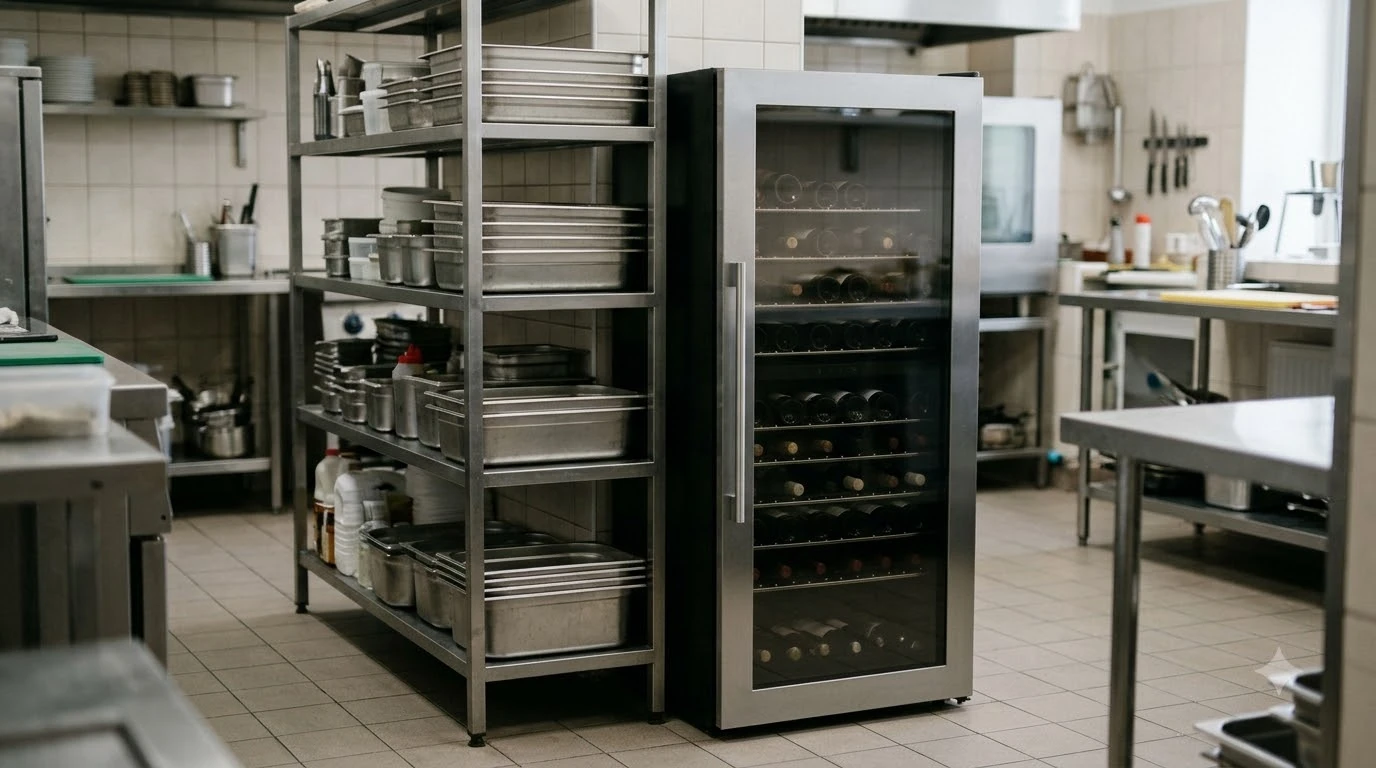
A Koolatron wine fridge is a practical choice for wine drinkers who want compact, freestanding storage, straightforward temperature controls, and options for single-zone or dual-zone cooling. The brand offers capacities ranging from small 12-bottle cabinets to larger wine refrigerators, with features such as removable racks, mirrored glass doors, and thermoelectric cooling on several models. Its main appeal is convenient home storage rather than professional wine-cellar performance, so the right purchase depends on bottle capacity, temperature requirements, room conditions, and the specific model’s warranty.
Koolatron makes wine coolers for apartment kitchens, dining rooms, home bars, and other spaces where a conventional refrigerator or full-size wine cellar would be impractical. Its range includes compact single-zone units, narrow dual-zone cabinets, and larger-capacity refrigerators. Understanding the differences between these product lines matters because two Koolatron wine fridges can have substantially different temperature ranges, cooling systems, and storage arrangements despite sharing the same brand name.
Brand Overview: What Koolatron Offers Wine Collectors
Koolatron focuses on accessible home appliances and cooling products, with wine refrigerators forming part of its broader appliance selection. Its wine storage range emphasizes compact dimensions, practical bottle organization, and straightforward operation rather than elaborate cellar-management systems.
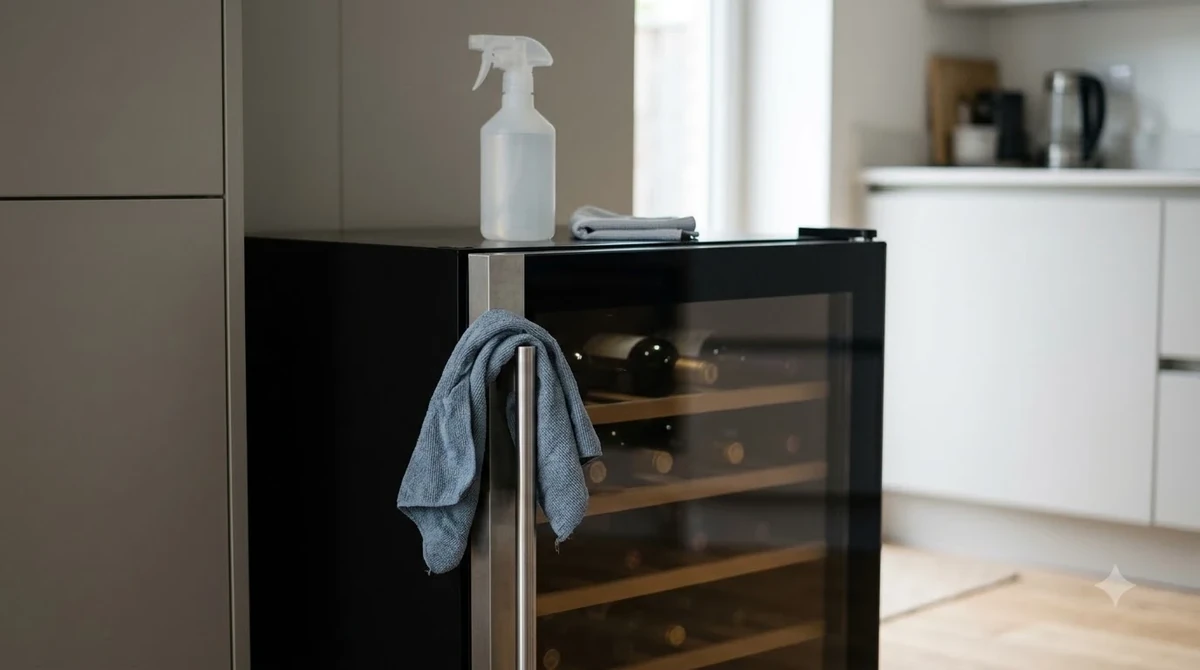
The manufacturer’s wine refrigerator collection includes several configurations, from 12-bottle countertop or floor-placement options to larger cabinets designed for households with more substantial collections. Some models use thermoelectric cooling, while the collection also includes compressor-based options. This distinction is important because the cooling technology affects operating characteristics and the conditions in which an appliance is most appropriate.
Many Koolatron wine coolers feature glass doors, removable shelving, interior lighting, and adjustable temperature controls. These are useful everyday features for someone who wants to keep several wine styles organized without dedicating an entire room to wine storage. However, the exact combination depends on the model. A basic single-zone cooler should not be assumed to offer the independent temperature settings found in a dual-zone model.
The brand’s product range also addresses different installation constraints. A narrow cabinet can fit into a tighter floor space, while a wider unit may offer more flexibility for different bottle arrangements. Some models are described as suitable for countertop or floor placement, whereas others are designed specifically as freestanding appliances.
Is Koolatron a good brand? It can be a sensible option for casual wine drinkers who value compact storage and simple controls. Buyers who need precise long-term cellar conditions, extensive humidity management, or specialized commercial equipment should evaluate more advanced refrigeration categories before choosing a small consumer wine cooler.
For shoppers comparing several appliance manufacturers, the brand hubs provide another way to assess product ranges and practical differences before committing to a purchase. It is more useful to compare individual specifications and support terms than to assume every appliance from one manufacturer performs identically.
Product Lines Explained: Single-Zone, Dual-Zone, and Larger Cabinets
Koolatron’s wine refrigerator lineup includes single-zone and dual-zone configurations, with capacities suited to different household collections. The most important distinctions are the number of bottles accommodated, the available temperature range, and whether the cabinet allows separate settings for different wine styles.
| Product or configuration | Capacity | Temperature range | Main features |
|---|---|---|---|
| WC12MG single-zone | 12 bottles | 46–66°F | Thermoelectric cooling, removable shelves, mirrored glass |
| WC12-DZ dual-zone | 12 bottles | Upper: 54–66°F; lower: 42–66°F | Two six-bottle zones, touchscreen, four removable racks |
| WC18DZ dual-zone | 18 bottles | 46–66°F per zone | Two nine-bottle zones, removable racks, mirrored glass |
| WC18 MG slim dual-zone | 18 bottles | Upper: 54–66°F; lower: 46–66°F | 10-inch-wide cabinet, separate compartments |
| WC29 dual-zone | 29 bottles | Consult model documentation | Larger capacity, separate compartments, digital controls |
The specifications above come from the corresponding manufacturer product pages and model-specific manuals. They are not interchangeable: different capacities and model generations can have different controls, temperature ranges, and installation requirements.
The WC12MG is a straightforward example of the single-zone approach. Its 12-bottle capacity and 46°F to 66°F adjustment range suit households that primarily want one general storage environment. The temperature is controlled through an adjustment knob inside the cabinet rather than the external touchscreen arrangement found on certain newer configurations.
The WC12-DZ takes a different approach. Its upper compartment accommodates six bottles and operates between 54°F and 66°F, while the lower compartment accommodates six bottles and operates between 42°F and 66°F. Independent controls make it possible to maintain separate settings for red and white wines, although the useful temperature range of each zone should be considered before assigning bottles.
For households with more bottles, the WC18DZ offers 18-bottle capacity divided into two nine-bottle sections. The WC18 MG slim version also holds 18 bottles but uses a narrower cabinet measuring 10 inches across, with eight bottles assigned to the upper zone and ten to the lower zone.
The larger WC29 configuration adds more storage capacity and its manual provides detailed instructions for temperature selection, installation, and troubleshooting. Buyers should consult its model-specific documentation rather than assume that the temperature specifications of a smaller Koolatron dual-zone cooler also apply to this cabinet.
For the complete selection and current model descriptions, visit the official Koolatron wine refrigerator collection.
One practical consideration across the range is bottle shape. Published capacity figures generally refer to standard 750 mL Bordeaux bottles. Wider Champagne bottles, Burgundy bottles, and unusually shaped bottles can occupy more space, reducing the actual number that fits comfortably.
What the Koolatron Brand Does Well
Koolatron’s strongest advantages are compact storage, accessible controls, and a range of configurations that address different household needs. Its feature selection is particularly relevant to people who want to organize a modest wine collection without buying a large built-in refrigeration system.
Compact dimensions and flexible placement
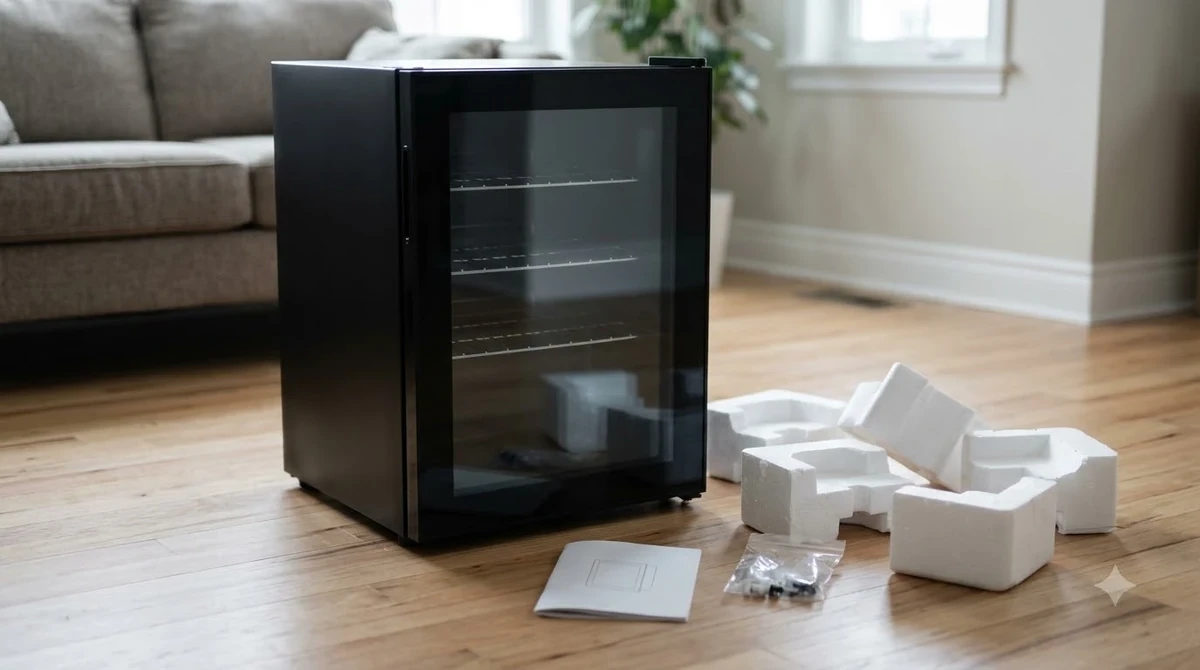
The 18-bottle slim dual-zone cabinet is a useful example of space-conscious design. At 10 inches wide, it provides separate storage areas while taking up less horizontal floor space than many wider wine refrigerators. Its 18-bottle capacity is divided between eight upper and ten lower positions.
The 12-bottle models are also attractive for smaller collections. Rather than keeping wine bottles scattered between a kitchen refrigerator, cabinets, and countertop storage, a dedicated wine cooler provides one organized location. Removable shelving gives owners some flexibility when bottle shapes differ from the standard arrangement.
Separate temperature settings
Dual-zone cooling is another meaningful advantage. Red and white wines are generally served at different temperatures, so two independently controlled compartments can make a mixed collection easier to manage.
For example, a household that regularly serves Cabernet Sauvignon and Sauvignon Blanc may prefer a warmer upper compartment for the red wine and a cooler lower compartment for the white wine. The exact settings depend on the model’s available range and whether the owner prioritizes serving temperature or longer-term storage.
Useful everyday features
Several Koolatron models include mirrored glass doors designed to reduce ultraviolet exposure, interior LED lighting, and external controls. These features improve convenience without requiring the owner to open the door every time a temperature adjustment is needed.
Thermoelectric cooling is another feature found on several smaller models. Its low-vibration operation is appealing to wine drinkers who want a quieter appliance and wish to minimize mechanical disturbance. The WC12-DZ and WC18DZ product descriptions specifically identify thermoelectric technology as part of their design.
These advantages make Koolatron worth considering for modest home collections. They do not, however, eliminate the importance of ambient temperature, ventilation, door seals, or the appliance’s actual ability to maintain its selected temperature under household conditions.
Common Complaints and Limitations to Consider
Koolatron wine refrigerators have practical limitations that buyers should understand before ordering. Capacity restrictions, temperature variation, installation requirements, and differences between model manuals are more important purchasing considerations than appearance alone.
Published capacity may exceed practical capacity
A cooler advertised for 12 or 18 bottles is generally rated around standard Bordeaux-shaped bottles. Sparkling wine bottles and wider Burgundy-style bottles can take up additional room. If a collection contains several Champagne bottles or broad-bodied bottles, the available storage space may be noticeably smaller than the headline capacity suggests.
Removable shelves help address this problem, but removing or repositioning a rack can reduce the number of bottles stored at once. Buyers with varied bottle shapes should examine the interior layout rather than relying exclusively on the advertised bottle count.
Thermoelectric cooling has environmental limitations
Thermoelectric models are appealing for quieter operation, but they are not automatically suitable for every room. Ambient temperature can affect cooling performance, particularly when the surrounding environment becomes unusually hot.
The Koolatron 29-bottle manual specifies an operating ambient range of 59°F to 77°F. It also calls for at least five inches of ventilation clearance around the appliance. These are important requirements for installation, especially if the cooler will sit near a sunny window, oven, or other heat-producing equipment.
Temperature readings are not a guarantee of exact bottle temperature
A displayed setting represents the cooler’s selected target rather than a guarantee that every bottle has reached precisely that temperature. The 29-bottle manual describes possible temperature variation of approximately plus or minus 5°F depending on ambient conditions and the amount of wine loaded.
This is an important consideration for people who want precise wine service. A separate refrigerator thermometer can help owners understand the actual conditions inside their cabinet. Temperature stability should be considered alongside the displayed number.
Warranty terms require model-specific attention
Older Koolatron manuals do not necessarily describe the same warranty as newer products. For example, the WC12MG manual specifies a 90-day warranty against defects in materials and workmanship. That information should not be generalized to every wine cooler currently sold under the brand.
Buyers should also understand that a warranty may exclude damage resulting from misuse, accidents, or neglect. Retaining purchase documentation and obtaining the correct model manual are sensible steps before installation.
These limitations do not make Koolatron a poor choice. They simply indicate that its compact wine coolers are best evaluated as household appliances with specific operating conditions rather than as universal replacements for professional wine-cellar equipment.
How to Choose the Right Koolatron Wine Fridge
The right Koolatron model depends on how many bottles you own, which wine styles you keep, and where the appliance will operate. A simple capacity and temperature assessment can eliminate unsuitable models before you compare individual features.
Start with your actual bottle collection
Count the bottles you expect to store simultaneously rather than the total number you might purchase over an entire year. A 12-bottle cooler can be sufficient for someone who keeps a few everyday whites, rosés, and reds. A household that frequently buys wine by the case may benefit from an 18-bottle or larger cabinet.
Allow additional capacity for bottle shapes that do not fit the standard Bordeaux profile. If your collection includes several sparkling wines, consider whether removing a rack would make the layout more practical.
Choose between single-zone and dual-zone cooling
A single-zone model is generally the more straightforward option when most of the collection consists of one wine style or when you prefer to store everything at one consistent temperature. The WC12MG, with its 46°F to 66°F range, is an example of this arrangement.
A dual-zone model is more useful when red and white wines are regularly stored together and you want independent temperature adjustments. The WC12-DZ, for instance, offers an upper range of 54°F to 66°F and a lower range of 42°F to 66°F.
However, do not assume every dual-zone model has the same temperature capabilities. The WC18DZ provides a 46°F to 66°F range in both compartments, while the WC12-DZ has a cooler lower-zone minimum.
Measure the installation location
Measure the available width, depth, and height before choosing a model. Include space for opening the door, accessing the controls, and maintaining the ventilation clearance required by the specific manual.
The 18-bottle slim model is particularly relevant when width is restricted because its cabinet measures 10 inches across. Nevertheless, a narrow cabinet still needs sufficient surrounding space for air circulation and safe access.
Consider your wine-serving habits
Storage temperature and serving temperature are related but different goals. A cooler that maintains a convenient storage environment may not have a suitable setting for every wine’s ideal serving temperature.
Typical serving guidelines provide a useful starting point:
- Sparkling wine: 40°F to 50°F.
- Light whites and rosé: 45°F to 50°F.
- Full-bodied whites: 50°F to 55°F.
- Light reds: 55°F to 60°F.
- Full-bodied reds: 60°F to 65°F.
- Sweet whites: 43°F to 50°F.
A cooler’s minimum setting may be colder than necessary for long-term storage, while its upper setting may be useful for holding certain red wines closer to serving temperature. Choose the appliance based on the temperatures it can actually maintain, not just the number of zones.
Compare the cooling system and controls
Thermoelectric cooling is a common feature among Koolatron’s smaller wine refrigerators. It is attractive when quiet operation and reduced vibration are priorities. Larger-capacity buyers should also compare the compressor-based models in the collection rather than assuming the same technology is used throughout the range.
External touchscreen controls are convenient because temperature adjustments can be made without opening the door. Traditional internal controls are simpler, but require access to the cabinet interior. Neither arrangement is automatically superior; the best choice depends on how frequently you expect to change settings.
Tip: Before buying a Koolatron dual-zone wine cooler, compare the minimum and maximum temperatures of both compartments separately. A model that offers a 42°F lower-zone minimum and another that starts at 46°F may have meaningfully different usefulness for sparkling wine and chilled whites.
Finally, compare the manufacturer’s current warranty information with the documentation supplied for the exact model. If you’re considering other compact appliance brands, you can also compare whether Black and Decker is a good brand or whether Galanz is a good brand to understand how different manufacturers position their household cooling products.
Warranty, Manuals, and Customer Support
Model-specific documentation is particularly important with Koolatron because different wine coolers can use different control systems and have different warranty conditions. Owners should locate the correct manual before installation and retain their purchase receipt for potential service requests.
Finding a Koolatron wine cooler manual
The most reliable starting point is the official Koolatron website’s product page or manuals section. Search using the model number printed on the appliance identification label rather than searching only for the phrase Koolatron wine cooler manual.
For example, the WC12MG has a manual describing a 12-bottle single-zone wine cellar with an internal temperature adjustment knob. That procedure should not automatically be applied to the WC12-DZ, which uses external digital touch controls and independently adjustable compartments.
The distinction matters because control-panel procedures can differ significantly. Some models use a simple warm-to-cold dial, while others require selecting a zone before changing its temperature. Older manuals may also refer to controls or indicator lights that do not appear on newer appliances.
Understanding warranty documentation
The WC12MG manual specifies a 90-day limited warranty covering defects in materials and workmanship. It describes replacement parts and labor as covered items, while excluding commercial or industrial use and damage caused by misuse, neglect, accidents, or abuse.
The same manual instructs owners to retain the original dated purchase receipt and identifies Koolatron service centers in Batavia, New York, and Brantford, Ontario. These are details for the specific manual and should not be treated as a universal warranty statement for all current products.
For a newly purchased appliance, confirm the warranty period directly with the retailer and manufacturer. Keep the order confirmation, model number, serial number, and original packaging information where practical. Written confirmation is especially useful if the retailer’s return window differs from the manufacturer’s warranty coverage.
Where to get help with a malfunction
Koolatron’s documentation identifies several issues owners can investigate before requesting service. A cooler that does not operate may have an unplugged power connection or a tripped circuit breaker. A unit that does not cool adequately may have an unsuitable temperature setting, excessive door opening, or an improperly sealed door.
For the 29-bottle dual-zone model, the manual identifies E1 as a temperature-sensor problem, E4 as a defrost-sensor problem, and E6 as a communication fault. It advises owners not to disassemble the appliance to investigate these error codes themselves.
For general product comparisons, a buyer can also review whether ROVSUN is a good brand before deciding which manufacturer offers the most suitable combination of features, documentation, and customer support.
Frequently Asked Questions
Is Koolatron a good brand for wine storage?
Koolatron is worth considering for household collections that need compact, dedicated refrigeration. Its products cover several capacities and cooling configurations, but buyers should distinguish basic serving-temperature storage from professional cellar storage. A dedicated wine cellar with more advanced environmental controls may be more appropriate for valuable bottles intended for extended aging.
Can a Koolatron wine fridge store Champagne bottles?
Champagne bottles can be wider than standard Bordeaux bottles, so they may not fit the standard rack arrangement in every model. Removable shelves can provide additional flexibility, but this may reduce the total number of bottles stored. Measure the bottle diameter and available interior clearance before relying on the advertised capacity.
How long should a Koolatron wine cooler run before loading wine?
Allow the cabinet to reach its selected temperature before loading a full collection, and avoid repeatedly opening the door during initial cooling. The exact cooling time depends on the model, starting room temperature, and the number of bottles loaded. The WC29 manual also recommends allowing approximately two hours upright before initial electrical connection after transportation.
Can a Koolatron wine fridge be installed inside a kitchen cabinet?
Do not assume a freestanding Koolatron model is suitable for enclosed cabinetry. The WC29 manual specifies five inches of clearance around the appliance, and restricted airflow can affect cooling performance. Only use an enclosed installation if the specific model’s documentation explicitly permits it.
Why does a Koolatron wine cooler sometimes make clicking or gurgling sounds?
Some refrigerator noises are associated with normal operation rather than a mechanical failure. The Koolatron troubleshooting documentation describes gurgling from refrigerant movement and popping or crackling from the expansion and contraction of interior walls. Persistent abnormal noise, excessive vibration, or cooling failure should be investigated through the appropriate service channel.
Koolatron offers a useful selection of compact wine refrigerators, with single-zone and dual-zone configurations for different collection sizes and household layouts. The strongest buying decision comes from matching the exact model’s capacity, temperature range, cooling technology, and installation requirements to your wine habits. For casual home storage, the lineup deserves consideration, provided you verify the model-specific manual and warranty before purchasing.
More in Brand Hubs
 Icyglee Wine Fridge: Compare Capacities, Features and ModelsUpdated Nov 20, 2026
 Fomup Wine Fridge: Explore Models, Features, and Buying TipsUpdated Nov 20, 2026
 Aaobosi Wine Fridge: Compare Models and Choose the Right CoolerUpdated Nov 20, 2026
 Orymuse Wine Fridge Reviews: Compare Capacities, Features and WarrantyUpdated Nov 20, 2026
 Tylza Wine Fridge: Find the Right Cooler for Your CollectionUpdated Nov 20, 2026
 Vintec Wine Fridge: Features, Warranty, and Buying AdviceUpdated Nov 20, 2026