

We may earn a commission when you buy through links on this page, at no extra cost to you. Learn more.
The Hudson Valley wine region is a cool-climate growing area in eastern New York, anchored by the Hudson River Region American Viticultural Area, where growers work with French-American hybrids and a rising share of European vinifera. The federal designation dates to June 4, 1982, making it New York’s first American Viticultural Area. According to New York Wines, the state’s wine promotion site, the AVA holds 59 wineries and 446 acres under vine. The region’s own promotion argues that the valley’s airflow, not the water in the river, shapes the wine.
Most American wine lovers hear about California, Oregon and the Finger Lakes long before they hear about the Hudson Valley. That is a missed opportunity, because the valley has one of the longest winemaking records in the country. Wine Enthusiast calls the Hudson River Region one of the oldest wine-growing areas in the nation, and its story runs from late-1600s plantings through a 1976 state law that reshaped small-scale winemaking. This guide covers where the region sits, how its climate works, the grapes growers rely on, the Cabernet Franc push, the winery culture and how to serve and pair these wines at home.
Where the Hudson Valley Wine Region Sits on the Map
The region follows the Hudson River valley north of New York City, and it carries its own formal wine designation. Wine Folly reports that the Hudson River Region AVA was established on June 4, 1982, making it New York’s first AVA. A separate Upper Hudson AVA lies farther north, and New York Wines counts 20 wineries there compared with 59 in the Hudson River Region itself.
New York Wines describes the region as best known as the Hudson Valley Region, and it argues that the valley’s shape and airflow, rather than the water in the river, influence the wine. That distinction explains why the region’s marketing talks so much about climate. The valley funnels air in from the south, and that movement is the factor the region highlights.
The scale is modest by New York standards, but the figures are useful for context. The table below pulls together the core numbers from the two sources, so you can see the size of the vineyards and the winery count at a glance.
| Measure | Figure | Reported by |
|---|---|---|
| AVA established | June 4, 1982 | Wine Folly |
| Vineyard area under vine | 446 acres (180 hectares) | New York Wines |
| Farms growing grapes | 79 | New York Wines |
| Wineries in the AVA | 59 | New York Wines |
| Average growing season | About 190 days | New York Wines |
| Average summer temperature | 74°F (23°C) | New York Wines |
| Average winter temperature | 21°F (-6°C) | New York Wines |
Climate: Hot Summers, Cold Winters and a Shorter Season
The valley runs cold in winter and humid in summer, which pushes growers toward cold-hardy vines and rewards varieties that can ripen within a fixed window.
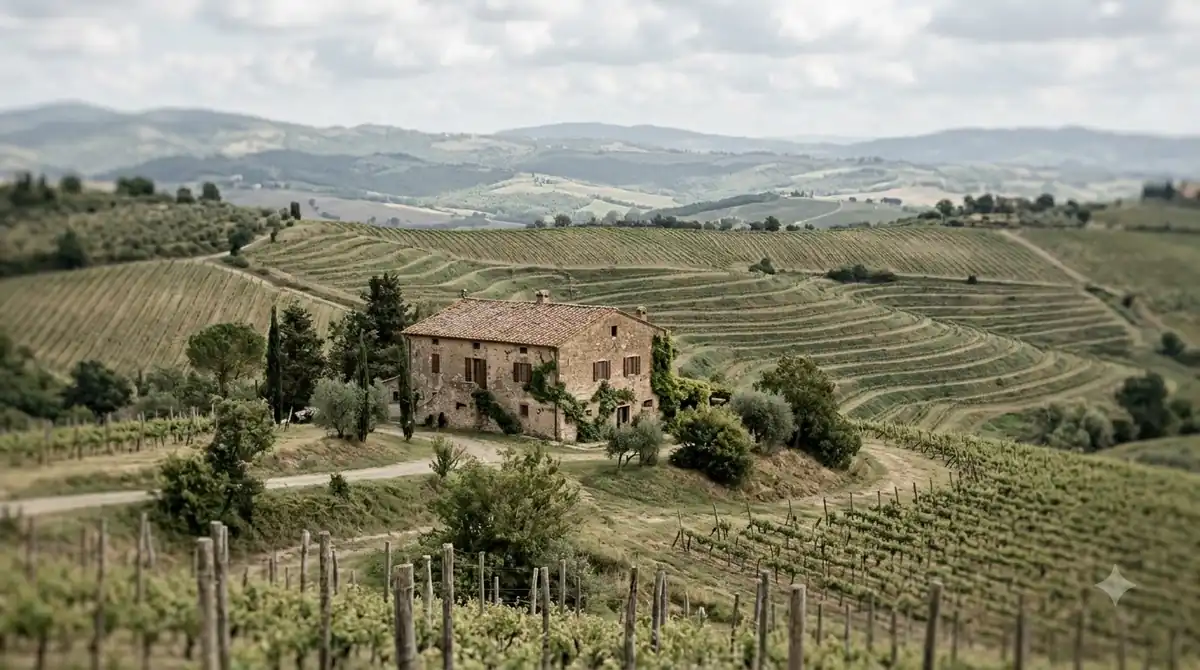
In its regional profile, New York Wines puts the average summer temperature at 74°F (23°C). Winds from Canada pull the average winter temperature down to 21°F (-6°C), which limits the region’s primary grapes to cold-hardy varieties. The growing season averages about 190 days, so vines have a defined stretch to ripen fruit before autumn cools the vineyards.
Rain timing matters as much as total rainfall. July is wetter in the Hudson Valley than in the rest of New York, while September and October, the critical harvest window, see less. The lowlands also receive less rainfall than the rest of the state, because moisture moving inland from the Atlantic tends to fall over the Hudson Highlands and the mountains of New England. Readers who want a point of comparison from outside North America can start with the eden valley wine region guide.
Humidity has a double edge. Wine Folly describes warm, humid air sweeping up the river valley from the Atlantic, and New York Wines says the humid evenings keep grapes developing even when the sun is not shining. Those conditions help fruit ripen, but they also create high disease pressure, which is why growers lean on resilient varieties and careful vineyard work.
A History That Starts With French Huguenots in the 1600s
The region’s wine story begins in the late 1600s and moves through the 19th century, when native and hybrid varieties took over from early experiments and commercial estates began to appear.
French Huguenot settlers at New Paltz tried to grow vinifera vines in the late 1600s. New York Wines says those early attempts failed, likely because of disease, and native grapes dominated until varieties such as Isabella took hold in the early 19th century. Wine Enthusiast adds that the Huguenots mostly made wine for personal consumption, so the first plantings were a household effort rather than a business.
Commercial growing followed. New York Wines identifies Croton Point Winery as the first commercial vineyard, established in 1827, which eventually grew to 75 acres (30 hectares) and supplied New York City with grapes before producing some of the first wines in the 1860s. Wine Enthusiast ties the start of commercial winemaking in the area to the 1820s, when hybrid grapes arrived that could handle frigid winters and humid summers. Brotherhood Winery, originally founded as Blooming Grove Winery, began in 1839 and is the oldest continuously operating winery in the country, according to New York Wines.
Grapes: Hybrids Built the Reputation and Vinifera Is Gaining
Hybrids such as Seyval Blanc and Baco Noir built the region’s identity, and vinifera plantings are increasing alongside them.
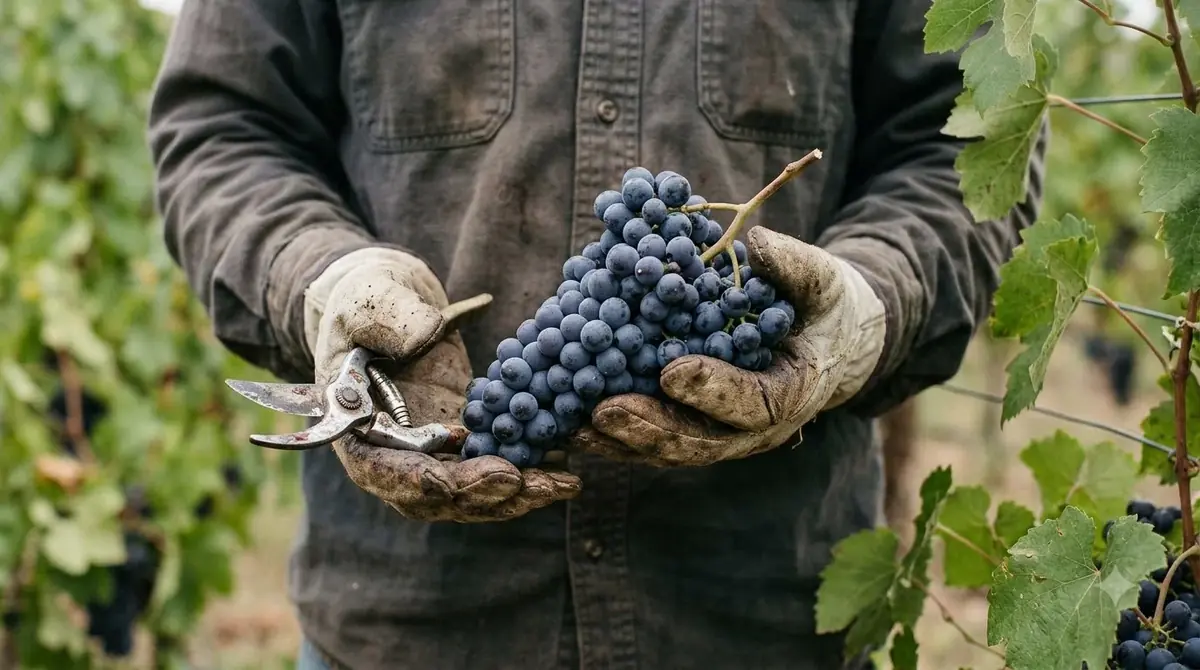
New York Wines names Seyval Blanc, Cayuga White, Baco Noir, Marechal Foch and Traminette among the French-American hybrids the valley helped develop. Seyval Blanc has citrus in both aroma and taste, along with a minerality sometimes compared to white Burgundy. Baco Noir is a cool-climate alternative to Pinot Noir, with rich blueberry and plum tones rather than the grapey notes common to other Vitis riparia varieties. Vidal Blanc shows grapefruit and pineapple, and its tough outer skin makes it well suited to ice wine.
Vinifera is the direction growers are moving. New York Wines lists Cabernet Franc, Pinot Noir, Chardonnay, Riesling, Albariño, Malbec and Gamay among the varieties seeing increased plantings, and Wine Folly names Cabernet Franc, Pinot Noir, Chardonnay and Riesling as the most planted vinifera in the region. The shift began in earnest around 1982, when John Dyson started experimenting with Pinot Noir, Chardonnay and Cabernet Franc at his Millbrook farm. Millbrook Vineyards & Winery followed in 1985, and according to Hudson Valley Wine Magazine it became the first vineyard in the Hudson River Region dedicated exclusively to vinifera.
The hybrids have not disappeared. Hudson Valley Wine Magazine describes them as foundational to the region’s identity, and their cold-hardy, disease-resistant character still matters in a valley with harsh winters. The most sensible reading is that growers have layered vinifera on top of a hybrid base rather than replacing it. Readers comparing other eastern American growing areas can also look at the yadkin valley wine region as a reference point.
Cabernet Franc Has Become the Region’s Calling Card
Cabernet Franc has moved from a niche planting to the valley’s most discussed red, backed by a grower-led coalition and a growing list of award-winning estates.
Hudson Valley Wine Magazine says Cabernet Franc ripens earlier than many comparable red vinifera varieties, a real advantage in a shorter season. It also tolerates winter cold and summer humidity with notable resilience. The grape existed in small pockets before the 1990s, but it came into its own during the late 1990s and 2000s, once growers learned to match sites and farming methods to it.
The Hudson Valley Cabernet Franc Coalition was founded about a decade ago by Doug and MaryEllen Glorie of Glorie Farm Winery, along with publishers Robert Bedford and Linda Pierro. Early members include Benmarl Winery, Millbrook Vineyards & Winery, Whitecliff Vineyard, Robibero Winery, Milea Estate Vineyard, Quartz Rock Vineyard, Fjord Vineyard and Rosina’s Winery. The push has reached the state level, with bills before the New York legislature that would officially recognize Cabernet Franc as the state’s signature red grape.
The wines back up the enthusiasm. Wine Enthusiast gave Millbrook’s 2017 Proprietor’s Special Reserve Cabernet Franc 90 points, noting 15 months in oak, aromas of red cherry coulis and allspice, and finely knit tannins supported by juicy acidity. Those notes show the grape’s balance of red fruit and structure, which makes it a flexible partner at the table.
How the Hudson Valley Wine Region Built Its Tasting-Room Culture
A 1976 state law changed how small farms could sell their own wine, and much of today’s tasting-room culture traces back to that change.
The New York Farm Winery Act passed on June 4, 1976, and Governor Hugh Carey signed it into law. Before it, fewer than twenty wineries operated across the entire state. Growers depended on larger wineries to buy their grapes, and a three-tier system kept production, wholesale and retail separate. Wineries were prohibited from running tasting rooms, and about 95 percent of a winery’s output had to go through a distributor. Hudson Valley Wine Magazine’s look back at the act covers the law’s origins in detail.
Benmarl Winery in Marlboro, founded by Mark Miller, played a pivotal role in lobbying for the act and received Farm Winery License No. 1 for its efforts. Hudson Valley Wine Magazine credits the law with kick-starting a statewide industry, and new estates followed quickly. Clinton Vineyards in Clinton Corners was founded in 1976, Cascade Mountain Winery in Amenia in 1977, and Millbrook Vineyards & Winery in 1985. The Hudson Valley Wine Company, which operated from 1904 to 1987, and Brotherhood expanded their visitor experiences and direct-to-consumer sales under the act.
Over the following decades, further laws widened the options. A micro-winery Farm License allowed small producers to make up to 1,500 gallons of wine or cider a year. Hudson Valley Wine Magazine says the boutique, experiential model the valley helped pioneer is now the norm in tasting rooms across the country. Today many estates offer much more than a flight of wine, with live music, wood-fired pizza, hard cider, spirits and agritourism alongside the glasses, which makes the region a tourism destination as much as a wine region.
Serving and Pairing Hudson Valley Wines at Home
Serving temperature and food matching change how these wines taste, and the rules for the region’s main grapes are straightforward.
Crisp whites such as Seyval Blanc show best between 45 and 50°F, the same range that suits light whites and roses. Sweet whites, including ice wine made from Vidal Blanc, do well from 43 to 50°F. Medium-bodied reds such as Cabernet Franc and Baco Noir fit the 55 to 60°F range, which keeps their fruit lively. A standard 750 ml bottle pours about five 5-ounce glasses, so one bottle covers a small dinner party comfortably.
Pairing comes down to acidity, sweetness and fat. Acidic food needs a wine with equal or higher acidity, so Seyval Blanc’s bright citrus suits lemon-herb dishes or fresh goat cheese. A wine should be at least as sweet as the dessert beside it, so pour ice wine with fruit tarts rather than chocolate. Keep oily fish away from firmer reds, since oil clashes with tannin, and remember that alcohol and tannin amplify chili heat, so a spicy curry may call for a softer, fruitier pour.
Tip: If a bottle has spent time in a warm kitchen, give it about 15 minutes in the fridge so a Cabernet Franc lands within 55 to 60°F rather than drifting above it.
Store bottles on their side in a cool spot near 55°F, and once opened, keep still wines refrigerated for three to five days. Young full-bodied reds benefit from 30 to 60 minutes of decanting, but most medium-bodied Hudson Valley reds open up with much less time. For a broader map of how regions differ, see the Wine Regions section.
Frequently Asked Questions
How far is the Hudson Valley wine region from New York City?
Wine Folly describes the Hudson River Region as within an hour of downtown Manhattan, although traffic can stretch that considerably. Because the wineries sit spread along a long valley, a route with two or three stops keeps a day trip manageable.
Do Hudson Valley wines get serious critical attention?
Hudson Valley Wine Magazine says the region has earned major awards from the Great American International Wine Competition and consistent scores of 90 or higher from Wine Enthusiast and Decanter. It also reports that Millbrook Vineyards & Winery has been nominated for Wine Enthusiast’s American Winery of the Year.
How many wineries does New York State have in total?
New York Wines counts 471 wineries statewide, including 144 in the Finger Lakes and 82 on Long Island. Another 131 operate outside any named AVA, so many producers sit beyond the state’s official regions.
Why were hybrid grapes so important to the region?
Wine Folly notes that producers in the late 1800s created new hybrids that remain important today. It describes these cold-hardy, disease-resistant vines as often the only workable way to grow and make wine in New York’s cool climate.
Is Chelois worth seeking out?
Wine Enthusiast says quality Baco Noir and Chelois can be found in the Hudson River Region, and it notes that Vitis vinifera grapes such as Pinot Noir, Riesling and Chardonnay are also common. Looking for both hybrids alongside a vinifera bottling gives a fair picture of the valley’s range.
The Hudson Valley wine region rewards curiosity because its history, climate and grapes vary more than a single regional label suggests. Start with a Cabernet Franc or a Seyval Blanc, then compare a hybrid and a vinifera from a second estate to see how the valley’s style shifts from producer to producer.
More in Wine Regions
 Willcox Wine Trail: Discover Arizona’s High-Elevation Wine CountryUpdated Nov 20, 2026
 Yakima Valley Wine Region: Find the Best Styles to TryUpdated Nov 20, 2026
 Vosne Romanee Wine Tasting: Identify Aromas and Choose Better PairingsUpdated Nov 20, 2026
 Yakima Valley Wine Festival: Find the Best Seasonal Wine EventsUpdated Nov 20, 2026
 Wales Vineyards: Discover Cool-Climate Wines and Where to VisitUpdated Nov 20, 2026
 Yountville Wine Festival: Discover Napa Wines and Local FoodUpdated Nov 20, 2026