


We may earn a commission when you buy through links on this page, at no extra cost to you. Learn more.
How to open a wine bottle with a knife usually means prying or pushing the cork with the blade, and it is the least reliable and least safe improvised method. Knife use tends to tear the cork, drop fragments into the wine, and can crack the glass, so a corkscrew or a cork puller is the better choice in nearly every case. If a knife is the only tool available, slow, careful technique and a strainer for the pour reduce the risk of injury and mess.
A knife is one of the first items people reach for when a bottle has no corkscrew nearby, and the idea of opening wine with a blade appears in many stories and films. In practice, the method is awkward, and the cork is rarely removed cleanly. This guide explains why a knife is a poor tool for the job, what the risks are, and how to handle the situation if you have no choice.
Why a Knife Is a Poor Tool for a Cork
A cork is designed to be pulled out in one piece by a tool that grips it from the center and draws it straight up. A knife has a broad, flat blade and a sharp edge, neither of which suits that task. Pushing the blade beside the cork tends to tear the stopper rather than lift it, and a knife tip can drive fragments further into the neck.
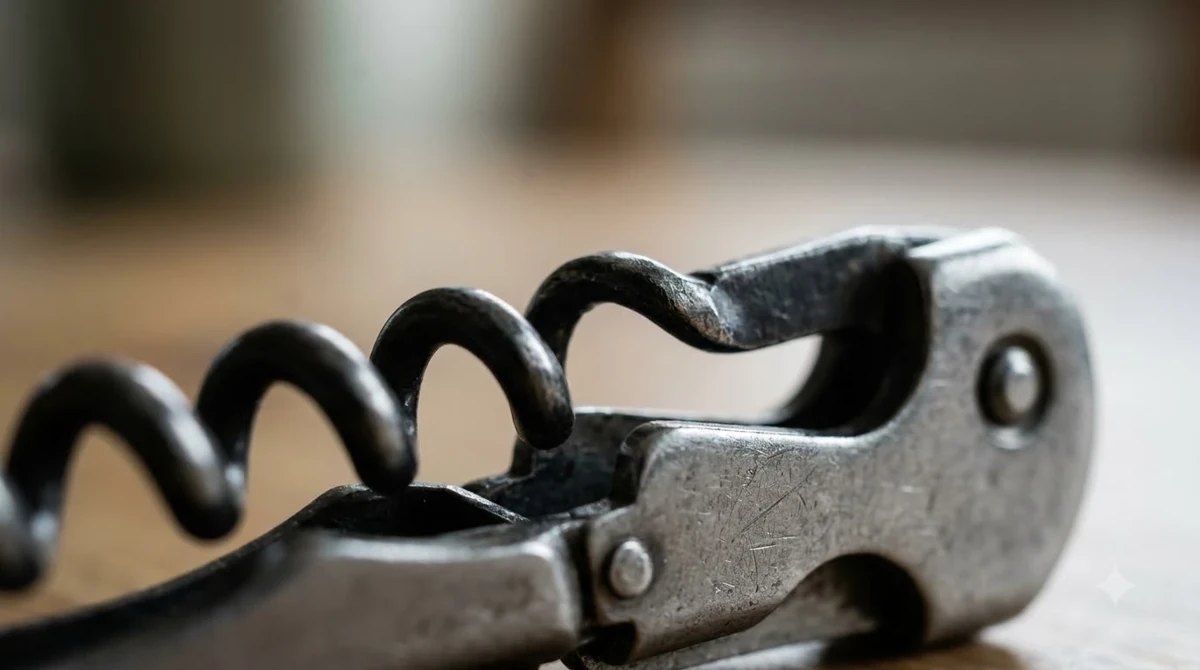
The Wikipedia article on the corkscrew explains that designs such as the twin-prong cork puller are made to slide down beside the cork and draw it out intact, which is the opposite of what a knife does. The difference is one reason experienced drinkers recommend keeping a proper tool on hand rather than trying to improvise with a kitchen knife.
The Risks of Using a Knife
The main risks are cuts, broken glass, and cork pieces in the wine. A blade working near the neck can slip, especially if the bottle is wet or the hand is tired. Pressure from pushing or prying can also stress the glass, and a bottle that cracks around the neck can release wine and glass fragments onto the counter or into a glass.
Cork fragments are the everyday problem. Even with careful work, small pieces of cork often break off and float in the wine. These are unpleasant to drink, and they can be hard to remove completely. Pouring through a fine strainer helps, but a strainer is only effective if the wine is poured slowly and the bottle is held steady.
Safer Ways to Work With a Knife
If a knife is the only tool available, the safest approach is to keep the bottle on a stable, flat surface with a towel underneath and the neck angled away from your body. Work the blade gently around the edge of the cork rather than jabbing, and avoid using excessive force. Stop if the glass feels stressed or the cork begins to split into pieces.
Once the cork is free or pushed into the bottle, pour slowly through a strainer, a clean cloth, or a coffee filter. Tilt the bottle at a shallow angle so any stopper pieces remain behind the filter. Decant the wine into a jug if you can, which leaves fragments and sediment behind. Clean the blade and the neck before the next step, so no grit reaches the glass.
| Method | Cork condition | Main drawback |
|---|---|---|
| Knife blade used to pry or push | Firm, intact cork | Often tears the cork and drops fragments |
| Key pushed into the bottle | Firm cork with room in the bottle | Cork can crumble and spill wine |
| Twin-prong cork puller | Most corks, including older ones | Needs careful placement beside the cork |
| Lever or waiter’s corkscrew | Almost any cork | Takes a little practice |
What About Sparkling Wine and Sabering?
Knife techniques are sometimes linked to sparkling wine, and the most famous example is sabrage, where a blade is slid along the bottle and strikes the lip to break off the neck. The Wikipedia article on sabrage describes how the bottle holds significant internal pressure, and that the released top and cork can travel several metres, while loose glass can remain on the neck. The technique is a ceremony with practice and specific equipment, not a substitute for a corkscrew.
The article also notes that the lip and seam of a bottle create stress points that weaken the glass, which is why an impact breaks it so readily. That is exactly the kind of force that makes an improvised knife method dangerous on a still wine bottle, where the cork is not designed to come out under pressure in the same way.
Good Habits When You Have Only a Knife
Choose a bottle that is at room temperature and has been left still, because shaking it increases the risk of spills. Keep the blade dry and clean, and work away from any fine glassware. Have a clean towel ready to wipe up the wine and a jug or bowl to catch the first pour. These simple steps reduce mess and make the job easier to finish safely.
Pace yourself as well. Rushing the job is the usual reason a cork breaks apart or a blade slips, and a few extra minutes spent easing the cork out will save the wine and protect your hands. If the first attempt does not work, stop and reassess rather than forcing the blade deeper into the neck.
If the bottle is one you intend to keep, consider recorking it after pouring. A cork that has been pushed in may not reseal well, so store the bottle sealed and cool. For broader questions about storing wine once it has been opened, the guide on whether red wine can be chilled covers temperature and everyday habits.
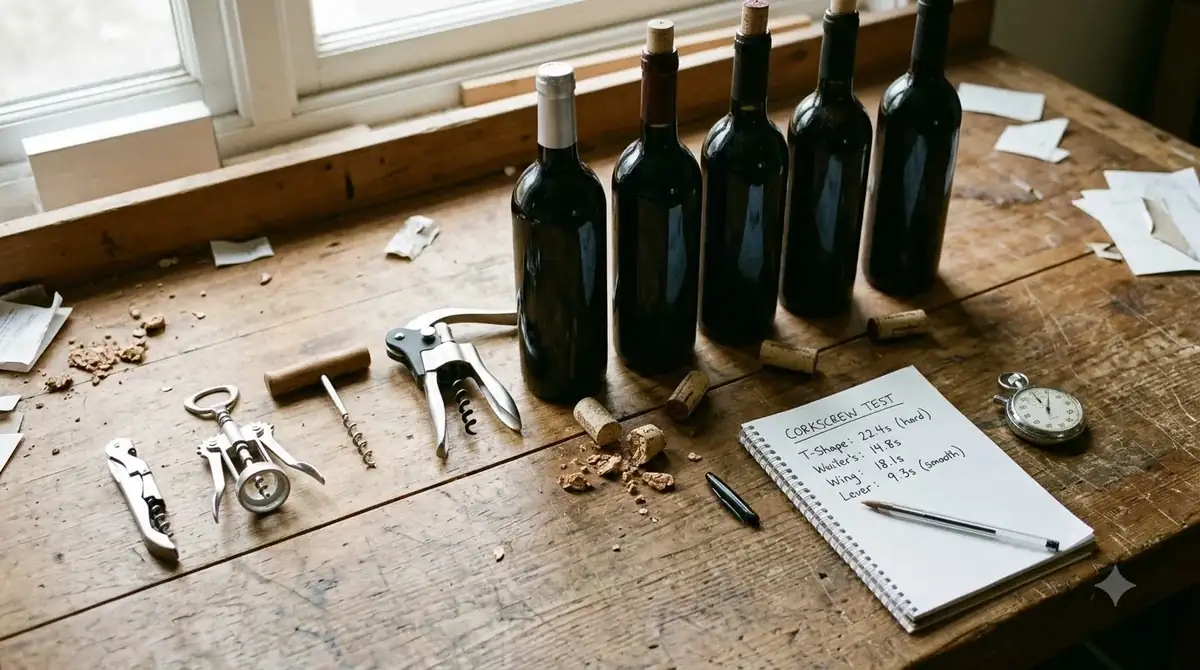
Tip: Keep a basic corkscrew in a drawer or in your bag for events. A cheap lever-style tool costs far less than a broken bottle or a cut hand.
Frequently Asked Questions
Can you open a wine bottle with a knife?
It is possible to push or pry the cork with a knife blade, but the method usually tears the cork and leaves fragments in the wine. It is an emergency option, not a reliable one, and a corkscrew is much better.
Is it safe to open wine with a knife?
The method carries risks of cuts and broken glass, especially if the blade slips or the bottle is under pressure. Work slowly on a stable surface, keep fingers clear of the blade, and stop if the glass feels stressed.
How do I keep cork pieces out of the wine?
Decant or pour slowly through a fine strainer, a clean cloth, or a coffee filter. Keep the bottle at a shallow angle so any fragments stay behind the filter as the wine comes out.
What is the difference between opening with a knife and sabrage?
Sabrage is a ceremonial technique for sparkling wine, where a blade strikes the bottle lip to break off the neck. Opening a still wine with a knife is a different and less controlled process, with a cork that usually tears rather than separating cleanly.
A knife can open a bottle in an emergency, but it rarely does so cleanly, and the risks of cuts and cork fragments are real. A corkscrew remains the best tool for everyday use. For a related method using a different everyday object, see the guide on opening a wine bottle with a key, and the wine Q&A section covers other basic questions about bottles and serving.
More in Wine Basics
 Which Rose Is Best for Your Taste, Budget, and Food PairingsUpdated Nov 21, 2026
 Is Cheap Wine Bad? How to Find Bottles Worth DrinkingUpdated Nov 21, 2026
 What To Write On A Wine Gift Tag: Thoughtful Messages For Every OccasionUpdated Nov 21, 2026
 Which Wine Is Best For Weight Loss? Compare Lower-Calorie ChoicesUpdated Nov 21, 2026
 What Is The Best Wine For Mimosas? Choose Bubbly That Balances Orange JuiceUpdated Nov 20, 2026
 Which Prosecco Is Best for Your Taste and OccasionUpdated Nov 20, 2026