

We may earn a commission when you buy through links on this page, at no extra cost to you. Learn more.
Knowing how to decant wine takes only a few steps: pour it slowly from the bottle into a clean glass decanter, then let it sit for a while before serving. Decanting exposes the wine to air, which can soften harsh tannins and let aromas open up. It is most useful for bold reds, and a few minutes is often enough for a young bottle, while bigger wines can benefit from up to two hours.
This guide covers what decanting does, which bottles deserve it, and the simple steps to do it at home without special equipment beyond a decanter or a clean pitcher.
What decanting actually does
Decanting has two purposes that are often mixed up. The first is aeration: the wine meets oxygen as it flows into the decanter and while it rests, which can soften a closed or tight wine. Wine Folly’s decanting guide describes the pour itself as doing much of the work, and notes that swirling the wine in the decanter increases its exposure to air.
Both goals lead to the same practical habit: pour gently and watch the wine. Aeration is about giving the wine air and time, while sediment removal is about controlling the flow so that solids stay in the bottle. Many home cooks and wine lovers combine the two, decanting a bottle slowly, then letting it rest before the first glass.
The second purpose is separating sediment from older wines. Some mature bottles form natural deposits that are harmless but gritty, and a slow, steady pour lets you leave that sediment behind in the bottle. This is a different goal from aeration, and it is the main reason collectors decant very old reds.
Which wines need decanting
Not every bottle needs a decanter. Most white wines and lighter reds are fine poured straight into a glass, and decanting them can reduce their freshness. The bottles that benefit most are big, tannic, and young, because air helps those tannins feel smoother.
Wine Folly lists several examples: massive cabernet sauvignons, Italian reds such as Barolo, Brunello di Montalcino, and Chianti, and Syrah, Malbec, and Petite Sirah. The same guide notes that some cheaper young wines can smell sulfurous when first opened, and that the smell often fades after decanting. A very acidic pinot noir that tastes too tart may also taste smoother after a short rest in a decanter.
| Wine type | Decant? | Typical approach |
|---|---|---|
| Big cabernet sauvignon or Syrah | Yes | Longer rest, often close to two hours |
| Barolo or Brunello | Yes | Give it time to open up before pouring |
| Young, inexpensive red | Often helpful | A short rest can soften a closed or sulfurous nose |
| Old, mature red with sediment | Yes, carefully | Pour slowly and stop at the sediment line |
| Most white wines | Usually not | Serve chilled straight from the bottle |
How long to decant
Timing depends on how young and structured the wine is. Wine Folly gives a range of as little as five minutes up to about two hours, and it suggests the longer end for high-tannin wines. For Syrah, the guide recommends about two hours before drinking, while many younger reds need far less.
A practical approach is to start with a short rest, taste, and then decide whether to wait longer. Tasting every thirty minutes or so helps you find the point where the wine feels rounder without losing its fruit. If a wine tastes flat after a long rest, it may have been decanted too early or for too long, so keep a note for next time.
Step-by-step: how to decant wine at home
Start by standing the bottle upright for a day if you are working with a sediment-heavy older wine, so the deposits settle at the bottom. Open the bottle gently and do not shake it. Hold a light source, such as a candle or a small flashlight, behind the neck so you can see the wine as it moves.
- Pour the wine in one steady stream from the bottle into the decanter.
- Stop when the sediment, if any, reaches the neck of the bottle.
- Swirl the decanter gently to bring air into the wine.
- If you want to speed up aeration, pour the wine between two decanters or through a funnel into a clean carafe.
- Let the wine rest for the time that fits its style, then taste it before serving.
Tip: Rinse the decanter with a little water and dry it fully before use. A cloudy or soapy residue can change the aroma of the wine.
Equipment and cleanup
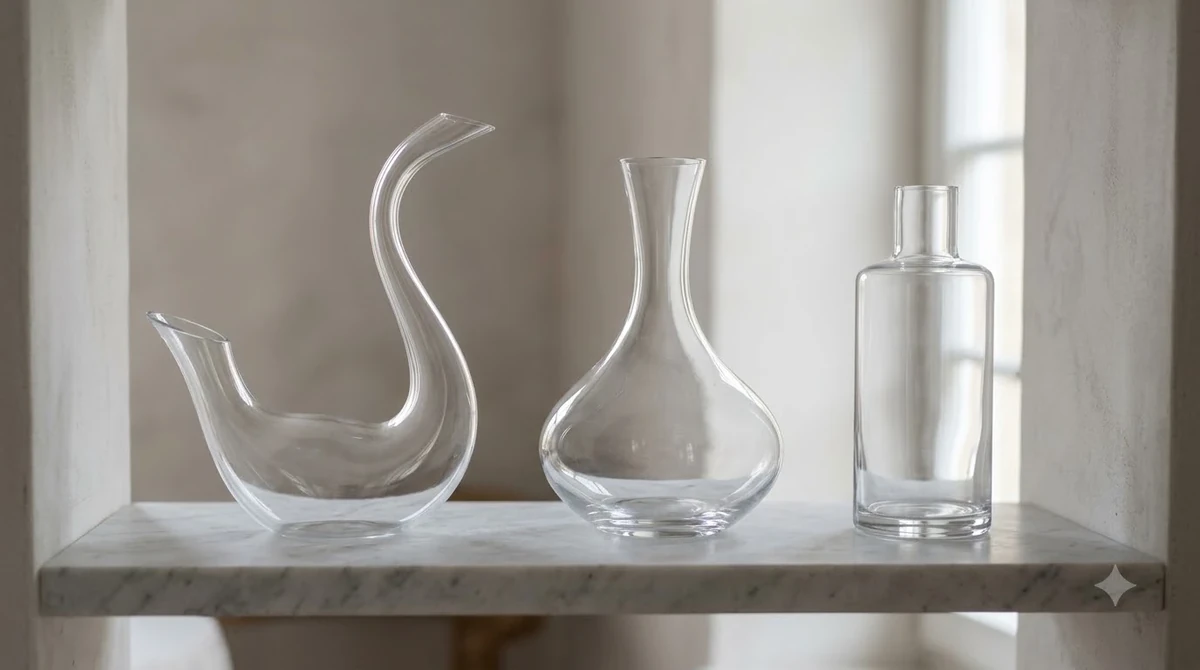
You do not need specialty tools to learn how to decant wine. A standard glass decanter is the simplest option, and a wide base gives the wine more surface area for air to reach. A narrow-necked decanter is easier to fill without splashing and works better when you want to hold back sediment. A clean glass pitcher can stand in when you only need a little aeration for a single bottle.
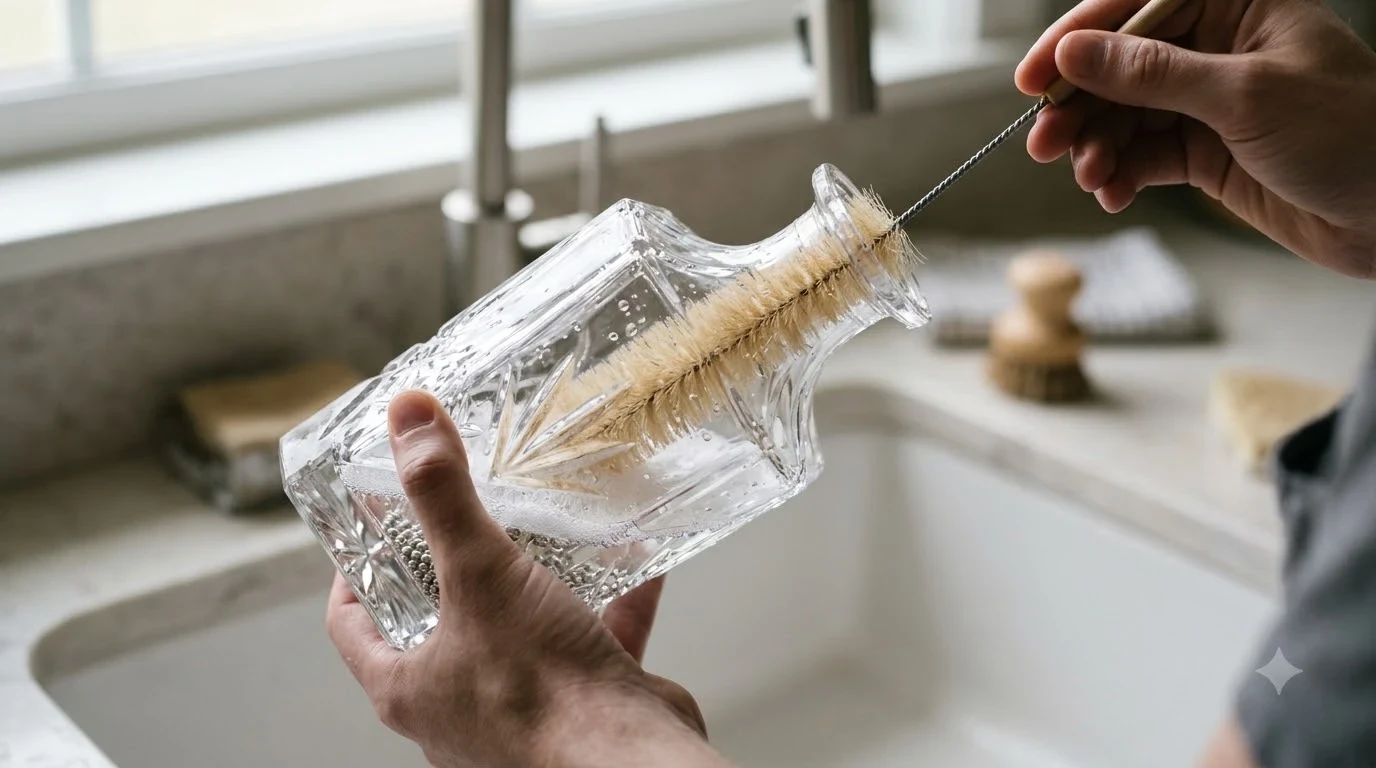
Some people prefer an aerator that sits on the glass, which pulls air into the wine as you pour. Wine Folly mentions this style as a faster option, though it does not replace a rest for a very tannic red. Whichever tool you choose, clean it right after use and let it air dry, because leftover moisture or detergent can leave an odor that carries into the next pour.
Common mistakes when decanting
The most common mistake is decanting too early. A young, very tannic wine can taste smoother after a short rest, but a delicate older wine may fade quickly once exposed to air. Match the time to the bottle rather than following a single rule.
Another mistake is pouring too fast. Speed can stir up sediment and send grit into the glass. Slow, even pouring keeps the wine clear and gives you a better chance to stop before the deposits move. Finally, do not decant a wine just because it is expensive. Many premium bottles taste best when they are served simply.
Frequently Asked Questions
Does decanting wine make it taste better?
It can, especially for young, tannic reds. Air softens harsh tannins and lets aromas open up. Delicate or very old wines may lose their character if they sit out too long, so taste as you go.
How long should you decant red wine?
Wine Folly gives a range of about five minutes to two hours. Bold, high-tannin reds usually benefit from longer rests, while lighter wines need less time.
Do you need a special decanter?
No. A clean glass pitcher or carafe works for aeration. A wide-bottomed decanter makes it easier to swirl the wine, and a narrow neck helps when you are separating sediment.
Can you decant white wine?
Most white wines do not need it and can lose freshness when exposed to air. Decant only if a particular white tastes closed or has a strong sulfur smell that fades with air.
When you serve a decanted wine, pour it into glasses rather than leaving it in the decanter for hours, since wine left out too long can lose freshness. Keeping the decanter covered between pours also limits dust and odors from the room. These small habits help a carefully decanted bottle taste its best from the first glass to the last.
Decanting is a simple skill that rewards a little patience. Start with a bold red, taste as you go, and learn how your favorite bottles change over time. For more basics on opening and serving, see our wine basics guide, and if you are tracking what you pour, our calorie breakdown for white wine covers the numbers.
More in Wine Basics
 Which Rose Is Best for Your Taste, Budget, and Food PairingsUpdated Nov 21, 2026
 Is Cheap Wine Bad? How to Find Bottles Worth DrinkingUpdated Nov 21, 2026
 What To Write On A Wine Gift Tag: Thoughtful Messages For Every OccasionUpdated Nov 21, 2026
 Which Wine Is Best For Weight Loss? Compare Lower-Calorie ChoicesUpdated Nov 21, 2026
 What Is The Best Wine For Mimosas? Choose Bubbly That Balances Orange JuiceUpdated Nov 20, 2026
 Which Prosecco Is Best for Your Taste and OccasionUpdated Nov 20, 2026