

We may earn a commission when you buy through links on this page, at no extra cost to you. Learn more.
How much wine per person should you plan? For a casual dinner, allow about two 5-ounce glasses per wine-drinking guest, or one 750 ml bottle for every two people. For a longer party, calculate the number of glasses guests may have throughout the event rather than relying on a single bottle-per-person rule. A standard 750 ml bottle provides approximately five 5-ounce servings, making it straightforward to estimate bottles for almost any gathering.
Buying wine for an event involves more than multiplying your guest count by a fixed number. The length of the gathering, whether guests are eating dinner, the availability of beer and cocktails, and the mix of people attending all affect the amount you should prepare. A little planning also helps you choose an appropriate selection of red, white, rosé, and sparkling wines without opening more bottles than necessary. The following calculations provide a practical starting point for hosting at home, organizing a celebration, or planning a larger catered event.
Start With Five Glasses Per Standard Bottle
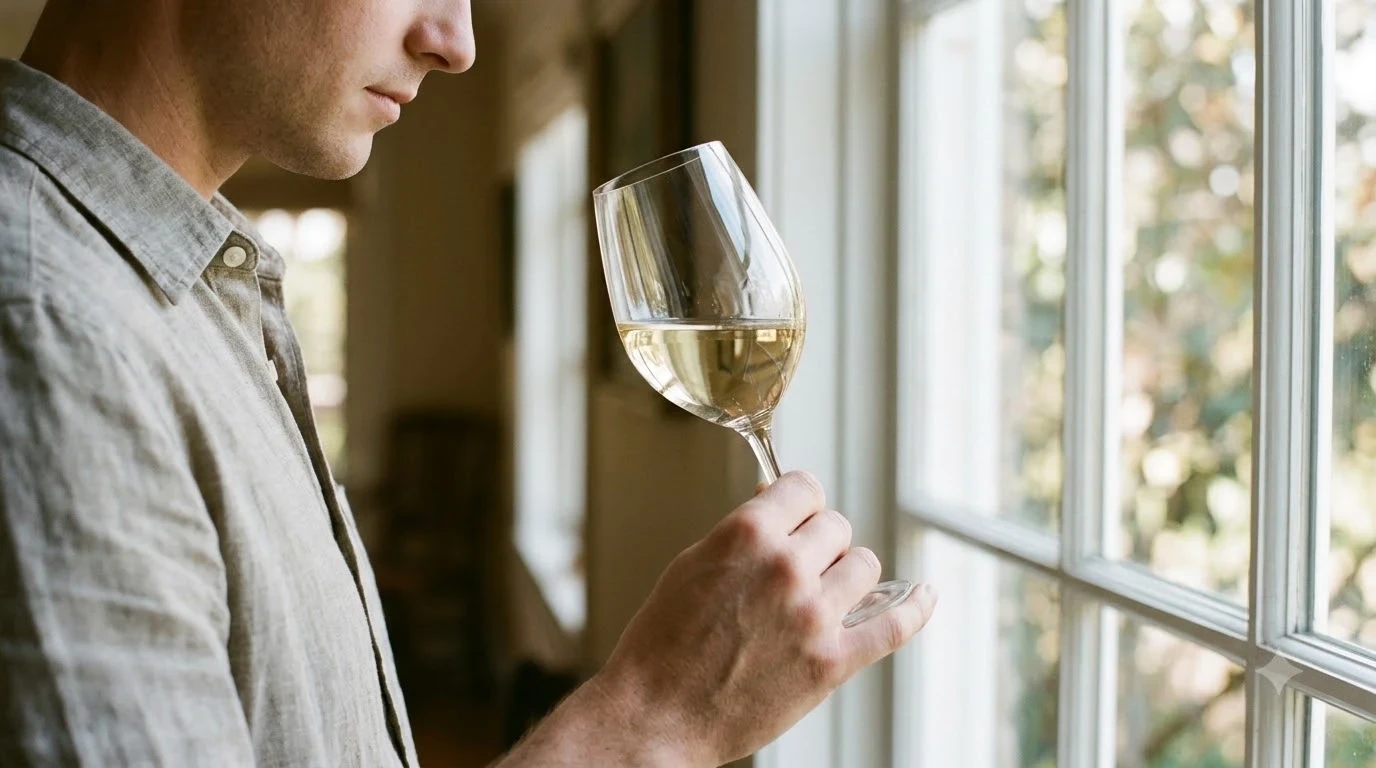
A standard 750 ml bottle of wine provides approximately five glasses when you use a 5-ounce pour. This is the most useful measurement for planning because it gives you a consistent number to use when calculating quantities for dinner parties, receptions, and other gatherings. One bottle therefore serves five individual guests if everyone receives one glass, or two guests if each receives two glasses with a little wine remaining.
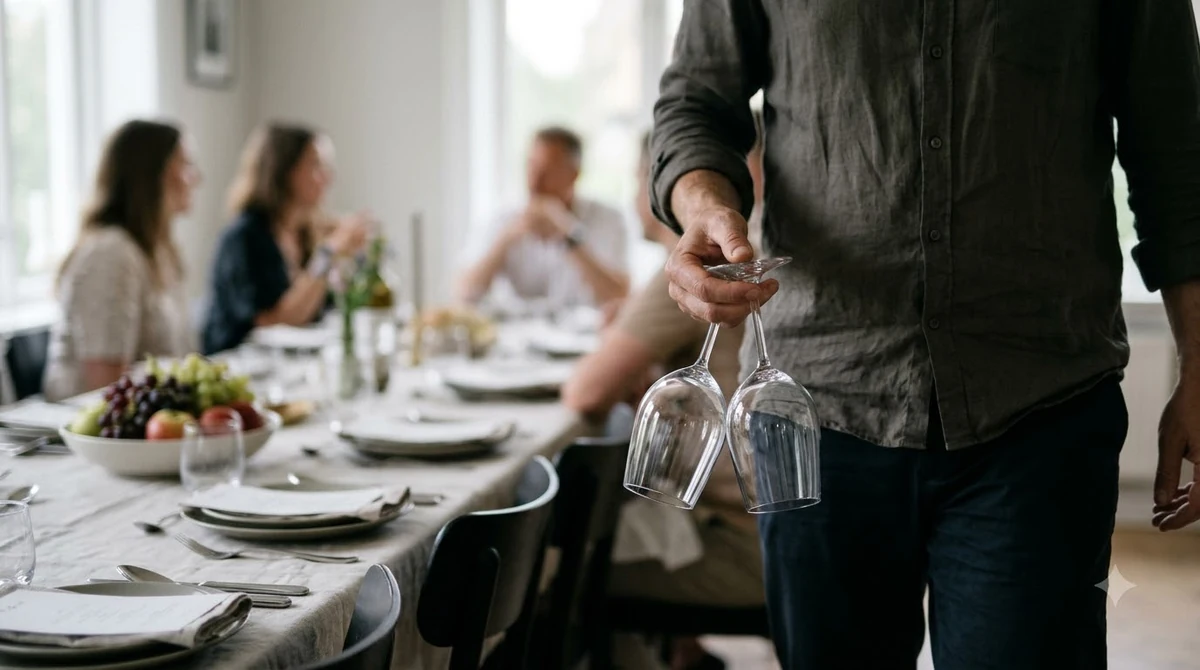
The calculation is based on volume rather than the physical size of the wineglass. A large Burgundy glass and a smaller universal wineglass can both accommodate a standard 5-ounce serving. The remaining room in the bowl allows the wine to release its aromas and gives guests space to swirl it without spilling. Pouring until the glass looks full can dramatically reduce the number of servings available from each bottle.
The Wine and Spirit Education Trust (WSET) identifies approximately 150 ml, or 5 fluid ounces, as a common US serving. Its guidance also explains that a 750 ml bottle produces approximately five servings at this size. You can read its wine serving and decanting guidance for additional information about standard pours and different wine styles.
Use the following measurements when converting bottle sizes into servings:
| Bottle or serving | Wine volume | Approximate 5-ounce servings |
|---|---|---|
| Half-bottle | 375 ml | 2.5 |
| Standard bottle | 750 ml | 5 |
| Magnum | 1.5 liters | 10 |
| Double magnum | 3 liters | 20 |
| Six standard bottles | 4.5 liters | 30 |
| One standard case | 9 liters | 60 |
These figures assume standard 5-ounce servings, so they provide a reliable basis for still wines. Sparkling wine is often poured in smaller portions, while fortified wines such as Port and Sherry typically receive smaller pours still. Those differences matter when calculating how many guests a particular bottle can serve.
Calculate Wine for the Length of Your Event
The duration of a gathering is one of the most important factors in estimating wine requirements. A two-hour dinner with food and other beverages has different needs from a four-hour reception where wine is the main alcoholic drink. Instead of automatically buying one bottle per guest, estimate the number of glasses each person is likely to receive.
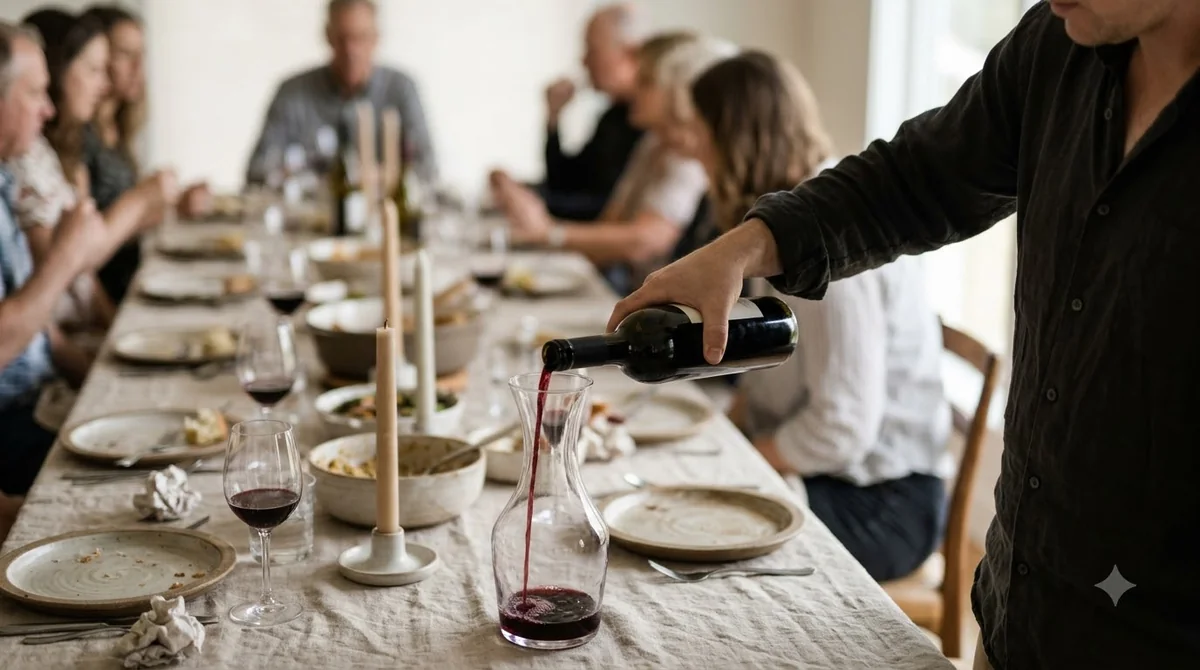
A straightforward formula is:
Number of bottles = Number of wine-drinking guests × Expected glasses per guest ÷ 5
For example, if 20 guests are expected to have two glasses each, the calculation is 20 × 2 ÷ 5. The result is eight standard bottles. If you expect 30 guests to have three glasses each, you need 18 bottles before making any adjustments for the event format.
For a casual dinner, two glasses per wine-drinking guest are a useful planning assumption. For a longer reception, estimate the glasses across the entire service period and consider whether guests will also have beer, cocktails, or nonalcoholic drinks.
Harvard University’s Beverage Service Guide uses an event-planning estimate of one drink every 45 minutes. Its example for a two-hour event allows three drinks per person. This is a planning reference rather than a universal prediction, since actual preferences and beverage choices vary considerably.
The following examples demonstrate how the same guest count can produce different bottle requirements:
| Wine-drinking guests | 1 glass each | 2 glasses each | 3 glasses each | 4 glasses each |
|---|---|---|---|---|
| 10 | 2 bottles | 4 bottles | 6 bottles | 8 bottles |
| 20 | 4 bottles | 8 bottles | 12 bottles | 16 bottles |
| 30 | 6 bottles | 12 bottles | 18 bottles | 24 bottles |
| 50 | 10 bottles | 20 bottles | 30 bottles | 40 bottles |
| 100 | 20 bottles | 40 bottles | 60 bottles | 80 bottles |
Every figure represents a mathematical estimate rounded up to a complete bottle. The table does not assume that every invited person drinks wine. For a mixed group, calculate the number of people expected to choose wine first, then apply the appropriate serving estimate.
Tip: Calculate your expected glasses before deciding how many cases to purchase. For example, 24 wine-drinking guests receiving two glasses each need approximately 10 standard bottles, because 48 servings divided by five equals 9.6. Rounding up gives you a complete bottle for the final servings.
Choose the Right Amount for Dinner Parties and Casual Gatherings
For a typical dinner party, start with one standard bottle for every two people who expect to drink wine. This provides approximately two and a half glasses per person across the gathering, making it a practical starting point for a meal that includes an aperitif or wine with dinner. Adjust the total if the event is particularly short or if several guests prefer other beverages.
For a smaller gathering, the numbers are easy to work out. Four guests generally need two bottles for two glasses each, while six guests need three bottles. Eight guests need four bottles, and ten guests need five. These estimates provide enough wine for a straightforward meal without assuming that everyone will want a glass throughout the evening.
Consider the structure of the meal when choosing the quantity. A dinner that lasts two hours may need less wine than a relaxed evening that continues for four hours. If guests arrive early for appetizers, serve wine with the main course, and remain afterward for conversation, allow for additional servings rather than treating the entire event as a short dinner.
Wine selection matters, too. A useful dinner-party assortment might include a crisp Sauvignon Blanc or Chardonnay, a medium-bodied Pinot Noir or Merlot, and a bottle of sparkling wine for guests who prefer something different. The goal is to offer choices without dividing a small quantity into too many separate styles.
Small gatherings and larger dinner parties
Half-bottles are useful when two people want to share a wine without committing to a full bottle. A 375 ml bottle contains approximately two and a half standard glasses. For a dinner involving several different wines, this format can also provide variety without leaving multiple full bottles open.
For larger gatherings, full bottles and magnums simplify serving. A 1.5-liter magnum holds twice as much wine as a standard bottle and produces approximately ten 5-ounce glasses. Six standard bottles provide 30 servings, while a full 12-bottle case supplies approximately 60.
For a more detailed calculation involving larger guest lists, use our guide to how much wine for 100 guests. It is particularly useful when the event requires a larger purchasing plan and a clear division between wine styles.
Plan Wine Quantities for Weddings and Receptions
Weddings and receptions require more careful planning because they often involve several stages of service. Guests may receive sparkling wine during a welcome toast, drink white or rosé during cocktail hour, and choose red or white wine with dinner. A reception lasting four hours will generally require a different calculation from a short afternoon celebration.
One approach described in Martha Stewart’s event-planning guidance estimates two glasses per guest during the first hour and one additional glass for each subsequent hour. Under that particular assumption, a four-hour wedding involves five glasses per guest, equivalent to one 750 ml bottle per guest. This is a relatively generous planning scenario, not a requirement for every wedding.
For a reception with 50 expected wine drinkers, that calculation produces 250 glasses, or 50 standard bottles. For 100 wine drinkers, it produces 500 glasses, or 100 bottles. If beer and cocktails are also available, the wine allocation may be substantially lower because not every guest will choose wine throughout the reception.
Separate the toast from dinner service
A sparkling wine toast should be calculated separately from regular wine service. Sparkling wine is commonly poured in approximately 4-ounce servings in the United States, allowing a standard 750 ml bottle to provide around six portions. A 5-ounce pour, by contrast, produces approximately five glasses.
For example, a toast involving 60 guests requires approximately 10 bottles if each receives a 4-ounce serving. If the toast is followed by dinner wine, calculate those bottles independently rather than counting the sparkling wine as a full dinner serving.
Think about service timing as well. A welcome reception may have a higher concentration of wine service during its opening hour, while dinner service may be more evenly distributed. Coordinating the opening of bottles with the catering team can help prevent unnecessary waste and make it easier to keep different wines at appropriate temperatures.
If you are organizing a full wedding rather than a smaller reception, see our separate guide to how much wine for a wedding for a more focused event calculation.
Adjust Your Estimate for Other Drinks and Guest Preferences
Not every guest will choose wine, and not every wine drinker will want the same number of glasses. A more accurate purchasing plan starts with the people likely to drink wine rather than automatically counting the entire invitation list. This is particularly important for daytime celebrations, family gatherings, and events with a full bar.
For example, consider a gathering with 40 invited adults. If approximately 30 are expected to drink wine and each receives two glasses, the calculation is 30 × 2 ÷ 5, producing 12 bottles. If the same event includes beer and cocktails, the expected number of wine servings might be lower.
Other factors also affect the estimate:
- Time of day: A lunchtime gathering or afternoon reception may call for fewer bottles than an evening dinner.
- Food service: A full seated meal creates different serving opportunities from a short cocktail reception with appetizers.
- Alternative drinks: Beer, cocktails, sparkling water, and other options can reduce demand for wine.
- Guest preferences: A group that regularly chooses wine may need a larger allocation than a group with mixed beverage preferences.
- Event length: An additional hour of service can change the number of servings required.
- Service format: Staff-controlled pours are generally easier to estimate than unattended self-service stations.
It is also helpful to ask whether guests have a preferred wine style. If most people prefer white wine, purchasing equal quantities of red and white may leave you with unnecessary red bottles. A varied menu can also change the balance: lighter appetizers and seafood may favor crisp whites, while grilled meats and richer dishes may encourage more red wine choices.
For mixed beverage events, avoid assuming that a fixed percentage of guests will select wine unless you have a reason to expect that pattern. Past attendance figures, guest responses, and the event’s format are more useful than an arbitrary split.
Choose a Balanced Mix of Red, White, Rosé, and Sparkling Wine
Once you have calculated the total number of bottles, divide them according to the menu and the preferences of your guests. Offering two or three well-chosen styles is often more practical than buying a large collection of wines that will each serve only a few people. A combination of red, white, and sparkling wine can accommodate many different meals and occasions.
For a general dinner party, consider dividing the wine selection between red and white, with sparkling or rosé added according to the occasion. A seafood dinner may need more Sauvignon Blanc or Chardonnay, while a meal centered on beef or lamb may call for more Cabernet Sauvignon, Merlot, or Syrah. A summer reception with salads, grilled vegetables, and lighter dishes may benefit from additional rosé.
Match the wine to the food
Food pairing can influence which wines guests choose. Sauvignon Blanc’s high acidity works well with acidic dishes such as citrus-dressed salads. Chardonnay offers a different texture for richer poultry dishes, while Pinot Noir provides a lighter red option for roasted chicken, mushrooms, and other moderately rich foods.
For beef or other rich meats, Cabernet Sauvignon can be a suitable choice because its stronger tannins complement protein-rich dishes. Merlot generally has softer tannins, while Syrah provides a fuller-bodied alternative. For spicy food, be careful with high-alcohol wines and strongly tannic reds because chili heat can become more pronounced.
Serving temperature also influences the experience. Light whites and rosé are generally best served around 45–50 F, full-bodied whites around 50–55 F, and light reds around 55–60 F. Full-bodied reds are typically served around 60–65 F, while sparkling wine is best served around 40–50 F.
For a practical selection, use these examples as a starting point:
- White wine: Sauvignon Blanc for fresh, acidic dishes or Chardonnay for richer meals.
- Red wine: Pinot Noir for lighter meat dishes, Merlot for softer red-wine preferences, or Cabernet Sauvignon for richer grilled foods.
- Rosé: Dry rosé for outdoor gatherings, appetizers, and a range of lighter dishes.
- Sparkling wine: Brut sparkling wine for a welcome drink, toast, or opening reception.
The exact division should reflect your menu rather than an inflexible rule. If your guests prefer red wine, purchase accordingly. If you are serving a seafood-focused dinner, allocating more bottles to white wine is likely to make better sense than an equal split.
Buy, Store, and Serve the Wine Efficiently
After determining the quantity and selection, think about how the wine will be stored and served. Bottles purchased ahead of time should remain in a cool, dark location away from direct sunlight and strong temperature changes. For longer storage, bottles with natural cork closures are generally kept on their sides, ideally near 55 F.
Chilling should happen before guests arrive, particularly for sparkling wines, whites, and rosé. Sparkling bottles need enough time in the refrigerator to reach approximately 40–50 F. Light whites and rosé generally work well around 45–50 F, while fuller whites benefit from slightly warmer service at 50–55 F.
Red wine should not automatically be served at a warm room temperature. Light reds such as Pinot Noir are generally more appealing around 55–60 F, while full-bodied reds such as Cabernet Sauvignon are often served around 60–65 F. A brief period in the refrigerator can help bring an overly warm bottle closer to its preferred temperature.
Control pours and open bottles gradually
For consistent servings, use a 5-ounce measuring pour when filling glasses. This makes the bottle calculation more reliable, especially when several people are serving themselves. It also helps avoid the common problem of generous pours leaving too little wine for guests who arrive later.
Rather than opening every bottle at the beginning of a gathering, start with a few bottles of each style. Keep additional wine ready for service and open it as needed. This approach makes it easier to preserve unopened bottles and maintain freshness in wines that have already been opened.
Most everyday table wines do not require decanting. WSET explains that older wines and certain minimally filtered reds can develop sediment, while most ordinary table wines are filtered and generally do not form heavy deposits. If you are serving a young, full-bodied red that benefits from aeration, a short decanting period of approximately 30–60 minutes can be useful.
Once opened, store remaining still wine in the refrigerator and reseal the bottle. A general planning guideline is three to five days for opened still wines, one to three days for sparkling wines when properly sealed, and several weeks for many fortified wines. Actual freshness varies by style, storage conditions, and exposure to oxygen.
If your event takes place at a restaurant or rented venue, ask about its bottle policies before purchasing. Some venues allow outside wine but charge a corkage fee. Our explanation of how much is corkage fee can help you understand this additional event-planning consideration.
Frequently Asked Questions
How many ounces of wine are in a standard glass?
A standard US serving of still wine is approximately 5 fluid ounces, or 150 ml. The actual glass may hold considerably more than that amount. Sparkling wine is often served in approximately 4-ounce portions, while fortified wines such as Port are generally poured in smaller quantities.
How many bottles are in a case of wine?
A standard wine case contains 12 bottles, although some retailers also sell six-bottle cases. Twelve standard 750 ml bottles contain 9 liters of wine altogether. At five standard servings per bottle, a full case provides approximately 60 glasses.
Can a magnum bottle replace two regular bottles?
Yes. A 1.5-liter magnum contains twice the volume of a standard 750 ml bottle and provides approximately ten standard 5-ounce servings. Magnum bottles are particularly useful for larger tables because they reduce the number of individual bottles that need to be opened during service.
How many bottles of wine should I bring to a potluck?
For a small potluck with six to eight expected wine drinkers, two or three standard bottles can be a practical contribution if other guests are bringing beverages. Ask the host whether the gathering already has a beverage plan before deciding on the quantity. Bringing a half-bottle of a distinctive wine can also provide an interesting option without adding several full bottles.
Does wine lose its flavor if it is poured into a glass too early?
Wine changes as it comes into contact with oxygen, and some delicate aromas can fade with prolonged exposure. This is one reason to pour smaller quantities and replenish glasses as needed rather than filling every glass well before dinner. Sparkling wine also loses carbonation after opening, so it is best served relatively soon after the bottle is opened.
The most reliable way to estimate wine for a gathering is to count expected wine drinkers, decide how many 5-ounce servings each person may have, and divide the total by five. Adjust the result for the event’s length, food, alternative beverages, and preferred wine styles. With those details in place, you can prepare an appropriate selection without relying on guesswork or automatically buying one bottle for every guest.
More in Wine Basics
 What Is The Best Wine For Mimosas? Choose Bubbly That Balances Orange JuiceUpdated Nov 20, 2026
 Which Prosecco Is Best for Your Taste and OccasionUpdated Nov 20, 2026
 Which Wine Is Best For Health? Understand the Risks and BenefitsUpdated Nov 20, 2026
 Which Champagne Is Best for Your Taste and OccasionUpdated Nov 20, 2026
 What To Put In A Wine Gift Basket For A Thoughtful, Memorable GiftUpdated Nov 20, 2026
 What Is the Best Wine for Mulled Wine? Choose a Smooth, Fruity RedUpdated Nov 20, 2026