

We may earn a commission when you buy through links on this page, at no extra cost to you. Learn more.
The answer to how long to decant pinot noir is 15 to 30 minutes for young, closed bottles, while mature, delicate examples may need only 10 to 15 minutes or no decanting at all. Start with a small pour, taste, and let the wine tell you whether it needs a little more oxygen. For mature or fragile bottles, skip extended aeration and decant only to separate sediment, then serve promptly.
Pinot Noir rewards a light touch. Its generally low-to-medium tannin, lively acidity, and fine aromas can become more expressive with air, but a long stay in a wide decanter is not automatically an improvement. The best approach is to judge the bottle in front of you, make a small adjustment, and follow its changes rather than treating a timer as a rule.
How Long to Decant Pinot Noir
For a typical young Pinot Noir that seems a little closed, start with 15 to 30 minutes in a decanter; for a mature, delicate bottle, think in terms of 10 to 15 minutes or simply a few minutes in the glass. A fresh, open-fruited Pinot may need no decanting at all.
That range is a starting point, not a promise that every bottle will improve on schedule. Decanter notes that some mature, light-bodied wines open in 10 or 15 minutes yet can begin to lose aromas after about an hour. Pinot Noir often belongs closer to this delicate end of the red-wine spectrum than to the dense, high-tannin category that tolerates long aeration, so begin tasting early and serve it when its fruit, floral notes, and texture show clearly.
For a young bottle, pour a small sample first. If the nose is muted and the palate feels tight, transfer the rest to a clean decanter and taste again after 15 minutes. Clearer cherry, raspberry, cranberry, rose, spice, or earthy notes suggest that air is helping. If fruit fades or the wine seems less lively, pour it into glasses rather than leaving it exposed.
Removing the cork is not the same as aerating the wine: only a small amount near the narrow neck meets the air. That gentle exposure can suit a delicate Pinot, while pouring into a glass or decanter reaches more of the wine. Taste after opening, then give it another 10 to 15 minutes in the glass before deciding whether a decanter is needed.
Why Pinot Noir Needs a Lighter Touch
Pinot Noir is usually lighter in tannin than Cabernet Sauvignon or Syrah, so it rarely needs the same extended aeration. Its fragrance and delicate fruit can be the main attraction, which makes it important to gain freshness without allowing those aromas to dissipate.
Red Burgundy offers a useful example of the variety’s delicate side. Decanter notes that Pinot Noir has less coloring matter and tannin than many classic red Bordeaux wines, and therefore tends to deposit less material in the bottle. That does not mean Burgundy must never be decanted: some fine red Burgundies are bottled unfiltered, and a careful pour can improve clarity when sediment is present. The choice depends on the particular wine, not simply the name of the grape or region.
Pinot Noir also varies in weight and extraction. A bright, light-bodied bottle made for early drinking may show cranberry, red cherry, and soft floral notes without any time in a decanter. A more concentrated Pinot, perhaps with darker fruit, noticeable oak, or firmer structure, may benefit from a short rest after pouring. Wines from places such as Oregon’s Willamette Valley, California’s Russian River Valley, and Burgundy can each range from delicate to relatively powerful; the place name alone cannot supply a decanting schedule.
Oxygen can help a closed wine release aromas and make its texture seem more integrated, but it does not create bottle age or repair a wine that is past its best. Decanter’s advice is to treat delicate Burgundy with care and consider leaving the bottle open rather than transferring it to a decanter. Wine Enthusiast also reports that some tasters are reluctant to decant Pinot because they fear it will fall apart, while Master Sommelier Jonathan Pullis argues that certain Pinot Noirs need oxygen to wake up. Both instincts point to the same practical answer: taste first, then choose the gentlest method that improves the wine.
Adjust the Time for Age and Structure
Use the wine’s condition—not its vintage date alone—to set the clock. A young, tightly wound Pinot may benefit from 15 to 30 minutes, while a mature light-bodied bottle may need only 10 to 15 minutes before serving.
Age gives useful clues, but no single birthday tells you exactly how long to decant. A two-year-old Pinot made for immediate drinking may already be fragrant and supple. A young, concentrated wine from a producer who favors whole-cluster fermentation, firm extraction, or noticeable new oak may feel more reserved and respond to a little air. A bottle that has spent a decade or more in the cellar may have developed complexity, but its aromas can also be fragile. Storage conditions, vintage, producer style, and the bottle’s health all matter.
| Bottle condition | Starting point | Best next step |
|---|---|---|
| Young, fruit-forward Pinot that already smells open | 0 minutes in a decanter | Pour into a glass and swirl gently |
| Young Pinot that smells closed or feels tight | 15 minutes | Taste; continue toward 30 minutes only if it is improving |
| Concentrated young Pinot with firm structure | 15–30 minutes | Use a broad decanter briefly and reassess before extending the time |
| Mature, light-bodied Pinot without obvious sediment | 10–15 minutes at most as a first trial | Serve promptly; watch for fading aromas |
| Older bottle with visible sediment | Decant just before serving | Pour slowly and stop when sediment approaches the neck |
These are practical starting points, not strict age categories. If a wine is improving after 15 minutes, another short interval may help; if it is fading, more air will not bring back what has already dispersed. Decanter’s advice for mature light reds—that they can open in 10 to 15 minutes and begin losing aromas after about an hour—supports keeping the window short. For more powerful young reds, longer periods can be useful, but Pinot Noir generally deserves more frequent checks than Cabernet Sauvignon. The article on how long to decant Cabernet Sauvignon explains why that firmer, more tannic grape often follows a different schedule.
Tip: Set a 15-minute reminder, but do not wait for it before tasting. Pour a small sample as soon as the bottle is opened, taste it again after 10 to 15 minutes, and stop aerating as soon as the wine is expressive and balanced.
Do not use age alone as a reason to leave a bottle in a decanter for hours. A mature Pinot can be fully expressive soon after opening, and a fragile wine may lose definition while it sits. When a valuable or unfamiliar older bottle is involved, open it early enough to assess it without rushing, but keep the actual transfer and service close together.
A Careful Method for Decanting Pinot Noir
When Pinot needs air, transfer it gently and check its progress in short intervals. When the purpose is to remove sediment, the goal changes: keep the sediment in the bottle and minimize splashing.
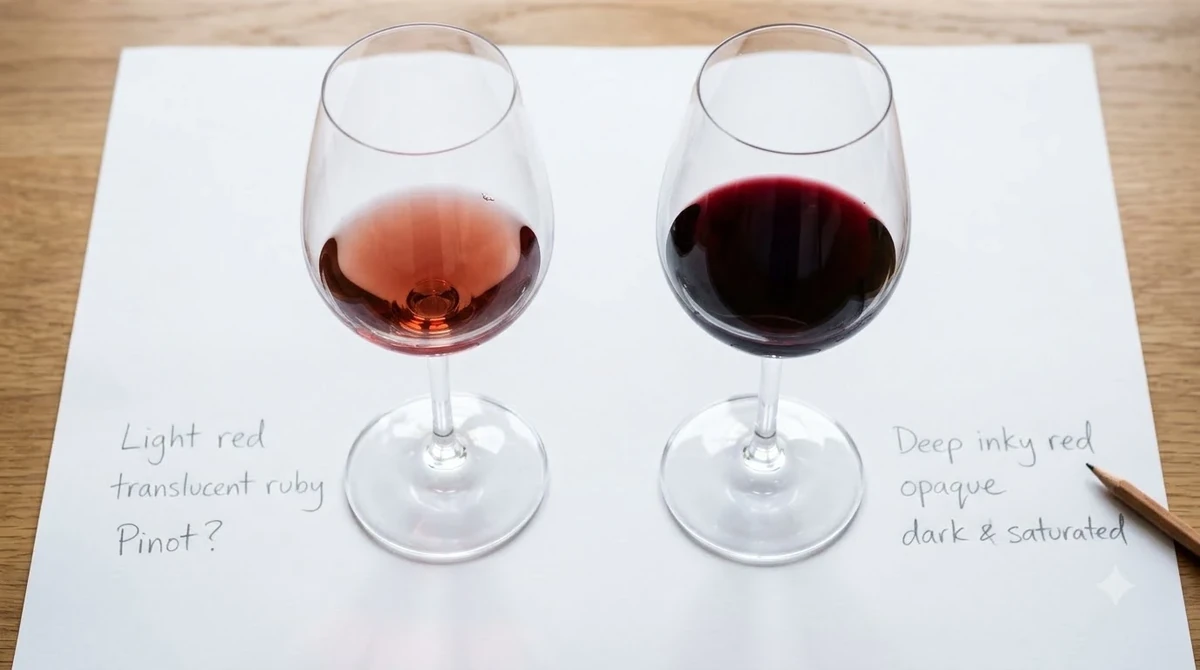
Begin with a clean, odor-free decanter. For a young wine that seems closed, pour steadily so the wine runs down the sides and meets air. A wide bowl works quickly for a tight young bottle but is less suitable for a fragile one; avoid shaking Pinot or treating it like a powerful Cabernet that needs an hour or more of forceful aeration. After 10 to 15 minutes, taste again for clearer fruit, a more open aroma, and a less angular finish. Color alone is not a guide: pale garnet Pinot can be vivid, and a darker hue does not automatically call for more time.
Older bottles that may contain sediment need a different routine. Stand the bottle upright well before dinner—12 hours is a useful minimum when possible—so the deposit can settle. Open it upright, place a small light behind the neck, and pour in one slow, even stream; stop when sediment or cloudiness approaches the shoulder or neck. Do not swirl the decanter or leave the wine resting for another hour after the transfer.
Sediment is a natural deposit, not proof that a bottle is defective; it can feel gritty and taste bitter, so leaving it behind improves the pour. VinePair distinguishes the two purposes of decanting: exposing young wine to oxygen and separating aged wine from sediment. With Pinot, aeration is optional, while sediment removal is a matter of clarity.
Use a Glass Before Reaching for a Decanter
A large, well-shaped wineglass is often the best first tool for Pinot Noir. Pouring a modest amount and swirling it gives the wine air while allowing you to track its development sip by sip.
Try a tulip-shaped red-wine glass with a bowl broad enough to swirl and a rim that gathers aromas. Pour about one-third full, leaving room to smell and move the wine. A 5-ounce serving is a familiar standard pour, but a smaller sample is more useful for deciding whether the bottle needs air. Take a first sniff, swirl gently, and check again after a minute or two. This glass-first approach limits exposure and lets everyone follow the wine’s changes without leaving the bottle in a broad decanter.
Decanter notes that opening the bottle can provide gradual aeration for delicate wines such as Pinot Noir, while swirling in the glass offers another controlled approach. Its overview of how to let a wine breathe explains how the method can vary with style and age. A decanter remains useful for a bottle with sediment, a group sharing one wine, or a young Pinot that stays closed after a glass test; choose a broad bowl for faster aeration and a narrower vessel for a gentler sediment pour.
Do not mistake a longer decant for a better wine. Oxygen can clarify some aromas but can also carry delicate volatile aromas away. Wine Enthusiast notes that tasting is the best way to decide and that a tightly closed wine may sometimes benefit from more air. That is a reason to assess the bottle carefully, not to leave every Pinot exposed for hours. Its article on wine myths and decanting explains why the grape’s delicate reputation should not become a blanket rule.
Serve Pinot at the Right Temperature
Serving temperature changes how Pinot Noir’s aromas and structure come across, so pour it slightly cool rather than warm. A light red is generally best around 55 to 60 degrees Fahrenheit, whether it has spent 15 minutes in a decanter or gone straight from bottle to glass.
A bottle served too warm can seem soft and alcoholic, while a very cold pour may mute its perfume and make the acidity feel sharper. If the room is warm, a short chill in the refrigerator can bring the wine into range. Check the temperature after decanting, since a broad glass vessel may warm more quickly than a bottle kept in a cool wine cellar. There is no benefit in leaving a delicate Pinot on a sunny counter while waiting for an arbitrary aeration period to pass.
Keep the wine away from sunlight, radiators, and hot kitchen surfaces. For a long dinner, pour smaller amounts and refill as guests finish; the wine will continue to evolve in the glass. Replace the cork or screw cap and refrigerate any remainder. For broader storage guidance, see how long Pinot Noir lasts unopened, which explains the difference between storing a sealed bottle and keeping an opened one.
Pinot Noir’s bright acidity works well with roast chicken, mushrooms, salmon, duck, and savory herbs, while heavy chili heat can make its alcohol seem more prominent. For a broader look at red, white, rosé, and sparkling styles, explore Wine by Type. The food and serving choices should support the bottle’s lighter fruit and aromatic detail.
Frequently Asked Questions
The most useful rule is to taste Pinot early, use short intervals, and protect delicate aromas. A 15-minute check, a 55-to-60-degree serving range, and a slow sediment pour cover most home situations.
Should I double-decant Pinot Noir?
Double-decanting means pouring the wine into a decanter and then returning it to the original bottle, usually after rinsing that bottle. It exposes the wine to air twice and is mainly useful for very young wines that are unusually tight; for a mature Pinot, the extra handling can be too much.
Does a screw cap change how long Pinot Noir needs to breathe?
No. The closure does not set the aeration time once the bottle is open; the wine’s condition and the amount of air it receives matter more. A screw-cap Pinot can be poured into a glass or decanter using the same taste-and-check method as a cork-finished bottle.
Can decanting fix a corked bottle of Pinot Noir?
No. Cork taint is commonly associated with the compound TCA, which can produce musty, damp-cardboard aromas. More oxygen may change how the wine smells, but it does not reliably remove the taint or restore the fruit.
Is sediment in Pinot Noir a sign that the wine has spoiled?
Not by itself. Some bottles develop harmless crystals called tartrates, which can look like small glass shards, while red-wine sediment can include natural pigment and tannin deposits. The appearance of sediment alone does not tell you whether the wine is sound.
Does decanting meaningfully lower Pinot Noir’s alcohol level?
No. Some ethanol can evaporate after wine is poured and exposed to air, but the change is slight and is not a practical way to alter a bottle’s alcohol content. Choose the decanting method for aroma, texture, or sediment—not to change the wine’s strength.
For most Pinot Noir, patience means checking the wine rather than leaving it alone for an hour. Begin with a glass, give a closed young bottle a brief 15-to-30-minute trial, and treat older bottles with extra care. The best moment to pour is the moment the wine’s fruit and fragrance are showing clearly.
More in Wine Types & Grapes
 What Does Mourvèdre Taste Like? Flavor Profile, Regions, and PairingsUpdated Nov 20, 2026
 What Does Marsanne Taste Like? Flavors, Styles, and Food PairingsUpdated Nov 20, 2026
 What Does Malvasia Taste Like? Styles, Flavors, and Food PairingsUpdated Nov 20, 2026
 What Does Grenache Blanc Taste Like? Flavor Profile, Styles, and PairingsUpdated Nov 20, 2026
 What Does Garnacha Taste Like? Key Flavors, Styles, and Pairing TipsUpdated Nov 20, 2026
 What Does Fruit Wine Taste Like? A Complete Flavor and Style BreakdownUpdated Nov 20, 2026