

We may earn a commission when you buy through links on this page, at no extra cost to you. Learn more.
The Houdini wine opener review verdict is that the Houdini Winged Corkscrew is a practical, beginner-friendly manual opener with a stable bottle grip, nonstick spiral, and simple two-arm lifting mechanism. Its dishwasher-safe construction and straightforward operation make it appealing for occasional home use. However, concerns about durability and the absence of a built-in foil cutter mean it is not necessarily the right choice for everyone.
Houdini makes several types of wine openers, from traditional winged corkscrews to electric and lever-operated designs. This review focuses primarily on the Houdini Winged Corkscrew, examining its construction, operating experience, owner feedback, and suitability for different wine drinkers. It also considers how the other Houdini designs compare, since choosing the right opening mechanism can matter more than choosing a particular brand.
Specs and Key Features of the Houdini Winged Corkscrew
The Houdini Winged Corkscrew is a manually operated opener designed to simplify the traditional winged-corkscrew process. Its bottle-clamping structure helps stabilize the opener while the spiral enters the cork, and the two rising arms provide leverage for extraction.
According to Target’s product specifications, the opener measures 1.06 inches long, 7.87 inches high, and 3.35 inches wide. It weighs approximately 0.67 pounds, making it a substantial countertop accessory rather than a particularly compact pocket tool. Its construction combines ABS plastic, zinc, iron, and steel.
One of its main selling points is the nonstick spiral. Houdini’s product description explains that the spiral is designed to penetrate cork cleanly and reduce crumbling. The bottle-clamping mechanism is another useful feature because it helps keep the opener centered during operation instead of allowing it to wobble around the bottle neck. The Houdini Winged Corkscrew product specifications and manufacturer Q&A at Target provide additional details about its construction and spiral length.
| Specification | Houdini Winged Corkscrew |
|---|---|
| Product type | Manual winged corkscrew |
| Overall length | 1.06 inches |
| Overall height | 7.87 inches |
| Overall width | 3.35 inches |
| Weight | 0.67 pounds |
| Spiral length | 2.5 inches |
| Main materials | ABS, zinc, iron, and steel |
| Power source | Manual |
| Battery requirement | None |
| Cleaning | Dishwasher-safe |
| Foil cutter included | No |
The 2.5-inch spiral is particularly relevant for people who regularly encounter longer natural corks. A manufacturer representative confirmed this measurement in the product Q&A at Target, noting that the spiral can accommodate a 2-inch cork. This provides useful context when comparing it with smaller corkscrews that may not penetrate deeply enough.
The materials are a mixture of metal and plastic rather than an all-metal construction. Steel and iron provide the working components, while ABS contributes to the outer structure. This combination keeps the design manageable while providing a firm operating mechanism.
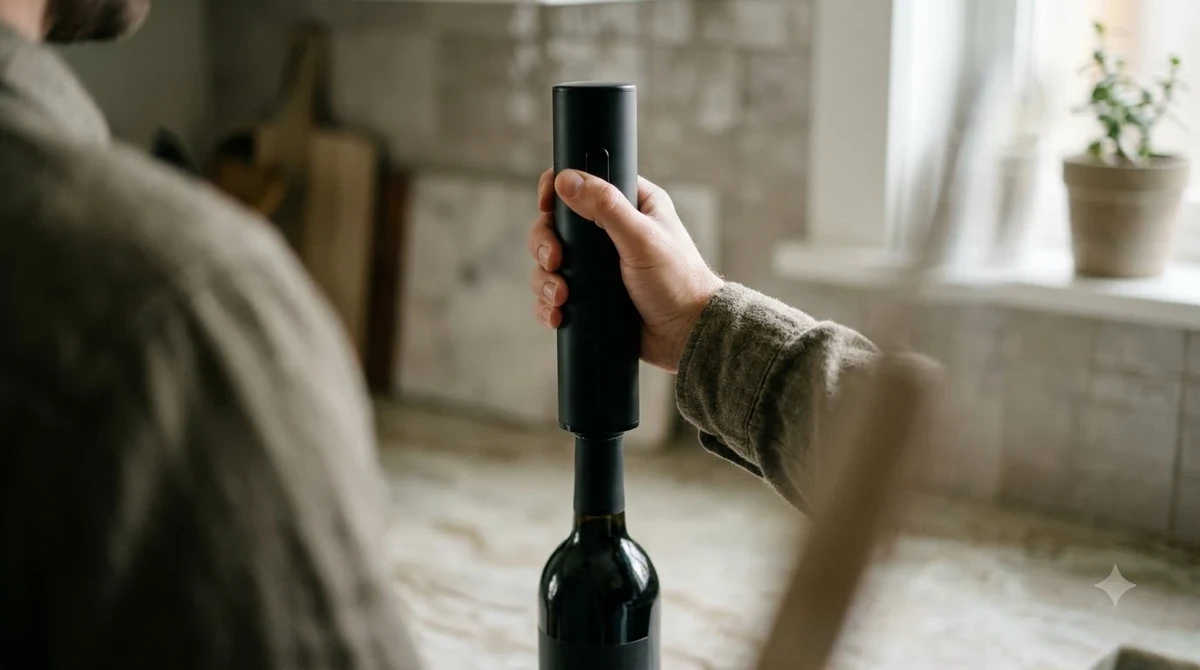
There is no battery compartment, charging connection, or motor to maintain. That is an advantage for people who want a simple opener that remains ready to use without checking its charge level or replacing batteries.
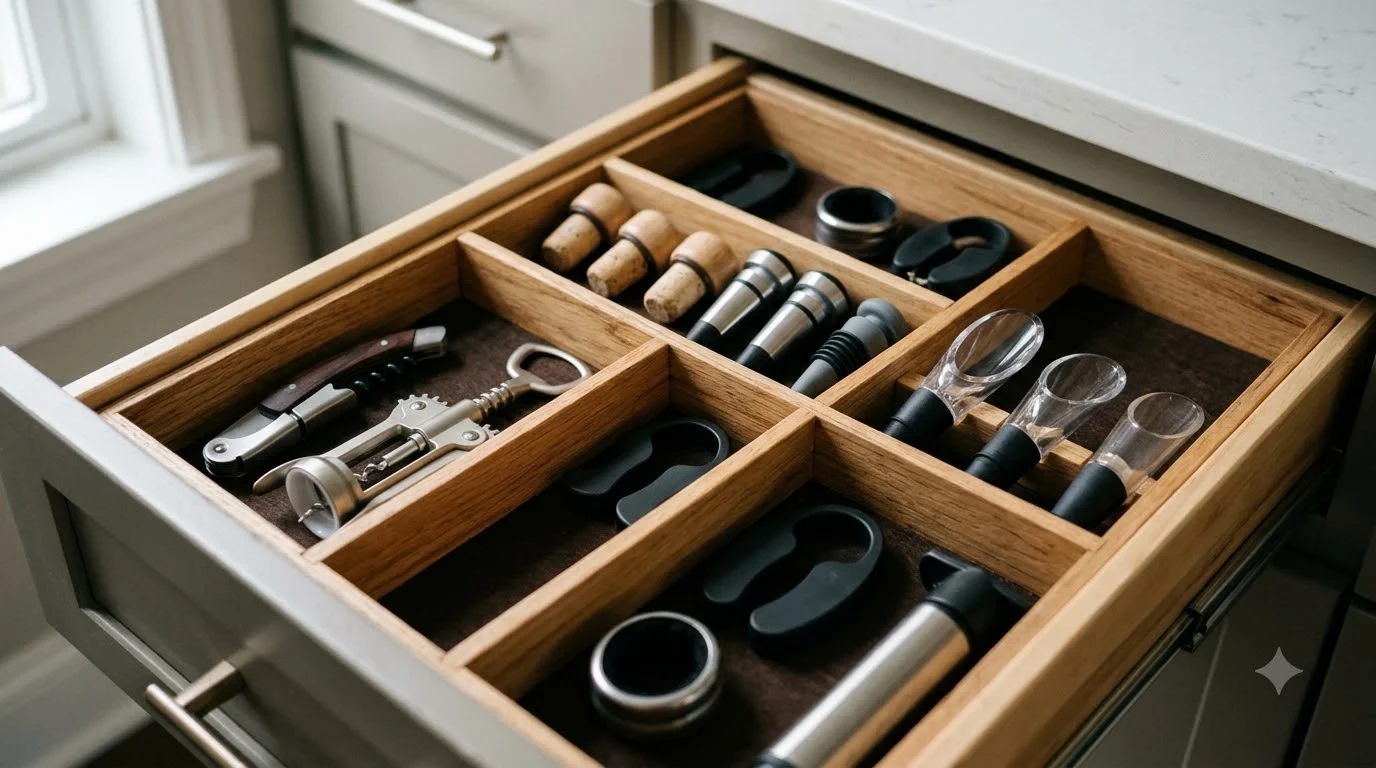
One limitation is the lack of an integrated foil cutter. Users must remove the capsule with a separate cutting tool before inserting the spiral. Anyone assembling a complete home wine-opening station may prefer to keep a dedicated foil cutter nearby.
For a broader look at the accessories that complement a corkscrew, the wine accessory brands collection provides useful context for building a practical home bar setup.
What Owners Like About the Houdini Opener
The most appealing qualities of the Houdini Winged Corkscrew are its straightforward operation, stable positioning, and familiar lifting action. It is designed to reduce some of the awkwardness associated with ordinary winged openers, particularly when users struggle to keep the spiral centered.
Target describes the bottle-clamping design as a feature that stabilizes the opener on the bottle top. This is helpful because alignment is an important part of removing a cork cleanly. When the spiral enters at an angle, the cork can become damaged or difficult to extract.
The two-arm mechanism also makes the process relatively intuitive. Rather than relying entirely on wrist strength, the user turns the central handle to insert the spiral and then pushes the raised arms downward to lift the cork. The leverage reduces the amount of direct pulling required.
Shop TODAY included the Houdini Winged Corkscrew among its recommended manual openers in its evaluation of wine bottle openers. The publication highlighted its naturally raised arms, which help users understand the opening sequence without needing to hold the mechanism in an awkward position. Its wine opener evaluation and Houdini product assessment also discuss the opener’s dimensions, handling, and cork-removal performance.
That assessment is especially relevant for beginners. Traditional winged corkscrews can be confusing because users sometimes hold the arms down while turning the central handle. This prevents the mechanism from operating as intended. A design that makes the arms’ movement more apparent can reduce that learning curve.
Simple operation for occasional wine drinkers
Another advantage is the absence of electronic components. There is no motor noise, charging dock, battery replacement, or electrical troubleshooting. Someone who opens a bottle of Cabernet Sauvignon on Friday evening and a bottle of Pinot Noir during a weekend dinner can use the same manual mechanism whenever needed.
The opener also works without requiring a particular bottle-opening environment. It does not need to be positioned near an electrical outlet or stored with a charging station. That makes it suitable for a kitchen drawer, dining-room cabinet, or compact bar cart.
Positive feedback about grip and feel
Some Target owners specifically praise the grip and substantial feel of the winged opener. A solid-feeling mechanism can make a difference when users are applying downward pressure to remove a cork. Lightweight openers sometimes feel less stable, particularly when their bottle support is narrow.
The dishwasher-safe designation is another practical benefit. Wine residue and cork particles can collect around the spiral after repeated use. Having a dishwasher-safe accessory makes routine cleaning more convenient, although removing visible debris before washing is still sensible.
Overall, the positive feedback points toward an opener that is approachable and uncomplicated. It is not a specialized wine-service tool, but its features address several frustrations that occasional wine drinkers experience with basic corkscrews.
Common Complaints and Potential Drawbacks
The biggest concern with the Houdini Winged Corkscrew is long-term durability. Although its operating concept is straightforward, some owner feedback raises questions about how well the plastic and mechanical components hold up under repeated use.
Target reviews include reports of the opener cracking or breaking after a period of use. Other customers describe disappointing experiences with its general construction. These complaints do not establish that every unit will fail, but they are important considerations for anyone planning to open several bottles each week.
Durability is especially important with a winged corkscrew because the lifting arms experience repeated mechanical pressure. If a hinge becomes loose or a structural component cracks, the opener can become difficult to operate. A mechanism that initially feels sturdy may still require careful handling over time.
The missing foil cutter
The absence of a foil cutter is another inconvenience. Many waiter’s corkscrews incorporate a small blade into the handle, allowing the user to remove the capsule before inserting the worm. The Houdini winged model does not provide that integrated convenience.
This is not necessarily a serious problem for someone who already owns a foil cutter or uses wine bottles with easily removable capsules. However, beginners purchasing their first opener may expect a complete bottle-opening solution rather than a single-purpose corkscrew.
Keeping a separate foil cutter beside the opener solves the problem, but it adds another accessory to the drawer or bar station. People who value compact storage may prefer a double-hinged wine key with a built-in cutting blade.
Potential cork damage
Houdini promotes its nonstick spiral as a way to reduce cork crumbling. Nevertheless, no manual corkscrew can guarantee that every cork will remain intact. Old natural corks can become brittle, particularly after years of storage, and an opener cannot completely eliminate that risk.
Shop TODAY’s evaluation of the Houdini winged model noted mild splintering during the spiral insertion process, although no pieces entered the wine during that assessment. This is a useful reminder that advertised cork-protection features should be viewed as design goals rather than absolute guarantees.
Users should also avoid forcing the spiral into a cork at an angle. If the cork begins moving sideways, stopping and correcting the alignment is preferable to applying additional force.
Not ideal for demanding service environments
Someone opening a large number of bottles during a restaurant shift may want a more compact, service-oriented tool. A professional double-hinged wine key fits into an apron pocket, includes a foil blade, and provides a controlled two-stage pulling action.
The Houdini winged design is larger and better suited to a stationary home setting. Its arms need space to rise and lower, and its overall structure is less convenient to carry in a pocket. For occasional entertaining, these limitations may be minor. For frequent professional use, they become more significant.
Tip: If a cork feels unusually resistant, stop before forcing the arms downward. Check that the opener remains centered, that the spiral has entered straight, and that the cork is not visibly damaged. Excessive pressure can damage the cork or the opener’s moving parts.
Who Should Buy the Houdini Winged Corkscrew and Who Should Skip It?
The Houdini Winged Corkscrew is most appropriate for casual wine drinkers who prefer a familiar manual mechanism and want an opener that can stay in the kitchen or home bar. Its stable bottle-clamping design and two-arm leverage system make it a reasonable option for people who find traditional corkscrews awkward.
It is particularly suitable for households that open a few bottles each month rather than dozens every week. Someone serving a bottle of Merlot with dinner or opening a Sauvignon Blanc for a weekend gathering is unlikely to need the advanced features of an electric or professional lever system.
Buy it if you want a simple manual opener
The winged mechanism is a good fit for people who prefer a visible, mechanical opening process. Users can see how the spiral enters the cork and how the arms create leverage during extraction. There is no need to learn button sequences or troubleshoot a motor.
It is also suitable for buyers who already have a foil cutter. The missing accessory becomes less important when the rest of the wine-opening equipment is already available.
People who want a dishwasher-safe accessory may appreciate the listed cleaning convenience. After use, the opener can be cleaned without relying on a complicated disassembly process.
Skip it if durability is your highest priority
Buyers who are especially concerned about mechanical longevity should compare alternative designs before choosing this model. Reports of cracking and breakage make it difficult to recommend the winged opener without qualification.
Frequent entertainers may also prefer a sturdier lever mechanism or a quality double-hinged wine key. These designs serve different needs, but they can be more appropriate for repeated bottle opening and controlled extraction.
Another reason to skip the winged model is portability. Its approximately 7.87-inch height and 0.67-pound weight make it less convenient than a compact waiter-style corkscrew. Someone who regularly attends picnics, outdoor dinners, or wine tastings may prefer a smaller tool.
Consider your usual wine bottles
Most standard still-wine bottles with natural or synthetic cork closures are compatible with conventional corkscrew mechanisms. However, bottle neck dimensions, cork condition, and closure material can influence how smoothly an opener works.
For example, a young bottle of Napa Valley Cabernet Sauvignon with a firm synthetic closure may behave differently from an older Burgundy Pinot Noir with a fragile natural cork. The condition of the closure matters as much as the opener itself.
People who frequently open older bottles should consider a specialized cork-removal tool rather than assuming a standard winged opener will handle every situation equally well.
For buyers assembling a complete opening and preservation setup, a wine opener and preserver set can provide a more coordinated solution for opening bottles and storing unfinished wine.
How the Houdini Compares to Alternative Wine Openers
Houdini’s product range includes several opening mechanisms, so the winged model is not the only option within the brand. Its electric and lever-operated alternatives serve different preferences, while a traditional waiter’s corkscrew remains a practical alternative for users who value portability.
The best comparison depends on how much physical effort a person wants to use, how frequently bottles are opened, and whether the opener needs to travel. A simple manual design may be perfectly adequate for occasional use, while a lever or electric mechanism can appeal to people who prioritize convenience.
Houdini winged versus Houdini electric
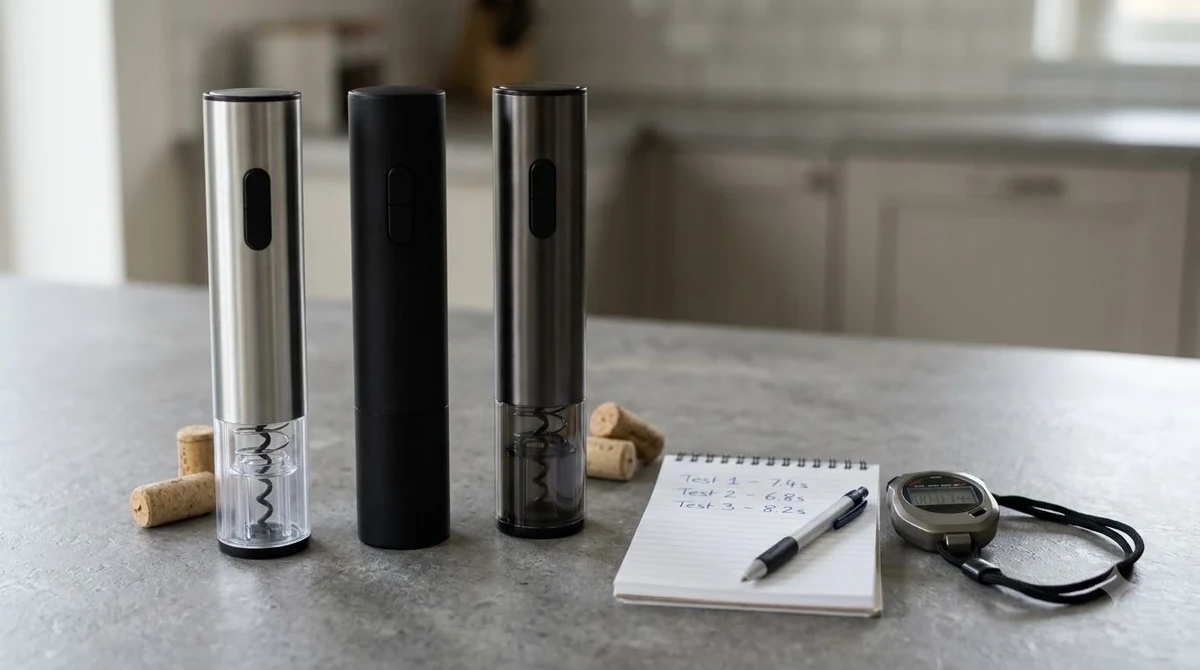
The Houdini electric corkscrew uses a motorized mechanism rather than manually operated lifting arms. Target identifies the electric model as battery-operated, and a Lifetime Brands representative confirms a one-year limited warranty in the product Q&A.
The electric design can be appealing to people who prefer pressing a button rather than turning a handle and pushing down two arms. However, owner feedback is mixed. Some Target customers praise its ease of operation, while others report incomplete cork extraction, cork damage, or reliability problems.
The electric model also requires batteries, so it introduces an additional maintenance consideration. A manual winged opener does not depend on a power source and can be used whenever the mechanism is functioning properly.
Houdini winged versus Houdini lever
The Houdini lever corkscrew is designed around a lever-assisted extraction process. Total Wine describes the product as capable of removing a cork in as little as three seconds and identifies compatibility with wide-mouth bottles, rubber corks, and difficult or fragile corks.
A lever mechanism may appeal to users who want a more controlled opening motion without the familiar two-arm winged structure. However, it generally occupies more storage space and requires a different operating technique.
The winged model is the more straightforward choice for people who already understand traditional corkscrews. The lever version is worth considering for users who want a different mechanical approach, particularly when opening a variety of closures.
Houdini winged versus a waiter’s corkscrew
A waiter’s corkscrew is one of the most practical alternatives for people who want a compact wine-opening tool. Its folding handle, spiral, foil blade, and hinged bottle support combine several functions in a relatively small package.
A double-hinged model provides two stages of leverage. The first stage begins lifting the cork, while the second provides additional leverage to complete extraction. This arrangement can help prevent cork breakage when used correctly.
The Houdini winged opener is easier to understand visually, but a waiter’s corkscrew offers greater portability and usually includes a foil-cutting blade. Professional servers and people who frequently travel with wine accessories may prefer the latter design.
For occasional home use, the decision is less complicated. Someone who likes a stationary opener with two rising arms may prefer Houdini’s winged model, while someone who values compact storage may choose a traditional wine key instead.
Frequently Asked Questions
Can the Houdini winged corkscrew open synthetic corks?
Conventional winged corkscrews are generally compatible with many synthetic wine closures, provided the spiral can penetrate the material securely. Synthetic corks can sometimes create more resistance than natural cork, so a straight insertion and steady extraction are important. Avoid twisting aggressively if the closure begins deforming.
Can the Houdini opener be used on sparkling wine bottles?
No conventional corkscrew is needed for most traditionally corked sparkling wines. Champagne and many Cava bottles use mushroom-shaped closures secured by wire cages. Remove the foil and cage carefully, keep a hand over the cork, and rotate the bottle rather than inserting a spiral into the closure.
What should you do if a cork breaks inside the bottle?
Keep the bottle upright and avoid pushing the remaining cork farther into the wine. A carefully positioned corkscrew may remove the remaining section if enough cork is exposed. If fragments fall into the wine, pouring through a fine mesh strainer can separate the pieces from the liquid.
Does the Houdini winged opener require replacement batteries?
No. The winged model is entirely manual and has no battery requirement. This differs from Houdini’s electric corkscrew range, which uses battery power for its motorized extraction mechanism.
Is a winged corkscrew suitable for an older collectible wine?
It can open some older bottles, but fragile natural corks present a greater risk of crumbling during extraction. A two-pronged Ah-So opener is often preferred for particularly delicate closures because it works between the cork and bottle neck rather than penetrating the cork with a spiral. For valuable older bottles, careful technique and the condition of the closure should guide the choice of tool.
The Houdini Winged Corkscrew is a straightforward option for casual wine drinkers who appreciate manual operation, bottle stability, and easy cleaning. Its nonstick spiral and familiar lifting mechanism are appealing, although durability concerns and the missing foil cutter deserve consideration. Buyers who prioritize convenience, portability, or frequent use should compare the electric, lever, and waiter’s corkscrew alternatives before making a decision.
More in Wine Accessories
 Coravin Vs Vacu Vin: Choose the Right Wine Saver for Your BottlesUpdated Nov 21, 2026
 Zwilling Wine Stopper Review: Preserve Open Bottles LongerUpdated Nov 21, 2026
 Wine Enthusiast Wine Preserver Review: Features, Benefits and LimitationsUpdated Nov 21, 2026
 Wine Enthusiast Wine Stopper: An Easier Way to Reseal Open BottlesUpdated Nov 21, 2026
 Vintorio Wine Opener: Two-Step Cork RemovalUpdated Nov 21, 2026
 Zwilling Wine Aerator Review: Aerate, Pour, and Seal With One ToolUpdated Nov 21, 2026