

We may earn a commission when you buy through links on this page, at no extra cost to you. Learn more.
Horse Heaven Hills wine comes from a warm, windy American Viticultural Area in south-central Washington, where Cabernet Sauvignon and Merlot are among the best-known red grapes. The district sits inside the larger Columbia Valley and is shaped by strong winds, a long growing season and south-facing vineyard slopes. White varieties such as Chardonnay and Riesling are also major plantings. This guide explains what shapes the style, which grapes matter most, and how to choose and serve a bottle.
If you are new to Washington wine, the name Horse Heaven Hills can seem unusual. You may see it printed on a back label without much explanation. Knowing the region’s location, climate and soils helps you understand why its bottles taste the way they do.
What Is the Horse Heaven Hills AVA?
The Horse Heaven Hills is a federally defined grape-growing district. It sits within the much larger Columbia Valley appellation in south-central Washington State.
According to the Wikipedia entry on the appellation, the Alcohol and Tobacco Tax and Trade Bureau established the area in 2005 after a petition from regional grape growers. The area lies north and west of the Columbia River and south of the Yakima Valley. Sources differ on some details, so confirm specifics with official documents when you need them.
The name has a memorable origin. The Washington State Wine Commission says an early pioneer, seeing the wide prairies, exclaimed that surely this was Horse Heaven. The story describes the land, but it also explains why the name feels so distinctive on a label.
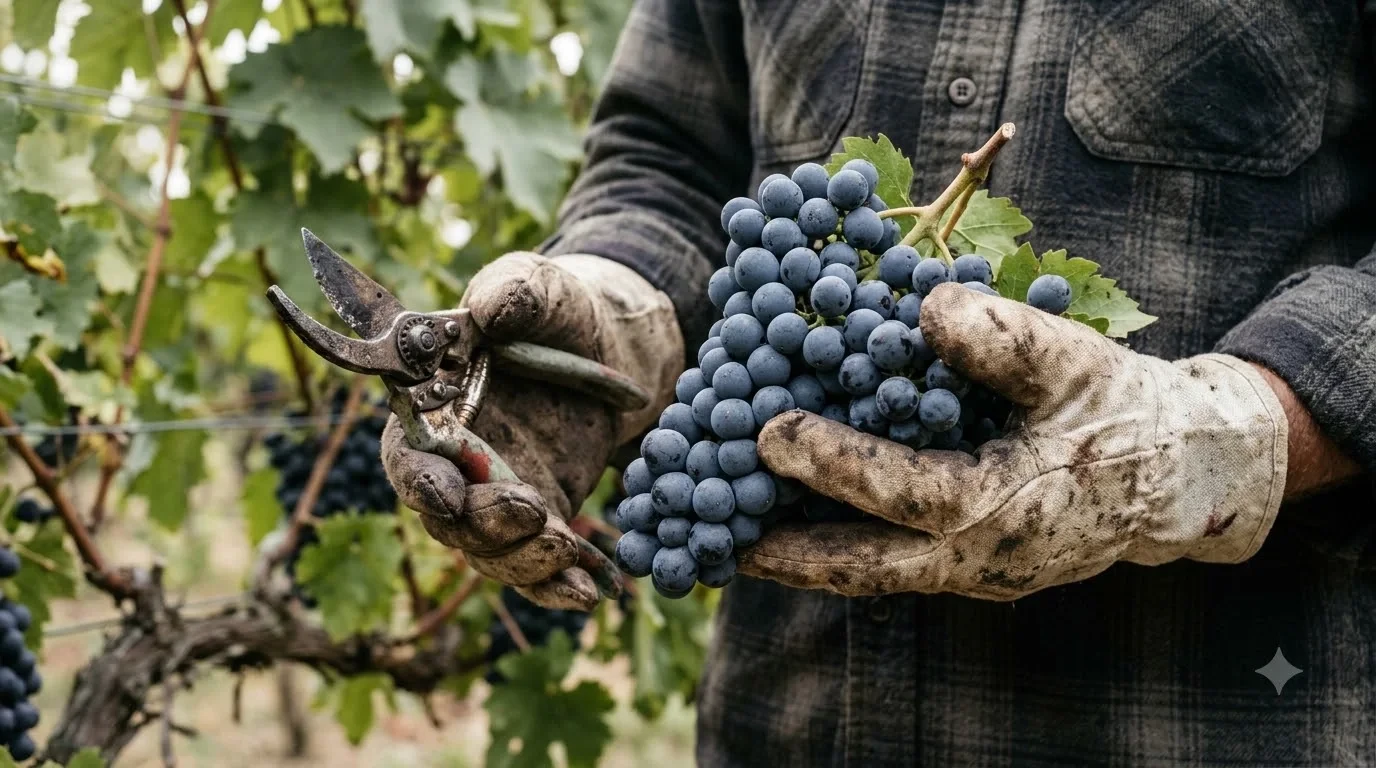
Growers have raised grapes here since the early 1970s. The commission credits Champoux Vineyard with the first vinifera plantings in 1972. Plantings expanded through the 1980s and early 1990s, then sped up after local vineyards came through the hard freeze of 1996 that damaged much of Washington’s grape crop.
Location, Climate and Soil
The region is warm and windy, with a long growing season and soils that drain well. Those three traits shape nearly every bottle made here. Many growers say the wind and sun give their fruit a character that is hard to copy elsewhere.
The vineyards run from about 200 feet above sea level at the southern edge along the Columbia River to roughly 1,800 feet at the northern boundary. Most plantings sit on slopes, and many face south. That orientation gives vines extended sun exposure, which helps ripen fruit.
Wind is one of the region’s defining features. Air funnels through the Columbia Gorge and sweeps across the appellation. According to the Washington State Wine Commission profile, the winds shrink canopies, toughen grape skins and help protect vines from mold and rot. Thicker skins can also add structure to the finished wine.
The climate is arid to semi-arid, so irrigation is needed to grow wine grapes, as it is across much of eastern Washington. The Columbia River moderates temperatures and lowers the risk of early and late frosts. Wikipedia reports a growing season of about 187 days, and harvest here can begin up to two weeks before the Yakima Valley to the northwest.
Soils are another key difference. The commission describes deep silt loam over basalt bedrock and gravel, with three main soil types: wind-blown sand and loess, Missoula Flood sediment, and hillside rubble. All of them drain well, which suits vinifera vines. Compare this with the Calistoga wine area in Napa Valley, where the climate and soils are very different.
| Factor | What it means for the wine |
|---|---|
| Location | South-central Washington, inside the Columbia Valley |
| Elevation | Roughly 200 to 1,800 feet above sea level |
| Growing season | About 187 days, long enough for mid- and late-season grapes |
| Wind | Strong and funneled from the Columbia Gorge, which thickens skins |
| Soils | Silt loam over basalt, with sand, flood sediment and rubble |
| Water | Irrigation is required for wine grapes |
Key Grape Varieties and Wine Styles
Cabernet Sauvignon and Merlot are the region’s best-known red grapes, while Chardonnay and Riesling anchor the white side. The warm, long season suits later-ripening varieties that need time on the vine.
Cabernet Sauvignon makes up a large share of the plantings, according to the commission. Wines made from it often show dark fruit, firm tannins and a structured frame. Merlot is usually softer and rounder, with plummy fruit that can pair easily with a range of dishes.
On the white side, Chardonnay and Riesling are both major plantings. Chardonnay can range from crisp and lean to rich and oaky, depending on the winemaker. Riesling tends to be aromatic and bright, and it can be made dry or with some sweetness.
The AVA’s grape list is long. Wikipedia lists more than a dozen other varieties, including Syrah, Malbec, Grenache, Zinfandel, Petit Verdot, Cabernet Franc, Mourvedre, Sauvignon blanc, Viognier, Roussanne, Marsanne and Chenin blanc. Producers also make dessert wines, sparkling wines and Meritage-style blends.
| Grape group | Examples grown here | General style to expect |
|---|---|---|
| Bordeaux-style reds | Cabernet Sauvignon, Merlot, Cabernet Franc, Petit Verdot | Structured, dark fruit, often blended |
| Other red varieties | Syrah, Grenache, Mourvedre, Malbec, Zinfandel | Spicy and fruit-forward in many cases |
| White varieties | Chardonnay, Riesling, Sauvignon blanc, Viognier | Crisp to rich, depending on the winemaking |
Overall, Horse Heaven Hills wines are often described as balanced and fairly full-bodied. A retailer profile of the region calls its wines elegant, with depth of flavor. Treat such descriptions as a starting point, then taste to see what suits you. The warm days and cool nights typical of the area help preserve acidity while the fruit ripens.
Notable Wineries and Brands
The region has about 27 vineyards and six commercial wineries, according to Wikipedia’s count as of 2025. Many bottles come from single-vineyard sources, so the vineyard name on a label can tell you a lot.
Several sites appear repeatedly in the region’s history. Champoux Vineyard is linked to the first vinifera plantings in 1972. Phinny Hill Vineyards is credited with an early Cabernet Sauvignon planting the same year. Mercer Ranch Vineyards produced an early Cabernet Sauvignon that helped establish the region’s reputation.
Stimson Lane also planted a large block of vines in Paterson between 1978 and 1981, including Merlot, Cabernet Sauvignon and Riesling. Its plantings show how larger producers helped shape the appellation. Because producers and labels change over time, check a winery’s current website for the latest releases.
Food Pairing with Horse Heaven Hills Wines
Match the wine’s weight to the food. Bold reds from Cabernet Sauvignon and Syrah suit grilled and braised meats, while crisp whites suit lighter dishes. The best matches balance texture and intensity on the plate and in the glass.
Here are a few simple starting points:
- Cabernet Sauvignon with grilled steak, lamb chops or aged hard cheeses.
- Merlot with roast chicken, mushroom dishes or pork tenderloin.
- Syrah with barbecue, smoked sausage or spiced stews.
- Chardonnay with creamy pasta, roast turkey or lobster.
- Riesling with spicy Thai or Indian food, and with pork dishes that have a touch of sweetness.
Serve reds slightly cooler than room temperature, and whites well chilled. Enjoy these pairings in moderation, and never drink and drive.
How to Buy and Store Horse Heaven Hills Wine
Look for the AVA name on the label, then check the vintage and producer. A federal rule requires most of the grapes in a wine labeled with an AVA name to come from that area, so the name tells you where the fruit grew.
- Read the front and back labels for the AVA name, the grape variety and the producer.
- Decide whether you want a single-variety wine or a blend, since many reds here are blended.
- Choose a vintage you can drink soon if you prefer fresh, fruit-forward styles.
- Store bottles somewhere cool, dark and steady in temperature, away from heat and vibration.
- Keep corked bottles on their sides so the cork stays moist.
Full-bodied reds often benefit from a few years of bottle age, while many whites are best within a few years of release. Check the producer’s notes for drinking windows.
Frequently Asked Questions
What is Horse Heaven Hills wine?
Horse Heaven Hills wine is wine made from grapes grown in the Horse Heaven Hills AVA, a federally defined area in south-central Washington. The region sits within the larger Columbia Valley appellation. The AVA name on a label tells you where most of the grapes were grown.
Which grapes are grown in Horse Heaven Hills?
Cabernet Sauvignon, Merlot, Chardonnay and Riesling are among the most prominent varieties. Wikipedia also lists Syrah, Malbec, Grenache, Zinfandel and several others. Cabernet Sauvignon is planted heavily because the region is among Washington’s warmer growing areas.
What makes the region’s wines distinctive?
Strong winds, a long growing season and well-draining soils set the region apart. The wind thickens grape skins and reduces disease pressure. Many vineyards also face south, which gives the grapes extended sun exposure.
Should I drink Horse Heaven Hills wine young or aged?
It depends on the wine and the producer. Many fresh whites and fruit-forward reds are meant for early drinking. Structured reds such as Cabernet Sauvignon may benefit from some bottle age. Check the producer’s recommendations on the website or back label.
Horse Heaven Hills is a useful region to learn once you understand its wind, sun and soils. Start with a Cabernet Sauvignon or Merlot, then try a Riesling or Chardonnay to compare. For more background, browse the Wine Regions section, or compare the style with Cahors wine from France.
More in Wine Regions
 Willcox Wine Trail: Discover Arizona’s High-Elevation Wine CountryUpdated Nov 20, 2026
 Yakima Valley Wine Region: Find the Best Styles to TryUpdated Nov 20, 2026
 Vosne Romanee Wine Tasting: Identify Aromas and Choose Better PairingsUpdated Nov 20, 2026
 Yakima Valley Wine Festival: Find the Best Seasonal Wine EventsUpdated Nov 20, 2026
 Wales Vineyards: Discover Cool-Climate Wines and Where to VisitUpdated Nov 20, 2026
 Yountville Wine Festival: Discover Napa Wines and Local FoodUpdated Nov 20, 2026