

We may earn a commission when you buy through links on this page, at no extra cost to you. Learn more.
Hermann J Wiemer wine comes from a Finger Lakes estate in New York that was founded in 1979 and is built around Riesling. The vineyard sits on the western slopes of Seneca Lake, and its founder, Hermann J. Wiemer, came from a German winemaking family and chose the grape as the estate’s central variety when demand for German-style wine in America was small. The range now includes dry Riesling, a sparkling Riesling and other styles, and the winery is often cited as one of the region’s leading producers of the grape.
If you are looking at a bottle of Hermann J. Wiemer wine and wondering what sets it apart from other New York whites, this guide explains the estate’s history, the style of its Riesling, and the simple serving and pairing choices that help the wine show its best side. The notes below draw on the estate’s own published material and on regional sources, so treat them as a guide to the house style rather than a rating of any one vintage.
Who Hermann J. Wiemer was and why Riesling
The estate takes its name from its founder, a German-born winemaker who grew up in a family with long roots in the Mosel valley. According to the estate’s own history, the family worked in the vine-grafting trade, and when Wiemer arrived in the Finger Lakes there was little vinifera planting material available locally. That gap led him to start a nursery alongside the winery, so that new vineyards in the region could be planted with the classic European varieties.
His focus on Riesling was a deliberate choice rather than a trend-following one. At the time, few American drinkers were buying German wine, and most of the Finger Lakes was still finding its identity. The estate’s media material states that it was founded in 1979 and describes it as a pioneer of viticulture and winemaking in the region. Regional writers have since treated the winery as one of the key figures in the Finger Lakes Riesling revival.
The vineyard and the Seneca Lake setting
The vineyard lies on the western slopes of Seneca Lake, near Dundee, New York. The lake moderates the temperatures on the hillside, which helps the fruit ripen slowly and keep its acidity. That acidity is a central part of the estate’s Riesling, and it is one reason the wines can age well and still taste lively years after the vintage.
The estate’s materials give somewhat different figures for how much land it works. The history section describes 90 acres of vineyard sites, while a later timeline entry refers to a 33-acre site, so the exact planted area is not settled by the published record. What is consistent across the sources is the emphasis on a few carefully managed sites rather than a large spread of purchased fruit.
| Style | What it tastes like | Good with |
|---|---|---|
| Dry Riesling | Crisp, citrus and stone fruit, clean finish | Seafood, salads, roast chicken |
| Reserve Dry Riesling | Riper fruit, more structure and weight | Pork, creamy pasta, aged cheese |
| Extra Brut Sparkling Riesling | Bright, dry, with fine bubbles | Appetizers, fried food, celebrations |
Dry Riesling and the Reserve bottlings
The estate’s dry Riesling was established in the mid-1980s, and it remains the center of the lineup. Dry Riesling from the Finger Lakes tends to show green apple, lime and white peach, with the lake’s influence giving the wine a firm, mineral line. The Reserve Dry bottlings are richer and more structured, and they are the ones to try when you want to see how far the style can develop.
The 2005 Riesling Reserve Dry is a good example of the estate’s ambitions. It received the Governor’s Cup in 2006, a state-level award that signaled the winery’s place among New York producers. Awards alone do not tell you how a bottle will taste, but they do show that the estate’s dry style drew attention from judges outside the Finger Lakes.
Tip: Dry Riesling is more forgiving with food than many people expect. Start with a simple dish such as grilled fish or a green salad, then move to richer food to see how the acidity cuts through fat.
Sparkling Riesling and the Champagne influence
The estate’s Extra Brut Sparkling Riesling has been made since 2015. It takes its inspiration from a 1985 bottling the winery describes as a Champagne-style wine, and the aim is a very dry sparkling wine that lets the Riesling fruit show through the bubbles. For readers who usually drink Champagne or Prosecco, it is a useful way to see how a different grape handles the same method.
Sparkling Riesling is also a practical choice for a crowd, because it moves well from aperitif to dinner. It can be poured with salty snacks, oysters or a plate of fried appetizers, and it holds up to fruit-based desserts that are not too sweet.
How to serve and pair Hermann J. Wiemer wine
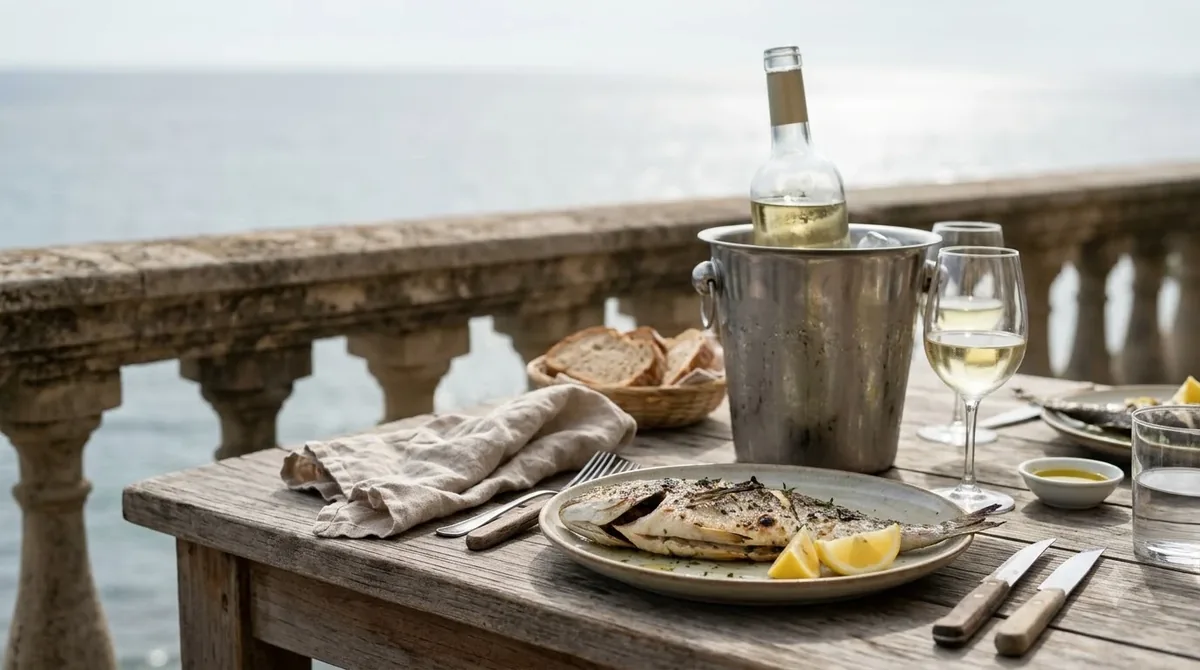
Riesling rewards careful serving. Chill the dry bottlings well but not icy, since very cold wine hides aromas, and let the glass warm for a few minutes before tasting. A tall white wine glass with a narrower bowl helps the fruit and acidity come forward. Sparkling Riesling should be served cold and poured into a flute or tulip glass so the bubbles last.
For food, dry Riesling is one of the most versatile wines on the table. It works with Thai and Vietnamese dishes that combine sweet, sour and spicy flavors, with roast pork and with soft cheeses such as goat cheese. The Reserve Dry has enough body for creamy sauces and roast poultry, while the sparkling bottling suits anything from salty chips to a simple cheese board. The estate’s own notes do not offer specific serving advice, so these pairings reflect general practice for the style rather than a recommendation from the producer.
If you want to see how a different producer handles a similar style, the guide to La Marca Prosecco shows how a sparkling wine from another region can fit the same kind of meal. Readers who want to compare brands can also browse the wine brands hub, and Barefoot wine offers a contrasting, widely available style for everyday drinking.
Who should try it and what to look for
Hermann J. Wiemer wine suits drinkers who enjoy crisp, dry whites and want to explore a New York producer that is closely tied to one grape. If you usually choose Sauvignon Blanc or Pinot Grigio, a dry Riesling is a worthwhile step: it shares their freshness but adds more aromatic complexity and a longer finish. The sparkling bottling suits anyone who likes Champagne-style wine but wants something different.
When you shop, check the bottling name and the vintage. The dry and reserve bottlings can differ noticeably in weight and age potential, so read the label before you buy. Because the estate produces a limited range, the most sought-after wines may sell out, and it is worth buying a single bottle first to learn the house style before committing to a case.
The estate’s own material is the best starting point for details on specific bottlings, including the estate page on the winery website. From there, a single dry Riesling is a simple way to taste what Seneca Lake can do with a grape that many American drinkers still overlook.
Frequently Asked Questions
Where is Hermann J. Wiemer wine made?
It is made at the Hermann J. Wiemer Vineyard on the western slopes of Seneca Lake in New York’s Finger Lakes region, near Dundee.
What is Hermann J. Wiemer best known for?
The estate is best known for Riesling, including dry and reserve dry bottlings and an Extra Brut sparkling Riesling made since 2015.
When was the winery founded?
The estate states that it was founded in 1979 by Hermann J. Wiemer, who made Riesling the central focus of the winery from the start.
What food goes with dry Riesling?
Dry Riesling pairs well with seafood, salads, roast chicken, pork and soft cheeses, and its acidity handles spicy and sweet-and-sour dishes better than many white wines.
Hermann J. Wiemer wine is a good choice for anyone curious about the Finger Lakes and about what Riesling can do outside Germany. Start with a dry bottling to learn the style, then try the sparkling wine or a reserve when you want more depth. Serve it cool, pair it with food that has some acidity or spice, and the estate’s character will come through clearly.
More in Wine Brands
 Underwood Wine Price: Compare Bottles, Cans, and Pack SizesUpdated Nov 21, 2026
 Zenato Wine Price: Compare Styles and Choose the Right BottleUpdated Nov 21, 2026
 Zuccardi Wine Price: Compare Bottles and Find the Right RangeUpdated Nov 21, 2026
 Yellow Tail Moscato Review: Taste, Sweetness and Serving TipsUpdated Nov 21, 2026
 Wolf Blass Yellow Label Review: Choose Your Best StyleUpdated Nov 21, 2026
 Wolffer Estate Rose Review: Choose the Right Bottle for Your TableUpdated Nov 21, 2026