


We may earn a commission when you buy through links on this page, at no extra cost to you. Learn more.
Hardys wine price in the United States typically ranges from about $7 to $25 for many everyday and midrange bottles, with premium collections costing considerably more. The final cost depends on the collection, grape variety, bottle size, and retailer. Hardys Stamp and Nottage Hill are useful starting points for affordable Australian wine, while Heritage Reserve Bin, Tintara, Eileen Hardy, and Thomas Hardy offer more premium choices.
Hardys is an established Australian wine producer with a portfolio that covers approachable everyday bottles, regional expressions, reserve wines, and fortified styles. Its broad selection means shoppers can compare several levels of quality without treating every bottle as interchangeable. Understanding the different collections and package sizes makes it easier to judge whether a particular bottle represents good value.
Who This Is For
Hardys wine is worth considering for shoppers who want Australian wines at several spending levels, from uncomplicated weekday bottles to more distinctive wines for dinners and special occasions. The brand’s range includes familiar grapes such as Shiraz, Cabernet Sauvignon, Chardonnay, and Merlot, making it relatively straightforward to find a style that suits an established preference.
Budget-conscious shoppers can start with Hardys Stamp or the Varietal Range. These collections emphasize accessible styles and straightforward drinking rather than making the buyer pay for a highly specialized wine experience. Stamp is particularly useful for people who enjoy familiar Australian blends, while the Varietal Range focuses on individual grape varieties.
People who want something more structured can explore Nottage Hill, Heritage Reserve Bin, and Tintara. These collections provide additional options for comparing grape expression, regional character, and winemaking approach. The premium end of the portfolio includes Eileen Hardy and Thomas Hardy, which are intended for shoppers looking for more ambitious Australian wines.
Hardys can also suit households that buy wine in different quantities. Retailer listings include individual 187 ml bottles, standard 750 ml bottles, and larger 3-liter boxes. A smaller format can be practical for an individual serving, while a larger package may make sense for regular household consumption or a gathering.
Shoppers comparing Australian wine brands can also use our overview of Wine Brands to understand where Hardys fits among familiar international labels. Those primarily interested in approachable, fruit-forward bottles may also want to compare the range with Barefoot wine, although the two producers have different portfolios and origins.
Key Factors to Compare
The most useful way to compare Hardys bottles is to look at collection, grape variety, package size, and retailer availability together. A lower-priced small bottle and a larger-format package should not be compared solely by their shelf prices.
For an American shopper, a standard 750 ml bottle is the simplest reference point. It provides approximately five 5-ounce servings, making it easier to compare the cost of a bottle with the number of glasses it supplies. Larger formats can change the per-serving calculation, while premium collections can justify higher spending through different fruit selection and winemaking ambitions.
| Comparison factor | What to look for | Why it matters |
|---|---|---|
| Collection | Stamp, Nottage Hill, HRB, Tintara | Indicates the general positioning and style of the wine. |
| Standard bottle | 750 ml | Provides approximately 5 servings of 5 ounces. |
| Small bottle | 187 ml | Provides approximately 1.25 servings of 5 ounces. |
| Large format | 3 liters | Provides approximately 20 servings of 5 ounces. |
| Grape variety | Shiraz, Cabernet, Chardonnay, Merlot | Helps match the wine to personal taste and food. |
| Wine category | Still, sparkling, fortified | Different styles suit different occasions and serving temperatures. |
| Retailer | Local store, online retailer, wine shop | Availability, taxes, and delivery costs vary by location. |
Collection names are especially useful because Hardys does not sell just one uniform style of wine. Its official portfolio describes Stamp as a range of blended wines, the Varietal Range as a collection focused on individual varieties, and Heritage Reserve Bin as a range of cross-regional blends using selected grapes. These differences help explain why bottles carrying the same producer name can occupy different price levels. The official Hardys collection descriptions provide details about the producer’s different ranges.
Retailer listings illustrate the range of available prices. GotoLiquorStore lists Hardys Stamp Chardonnay and Stamp Shiraz 750 ml bottles from about $7 to $12, while its Nottage Hill Cabernet Shiraz listing starts at approximately $15 for a 750 ml bottle. These are retailer-specific listing ranges rather than guaranteed national prices, and prices vary by state and retailer.
Another useful comparison comes from Midtown Market in Chicago. Its listing places Hardys Stamp Chardonnay and Stamp Shiraz in the same general entry-level category, while Nottage Hill Chardonnay and Shiraz are also available in smaller 187 ml formats. The smaller bottles make it possible to compare styles without committing to a standard-size purchase.
Shoppers can consult GotoLiquorStore’s Hardys wine listings to see examples of available collections and package sizes. The retailer explains that local delivery pricing and availability depend on the delivery address.
Remember to compare like with like. A 3-liter box contains four times the wine in a standard 750 ml bottle, so its total cost will naturally be higher even if its per-ounce cost is lower. Vintage, availability, and shipping arrangements can also affect the final amount paid.
Step-by-Step: How to Compare Hardys Wine Prices
A structured comparison helps prevent shoppers from choosing a bottle simply because it has the lowest displayed price. Start with the style you want, then compare equivalent sizes and collections before deciding how much to spend.
- Choose the wine style. Decide whether you want a red, white, sparkling, or fortified wine. For example, Shiraz and Cabernet Sauvignon are red options, Chardonnay is a white option, and Hardys Sparkling Shiraz offers a sparkling red alternative.
- Identify the collection. Look for Stamp, Nottage Hill, Heritage Reserve Bin, Tintara, or one of the premium collections. This prevents an entry-level bottle from being compared unfairly with a reserve wine.
- Use 750 ml as your reference size. A standard bottle provides approximately five 5-ounce glasses. This makes it easier to compare the cost per serving between different labels.
- Check smaller and larger formats. Midtown Market lists 187 ml Nottage Hill bottles, while GotoLiquorStore lists 3-liter Stamp boxes. Compare the quantity of wine rather than the package price alone.
- Compare at least two retailers. Check a local store and an online retailer serving your area. For example, Chicago shoppers can review Midtown Market’s Hardys selection, while other shoppers can investigate local listings through GotoLiquorStore.
- Calculate the unit cost. Divide the total bottle price by 750 for the cost per milliliter, or divide the price by five for the approximate cost per 5-ounce serving.
- Account for the final purchase cost. Include applicable taxes, delivery charges, and any local availability restrictions. A lower listed amount does not necessarily mean a lower final checkout total.
For a practical comparison, consider a hypothetical purchase of two standard bottles. If one bottle costs $10 and another costs $20, the first supplies five glasses at approximately $2 per glass, while the second supplies five glasses at approximately $4 per glass. The higher-priced bottle may still be the better choice if its grape variety, structure, or occasion suitability matches your preferences.
Tip: Compare the same Hardys collection and bottle size across retailers before deciding. A Stamp Chardonnay in a 750 ml bottle should be compared with another 750 ml Stamp Chardonnay, not with a 3-liter box or a premium Cabernet Sauvignon.
For shoppers who already enjoy the producer, the Hardys wine overview provides another useful starting point for exploring its collections and wine styles. It is easier to make a sensible purchasing decision when the wine’s intended style is understood before comparing the shelf price.
Hardys Wine Types and Collections Explained
Hardys offers several collections with different purposes, from straightforward varietal wines to selected premium bottlings. Understanding the distinctions is more useful than assuming that every wine from the producer has the same character or positioning.

Stamp
Stamp is one of the accessible collections to investigate first. The producer describes these wines as blends that bring together grapes from different regions. Its purpose is to provide approachable Australian wine styles, with recognizable options such as Shiraz, Chardonnay, Cabernet Sauvignon, and Merlot appearing in retailer listings.
Stamp can be a practical choice for everyday meals, casual entertaining, and shoppers who want familiar grape varieties. GotoLiquorStore lists its Chardonnay and Shiraz in 750 ml bottles and also offers larger 3-liter formats for selected Stamp wines. The larger package can be useful when several people are sharing the same wine.
Varietal Range
The Varietal Range focuses on individual grape varieties. Hardys explains that the collection is designed to communicate the diversity of wine without introducing complex secondary winemaking flavors. This makes it a useful option for people who want to identify what they enjoy about a particular grape.
For example, a shopper who likes the dark-fruit character and firmer tannins of Cabernet Sauvignon may prefer that variety over a softer Merlot. Someone who prefers a white wine with richer fruit and a fuller texture might look toward Chardonnay. Comparing individual varieties can be more informative than buying a blend without knowing its composition.
Nottage Hill
Nottage Hill provides another collection to consider when comparing the producer’s everyday and midrange selections. Retailer listings include Chardonnay, Shiraz, Merlot, and Cabernet-based wines, with different package sizes available depending on the retailer.
Its small-format options are particularly useful for shoppers who want a single serving or want to compare a white and red style without opening two full bottles. Midtown Market lists Nottage Hill Chardonnay and Nottage Hill Shiraz in 187 ml bottles, which provide approximately one and a quarter standard 5-ounce servings.
Heritage Reserve Bin
Heritage Reserve Bin, often abbreviated as HRB, is a more premium collection. According to Hardys, these wines use cross-regional blending and hand-selected grapes from leading Australian regions for the relevant varieties.
This collection is worth considering for shoppers who want something more substantial than a straightforward everyday bottle. The producer’s portfolio includes HRB Cabernet Sauvignon, Pinot Noir, Riesling, and Shiraz. The specific wine and vintage can influence the final retail cost.
Tintara
Tintara is another important part of the Hardys portfolio. The winery describes its wines as combining traditional methods with newer winemaking techniques. The range includes premium expressions, with Cabernet Sauvignon and Shiraz among the varieties featured in its collection.
Shoppers interested in Australian regional character may find Tintara particularly appealing. It provides an alternative to the more uncomplicated Stamp styles and gives buyers another collection to compare before moving to the most expensive wines in the portfolio.
Eileen Hardy and Thomas Hardy
Eileen Hardy represents a premium part of the portfolio. The producer says winemakers select handpicked parcels of fruit from Australian wine regions for wines carrying the Eileen name. The collection includes wines such as Chardonnay, Shiraz, and Pinot Noir.
Thomas Hardy Cabernet Sauvignon is another premium offering. Hardys identifies the first vintage of this wine as 1989 and describes it as the pinnacle of its Cabernet Sauvignon winemaking. These wines are better suited to shoppers specifically seeking a premium Australian bottle than to someone looking for a basic everyday purchase.
Rare and Fortified Wines
The Rare collection includes fortified styles such as Tawny, Muscat, Show Sweet White, and Liqueur Sauvignon Blanc. Hardys explains that these wines use selected reserve wines matured in barrels over many decades and are produced in limited quantities.
Fortified wines serve a different purpose from standard dry table wines. Their richer character makes them suitable for smaller pours after dinner, particularly with desserts or cheeses. They should be compared separately from regular 750 ml Chardonnay or Shiraz bottles because their production and serving occasions are different.
For more information about how individual varieties differ in body, acidity, and tannin, compare the grape before choosing a collection. A Cabernet Sauvignon generally has firmer tannins than Merlot, while Chardonnay is a different style of wine altogether.
Common Mistakes When Comparing Hardys Prices
The most common purchasing mistakes involve comparing different bottle sizes, confusing collections, and assuming that every retailer has the same selection. A little attention to the product details can prevent an apparently inexpensive purchase from becoming poor value.
Comparing Different Bottle Sizes
A 187 ml bottle is not equivalent to a 750 ml bottle, and a 3-liter box contains substantially more wine than either. A small bottle can appear inexpensive because it supplies approximately one serving, while a large box can have a higher total price despite offering a lower cost per glass.
For a fair comparison, calculate the cost per 750 ml equivalent. Divide a 3-liter package into four standard-bottle equivalents. This provides a clearer indication of whether the larger format offers meaningful savings.
Assuming Every Collection Has the Same Quality Positioning
Stamp, Nottage Hill, Heritage Reserve Bin, and Eileen Hardy are not interchangeable collection names. The producer gives them different roles, ranging from approachable blends and varietal wines to more selected premium expressions.
A shopper comparing a Stamp Shiraz with an Eileen Hardy Shiraz should consider the different positioning rather than expecting the prices to be close. A higher price does not automatically make the wine the right choice for every occasion.
Ignoring Grape Variety
Price alone does not tell you whether a wine suits your preferences. Cabernet Sauvignon generally has high tannin, while Merlot is softer and has medium tannin. Shiraz tends to offer a fuller red-wine experience, while Chardonnay is a white wine with a different structure and food-pairing role.
People who enjoy lighter reds may prefer Pinot Noir over Cabernet Sauvignon. Those who enjoy crisp whites may prefer a high-acidity variety such as Riesling or Sauvignon Blanc rather than Chardonnay. Choosing the grape first makes the price comparison more meaningful.
Overlooking Retailer Differences
American wine prices can vary considerably by state and retailer. Local taxes, distribution arrangements, shipping costs, and stock levels all influence what a customer eventually pays.
GotoLiquorStore specifically explains that it needs a delivery address to display local pricing and availability. A product listed on a national shopping platform may therefore not be available at the same cost in every ZIP code.
Assuming a Premium Bottle Is Always Necessary
Not every occasion requires a reserve or premium wine. A straightforward Stamp Chardonnay can be suitable for a casual meal, while a premium Thomas Hardy Cabernet Sauvignon may make more sense for a special dinner or a collector interested in Australian Cabernet.
Matching the collection to the occasion is a better purchasing strategy than automatically choosing the highest-priced bottle. Everyday wine and special-occasion wine serve different purposes.
Care, Serving, and Storage Tips
Proper storage and serving conditions help preserve the wine’s intended character after purchase. Temperature, light exposure, bottle position, and the time between opening and drinking can all affect the drinking experience.
Store Bottles Properly
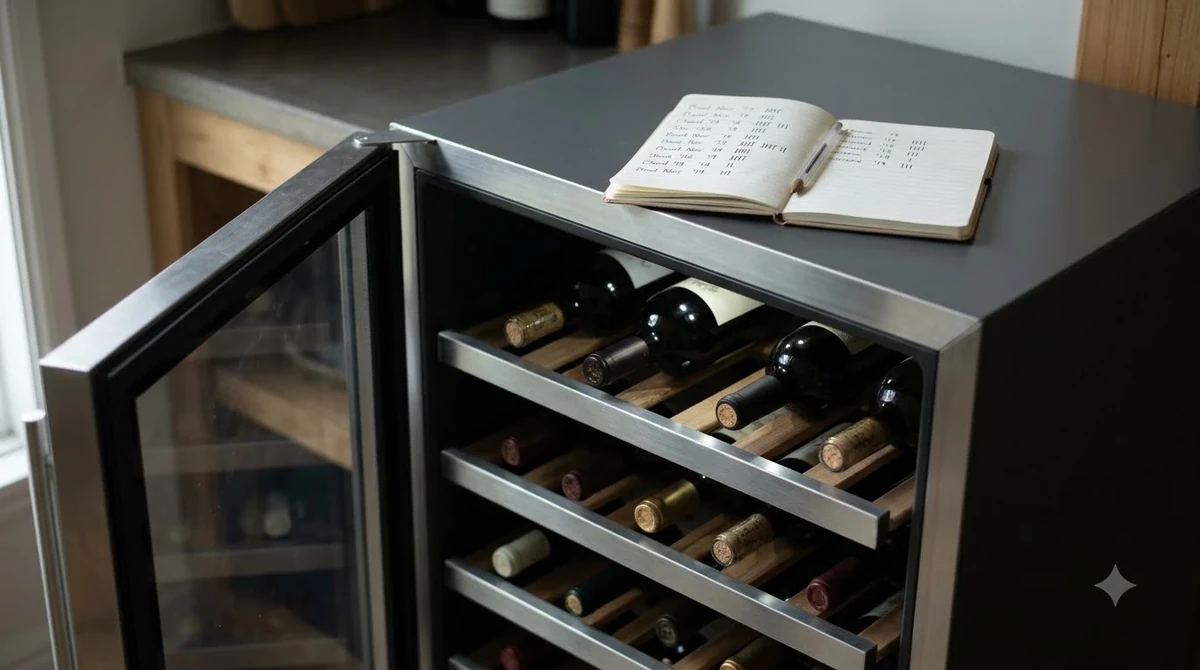
For bottles sealed with natural cork, horizontal storage helps keep the cork in contact with the wine. A cool, dark environment near 55 degrees Fahrenheit is a useful target for longer-term storage. Avoid locations near ovens, radiators, windows, and other sources of temperature fluctuations.
Large temperature changes are particularly undesirable because they can affect the wine over time. A dedicated wine refrigerator can provide more consistent conditions than an ordinary kitchen cabinet, especially if a household keeps several bottles for future occasions.
Serve at the Appropriate Temperature
Serving temperature makes a noticeable difference to aroma and texture. Full-bodied red wines generally show well around 60 to 65 degrees Fahrenheit, while lighter reds are better around 55 to 60 degrees. White wines should usually be served cooler.
For Hardys Chardonnay, a serving range of 50 to 55 degrees Fahrenheit is a useful starting point for fuller white styles. Shiraz and Cabernet Sauvignon can generally be served around 60 to 65 degrees Fahrenheit, depending on their body and structure.
Do not assume that a full-bodied red should be served warm simply because it is a red wine. Excessive warmth can make alcohol more prominent and reduce the impression of freshness. Slightly cooler serving conditions often provide a more balanced presentation.
Allow Young Red Wines to Breathe
Young, full-bodied red wines can benefit from 30 to 60 minutes of decanting before serving. This can help open aromatic expression and soften the initial impression of a structured wine.
A lighter red may need less time, and an older bottle requires more careful handling because extended exposure to air can diminish delicate aromas. Decanting is therefore a choice based on the wine’s style and condition, not an automatic requirement for every Hardys bottle.
Preserve Opened Bottles
Once opened, still wines generally keep for approximately three to five days when refrigerated and properly resealed. Sparkling wines usually retain their best qualities for around one to three days with an appropriate sparkling-wine stopper.
Fortified wines can remain enjoyable for several weeks after opening, depending on their style and storage conditions. Bag-in-box wines can generally last around four to six weeks after opening when stored according to the packaging instructions.
For households buying a 3-liter Hardys box, the packaging can be convenient because it allows wine to be poured over a longer period without repeatedly opening a new bottle. This is one reason larger formats may suit regular wine drinkers better than households that only open wine occasionally.
Finally, consider the food being served. Shiraz works well with grilled meats and richly flavored dishes, while Chardonnay can suit poultry, seafood, and creamy sauces. Cabernet Sauvignon pairs naturally with richer meat dishes, while a softer Merlot can work with roast chicken, burgers, and less intensely seasoned meals.
Frequently Asked Questions
Is Hardys an Australian wine brand?
Yes. Hardys was established in South Australia, and its history dates to Thomas Hardy’s arrival in the country in 1850. Its first winery was established in 1853, and the producer continues to identify Australian winemaking as central to its identity.
What does HRB mean on a Hardys wine bottle?
HRB stands for Heritage Reserve Bin, a named Hardys collection. The producer describes this range as using selected grapes and cross-regional blending. The collection includes several varieties rather than referring to just one grape or one individual wine.
Does Hardys make organic wine?
The standard Hardys collection descriptions do not establish that the entire portfolio is certified organic. Organic certification applies to specific wines and production standards, not automatically to every bottle from a producer. Shoppers specifically seeking certified organic wine should look for an identifiable certification on the individual product.
Does Hardys make wine in Australia or blend wines internationally?
Hardys is an Australian wine producer, and its official collections describe Australian fruit and regional blending. The Stamp and Heritage Reserve Bin ranges can combine grapes from different Australian wine regions. Cross-regional blending does not mean the wines are necessarily blends of grapes from different countries.
Can Hardys wine be purchased in half bottles?
Retailer listings show 187 ml Nottage Hill bottles, which are smaller than a conventional half bottle of 375 ml. A traditional 375 ml half bottle is a different package size and should not be assumed to be available for every Hardys variety. Availability depends on the specific collection and retailer.
Hardys offers a wide range of Australian wines, so the right purchase depends on the collection, grape variety, and bottle size rather than the producer name alone. Start with Stamp or Nottage Hill for approachable options, then compare Heritage Reserve Bin, Tintara, Eileen Hardy, and Thomas Hardy when looking for more premium expressions. Comparing equivalent bottle sizes and local retailer listings is the most reliable way to find a Hardys wine that fits your preferences and budget.
More in Wine Brands
 Louis Latour Wine Price: Compare Bottles by Style and TierUpdated Nov 20, 2026
 Yellow Tail Moscato Price: What to Expect Before You BuyUpdated Nov 20, 2026
 Sutter Home Sweet Red Review: Find the Right Food PairingsUpdated Nov 20, 2026
 Franzia Chillable Red Review: Find the Right Serving StyleUpdated Nov 20, 2026
 Veuve Clicquot Rose Review: Flavor, Food Pairings and Buying AdviceUpdated Nov 20, 2026
 Rombauer Wine Price: Compare Bottles Before You BuyUpdated Nov 20, 2026