

We may earn a commission when you buy through links on this page, at no extra cost to you. Learn more.
The Hamilton Beach wine opener (Model 76610) is a straightforward, budget-friendly cordless electric corkscrew that pulls up to 30 corks per charge with simple two-button control, though it is now discontinued on the manufacturer’s site and shows long-term battery wear. Its dedicated charging dock and integrated foil cutter storage keep home bar counters tidy without loose cables. However, shoppers who open wine frequently or want multi-year battery longevity will find higher capacity and stronger durability from competing electric models or a classic manual wine key.
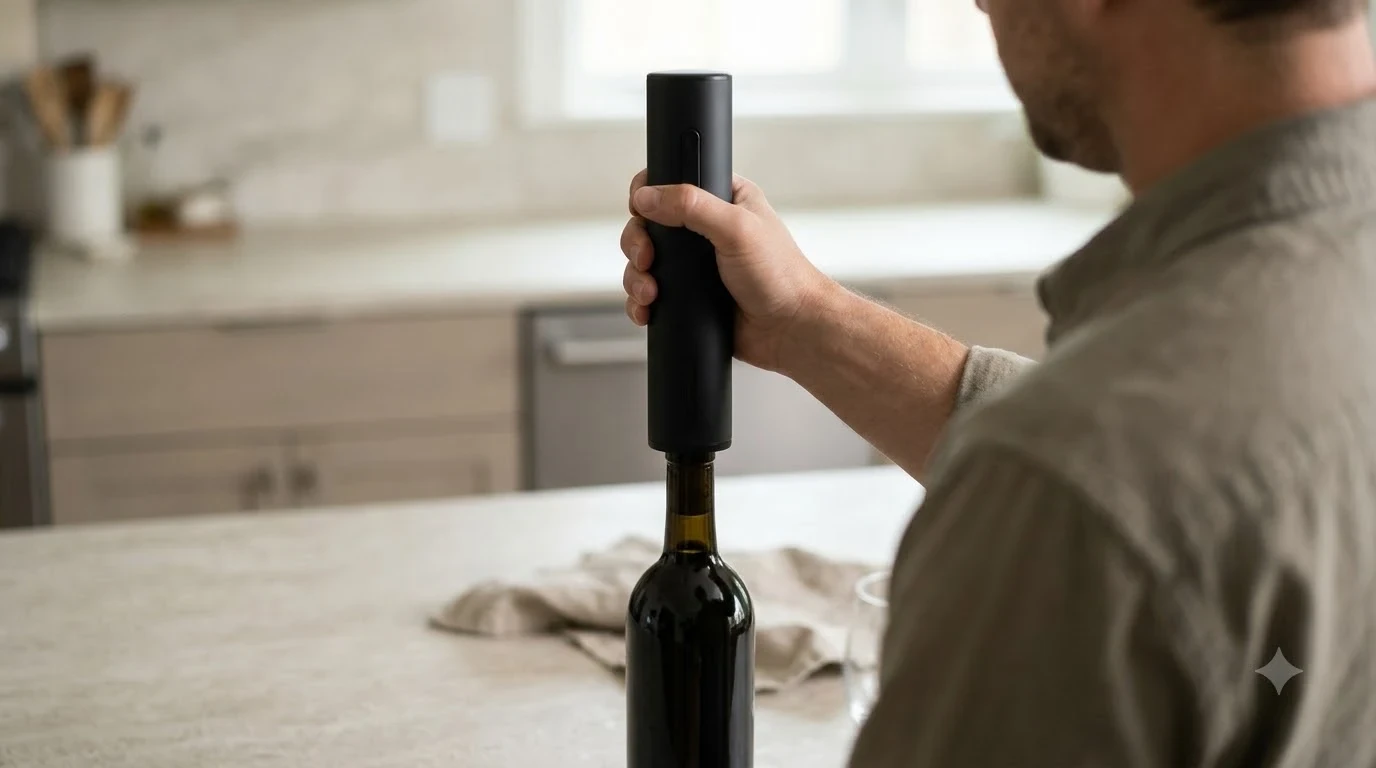
Choosing a wine opener usually comes down to how much wrist effort a drinker wants to spend and how much counter space a bar setup can spare. Named after its Virginia-rooted appliance maker, the Hamilton Beach Cordless Electric Wine Opener (Model 76610) targets casual home hosts who want push-button convenience for dinner parties and weeknight pours without wrestling with stubborn corks.
Hamilton Beach Wine Opener Specs and Key Features
According to the official Hamilton Beach specification sheet and user manual, Model 76610 is a countertop-docked rechargeable unit measuring 11 inches tall, 4.25 inches wide, and 4 inches deep. It operates with a single rocker-style up/down switch, comes with a snap-in foil cutter, and opens up to 30 bottles on a full charge.
| Specification | Hamilton Beach Model 76610 Detail | Operational Impact |
|---|---|---|
| Dimensions | 11 in. H x 4.25 in. W x 4 in. D | Fits under standard 18-inch upper kitchen cabinets |
| Rated Battery Capacity | Up to 30 bottles per full charge | Covers roughly 6 cases of 750 ml wine before recharging |
| Initial Charge Time | At least 8 hours before first use | Requires overnight charging right out of the box |
| Charging Indicator | Red light (charging) / Green light (full) | Confirms dock contact at a glance |
| Control Interface | Single up/down directional rocker button | Down arrow extracts cork; up arrow reverses spiral |
| Cork Compatibility | Natural and synthetic wine corks | Not rated for plastic champagne stoppers or screw caps |
| Included Accessories | Charging base, power cord, foil cutter | Foil cutter clips directly into back of charging base |
| Electrical Rating | 120V ~ 60Hz household outlet | Indoor household use only; no extension cords |
| Limited Warranty | 1 year (U.S.) / 5 years (Canada) | Requires original receipt; buyer pays return shipping |
| Manufacturer Status | Listed as no longer available on brand site | Remaining stock appears through third-party sellers |
The physical layout centers on a contoured black housing with a non-slip grip designed to stabilize the cylinder while the internal motor drives the auger downward. Unlike handheld openers that rely on disposable AA alkaline batteries or loose micro-USB cables, the 76610 rests upright in a weighted charging cradle. Per the Hamilton Beach 76610 User Guide, placing the opener on the base triggers a red LED indicator that switches to green once the internal rechargeable cells reach full capacity.
Accessory organization is handled cleanly through a dedicated slot molded into the rear of the charging dock. The circular, twin-blade foil cutter snaps into that rear recess after slicing the capsule off a bottle neck, keeping all pieces together between uses. Hamilton Beach also cataloged replacement foil cutters and replacement charging cords separately, though direct factory availability has wound down alongside the main unit.
Tip: Before opening your first bottle with a newly unboxed Model 76610, leave the unit on its charging base for a full 8 hours as specified in the user manual; running the motor on a partial factory charge can stall the auger halfway through dense synthetic corks.
What Owners Like About the Model 76610
Verified buyer reviews consistently highlight two practical strengths: zero-twist push-button operation and the convenience of a standing charging dock. Owners who dislike hunting for charging cables or replacing alkaline cells appreciate that the opener stays topped up whenever it sits on the counter.

In homeowner feedback compiled by retailers such as Advanced Mixology, buyers emphasize how little grip strength the 76610 demands compared to traditional winged or waiter’s corkscrews. Once the foil capsule is scored and lifted away, the user holds the 750 ml bottle steady with one hand, seats the open bottom collar squarely over the bottleneck, and holds the lower arrow button. The corkscrew drives into the cork, pulls it cleanly into the transparent barrel, and stops automatically, after which pressing the upper arrow backs the intact cork off the worm.
That predictable sequence appeals strongly to casual drinkers who open a bottle of Cabernet Sauvignon or Sauvignon Blanc on Friday night without wanting to master hinge leverage. Reviewers also note that having the foil cutter docked on the base eliminates drawer clutter, a small ergonomic detail that separates countertop units from many accessory brands that pack loose cutters into boxes.
Common Complaints and Durability Limits
Despite strong initial satisfaction, long-term owner reports point to gradual battery and motor decline after extended ownership. Several reviewers note that the internal rechargeable battery loses torque over time, leading to sluggish extraction or corks stopping halfway out of the neck.
One recurring pattern in multi-year owner feedback involves low-frequency users—households that open only one or two bottles per month—discovering that the motor runs noticeably slower after a year or two even without heavy wear. Because the battery pack is sealed inside the housing rather than user-replaceable, weak torque cannot be fixed by swapping in fresh cells. Once the internal cells degrade, the opener may struggle particularly with tight-fitting synthetic stoppers used in many New World white wines and rosés.
Another limitation stems from the manufacturer’s own safety restrictions and current product status. While marketing copy mentions deck cookouts, the official user manual explicitly warns against outdoor use and prohibits plugging the charger into an extension cord, meaning the unit must stay indoors near a standard 120V wall outlet. Furthermore, because Hamilton Beach lists Model 76610 as no longer available on its official storefront, buyers purchasing remaining inventory from third-party marketplaces face uncertain warranty support and limited access to replacement cords.
Who Should Buy and Who Should Skip
The Hamilton Beach wine opener suits indoor home entertainers and individuals with mild hand or wrist fatigue who want an inexpensive, counter-docked corkscrew for occasional bottles. Shoppers who open several bottles a week, drink outdoors frequently, or want an appliance built for a five-to-ten-year lifespan should skip it.
Best Fit Scenarios
- Casual indoor hosts: Households opening two to four bottles a week at the kitchen counter benefit from the 30-bottle charge capacity and grab-and-go dock.
- Beginners and gift recipients: Anyone intimidated by aligning a manual spiral off-center avoids broken corks and crumbled debris in young red wines.
- Drinkers with reduced grip strength: People who find twisting a T-shaped corkscrew or squeezing winged levers painful can uncork bottles with gentle downward pressure and a thumb press.
When to Look Elsewhere
- Outdoor and beach outings: Because the manual restricts use to indoor household environments and the 11-inch body is bulky in a tote bag, travelers packing beach wine glasses for a picnic or coastal trip are better served by a pocket-sized manual opener.
- High-volume wine households: Opening a case of wine every week accelerates wear on entry-level rechargeable motors, making heavy-duty electric units or metal lever corkscrews smarter long-term investments.
- Collectors of aged bottles: Vintage Bordeaux or mature Barolo often have fragile, saturated natural corks that require the tactile feedback of a manual two-step waiter’s corkscrew or a two-prong Ah-So puller rather than a high-torque motorized auger.
How the Hamilton Beach Wine Opener Compares to Alternatives
Compared to top-rated electric and manual corkscrews reviewed by culinary authorities like Food Network Kitchen and Wine Enthusiast, the Hamilton Beach 76610 trades battery endurance and portability for lower complexity. Higher-tier electric models pull more bottles per charge, while manual lever and waiter’s corkscrews eliminate battery degradation entirely.
In Food Network Kitchen’s testing of wine openers, the Cuisinart Electric Wine Opener earned top electric honors largely because it opens up to 50 bottles on a single charge per Food Network Kitchen’s review—20 more bottles than the 30-bottle rating listed on the Hamilton Beach 76610 specification sheet. That extra reserve matters during holiday hosting or multi-course dinners, where running out of torque mid-evening forces hosts to dig out a backup corkscrew.
For buyers worried about sealed rechargeable batteries wearing out after two or three years, manual alternatives highlighted by both Food Network Kitchen and Wine Enthusiast offer long-term durability with no electrical components to wear out:
- Vertical lever corkscrews (such as the OXO Steel Vertical Lever Corkscrew): Food Network Kitchen notes that vertical lever models extract corks in two swift downward-and-upward pulls without motor noise, making them ideal for dining rooms where a buzzing motor feels disruptive.
- Double-hinged waiter’s corkscrews (such as the Rabbit 2-Step Waiter’s Corkscrew): Recommended by both Wine Enthusiast and Food Network Kitchen for compact simplicity, a hinged wine key slips into a drawer or picnic basket, requires no charging, and handles fragile aged corks with direct hand control.
- Pocket-sized travel openers: When heading to a park, boat, or shoreline alongside a wine glass holder for beach setups, carrying a compact wine bottle opener keychain or hinged waiter’s tool avoids hauling an 11-inch electric cylinder outdoors where moisture and sand can ruin internal electronics.
Setup, Operation, and Care Tips for Longest Life
Following the exact electrical and cleaning guidelines in the Hamilton Beach 76610 User Guide prevents premature battery loss and motor strain. Proper care comes down to three habits: avoiding unnecessary continuous charging, keeping the unit dry, and centering the auger vertically during use.
First, manage battery cycles carefully. Although the manual specifies an initial 8-hour charge before opening the first bottle and notes that subsequent recharges take less time, the Hamilton Beach 76610 User Guide notes that the unit can remain on the charging stand between uses, though unplugging the base after charging completes and recharging when motor speed dips avoids unnecessary continuous power draw.
Second, align the opener squarely over the bottle neck before pressing the lower arrow. Holding the bottle firmly on a flat countertop and keeping the 11-inch housing (per Hamilton Beach product dimensions) perpendicular helps prevent the non-stick spiral from catching the glass rim or tearing a soft natural cork. Once the cork clears the neck, lift the unit off the bottle and press the upper arrow until the cork drops free, avoiding pulling the cork out by hand or with pliers while it remains threaded onto the spiral.
Third, follow strict moisture and storage rules. Hamilton Beach explicitly instructs owners never to immerse the opener, charging base, or power cord in water or any other liquid, and never to operate the appliance with wet hands. Wipe the exterior housing with a slightly damp cloth and dry it immediately, then snap the foil cutter back into the rear slot of the base so its small blades stay covered and easy to find.
Frequently Asked Questions
Can the Hamilton Beach Model 76610 open sparkling wine or Champagne bottles?
No, the Hamilton Beach 76610 is designed strictly for still wine bottles sealed with cylindrical natural or synthetic corks. Sparkling wines and Champagne are bottled under high internal carbon dioxide pressure (generally 5 to 6 atmospheres, or roughly 70 to 90 psi, per standard sparkling wine production references) and require removing the wire cage and easing the mushroom-shaped stopper out by hand while tilting the bottle at roughly a 45-degree angle.
What should be done if a cork gets stuck inside the Hamilton Beach wine opener?
Per standard electric corkscrew troubleshooting and the Hamilton Beach 76610 directional switch design, hold the cylinder firmly and press the upper arrow button to spin the auger in reverse while gently guiding the cork downward out of the clear barrel. If the battery is too depleted to reverse the spiral, place the unit back onto its 120V charging base until the indicator glows red and builds enough reserve power to back the cork off the worm.
How is the Hamilton Beach electric wine opener cleaned safely?
The Hamilton Beach 76610 User Guide specifies that none of the components are dishwasher-safe and warns against submerging the motor housing or charging cradle in water. Unplug the charging base from the wall outlet before wiping the plastic housing and transparent cork window with a soft, barely damp cloth, then dry all surfaces thoroughly before reconnecting power.
Does the Hamilton Beach 76610 come with a warranty if bought from a third-party seller?
According to the official Hamilton Beach 76610 Use and Care Guide warranty terms, Model 76610 carries a 1-year limited warranty in the United States and a 5-year limited warranty in Canada from the date of original purchase, provided the buyer retains the dated sales receipt. However, because Hamilton Beach lists the model as no longer available directly and excludes unauthorized resellers or used units from coverage, verify authorized-dealer status before relying on warranty service.
What is the difference between natural and synthetic cork performance in this opener?
While the Hamilton Beach 76610 manual confirms compatibility with both natural bark corks and synthetic polymer corks, synthetic stoppers create higher surface friction against the inside of the glass bottleneck. As a result, synthetic corks require noticeably more motor torque to extract and will stall a partially charged or aging battery faster than traditional natural corks.
The Hamilton Beach wine opener Model 76610 delivers convenient, low-effort uncorking for casual indoor wine drinkers who appreciate a standing charging dock and built-in foil cutter storage. Still, because the manufacturer has discontinued direct availability and sealed internal batteries lose torque over time, buyers seeking long-term reliability or outdoor portability should weigh higher-capacity electric rivals or a durable manual lever or waiter’s corkscrew before purchasing remaining stock.
More in Wine Accessories
 Coravin Vs Vacu Vin: Choose the Right Wine Saver for Your BottlesUpdated Nov 21, 2026
 Zwilling Wine Stopper Review: Preserve Open Bottles LongerUpdated Nov 21, 2026
 Wine Enthusiast Wine Preserver Review: Features, Benefits and LimitationsUpdated Nov 21, 2026
 Wine Enthusiast Wine Stopper: An Easier Way to Reseal Open BottlesUpdated Nov 21, 2026
 Vintorio Wine Opener: Two-Step Cork RemovalUpdated Nov 21, 2026
 Zwilling Wine Aerator Review: Aerate, Pour, and Seal With One ToolUpdated Nov 21, 2026