


We may earn a commission when you buy through links on this page, at no extra cost to you. Learn more.
The haier 40 bottle wine fridge is a 40-bottle, dual-zone wine cellar designed for households that want separate temperature settings for red and white wines. The Haier HVZ040ABH5S offers a 39°F to 65°F adjustment range in each compartment, five glide-out racks, two half-depth racks, and a tinted glass door. However, it is an older discontinued model, and historical owner complaints about temperature fluctuations and ice buildup make its condition particularly important when considering a used unit.
The Haier 40-bottle wine cellar has an appealing combination of capacity, flexible storage, and independent temperature controls. Its original design makes sense for a household with a moderate wine collection, but buyers should distinguish between the advertised specifications and the performance of an aging appliance. This review examines the HVZ040ABH5S, its storage arrangement, reported ownership experiences, and the practical questions to consider before purchasing one secondhand.
Specs and Key Features
The Haier HVZ040ABH5S combines a 40-bottle capacity with two independently adjustable cooling compartments. Its most useful features are the broad temperature range, electronic controls, and sliding storage racks, although its physical dimensions and right-hand door hinge deserve attention before installation.
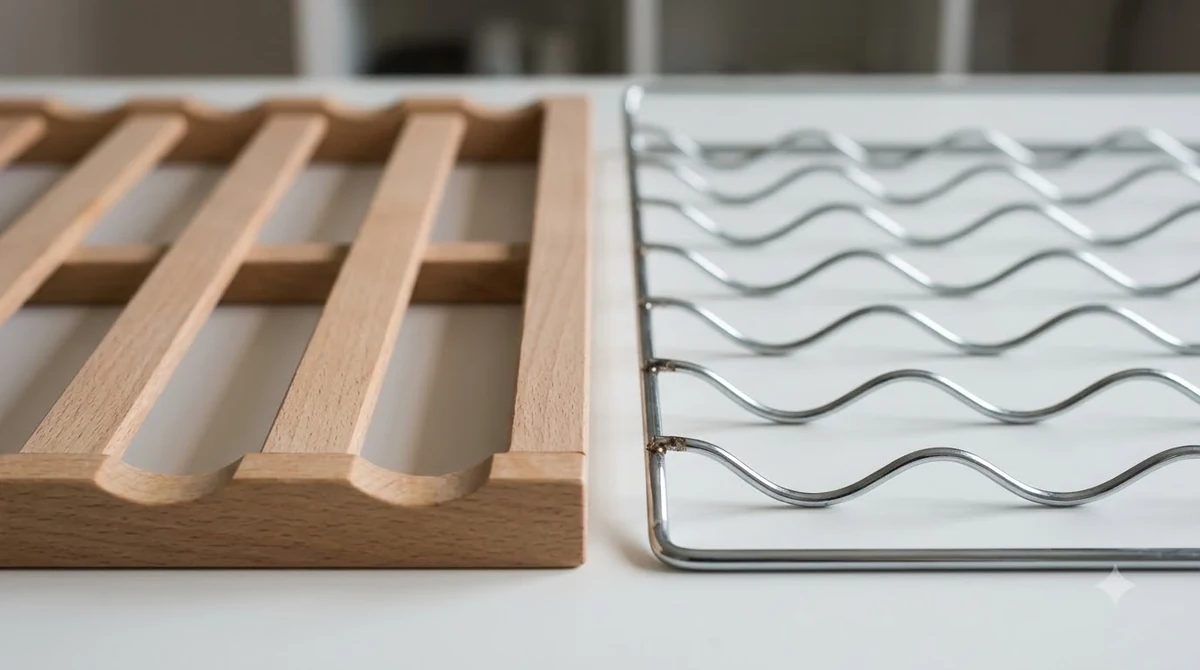
According to the product specifications published by Best Buy and Lowe’s, this is a freestanding wine cellar with a compressor cooling system, a black exterior, and a curved glass door. The two compartments are designed to accommodate different wine-serving preferences rather than requiring the entire collection to share one temperature. Each zone has an adjustment range of 39°F to 65°F, providing flexibility for different wine styles. The Best Buy product specifications provide additional details about the original configuration and features.
The following specifications refer primarily to the HVZ040ABH5S. Some older Haier listings use the closely related HVZ040ABH designation, so specifications from those listings should not automatically be assumed to apply to every production variation. The Lowe’s product listing also documents the appliance’s dimensions, rack arrangement, and installation details.
| Specification | Haier HVZ040ABH5S |
|---|---|
| Advertised capacity | 40 bottles |
| Temperature zones | 2 independent zones |
| Temperature adjustment | 39°F–65°F per zone |
| Storage racks | 5 full-depth and 2 half-depth racks |
| Rack construction | Chrome with wood trim |
| Cooling method | Compressor |
| Installation | Freestanding |
| Width | 19.93 inches |
| Height | 38.59 inches |
| Depth without handles | 20.25 inches |
| Depth with handles | 23.43 inches |
| Door configuration | Right hinge, non-reversible |
| Interior lighting | Yes |
| Temperature display | Dual-function LED |
| Exterior finish | Black with brushed-metal trim |
The capacity and rack arrangement are important selling points. Five full-depth racks provide the primary bottle storage, while two half-depth racks offer flexibility for additional bottles or beverage cans. The sliding arrangement also makes it easier to inspect bottles without removing everything stored above them.
Its electronic controls provide separate temperature adjustments for the two compartments. The LED display and indicator lights help users monitor the selected settings. The appliance also has automatic red- and white-wine settings, which provide a convenient starting point for households that do not want to choose every temperature manually.
There are a few limitations worth identifying. The door cannot be reversed, and Best Buy lists the appliance as not ENERGY STAR qualified. Its advertised 40-bottle capacity is also a maximum rather than a guarantee that every combination of bottle shapes will fit equally well.
For additional information about how older Haier appliances fit into the wider category, see our wine cooler model reviews.
What Owners Like
The Haier’s strongest design advantages are its two-zone layout, sliding racks, and relatively narrow footprint. These features make the appliance appealing to wine drinkers who want to separate everyday reds and whites without dedicating an entire room to wine storage.
The dual-zone arrangement is particularly useful for households that regularly serve different wine styles. A lighter white such as Sauvignon Blanc generally benefits from a cooler serving temperature than a full-bodied red such as Cabernet Sauvignon. Having two independently controlled compartments means users do not need to compromise on one shared setting.
The 39°F to 65°F adjustment range also gives the appliance flexibility beyond basic wine chilling. The cooler can accommodate different serving preferences, including cooler settings for sparkling wines and moderately warmer settings for lighter reds. Its temperature range is broad enough to cover many everyday wine styles.
The storage arrangement is another practical advantage. The five glide-out racks make it easier to retrieve bottles stored toward the back of the refrigerator. Compared with fixed shelves, sliding racks can reduce the amount of rearranging required when someone wants a particular bottle.
The two half-depth racks are useful for bottles or beverage cans that do not need the same space as standard wine bottles. They offer some flexibility when the collection includes mixed beverages rather than exclusively traditional 750 ml bottles.
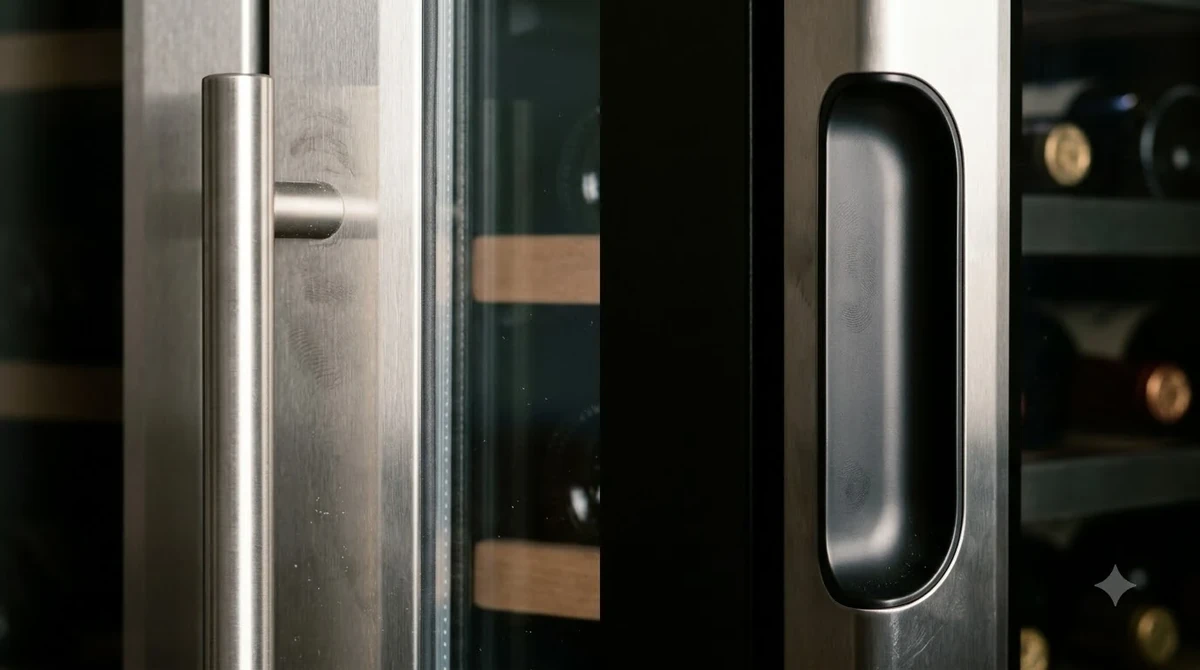
The exterior design also has some appeal. The curved blue-gray tinted glass door, black cabinet, and brushed-metal handle create a conventional appliance appearance that can complement a kitchen, dining room, or home bar. The matte top provides a level surface for temporarily placing serving accessories, although it should not be treated as a substitute for proper wine-storage equipment.
Another advantage is the freestanding configuration. Buyers do not have to plan a custom cabinetry installation, although the appliance still needs suitable ventilation and adequate clearance. Its approximately 20-inch width makes it easier to accommodate than many larger wine cabinets.
These features explain the product’s original appeal. For a collection of everyday wines, separate cooling zones and convenient access can be more useful than decorative features or sophisticated electronic connectivity.
Common Complaints and Reliability Concerns
The biggest concern with the Haier HVZ040ABH5S is its historical record of temperature-related complaints. Some owners have described inconsistent cooling, ice buildup, and repeated defrosting, making the condition of an individual used unit more important than its advertised features.
A historical owner account published by KitchenReviews describes a Haier 40-bottle wine refrigerator that initially worked well but subsequently developed fluctuating temperature readings. The owner also reported substantial ice accumulation on the cooling pipes at the back of the refrigerator.
According to that account, the appliance needed to be switched off periodically to allow accumulated ice to defrost. This created an inconvenience because the bottles had to be removed while the cooling compartment thawed. The owner eventually used the appliance primarily for other beverages rather than relying on it for wine storage.
A separate Lowe’s owner review describes another serious temperature-control concern. The reviewer reported that the appliance operated at approximately 33°F at one point and warmed to around 60°F during the following week, despite attempts to repair the temperature-control system.
These accounts are individual experiences, not a statistical failure rate. They do not establish that every HVZ040ABH5S will develop the same problems. However, they identify specific areas that deserve inspection before buying an older unit.
Temperature instability
Temperature stability matters more than the ability to select an impressive range on a digital display. A wine refrigerator that can be adjusted between 39°F and 65°F is useful only if it can maintain a reasonably consistent temperature after reaching the selected setting.
For a buyer considering a used Haier, a display reading alone is insufficient evidence of reliable operation. An independent refrigerator thermometer placed in each compartment can help identify differences between the displayed temperature and the actual storage conditions.
Ice accumulation
Ice buildup is another concern raised in historical ownership feedback. Excessive frost around cooling components can interfere with normal operation and may indicate a defrosting or cooling-system problem.
Occasional condensation and moisture are not necessarily evidence of a serious fault. However, recurring heavy ice accumulation, restricted airflow, and irregular cooling should not be dismissed as routine maintenance.
Repair economics
The age of this model creates another ownership consideration. An appliance with an electronic control problem or compressor-related fault may require parts and labor that are difficult to justify for an older wine cellar.
Before purchasing one, ask whether the seller can demonstrate that both zones work independently, whether the temperature remains stable over time, and whether replacement parts or qualified repair services are available. A refrigerator that needs immediate repair is a substantially different purchase from one that is fully operational.
For a used appliance, the ability to verify its current condition should carry more weight than an attractive exterior or a large advertised bottle capacity.
Who Should Buy and Who Should Skip
The Haier 40-bottle cellar is most appropriate for someone who values separate red- and white-wine storage and can verify the condition of an existing unit. It is less suitable for buyers who need a new appliance, dependable manufacturer support, or a modern installation with flexible door positioning.
Someone with a collection of approximately 20 to 35 standard wine bottles may appreciate the additional capacity. The advertised 40-bottle limit provides some room for growth, while the two temperature zones allow a mixed collection to be organized by wine style.
It can also appeal to someone furnishing a home bar or a secondary entertaining space. The tinted glass door and sliding racks make the contents visible and relatively accessible, and the freestanding format avoids the need for custom cabinetry.
However, there are several reasons to skip this particular model.
Buyers who may appreciate it
- Owners of an existing unit: Someone who already has a functioning HVZ040ABH5S may find its dual-zone layout and 40-bottle capacity useful for everyday storage.
- Secondhand appliance buyers: A buyer who can inspect the compressor, controls, door seal, and both temperature zones before purchasing may find a suitable used example.
- Mixed wine collections: Households that store Cabernet Sauvignon, Pinot Noir, Chardonnay, and Sauvignon Blanc can benefit from separate cooling compartments.
- Small home bars: The approximately 19.93-inch width makes the cabinet potentially useful where a wider refrigerator would be inconvenient.
Buyers who should skip it
- People seeking a new refrigerator: Best Buy and Lowe’s identify the model as discontinued from their respective retail listings.
- Long-term collectors: Someone storing valuable bottles for extended periods may prefer a newer wine cabinet with verified temperature performance and readily available support.
- Buyers needing a reversible door: The right-hinge configuration cannot be changed to suit an opposite-side opening.
- Noise-sensitive households: The related HVZ040ABH manual listing reports 47 dB, which may be noticeable in a quiet living area.
- People unwilling to inspect used appliances: Historical temperature-control and frost complaints make an unverified purchase difficult to recommend.
One additional consideration is the distinction between serving temperature and long-term storage temperature. The Haier’s wide adjustment range makes it convenient for preparing different wines for drinking, but the lowest or highest possible setting is not automatically the ideal permanent storage condition for every bottle.
For households that regularly entertain, the refrigerator can be part of a wider beverage setup. Its white-wine compartment may be useful for preparing ingredients for an Aperol Spritz recipe, while chilled sparkling wine can also suit a Hugo Spritz recipe. These are serving conveniences rather than reasons to overlook the appliance’s reliability concerns.
How It Compares to Alternatives
The Haier’s most important competitive characteristics are its 40-bottle capacity, two temperature zones, and seven-rack arrangement. Its main disadvantage compared with newer wine refrigerators is not necessarily the original feature set but the uncertainty associated with buying an older discontinued appliance.
For comparison, it is useful to distinguish between the Haier’s documented specifications and the broader categories of wine refrigerators available today. A newer dual-zone appliance may offer similar storage flexibility while providing more current support arrangements, but those benefits need to be verified for the specific replacement model.
Haier versus a single-zone wine cooler
A single-zone refrigerator has one shared temperature setting for its entire interior. This is a straightforward solution for people who mainly collect one wine style or prefer to keep every bottle at a common storage temperature.
The Haier offers more flexibility because its two compartments can be adjusted independently. Someone who stores both Chardonnay and Cabernet Sauvignon can select different temperatures without repeatedly changing the settings for the entire collection.
However, dual-zone designs can introduce more complexity. There are additional controls and separate compartments to monitor, and the historical reports about the Haier make reliable temperature performance especially important.
Haier versus newer dual-zone refrigerators
A modern dual-zone refrigerator is the more logical starting point for someone purchasing a new appliance. Newer models may provide updated electronic controls, current warranty documentation, improved shelf configurations, and easier access to replacement components.
The Haier’s five full-depth and two half-depth racks remain practical features, but buyers should compare actual usable bottle capacity rather than relying only on the number printed in a product description.
Standard Bordeaux-style bottles generally fit more easily than wider Champagne bottles or unusually shaped Burgundy bottles. A refrigerator advertised for 40 bottles may therefore hold fewer bottles if a collection contains many larger formats.
Haier versus a wine storage cabinet
A wine storage cabinet designed primarily for long-term preservation may place more emphasis on consistent temperature, humidity management, vibration control, and protection from light. These features become increasingly important when a collection contains expensive bottles intended to age over several years.
The Haier is better understood as a practical household wine cellar with separate temperature settings. Its specifications do not establish the presence of advanced humidity management or a dedicated long-term aging system.
For occasional drinking and entertaining, that distinction may not matter as much. For a serious collection of Bordeaux, Burgundy, or Napa Valley Cabernet Sauvignon, a purpose-built storage cabinet may be a more appropriate investment.
In short, the Haier’s original feature package remains useful on paper. The strongest reason to choose a newer alternative is the opportunity to obtain a current product with independently verifiable operating specifications and a clearly documented support arrangement.
Should You Buy a Used Haier 40 Bottle Wine Fridge?
A used Haier can be worth considering only when its cooling performance is demonstrably reliable and the purchase terms reflect its age. The dual-zone design and 40-bottle capacity are appealing, but an inexpensive-looking appliance can become an expensive ownership problem if its refrigeration system needs attention.
Availability is a significant issue. Best Buy identifies the HVZ040ABH5S as unavailable in new condition, and Lowe’s also lists it as no longer sold on its website. Consequently, buyers should approach this product as an older appliance rather than assume they can purchase a new example through ordinary retail channels.
Warranty information also requires careful interpretation. The archived manufacturer datasheet lists one year of labor coverage, one year of parts coverage, and five years of compressor parts coverage. Lowe’s separately lists one-year parts and labor coverage for its product record. These historical listings should not be treated as proof that a used unit still has active coverage.
Inspection checklist before purchasing
- Check the model number. Confirm that the appliance is actually the HVZ040ABH5S rather than a similar Haier wine cooler with different specifications.
- Inspect both temperature displays. Verify that the controls respond independently and that the readings change when the settings are adjusted.
- Measure the actual temperatures. Place a separate thermometer in each compartment and allow sufficient time for the appliance to stabilize. Do not rely exclusively on the LED display.
- Look for excessive frost. Examine the rear cooling area and interior for heavy ice buildup, water accumulation, or signs of repeated defrosting.
- Test the door seal. Inspect the glass door gasket for cracks, gaps, and areas that prevent a proper closure.
- Test the racks. Pull out all five full-depth racks and inspect the two half-depth racks for damage, bending, or missing components.
- Inspect the compressor operation. Listen for unusual noises, repeated starting and stopping, or other signs of abnormal operation.
- Verify the electrical supply. The manufacturer datasheet specifies 115V and 60Hz, so check that the intended installation has a compatible electrical supply.
- Confirm the installation space. Allow for the listed 19.93-inch width, 38.59-inch height, and ventilation requirements.
- Request operating evidence. If possible, ask the seller to demonstrate stable operation over an extended period rather than simply switching on the refrigerator for a few minutes.
Tip: Do not purchase a used Haier solely because its display powers on and shows the selected temperature. Ask to see both compartments operating, inspect for heavy frost, and independently verify the internal temperature before placing wine inside. A short demonstration cannot establish long-term reliability, but it can reveal obvious problems.
Installation considerations
The Haier is a freestanding appliance, so it should be positioned where its ventilation requirements can be met. Avoid enclosing it tightly inside cabinetry without confirming the required clearances. The manufacturer datasheet identifies side and rear ventilation considerations, making installation space an important part of the buying decision.
The door arrangement also deserves attention. Since the hinge is on the right and is not reversible, the refrigerator should be positioned where the door can open comfortably without hitting a wall, neighboring appliance, or cabinet. Best Buy lists a depth of 43 inches with the door open to 90 degrees, so the available space in front of the unit matters too.
Once installed, allow the appliance to stabilize before filling it with wine. Keep the interior organized, avoid blocking airflow, and monitor both compartments periodically. If temperature readings fluctuate substantially or excessive frost returns, investigate the problem rather than treating the refrigerator as dependable storage.
Wine itself also benefits from sensible handling. Store bottles away from direct sunlight, keep temperatures reasonably stable, and avoid unnecessary movement. A refrigerator can help maintain convenient serving conditions, but good storage practices remain important regardless of the brand.
Frequently Asked Questions
Does the Haier 40-bottle wine fridge have a lock?
No door lock is listed in the Lowe’s specifications for the HVZ040ABH5S. This means buyers should not assume the appliance provides child-resistant or security-controlled access. If a locking door is important, confirm that feature before choosing a replacement refrigerator.
Can the Haier 40-bottle wine cellar store Champagne bottles?
It may accommodate some Champagne bottles, but the advertised capacity is not a guarantee that 40 larger sparkling-wine bottles will fit. Champagne bottles typically have wider bodies than standard Bordeaux bottles, which can affect shelf spacing. Test the rack dimensions with the bottle shapes in your collection before relying on the full capacity.
Does the Haier HVZ040ABH5S have an automatic defrost system?
The archived product specifications identify its compressor cooling system but do not establish a specific automatic-defrost feature for this model. Historical owner feedback also describes manual defrosting after substantial ice accumulation. Buyers should not assume that every frost-related issue can be resolved through an automatic cycle.
Can the Haier wine refrigerator store unopened bottles for several years?
The refrigerator’s two adjustable compartments provide flexible cooling, but its published specifications do not establish dedicated long-term aging performance. Storage over several years also depends on stable conditions, bottle position, light exposure, and the wine itself. Collectors with valuable aging wines should prioritize verified storage stability over maximum capacity.
Is the Haier HVZ040ABH5S the same as the HVZ040ABH?
They are closely related model designations within Haier’s 40-bottle dual-compartment wine cellar range, but the suffix should not be ignored. The HVZ040ABH manual covers the HVZ035AB and HVZ040AB family, while the HVZ040ABH5S has a separate retailer specification listing. Confirm the exact model identification and matching documentation before ordering replacement components.
The Haier HVZ040ABH5S offers a useful original combination of 40-bottle storage, two independent temperature zones, and sliding racks. Nevertheless, its discontinued status and historical reports of cooling problems make a used purchase difficult to recommend without careful inspection. For someone who already owns a fully functioning unit, its flexible layout can remain practical; for a new purchase, a current dual-zone wine refrigerator with documented reliability and support is the safer direction.
More in Model Reviews
 Magic Chef 44 Bottle Wine Cooler Review for Flexible StorageUpdated Nov 21, 2026
 Whynter 164 Bottle Wine Cooler Review: Capacity, Features, and FitUpdated Nov 21, 2026
 Insignia NS WC16BK6 Review: Compact 16-Bottle Wine StorageUpdated Nov 21, 2026
 Wine Enthusiast Electric Blue Omega Review: Opening, Pouring, and Preserving Made EasierUpdated Nov 21, 2026
 Koolatron 20 Bottle Wine Cooler Review: Features, Fit, and PerformanceUpdated Nov 21, 2026
 NewAir AWC 330E Review for Home Wine StorageUpdated Nov 21, 2026