

We may earn a commission when you buy through links on this page, at no extra cost to you. Learn more.
Expect grenache tannins to sit between low and medium on the scale, which is why the wine feels soft and round rather than drying. Low levels of coloring compounds and tannin limit how much grip the grape produces, so the texture is usually fine-grained rather than coarse. That gentle structure makes grenache easy to drink young and flexible with herbs, roasted meats, and tomato-based dishes. The rest of this guide explains where the texture comes from and how to serve and pair the wine to get the most from it.
Tannin is the drying, grippy sensation you feel along your gums and inside your cheeks after a sip of red wine. It comes from compounds found in grape skins, seeds, and stems, and it largely decides whether a red feels bold and firm or smooth and easygoing. Grenache sits toward the smooth end of that range, which is why many drinkers who find Cabernet Sauvignon too austere enjoy it right away. If you want a wider view of how different grapes behave, the guide Wine by Type is a good starting point before you read on.
How Grenache Tannins Feel on the Palate
Grenache tannins usually feel silky to supple, building gently instead of hitting the mouth all at once. The grip tends to peak in the middle of the sip and then fade into a warm finish.
Most tasters describe the texture as round and smooth. Wine Insiders characterizes Grenache as having supple tannins with low astringency, and that matches what many everyday bottles deliver. The fruit leads, and the tannin supports the wine without drying out your tongue. If you have tried a Grenache-based blend from the Southern Rhône, you probably noticed a soft, warm grip that lingers for a few seconds rather than a sharp edge. For a closer look at the aromas that come with that texture, read our grenache tasting notes.
Wine Folly rates typical Grenache tannin at medium, a midpoint that gives the wine enough structure to avoid feeling thin without the firm grip of Cabernet. The sensation is most noticeable when a bottle is young. As the wine ages, the tannins tend to integrate further into the fruit, and the finish usually becomes smoother still.
Texture can vary widely from bottle to bottle, even within the same grape. In a Wine & Spirits feature, Deanna Gonnella described the tannins in a Château Maris Grenache from the La Livinière area as meaty and gritty, lifted by black cherry freshness. In McLaren Vale, the winemaker Taras Ochota credits the finely grained tannins in his Fugazi Vineyard wine to the ironstone soil where the old vines grow. Those examples show that a single grape can feel rugged in one bottle and silky in another, depending on site and winemaking.
What Keeps Grenache Tannin Low and How Winemakers Shape It
Grenache naturally produces modest tannin, so most winemakers manage extraction and blending rather than trying to add structure. Small choices in the vineyard and cellar decide how much grip reaches the glass.
The grape itself is the starting point. The UK wine merchant Jeroboams notes that Grenache carries relatively low levels of coloring compounds and tannin, which also makes it highly vulnerable to oxidation. Beverage Business, in a piece by Sandy Block, MW, calls it a low-tannin grape that does not always age well in small barrels unless sturdier varieties are present. Kobrand’s grape glossary describes it as low in acid and moderately low in tannin, which means its softness is a defining trait rather than a flaw to be corrected.
Winemakers can raise tannin, but they must be careful. Overly hard pressing and very hot fermentation can pull out harsh, astringent compounds, and the wine can lose the fresh red fruit that makes Grenache appealing. Many producers instead favor gentler approaches. Taras Ochota, for example, sometimes crushes and destems his fruit and then adds stalks back, which he says gives the wine an umami, bouillon-like character. For his Fugazi bottling, the juice stays on the skins for 82 days before it goes into old oak barrels, a long maceration that builds structure while the wine still tastes bright and floral.
Oak plays a smaller role for most Grenache. According to Wine Folly, the grape is usually aged in medium oak, which can add a little roundness and spice without covering the fruit. Beverage Business also notes that Grenache does not always age well in small barriques, so the texture you taste usually comes from the grape and the vineyard rather than from heavy toasting.
Grenache Compared With Other Red Wines
On a tannin scale, Grenache sits well below Syrah and Cabernet Sauvignon and near the softer end occupied by Pinot Noir. The table below gives a quick reference for typical tannin levels and serving temperatures.
| Red wine | Typical tannin | Serving temperature |
|---|---|---|
| Pinot Noir | Low to medium | 55 to 60 F |
| Grenache | Low to medium | 55 to 60 F |
| Syrah | Medium-plus to high | 60 to 65 F |
| Cabernet Sauvignon | High | 60 to 65 F |
Pinot Noir is the most useful comparison for many readers. Both wines show low to medium tannin, but Pinot Noir brings higher acidity and a leaner, more precise frame. Wine Insiders contrasts the two by saying Grenache feels rounder and warmer, while Pinot Noir feels more delicate, and Grenache typically shows higher alcohol and riper fruit. If you already enjoy pinot noir tannins, Grenache will feel familiar but fuller on the palate.
Syrah and Cabernet Sauvignon sit at the firmer end. Syrah carries medium-plus to high tannin, and Cabernet is high, so both usually need richer food or more time in the bottle to feel balanced. Wine Insiders notes that Syrah delivers darker fruit, black pepper, and firmer tannins, which is one reason winemakers in the Rhône blend it with Grenache. Grenache softens the blend while Syrah supplies the grip and depth.
Alcohol is the third point of comparison. Wine Folly puts Grenache in a range of 13.5 to 16 percent alcohol, so its softness does not come from being light-bodied. The tannin is gentle, but the wine still carries real weight. That combination is why Grenache can feel generous with food yet still satisfying on its own. For a fuller picture of the grape’s profile, Wine Folly’s grenache guide is a detailed reference.
Tannin Across Major Grenache Regions
Where grenache grows changes its texture as much as the winemaker’s choices do. Warm sites push alcohol up and soften the fruit, while high-altitude and stony vineyards often produce a firmer structure.
In the Southern Rhône, Grenache forms the backbone of many reds. According to Inter Rhône, Côtes du Rhône red and rosé wines must blend at least two of Grenache, Syrah, and Mourvèdre, and Grenache must always be included except in the northern part of the vineyards. Châteauneuf-du-Pape takes a different approach: it has no mandated minimum or maximum percentage for any single variety, which gives producers broad stylistic freedom. Even so, European Cellars notes that Grenache accounts for about three-quarters of the appellation’s plantings, so it sets much of the wine’s overall tone.
Spain is the grape’s ancestral home, where it is known as Garnacha. Wine Folly describes Calatayud as a warmer area where late-ripening grapes reach high sugar levels and often ferment to more than 15 percent alcohol, which adds body and spice. Priorat is a different story. Kobrand describes a harsh, hot, arid, and windy climate on stony, baked soils. A high-altitude Priorat bottling from Terroir al Limit, grown on red clay at about 2,600 feet, comes in around 13 percent alcohol, which is unusually low for the region. It tastes taut and tightly wound, which shows that elevation can firm up the texture.
Australian Grenache offers another contrast. Richard Betts, a winemaker quoted in Wine & Spirits, says the sandy soils of the Barossa’s Vine Vale district produce light-bodied wines with silken textures, and nightly winds keep acidity fresh. McLaren Vale, by contrast, yields wines with more structure from old dry-grown vines. In the United States, winemakers often blend Grenache with a touch of Syrah to add tannin and smooth the flavor, as Wine Folly notes, so a California bottle can feel softer or firmer depending on how it is put together.
Pairing Grenache With Food Based on Its Texture
Soft tannin makes Grenache easier to pair than most big reds, but its high alcohol and herb-driven character still shape which dishes work best. Match the wine’s weight and herbal edge to the food, and the texture will almost always cooperate.
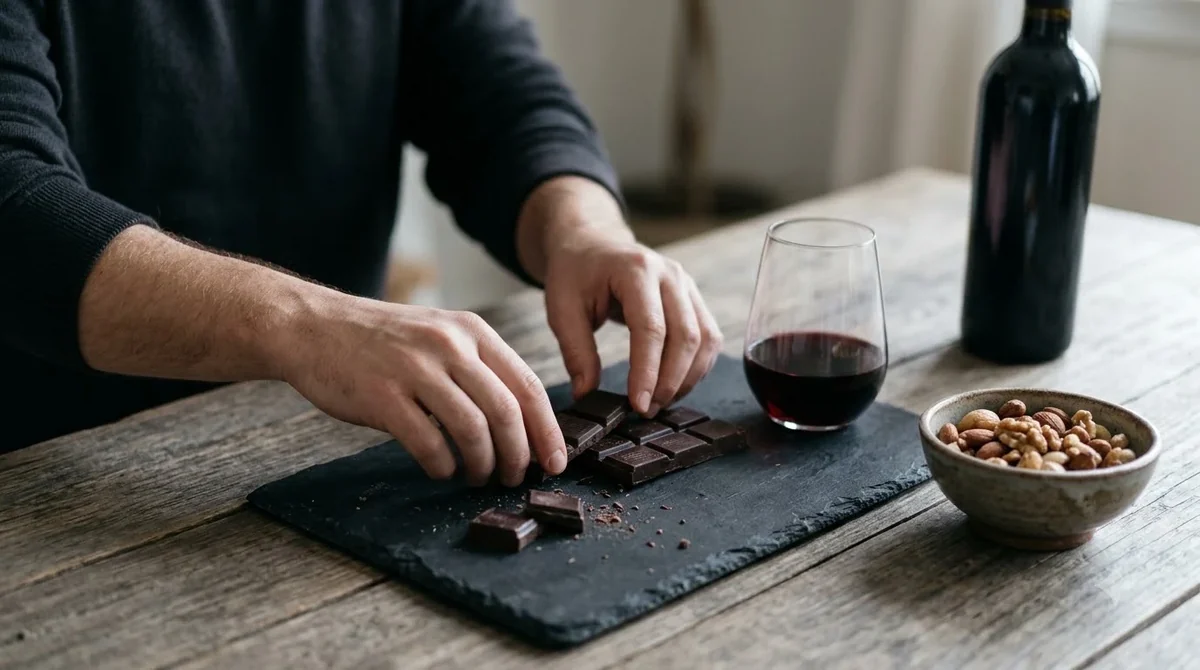
Herb-forward roasts are the classic match. Wine Insiders recommends grilled lamb, where the wine’s fruit balances the richness of the meat, and roasted chicken seasoned with thyme, rosemary, or garlic. Pork shoulder or chops with a fruit-based sauce also work well. The tannin is gentle enough not to clash with fat, and salt and fat in general soften any grip the wine has, which helps with olive oil and roasted vegetables. Eggplant, bell peppers, and tomatoes also pair comfortably, since their savory sweetness suits the wine’s red-fruit profile.
Spicy food needs more care. High alcohol can intensify chili heat, and tannin can do the same. For dishes with a real kick, choose a lower-alcohol bottle, serve it on the cool side of its range, and keep the heat moderate. Fennel or paprika sausage, which Wine Insiders also lists as a good match, usually works better with a lightly chilled Grenache than with a warm, high-alcohol bottle.
Acidity and texture matter at the table too. Tomato-based sauces are acidic, and Grenache’s medium acidity keeps pace with them, which is why it suits many Mediterranean dishes. Oily fish such as salmon or mackerel usually works better with a Grenache rosé than with a red, since rosé brings much less tannin to clash with the fish. Sweet desserts call for the opposite approach: a dry Grenache will taste thin and bitter next to a dessert that is sweeter than it is, so serve it with cheese or savory dishes instead.
Serving, Decanting, and Storing Grenache
Temperature and a little air can make Grenache feel rounder and softer, while proper storage keeps the texture from fading. These steps are simple, and they make a visible difference on the palate.
Serve Grenache slightly cooler than most red wines. Wine Insiders suggests 55 to 60 F, a range that keeps the alcohol from tasting hot and lets the red fruit stay lively. A bottle that feels cool to the touch but not cold is usually in the right zone. Pour about 5 ounces per glass, which means a standard 750 ml bottle yields about five generous pours.
Younger Grenache often benefits from 15 to 30 minutes of air, according to Wine Insiders, which helps the aromas open and the tannin soften. Older bottles need gentler handling. Pour them carefully to keep any sediment in the bottle, and avoid long aeration, since too much air can fade delicate aged aromas. Grenache-based blends can tolerate slightly longer exposure, but a young Grenache rarely needs hours in a decanter.
Tip: If a young Grenache tastes a little grippy when you first pour it, give it a few minutes in the glass and taste again. The texture often softens noticeably as the wine opens, and the fruit comes forward.
Store bottles on their side in a cool, dark place near 55 F with steady humidity, as Wine Insiders recommends. Most Grenache shows its best within three to five years of release, while old-vine examples and structured blends can develop savory depth over eight to fifteen years. Once opened, still wines usually keep for three to five days in the refrigerator, so you can finish a bottle over a few evenings while it stays fairly fresh.
Frequently Asked Questions
These answers cover the questions readers ask most often about sweetness, naming, dessert styles, rosé, and global plantings.
Is grenache a sweet wine?
Grenache is almost always made in a dry style, according to Wine Insiders. Its ripe red fruit and higher alcohol can still create an impression of sweetness, especially in warm vintages from hot sites. Paying attention to acidity and tannin helps you separate real sugar from fruit character.
Are Grenache and Garnacha the same grape?
Yes, they are the same variety under different names. Wine Folly lists Garnacha and Garnatxa as Spanish names, Cannonau as the name used in Sardinia, and Grenache Noir as another common synonym. Wine Folly also lists Alicante as a rare synonym that you may occasionally see.
Is grenache used in sweet fortified wines?
It is. Wine Folly identifies Rasteau, Maury, and Banyuls as fortified dessert wines from France, known as vin doux naturel, that are made from Grenache. Their production is similar to making Port, so the finished wines are rich and sweet rather than dry and tannic. They belong to a different category from the dry reds covered in this guide.
Is grenache rosé less tannic than grenache red?
Usually, yes. Beverage Business explains that Grenache makes fine rosé largely because it lacks substantial tannin, and that most Provençal rosé is Grenache-based. The spicier, more vibrant rosés of the southern Rhône often rely on it too, which gives them a fresh, dry finish.
How widely is grenache planted around the world?
Wine Folly estimates about 456,000 acres of Grenache worldwide. France has roughly 250,000 acres and Spain about 170,000, with much smaller plantings in Italy at around 55,300 acres, the United States at about 10,000, and Australia at about 8,000.
Grenache tannin is an advantage for most drinkers rather than a limitation. Its soft grip makes the wine approachable when young, flexible at the table, and easy to share with people who usually avoid big reds. Try a Southern Rhône blend alongside a Spanish Garnacha and notice how the texture shifts from one bottle to the next.
More in Wine Types & Grapes
 What Does Mourvèdre Taste Like? Flavor Profile, Regions, and PairingsUpdated Nov 20, 2026
 What Does Marsanne Taste Like? Flavors, Styles, and Food PairingsUpdated Nov 20, 2026
 What Does Malvasia Taste Like? Styles, Flavors, and Food PairingsUpdated Nov 20, 2026
 What Does Grenache Blanc Taste Like? Flavor Profile, Styles, and PairingsUpdated Nov 20, 2026
 What Does Garnacha Taste Like? Key Flavors, Styles, and Pairing TipsUpdated Nov 20, 2026
 What Does Fruit Wine Taste Like? A Complete Flavor and Style BreakdownUpdated Nov 20, 2026