

We may earn a commission when you buy through links on this page, at no extra cost to you. Learn more.
The greco grape is an Italian white wine grape best known for producing Greco di Tufo, a dry, high-acid wine from Campania with citrus, stone fruit, herbal, and mineral characteristics. It ripens late and thrives in the hills around Avellino, where volcanic-origin soils and cool nighttime temperatures help preserve freshness. Its wines can be medium- to full-bodied, pair especially well with seafood, and include both still and traditional-method sparkling styles.
Greco is one of southern Italy’s distinctive white varieties, valued for its combination of fresh acidity, substantial texture, and savory flavor. Its best-known expression comes from a small group of villages in the province of Avellino. Understanding the grape means looking beyond its name to the particular vineyards, production rules, and winemaking decisions that shape the wine in the bottle. Those details also help explain why Greco can work equally well with grilled fish, shellfish, vegetable dishes, and several Italian favorites.
Greco Grape Identity and Origins
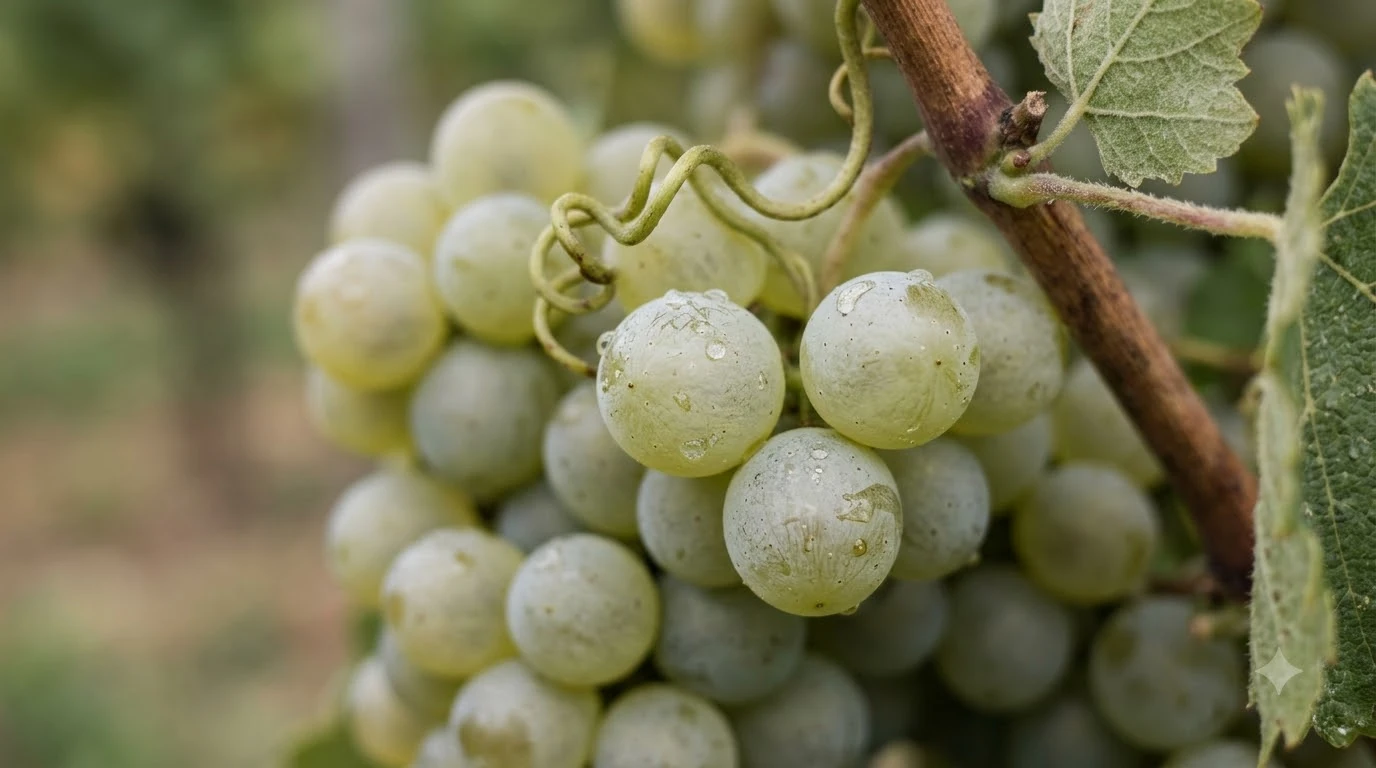
The Greco grape is a white variety associated most closely with Campania, particularly the Greco di Tufo DOCG appellation near Avellino. It is a late-ripening grape that benefits from southern Italy’s long, warm growing season, producing wines with more body and structure than many lighter, simple Mediterranean whites. The name Greco di Tufo combines the grape’s name with that of Tufo, a small town that sits at the heart of its most celebrated growing area.
Greco di Tufo is identified as a clone of Greco Bianco by Wine Enthusiast. The wider Greco Bianco name appears in several Italian regions, including Puglia, Lazio, and Tuscany, so a bottle labeled Greco does not automatically come from the same place or have the same profile as a bottle labeled Greco di Tufo. The appellation gives the name a defined geographical meaning, connecting the wine to a specific part of Campania rather than to every Italian vineyard where a related Greco variety may be grown.
Tradition connects the grape’s arrival in Campania with Greek colonists, and a Mastroberardino producer profile traces that history to the first century BC. The same profile refers to the ancient Roman name Aminea Gemina, associated with the twin-lobed shape of the grape clusters. Such historical accounts help explain the variety’s long cultural association with southern Italy, although the most useful modern way to identify the wine is through its grape composition and origin. Greco di Tufo is a geographically defined wine, not simply a generic name for any white wine made with Greco.
It is also important not to confuse Greco di Tufo with Greco di Bianco, a distinct Calabrian appellation associated with sweet wines made from partially dried grapes. Greco Nero is another unrelated name used for several Calabrian red grape varieties. These distinctions matter when choosing a bottle: Greco di Tufo is generally a dry white, while the similarly named Calabrian wine belongs to a different category and offers a very different drinking experience.
The Vineyards and Terroir Around Tufo
Greco di Tufo comes from eight municipalities in the province of Avellino, with vineyards spread through the hilly landscape around Tufo and the Sabato River. The area combines clay and limestone soils of volcanic origin with varied slopes and exposures, creating growing conditions that help explain the wine’s freshness and savory character.
The official production area includes Tufo, Altavilla Irpina, Chianche, Montefusco, Prata di Principato Ultra, Petruro Irpino, Santa Paolina, and Torrioni. These villages form a relatively concentrated zone in Irpinia, the inland part of Campania that is known for several important wine-growing areas. Rather than being a coastal vineyard region, Greco di Tufo comes from elevated inland hills, where the terrain can create meaningful differences in exposure, airflow, and temperature. A producer’s vineyard location within the appellation can therefore influence the final balance of fruit, acidity, and texture.
The soil profile is not uniform across every vineyard. The European Union product specification describes steep slopes and clay and limestone soils of volcanic origin, while individual producers describe combinations of chalky clay, tuff, limestone, and sulfur-bearing layers. The presence of volcanic material is often discussed in connection with the wine’s savory or mineral impression. That impression should be understood as a sensory description rather than a literal taste of rock or a guarantee that every bottle will display the same intensity.
Temperature differences between day and night are another important part of the growing environment. Warm daytime conditions support the late-ripening fruit, while cooler nights help the grapes retain natural acidity as they approach harvest. This balance is especially useful for Greco because the variety can produce wines with both considerable body and firm freshness. A warm climate alone might encourage ripe fruit and broad texture, but the region’s hillside conditions help keep the wines lively rather than heavy.
Greco Wine Flavor, Aroma, and Structure
Greco di Tufo is generally a dry, relatively high-acid white wine with medium to full body, a straw-yellow to golden color, and a flavor profile that combines citrus, stone fruit, herbs, and savory mineral impressions. The balance between ripe fruit and freshness is its most recognizable feature, although individual bottles can range from restrained and citrus-driven to richer and more complex.
Fruit and aromatic character
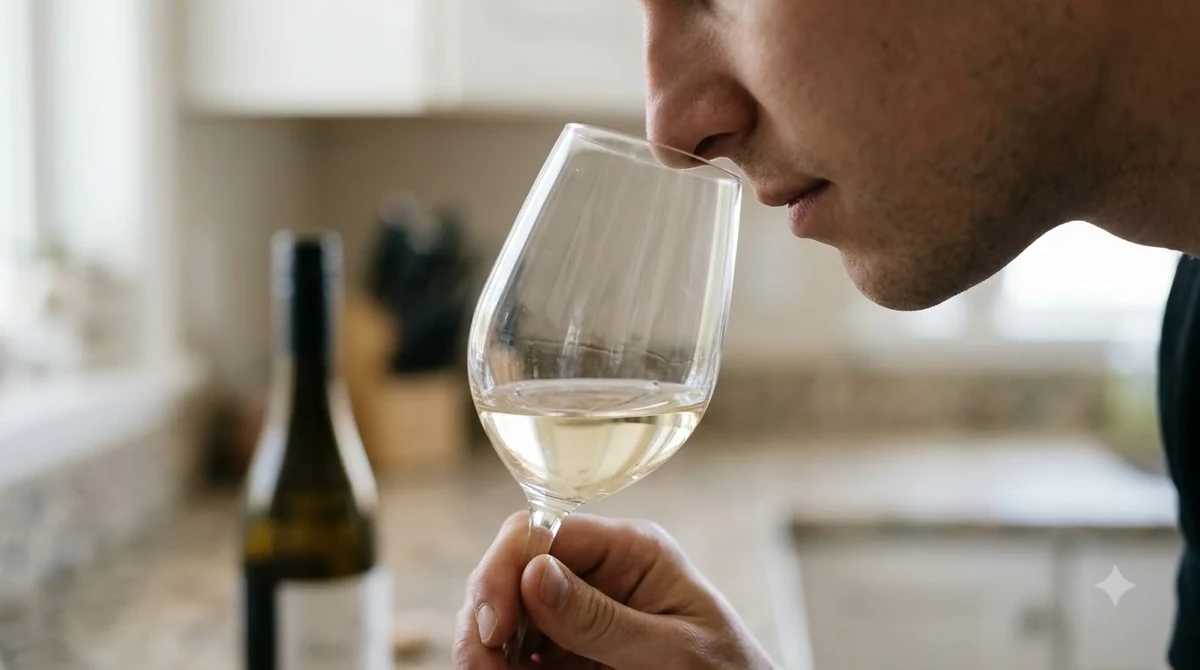
Common fruit notes include lemon, lime, grapefruit, peach, apricot, and other white or yellow stone fruits. Pineapple and other ripe tropical-fruit impressions may appear in wines made from particularly ripe grapes or in examples with a fuller texture. The aromas are not always as immediately floral or perfumed as those of some other Italian white varieties. Instead, Greco can show a measured combination of fruit, citrus peel, herbs, and spice, with the exact balance depending on the vineyard and the winemaking approach.
Some bottles develop hints of orange blossom, green almond, cedar, or flint-like character. Mastroberardino’s producer profile, for example, describes citrus, peach, pineapple, apricot, and lime, followed by an intense cedar aftertaste. These are useful reference points, not a fixed checklist. A younger stainless-steel-aged Greco may emphasize citrus and fresh fruit, while a more developed example can show greater complexity and additional herbal or nutty notes.
Acidity, body, and finish
Acidity is central to Greco’s identity. It gives the wine a refreshing line through the palate and makes it suitable for foods with noticeable acidity of their own, including tomato-based sauces and lemon-seasoned seafood. At the same time, its medium- to full-bodied texture gives it more presence than a very light, delicate white. The finish can feel firm and savory, sometimes with a persistent mineral or slightly bitter citrus-peel impression.
That bitterness needs context. A slight bitter edge in the finish can contribute to the wine’s character, especially alongside food, but harsh bitterness or excessive tartness can make a bottle feel less balanced. Ripe fruit, sufficient texture, and well-managed acidity help create a more harmonious result. A good example should feel fresh without seeming thin and structured without becoming heavy.
Greco is usually a dry wine, not a sweet one. Fruit aromas do not necessarily indicate residual sugar: peach, pineapple, or ripe citrus notes can be present in a wine that finishes completely dry. The still wines are the most familiar expression, but the variety is also used for sparkling wine in the Greco di Tufo appellation. That sparkling version adds bubbles and a more pronounced lees-related character while retaining the grape’s underlying freshness and structure.
Greco di Tufo DOCG Rules and Wine Styles
Greco di Tufo is a protected Italian DOCG appellation, and its production rules define the grapes, geographical area, and permitted styles. Standard wines must contain at least 85% Greco, and the appellation allows up to 15% of approved complementary grapes, most commonly Coda di Volpe.
The appellation was first recognized as a DOC in 1970 and became a DOCG in 2003. DOCG status ties the name to an established set of production requirements and a defined origin, giving buyers a more specific indication of where the grapes were grown. The minimum alcohol level for standard Greco di Tufo is 11.5% by volume. The standard category is still the most familiar starting point for understanding the wine, but the rules also provide for more mature and sparkling expressions.
The European Union product specification distinguishes standard Greco di Tufo from the Riserva and Spumante categories. Riserva is a still wine with a minimum aging period, while Spumante is made by the traditional method, involving a second fermentation in the bottle. The Spumante Riserva designation requires a longer period of lees aging than the standard sparkling category. These are meaningful differences in production, not just extra words on a label.
| Wine category | Minimum alcohol | Required aging or production detail |
|---|---|---|
| Greco di Tufo | 11.5% | Standard still wine category |
| Greco di Tufo Riserva | 12% | At least 12 months of aging from November 1 of the harvest year |
| Greco di Tufo Spumante | 12% | Traditional method; at least 18 months on the lees after tirage |
| Greco di Tufo Spumante Riserva | 12% | Traditional method; at least 36 months on the lees after tirage |
The distinction between aging periods is important. For still Riserva, the minimum 12-month period begins on November 1 of the harvest year. For sparkling wine, the relevant period is measured from tirage, the point at which the second fermentation is initiated in the bottle. Standard Spumante requires at least 18 months of bottle lees aging, while Spumante Riserva requires at least 36 months. Lees aging can contribute a more developed texture and subtle yeast-related aromas alongside the grape’s citrus and mineral character.
These rules make Greco di Tufo more than a single flavor profile. A straightforward still bottling may focus on freshness and fruit, a Riserva can show additional development, and a traditional-method sparkling wine offers a different texture and occasion. The appropriate choice depends on whether the meal calls for a crisp still white, a more mature wine, or a bottle with bubbles for an aperitif or celebration.
Food Pairings for Greco Wine
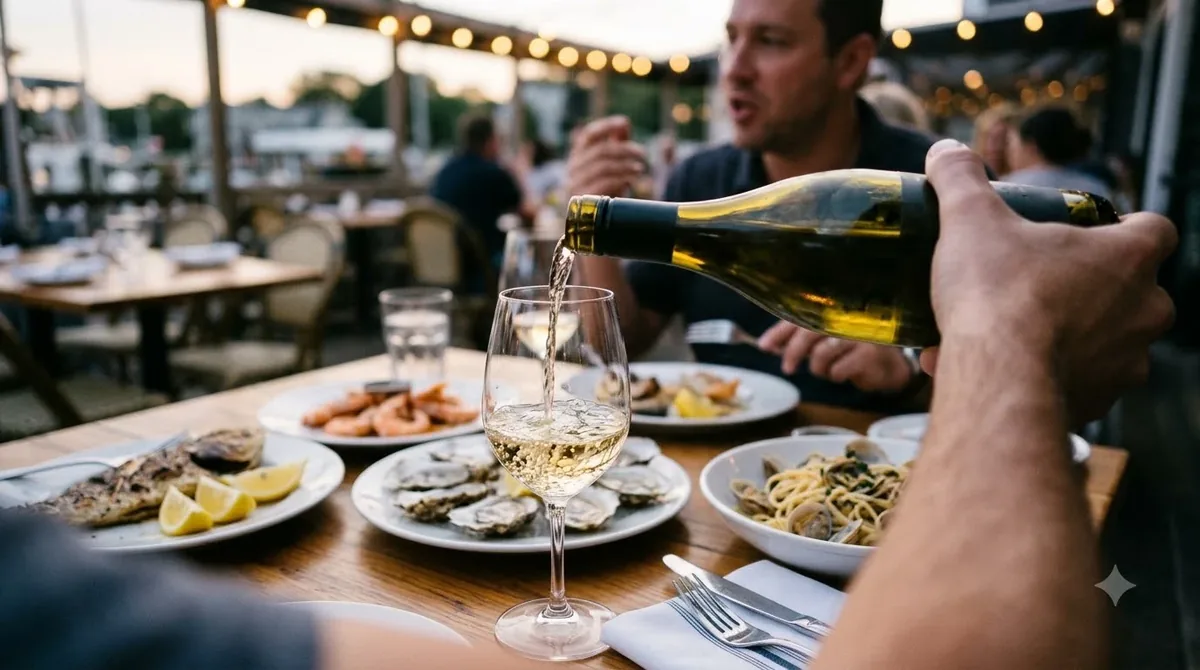
Greco is particularly well suited to seafood because its acidity refreshes the palate while its fuller body can stand up to flavorful fish preparations. Shellfish, grilled fish, seafood pasta, and fish soups are natural partners, with lemon, herbs, and olive oil often helping the food and wine meet in the middle.
For shellfish, try Greco with shrimp, scallops, mussels, clams, or grilled prawns. Its fresh acidity can cut through buttery sauces, while its body gives it enough presence for seafood cooked with garlic, olive oil, or herbs. Grilled sea bass and other white fish are also strong options, especially when seasoned with lemon, parsley, marjoram, or oregano. Fried calamari and fried seafood can work well because the crisp acidity helps balance the richness of the coating without overpowering the fish.
Greco can also pair successfully with pasta and rice dishes. Seafood risotto is a natural choice, particularly when it includes shellfish, lemon, or fresh herbs. Tomato-based pasta can work because Greco’s relatively high acidity is better equipped for acidic food than a soft, low-acid white wine. The same principle applies to simple pasta with tomato sauce, garlic, and olive oil. A wine with enough acidity to match the food tends to taste more balanced than one that seems flat beside it.
Vegetable dishes offer more options than seafood alone. Grilled zucchini, asparagus, artichokes, vegetable tempura, and roasted peppers can all work, particularly when they include olive oil, citrus, or herbs. Fresh cheeses and moderately aged cheeses are also useful matches. Try fresh goat cheese, mozzarella, or a mild sheep’s-milk cheese rather than an intensely pungent option that may dominate the wine. Light white-meat dishes, such as chicken with lemon or herbs, can suit fuller examples as well.
Pairing depends on the cooking method as much as the main ingredient. A simple grilled fish needs less wine intensity than fish cooked with a rich cream sauce or strongly flavored spices. Very hot chili preparations can make alcohol and bitterness feel more prominent, so heavily spiced dishes are less predictable partners. Delicate, oily fish preparations are also better served with a wine that keeps the overall texture balanced rather than forcing a tannic red pairing.
Serving, Cellaring, and Choosing a Bottle
Serve most still Greco di Tufo at about 50–55°F to preserve its acidity while allowing its citrus, stone-fruit, and herbal aromas to show. The wine can be enjoyed young, but selected bottles from strong producers and suitable vintages may gain complexity with additional bottle age.
Temperature has a practical effect on the wine’s balance. Served too cold, Greco can seem muted, with its fruit and texture difficult to appreciate. Served too warm, the alcohol and fuller body may become more prominent, making the wine feel less refreshing. A brief chill in the refrigerator followed by a few minutes in the glass is often enough to bring a bottle into a useful range. The regional Campania wine authority recommends 8–10°C, while Mastroberardino’s producer profile gives 12–14°C for its bottling, showing that serving preferences can vary by producer and style. For most still examples, 50–55°F is a practical middle ground.
For sparkling Greco di Tufo, a cooler temperature helps preserve the freshness and lively bubbles. A range around 40–50°F works well for sparkling wine generally. Use a white wine glass for still Greco rather than a very narrow glass: a little room in the bowl helps citrus, peach, and herbal aromas become clearer as the wine warms slightly. Pour a standard 5-ounce serving, and remember that a 750 ml bottle provides approximately five glasses.
Storage should protect the wine from heat, strong light, and unnecessary temperature changes. Keep unopened bottles in a cool, dark place near 55°F, ideally with a stable environment. Bottles sealed with natural cork are generally stored on their sides to keep the cork from drying out. For everyday Greco di Tufo, a drinking window of one to five years is a reasonable general guide, while exceptional examples may remain interesting for considerably longer. Mastroberardino lists an aging potential of more than 20 years for its own profile, but that should not be treated as a guarantee for every bottle.
Tip: When comparing bottles, start with the appellation and the style. A standard Greco di Tufo is the best introduction to the grape’s dry, fresh character; a Riserva offers a longer-aged still expression, while Spumante provides traditional-method bubbles. Compare vineyard location, producer notes, and vintage before assuming all bottles will have the same weight or aging potential.
Winemaking also influences the final style. Many producers ferment Greco in stainless-steel tanks to retain fresh fruit and acidity, while aging on the lees can add texture. Mastroberardino’s profile describes stainless-steel fermentation at 16–18°C, followed by some bottle refinement before release. Other producers may use different fermentation temperatures or maturation periods, so the same grape can produce wines that feel more citrus-driven, rounder, or more savory. Readers comparing the grape with other Italian and international varieties can also explore the airen grape and the brachetto grape for contrasting wine styles. The broader Wine by Type overview provides additional context for understanding how grape variety, production method, and sweetness shape a finished wine.
For a regional description of the appellation’s permitted grape composition, villages, and traditional pairings, consult the Campania regional wine authority’s Greco di Tufo profile. For a broader tasting overview, including its acidity, body, flavor profile, and general handling guidance, see Wine Enthusiast’s Greco di Tufo guide.
Frequently Asked Questions
These answers clarify a few common points about Greco, including its identity, naming, and place among Italian white wines. The key distinctions are the difference between the grape and its appellation, the separate Calabrian wine called Greco di Bianco, and the range of styles permitted in Greco di Tufo.
Is Greco an indigenous Italian grape?
Greco has a long-standing association with southern Italian viticulture, although its name and historical traditions point toward Greek connections. Campania’s wine history includes several periods of Greek settlement and influence. The exact historical path of individual grape varieties is difficult to establish from names alone, so Greco’s modern identity is best understood through its established cultivation and appellation in Italy.
Does Greco di Tufo have to come from the town of Tufo itself?
No. The DOCG production zone covers eight municipalities in the province of Avellino, not only the town of Tufo. A qualifying wine may therefore come from vineyards in another included municipality, provided it meets the appellation’s production requirements.
Is Greco related to Fiano di Avellino?
Greco and Fiano are separate white grape varieties, although both are associated with the province of Avellino and are important Campanian wines. They are often discussed together because they represent two of the area’s notable white-wine traditions. Their individual wines can differ in aroma, texture, and producer style, so tasting them side by side is a useful way to understand the region.
Can Greco di Tufo be made with a screw cap?
The European Union product specification permits screw caps for containers holding 0.187 liters or less, while the other still and sparkling categories are subject to their applicable closure provisions. Packaging rules are therefore more specific than a simple choice between cork and screw cap. The closure on a bottle does not, by itself, establish its quality or likely aging potential.
What is the maximum vineyard yield for Greco di Tufo?
The appellation’s product specification sets the maximum grape yield at 10,000 kilograms per hectare across its wine categories. Yield limits are one way appellation rules define production conditions and help maintain a connection between the wine and its designated growing area. Individual producers may choose to work below that permitted maximum.
Greco is an excellent choice for drinkers who want an Italian white with more structure than a light aperitif wine but enough acidity to remain refreshing at the table. Start with a standard Greco di Tufo alongside seafood, tomato-based pasta, or grilled vegetables, then explore Riserva and traditional-method Spumante to see how aging and production style change the grape’s expression. The best bottle is one whose freshness, body, and flavor profile suit the meal and the occasion.
More in Wine Types & Grapes
 Zinfandel Sugar Content: Dry Red vs. White Zinfandel GramsUpdated Nov 21, 2026
 Best Zinfandel Substitute Options for Sipping and CookingUpdated Nov 21, 2026
 Zweigelt Food Pairing: Best Dishes, Cheeses, and Serving TipsUpdated Nov 21, 2026
 Zinfandel Tannins Explained: How Structure Shapes Every BottleUpdated Nov 21, 2026
 Zinfandel Sweetness Level: Dry Red vs. Sweet White Zin ExplainedUpdated Nov 21, 2026
 Xinomavro Food Pairing: Best Dishes, Styles, and Serving TipsUpdated Nov 21, 2026