

We may earn a commission when you buy through links on this page, at no extra cost to you. Learn more.
The govino decanter is a shatterproof, reusable wine-serving vessel designed for people who want a practical alternative to traditional glass decanters. Its 28-ounce capacity, lightweight polymer construction, and distinctive thumb-notch design make it particularly appealing for patios, picnics, poolside gatherings, and casual entertaining. It is not a conventional crystal decanter, however, so buyers who prioritize the weight, clarity, and presentation of traditional glass should consider that difference before purchasing.
Govino has built its drinkware range around portability and resistance to breakage rather than traditional glassware construction. The Go Anywhere decanter follows that approach, providing a dedicated vessel for serving wine without bringing fragile glass to outdoor gatherings. This review examines the GV-7002 model, its practical strengths, its limitations, and the situations in which a polymer decanter makes more sense than a conventional wine-serving vessel.
Specs and Key Features of the Govino Decanter
The Govino Go Anywhere Decanter is a lightweight alternative to conventional glass serving vessels, with a 28-ounce capacity and a flexible polymer construction. Its primary selling points are resistance to breakage, portability, and a grip-oriented design that suits casual entertaining.
The GV-7002 is the individual decanter model identified by Joseph Grace Brands, while Govino’s official patent listing also identifies the Go Anywhere Decanter under SKU 7002. The brand separately lists a decanter-and-wine-glass set under different SKUs, so shoppers should distinguish between the standalone vessel and the bundled configuration.
According to the manufacturer’s official product and care FAQ, Govino uses a flexible Tritan polymer for its drinkware and describes the material as BPA/BPS-free and shatterproof. That construction gives the decanter a different feel from glass or crystal. It is intended to withstand the bumps and handling associated with outdoor use, rather than reproduce every characteristic of a traditional glass vessel.
| Specification | Govino Go Anywhere Decanter |
|---|---|
| Product | Go Anywhere Decanter |
| Model | GV-7002 |
| Capacity | 28 oz (approximately 828 ml) |
| Material | Flexible polymer; Govino identifies its drinkware material as Tritan |
| Construction | Shatterproof design |
| Grip feature | Distinctive thumb notch |
| Food-contact positioning | BPA-free; Govino describes its drinkware as BPA/BPS-free |
| Cleaning | Dishwasher-safe listing for the GV-7002 |
| Intended use | Wine serving and portable entertaining |
Capacity is one of the most useful specifications to understand. A 28-ounce vessel holds more than a standard 750 ml wine bottle’s nominal volume of approximately 25.4 fluid ounces. That provides some room for pouring, although it does not mean the decanter should be filled to the brim when serving. Leaving space helps reduce splashing when carrying or pouring it.
The thumb notch is another defining feature. Govino uses this design across its drinkware, and the decanter’s shape is intended to provide a more secure grip than a completely smooth-sided vessel. It is a functional design choice, particularly for outdoor settings where hands may be damp from condensation or cleaning.
For buyers comparing product configurations, the decanter-and-glass set is a separate option. Wine.com’s listing for the Govino decanter-and-glass set describes one version as containing a 28-ounce decanter and two 16-ounce glasses. That bundle can be convenient for someone assembling matching outdoor drinkware, but it should not be confused with the standalone GV-7002.
The important distinction is straightforward: this is a portable polymer decanter, not a crystal wine accessory. Its specifications favor practical handling, capacity, and resistance to breakage over the weight and traditional presentation associated with glass.
What Owners and Buyers May Appreciate
The strongest reasons to consider the Govino decanter are its resistance to accidental breakage, manageable capacity, and suitability for places where ordinary glassware is inconvenient. These features address everyday serving problems rather than attempting to make the decanter a luxury centerpiece.
Outdoor entertaining is the clearest use case. A conventional glass decanter can be awkward around swimming pools, patios, campsites, and picnic tables. One accidental knock can leave broken pieces that are difficult to locate and clean up. A shatterproof polymer vessel reduces that particular concern, making it easier to organize an outdoor wine service.
The distinction matters when guests move between seating areas. A decanter that can be carried from a dining table to a patio without the same breakage anxiety as crystal is useful for informal gatherings. It also suits households that regularly entertain around children, pets, or busy outdoor spaces, although shatterproof should never be interpreted as indestructible.
Another advantage is the 28-ounce capacity. A typical 750 ml bottle contains approximately 25.4 fluid ounces, so the decanter can accommodate the contents of one standard bottle with some remaining capacity. That makes it a practical serving vessel for a small dinner or a casual gathering without requiring a large, heavy carafe.
The flexible polymer construction also contributes to portability. Traditional glass decanters can be relatively heavy, especially when filled. A lighter vessel is easier to carry between a kitchen, outdoor dining area, and picnic setup. This can be useful when a wine service needs to move rather than remain in one formal place.
The thumb notch adds a recognizable ergonomic detail. Govino says this feature is designed to improve grip, and the shape gives the decanter a distinctive appearance. It is not merely a decorative indentation: the intended benefit is easier handling during serving.
Cleaning convenience is another positive for the dishwasher-safe version. Govino says its dishwasher-safe range is designed for home and commercial dishwashers, while the GV-7002 retailer listing also identifies the decanter as dishwasher safe. That is helpful for people who prefer reusable serving pieces that do not require a dedicated hand-washing routine.
There is also versatility beyond wine. Wine.com describes the matching decanter-and-glass set as suitable for serving water and juice as well as wine. A carafe that can move between beverages is useful at a mixed gathering where not everyone wants wine. It can also serve as a general-purpose cold-beverage vessel.
However, these advantages are best understood as design benefits rather than proof of universal owner satisfaction. Retailer product descriptions establish the intended features, but they do not provide enough verified customer feedback to claim that every owner has the same experience. Buyers should focus on whether the material, shape, and capacity fit their own serving habits.
Common Complaints and Practical Limitations
The biggest compromise is the material: the Govino decanter is polymer, not glass. It can offer practical advantages, but it does not provide the same tactile weight, traditional appearance, or formal presentation as a crystal or glass decanter.
For some wine drinkers, the difference will be immediately noticeable. A traditional glass decanter has a solid feel and a familiar clarity that many people associate with formal wine service. A polymer vessel may look clear and attractive, but its lighter construction and flexibility can feel less substantial. Buyers who enjoy the ritual of presenting an older Bordeaux or a special Burgundy in crystal may prefer a conventional alternative.
Another limitation is the 28-ounce capacity. Although it is sufficient for one standard bottle, it is not designed for large-volume entertaining. A host serving several bottles at once may need to refill it repeatedly or use a larger carafe. This is a manageable limitation for a small dinner, but it matters at a larger event.
The flexible construction also means that handling may feel different from a rigid glass decanter. The material is designed to offer flexibility, and Wine.com specifically describes the matching Govino glasses as flexing slightly in the hand. Buyers who prefer a firm, heavy vessel should consider that characteristic before choosing the product.
Cleaning requires some attention to the exact product collection. Govino sells both dishwasher-safe and hand-wash-only drinkware. Its FAQ warns that placing a hand-wash-only product in a dishwasher can cause it to lose its shape. The GV-7002 is identified as dishwasher safe by its retailer, but shoppers buying older stock or a different configuration should confirm which version they have.
Even dishwasher-safe polymer products benefit from sensible handling. Govino advises against squeezing its drinkware between heavy glassware and recommends avoiding extended heated drying. These instructions show that shatterproof construction does not eliminate the need for reasonable care.
Another potential disappointment is the expectation of major wine improvement. A decanter can expose wine to oxygen and provide a convenient serving vessel, but its material alone does not guarantee better aromas or flavor. The Govino decanter is primarily a practical serving accessory. Buyers should not mistake a portable carafe for a specialized wine-aeration system.
Finally, availability may vary between retailers and product configurations. Wine.com has listed the decanter-and-glass set as sold out, while Joseph Grace Brands lists the standalone GV-7002. That difference is a reminder to verify the exact product configuration before ordering rather than assuming every retailer carries the same set.
Who Should Buy the Govino Decanter and Who Should Skip It
The Govino decanter is a sensible choice for wine drinkers who value portability and resistance to breakage more than traditional glass presentation. It is especially suitable for casual outdoor entertaining, but less compelling for collectors who want a formal crystal decanter.
Buy it if outdoor entertaining is a regular part of your routine. Poolside gatherings, backyard dinners, camping trips, and picnics are situations in which glass can be inconvenient. The polymer construction makes the Govino a more practical serving option for those settings, especially when the vessel will be carried between locations.
It also makes sense for households that want reusable drinkware without the same concern about accidental breakage. The 28-ounce capacity is convenient for serving one standard wine bottle, and the thumb notch offers a distinctive grip feature. A person who frequently serves wine informally may appreciate that combination.
Buyers who already own matching Govino glasses may also prefer the decanter for a coordinated serving setup. The separate decanter-and-glass bundle is another possibility for someone starting from scratch. Wine.com’s described configuration includes one 28-ounce decanter and two 16-ounce glasses, making it a useful small set for casual entertaining.
Skip it if traditional glass presentation is your priority. A crystal decanter has a different appearance, weight, and feel. For a formal dinner, a special bottle, or a carefully arranged wine service, conventional glassware may better match the occasion.
It may also be the wrong purchase for someone who routinely decants several bottles at once. A 28-ounce capacity is adequate for one standard bottle, but repeated refilling can become inconvenient when serving a larger group. A larger glass vessel may be a better fit for that requirement.
Wine enthusiasts who expect a specialized decanting tool should also consider their needs carefully. The Govino is a serving decanter, not a substitute for every type of wine accessory. Someone who regularly separates sediment from mature wine or needs a large surface area for extended aeration may prefer a purpose-designed glass decanter.
For everyday drinkware, it is also useful to consider the rest of the serving setup. The right wine glasses can make a casual outdoor arrangement feel more coordinated, while a matching Govino set prioritizes breakage resistance across the entire table.
Tip: Before buying, decide whether the decanter will mainly serve one bottle at a time or support larger gatherings. The 28-ounce capacity is convenient for a standard 750 ml bottle, but hosts serving several bottles may find a larger carafe more practical.
How It Compares to Traditional Glass Decanters and Other Drinkware
The Govino decanter competes most directly with conventional glass carafes on convenience rather than luxury presentation. Its strongest advantage is portability, while glass alternatives remain appealing for formal serving, visual clarity, and a more substantial feel.
A traditional glass decanter is the natural comparison. Glass is rigid and has a familiar weight in the hand. It is also available in many shapes, from simple narrow-necked carafes to wide-bottomed vessels designed for serving and aeration. However, glass can break if knocked against a hard surface, which makes it less convenient around pools, outdoor dining areas, and campsites.
The Govino takes a different approach. Its polymer body is intended to resist shattering, and the thumb-notch design helps distinguish it from an ordinary plastic carafe. For a casual setting, those features can matter more than the traditional appearance of crystal. For a formal dinner, the reverse may be true.
There is also a difference between a decanter and an aerator. An aerator is designed to expose wine to oxygen quickly as it is poured, while a decanter provides a vessel in which wine can sit before serving. The Govino can hold wine for serving and some exposure to air, but it should not be treated as a mechanical aerator or a guarantee of a particular aeration result.
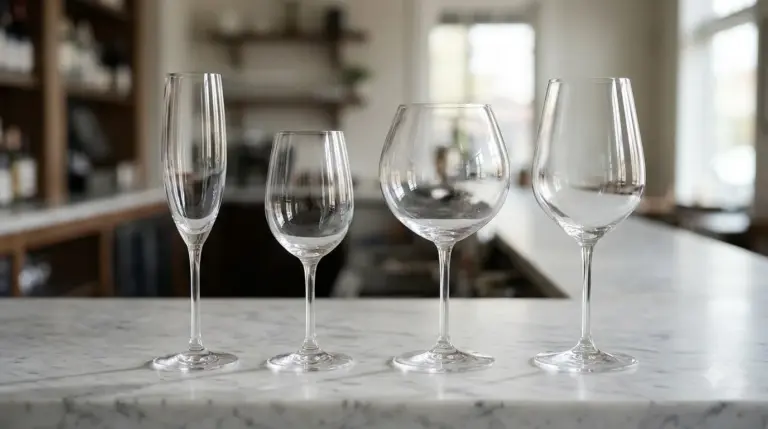
Wine glasses are another part of the comparison. The Govino decanter can be paired with conventional stemware, but the combination may feel mismatched if the host is aiming for a consistent formal presentation. A matching set is a more coherent choice for outdoor service. For sparkling wine, dedicated champagne flutes offer a different shape and serving purpose, so the decanter should not be considered a replacement for them.
Similarly, people who focus on structured red wines may prefer dedicated red wine glasses for the drinking experience. A decanter is a serving vessel; it does not replace the glass used to evaluate a wine’s aromas and structure.
For a wider look at the manufacturers and styles available across the category, the Glassware Brands overview can help put Govino’s practical design philosophy into context.
The choice comes down to where and how the vessel will be used. A glass decanter is the stronger option for a traditional dining room and formal wine presentation. Govino is more appealing when the same vessel needs to travel outdoors, withstand everyday handling, and reduce the risk of broken glass.
Frequently Asked Questions
Can the Govino decanter hold sparkling wine?
Yes, it can physically serve sparkling wine as a beverage, but a decanter is generally not the preferred serving vessel for preserving carbonation. Pouring sparkling wine into a wide vessel releases carbon dioxide more quickly than keeping it in its original bottle. For Champagne or Prosecco, use suitable sparkling-wine glasses and serve promptly.
Does the Govino decanter have a lid or stopper?
The GV-7002 product description from Joseph Grace Brands does not list a lid or stopper as an included feature. Buyers who need to transport wine after filling the vessel should not assume it seals against spills. A separate transport container with a secure closure is a better choice for carrying wine over longer distances.
Can the Govino decanter be used for nonalcoholic drinks?
Yes. Govino says its food-safe drinkware is suitable for cold or room-temperature beverages and snacks. The brand specifically identifies water, juice, cocktails, and other everyday uses across its drinkware range, so the decanter can serve as a general cold-beverage vessel rather than being reserved exclusively for wine.
Can the Govino decanter be recycled?
Govino describes its products as reusable and recyclable, but local recycling acceptance depends on the polymer identification and the facilities available in a particular community. Check the material identification and your local recycling program before placing a worn-out item in a household recycling bin. Reusing the vessel for as long as it remains suitable is another practical way to extend its useful life.
Is the Govino decanter suitable for storing wine overnight?
It is primarily presented as a serving decanter rather than a long-term wine-storage container. It does not have a documented airtight closure in the GV-7002 product description. For leftover still wine, transfer it to a properly sealed wine bottle or storage container and refrigerate it rather than relying on an open serving decanter.
The Govino decanter is best viewed as a practical, shatterproof serving accessory rather than a replacement for traditional crystal. Its 28-ounce capacity, polymer construction, and distinctive grip make it a useful option for patios, picnics, and casual gatherings. Choose it when convenience and resistance to breakage matter most; choose glass when formal presentation and traditional decanting are the priorities.
More in Wine Glasses
 Spiegelau Crystal Wine Glasses That Bring Clarity to Every PourUpdated Nov 21, 2026
 Zalto Crystal Wine Glasses: Are They Worth the Investment?Updated Nov 21, 2026
 Villeroy And Boch White Wine Glasses for a More Cohesive TableUpdated Nov 21, 2026
 Zalto Wine Glasses On Sale: Find the Right Denk’Art GlassUpdated Nov 21, 2026
 Zwiesel Glas Champagne Glasses: Features, Quality and Buying AdviceUpdated Nov 21, 2026
 Zwiesel Glas Decanter Review: A Durable, Elegant Choice for Wine ServiceUpdated Nov 21, 2026