

We may earn a commission when you buy through links on this page, at no extra cost to you. Learn more.
The gigondas wine region is a prestigious southern Rhône appellation in southeastern France, best known for full-bodied red wines made primarily from Grenache, Syrah, and Mourvèdre. Located beneath the dramatic Dentelles de Montmirail mountains, it produces structured, aromatic wines with ripe red and black fruit, Mediterranean herbs, pepper, and earthy complexity. Its limestone-influenced vineyards, varied elevations, and relatively cool hillside exposures help give these powerful wines freshness and the ability to age.
Gigondas offers an appealing combination of southern French warmth and mountain-influenced character. Although it is frequently compared with neighboring Châteauneuf-du-Pape, the appellation has its own identity, shaped by limestone geology, different vineyard elevations, and traditional Rhône blending. Understanding its location, grapes, production methods, and wine styles makes it easier to recognize what distinguishes a bottle of Gigondas and how to enjoy it.
Where Gigondas Is Located and Why Its Appellation Matters
Gigondas is situated in the southern Rhône Valley, in the Vaucluse department of Provence-Alpes-Côte d’Azur, southeastern France. Its vineyards surround the village of Gigondas, where the Dentelles de Montmirail create a distinctive mountain backdrop and influence the local growing conditions.
The village sits northeast of Châteauneuf-du-Pape and close to other important southern Rhône appellations, including Vacqueyras and Beaumes-de-Venise. These neighboring areas share the broader Mediterranean climate and many traditional grape varieties, but their geographical characteristics produce noticeably different expressions of southern Rhône wine.
Gigondas became an independent Cru des Côtes du Rhône appellation in 1971. This recognition marked an important step in its development from a well-regarded regional wine-producing village into one of the southern Rhône’s established cru appellations. Cru status identifies a geographically defined growing area whose wines are recognized for distinctive characteristics and stricter production requirements.
The appellation’s history is considerably older than its modern classification. According to the official Gigondas appellation organization, grape growing and olive cultivation have ancient roots in the village. Roman settlement is part of the area’s history, and the village’s name is associated with the Latin word Jucundus, meaning joyful.
Today, Gigondas is recognized internationally for concentrated red wines that combine ripe fruit with spice and savory complexity. The traditional appellation area is geographically restricted to the commune of Gigondas, rather than encompassing a much larger portion of the Rhône Valley.
This geographical distinction matters when shopping. A wine labeled Gigondas comes from a specific appellation with defined production requirements. A bottle labeled Côtes du Rhône or Côtes du Rhône Villages may share some grape varieties and regional characteristics, but it does not carry the same geographical designation.
For readers exploring the differences between European wine-growing areas, the broader collection of Wine Regions provides useful context about how geographical origin influences wine identity.
The appellation’s reputation rests on more than its location. Its elevation, limestone terrain, and exposure to Mediterranean weather create conditions that support concentrated grapes while retaining an important degree of freshness. These elements explain why Gigondas can produce wines that feel powerful without being simply heavy.
Climate, Elevation, and the Dentelles de Montmirail Terroir
Gigondas combines a sunny Provençal climate with hillside vineyards, limestone-rich soils, and cooling air movements around the Dentelles de Montmirail. The resulting terroir helps explain the balance between ripe fruit, structured tannins, and freshness found in its wines.
The vineyards occupy elevations of approximately 160 to 400 meters above sea level. This range creates meaningful differences in temperature, exposure, and ripening conditions within a relatively compact appellation. Lower sites can experience stronger Mediterranean warmth, while higher and more exposed parcels may benefit from cooler conditions and slower grape development.
The Dentelles de Montmirail are a dramatic limestone mountain formation that reaches approximately 730 meters at its highest point. Their steep ridges create a distinctive landscape and influence air circulation around the vineyards. Breezes moving through the mountain formations help moderate temperature extremes during the growing season.
Soil composition also varies considerably. The official Gigondas terroir information identifies several important geological environments:
- Sandy-clay alluvial terraces: These relatively permeable soils allow water to drain and help reduce erosion from running water.
- Limestone-marl slopes: These soils occur on hillsides and support vineyards planted on terraces.
- Clay-rich ground: Clay contributes to water management and provides an important element in the appellation’s varied soils.
- Rocky surface layers: Surface stones and underlying geological formations influence drainage and the way vineyards respond to sunlight and temperature.
The climate is characteristically Mediterranean, with warm, dry summers and the influence of the Mistral, a strong northerly wind. These conditions create favorable circumstances for ripening Grenache and other late-ripening Rhône varieties.
However, the growing environment is not uniformly hot. West and northwest vineyard exposures benefit from air movement that can help moderate summer temperatures. Higher elevations and mountain breezes contribute to differences between individual vineyard sites.
These conditions are particularly important for Grenache. The variety generally performs well in warm, sunny locations, where it develops ripe fruit flavors and generous body. Nevertheless, excessive heat can reduce freshness. The combination of elevation, airflow, and varied exposure helps growers manage this balance.
The geological diversity also means that not every Gigondas tastes exactly the same. Some wines emphasize ripe cherry and blackberry, while others show more pepper, herbal notes, or mineral impressions. Differences in vineyard location, grape maturity, blending, and aging all contribute to the final character.
For comparison, cooler European mountain-growing areas such as the Savoie wine region demonstrate how elevation and local geography can create a different style of wine from the warmth of the southern Rhône.
Grenache, Syrah, and Mourvèdre: The Grapes Behind Gigondas
Grenache Noir forms the foundation of traditional Gigondas red wines, while Syrah and Mourvèdre contribute additional color, structure, spice, and complexity. Smaller quantities of other traditional Rhône varieties may also appear in permitted blends.
Grenache is especially well suited to the southern Rhône climate. It ripens relatively late and produces generous fruit flavors when grown in warm conditions. In Gigondas, it commonly contributes ripe strawberry, raspberry, cherry, plum, and darker fruit characteristics.
It also brings alcohol, body, and a rounded texture. Although Grenache can produce wines with substantial concentration, its tannins are generally less aggressive than those of Cabernet Sauvignon. This helps explain why many Grenache-based Gigondas wines feel generous and approachable even when they have considerable structure.
Syrah adds structure and aromatic complexity
Syrah contributes darker fruit flavors, pepper, color, and firmer tannins. Its presence can give a Grenache-based blend greater definition, particularly when the wine is intended for extended aging.
Typical Syrah characteristics include blackberry, black pepper, violet, and savory notes. In a warm southern Rhône environment, the variety can develop ripe fruit while retaining the spicy qualities that make it an important blending partner.
Mourvèdre brings depth and savory character
Mourvèdre is another important Rhône grape. It generally produces wines with firm tannins, dark fruit, and earthy or meaty characteristics. Its relatively late ripening makes it particularly suitable for warm growing areas with sufficiently long seasons.
In Gigondas, Mourvèdre can contribute additional structure and complexity to Grenache-led wines. It also helps create blends that evolve with bottle aging.
Other permitted grape varieties
The appellation also recognizes a range of traditional Rhône varieties. Depending on the blend and applicable production specifications, these include Cinsault, Counoise, Clairette, Bourboulenc, Roussanne, Marsanne, Viognier, and Vaccarèse, among others.
These varieties are generally supporting components rather than the principal grapes responsible for the traditional red style. Their contributions can include floral aromas, additional freshness, texture, or different fruit characteristics.
The following table summarizes the principal grapes and their typical roles in Gigondas wines.
| Grape variety | Main contribution | Typical characteristics |
|---|---|---|
| Grenache Noir | Primary fruit and body | Cherry, raspberry, strawberry, plum |
| Syrah | Color, structure, and spice | Blackberry, black pepper, violet |
| Mourvèdre | Tannin and savory depth | Dark fruit, earth, herbal notes |
| Cinsault | Freshness and aromatic lift | Red berries and lighter fruit |
| Clairette | Freshness and aromatic variation | Delicate fruit and floral notes |
The proportions vary between producers and individual bottlings. Rather than expecting every Gigondas to follow one identical recipe, it is more useful to understand the general relationship between the varieties. Grenache supplies the generous fruit, Syrah adds definition, and Mourvèdre contributes additional structure.
How Gigondas Wine Is Made and Aged
Gigondas production combines strict appellation requirements with individual winemaking decisions. Producers work with controlled vineyard yields, carefully selected grapes, fermentation, maceration, and aging to create wines that express both the fruit and the local terroir.
One important production restriction is the maximum permitted vineyard yield of 36 hectoliters per hectare. A hectoliter contains 100 liters, so this limit corresponds to a maximum of 3,600 liters of wine per hectare of vineyard. Actual production can be lower depending on growing conditions, vineyard age, and producer decisions.
Controlled yields are important because they help growers concentrate on grape quality rather than maximizing the volume of fruit harvested. In a warm region producing naturally generous varieties such as Grenache, careful vineyard management is particularly relevant.
Harvest and grape selection
Harvest timing influences the balance between fruit maturity, acidity, and alcohol. Grapes harvested at higher maturity generally deliver riper fruit flavors and fuller body, while picking decisions that preserve freshness can help prevent wines from becoming excessively heavy.
Producers may harvest different grape varieties separately because Grenache, Syrah, and Mourvèdre do not necessarily reach their ideal maturity at the same time. Individual vineyard parcels may also be handled separately before blending.
Fermentation and maceration
After harvesting, grapes are prepared for fermentation. Depending on the producer’s approach, they may be partially or completely destemmed. Some producers ferment varieties separately, while others use different blending approaches.
Maceration is particularly important for red Gigondas. During this stage, grape skins remain in contact with fermenting juice, allowing the extraction of color, tannins, and aromatic compounds.
According to the official appellation organization, maceration periods can range from approximately two to four weeks, depending on the vintage and the individual winemaker’s choices. Longer extraction can contribute greater structure, although temperature management and extraction techniques also affect the result.
Aging in tanks and barrels
Once fermentation and extraction are complete, the wine enters its maturation period. Producers may use stainless-steel tanks, wooden vats, and oak barrels to achieve different results.
Stainless steel generally preserves fresh fruit characteristics without introducing oak aromas. Wooden vats provide a different maturation environment, while oak barrels can influence texture and the integration of tannins.
Not every producer uses the same combination of vessels. Some favor a more fruit-driven expression, while others use a greater proportion of wood to develop additional texture and complexity.
Gigondas wines are typically bottled after many months of maturation, once the producer considers the wine sufficiently balanced. This process contributes to the appellation’s range of styles, from relatively accessible young reds to structured bottlings intended for extended cellar aging.
The appellation also maintains official production specifications covering vineyard management, harvest, vinification, and aging. Independent checks help ensure that producers meet the requirements necessary to use the Gigondas designation.
What Gigondas Wine Tastes Like: Aroma, Body, and Structure
Gigondas red wine is generally full-bodied, richly flavored, and structured, with ripe fruit supported by noticeable tannins and Mediterranean spice. Its character can change substantially with age, developing more savory and earthy aromas as youthful fruit becomes integrated.
Young Gigondas commonly displays aromas of sweet cherry, crushed strawberry, raspberry, blackberry, blackcurrant, and blueberry. These fruit characteristics reflect the dominant role of Grenache, supported by Syrah and Mourvèdre.
The wines also show a recognizable savory dimension. White pepper, thyme, dried herbs, licorice, and garrigue are common descriptions. Garrigue refers to the aromatic Mediterranean vegetation found across parts of southern France, including herbs and shrubs that contribute a distinctive regional scent.
Depending on the producer and vineyard, these herbal qualities may be subtle or quite pronounced. Some wines lean toward ripe red fruit and floral aromas, while others emphasize darker fruit, pepper, and earthy characteristics.
Body and tannin
Gigondas is typically a full-bodied wine. Its Grenache base provides generous weight, while Syrah and Mourvèdre can contribute a firmer tannic structure.
The exact intensity varies between bottles. A fruit-focused example may feel relatively smooth and rounded, while a more concentrated blend can have substantial grip and a longer, more structured finish.
Its acidity is an important part of its balance. Although Gigondas is not generally as sharply acidic as some cool-climate red wines, the region’s elevation, vineyard exposures, and microclimate help preserve freshness in well-balanced examples.
How bottle aging changes the flavor
With time, the primary fruit aromas can become less dominant, allowing more complex secondary and tertiary characteristics to emerge. The official appellation organization identifies forest floor and truffle among the aromas that can develop in mature Gigondas.
Additional mature-wine characteristics may include dried herbs, leather, earth, tobacco, and savory spice. The fruit can also move from fresh cherry and blackberry toward dried plum and fig.
The best aging potential depends on the particular wine rather than the appellation name alone. Concentration, tannin, acidity, producer style, and storage conditions all matter. A structured, carefully made example may develop over several years, while a lighter and more fruit-driven bottling may be most enjoyable earlier.
Gigondas is often compared with Châteauneuf-du-Pape, but the two appellations should not be treated as identical. Wine Enthusiast describes Gigondas as generally slimmer in profile, with a distinctive garrigue character. Châteauneuf-du-Pape can be more opulent and concentrated, although individual producers and vintages create considerable overlap. The publication’s guide to the wines of the southern Rhône provides additional context about these neighboring appellations and their grape varieties.
For a broader understanding of how geographical origin shapes wine style, comparing Gigondas with other European regions, including the Switzerland wine region, offers an interesting contrast between Mediterranean warmth and cooler alpine influences.
Best Food Pairings and Serving Temperature for Gigondas
Gigondas pairs especially well with roasted meats, lamb, grilled vegetables, hearty stews, and dishes featuring Mediterranean herbs. Its full body, ripe fruit, and structured tannins make it a natural match for flavorful food with sufficient richness.
Lamb is one of the strongest pairing choices. Roast leg of lamb seasoned with rosemary, thyme, garlic, and black pepper complements the wine’s fruit and herbal aromas. The meat’s protein and fat also soften the perception of tannin, making the combination feel more balanced.
Other meat dishes worth considering include:
- Roast beef: The savory flavors and substantial texture complement Gigondas’s dark fruit and tannin.
- Beef short ribs: Slow cooking creates a rich, tender dish that works particularly well with concentrated red Gigondas.
- Duck breast: Its richness and roasted flavors provide a good match for the wine’s ripe fruit and spice.
- Venison: Game meat complements the wine’s earthy characteristics and firm structure.
- Pork shoulder: Slow-roasted pork with rosemary and garlic offers enough richness to balance the wine.
Mediterranean and vegetarian dishes
Gigondas is not limited to meat-based meals. Grilled eggplant, roasted mushrooms, lentil dishes, and tomato-based vegetable preparations can all work well, especially when they incorporate herbs such as thyme, rosemary, and oregano.
Roasted eggplant with olive oil, garlic, and herbs provides a satisfying combination of savory flavor and texture. Mushroom dishes are also useful because their earthy character connects with the more mature aromas that develop in aged Gigondas.
Hard cheeses can provide another suitable pairing. Aged Comté, mature Gouda, and firm sheep’s-milk cheeses have enough flavor and richness to stand up to the wine’s concentration. Salt and fat also help soften the perception of tannin.
Foods that require more care
Very spicy dishes are less suitable. Chili heat can feel more intense alongside wines with substantial alcohol and tannin, making a powerful Gigondas seem hotter and less balanced.
Delicate seafood and oily fish are also generally better matched with lighter, fresher wines. The tannins in a structured red can clash with fish oils and create an unpleasant metallic impression.
Sweet dishes require particular attention. A dessert should be at least as sweet as the wine served alongside it. Since traditional red Gigondas is normally dry, it is generally better with savory food than with sweet desserts.
Serving temperature and preparation
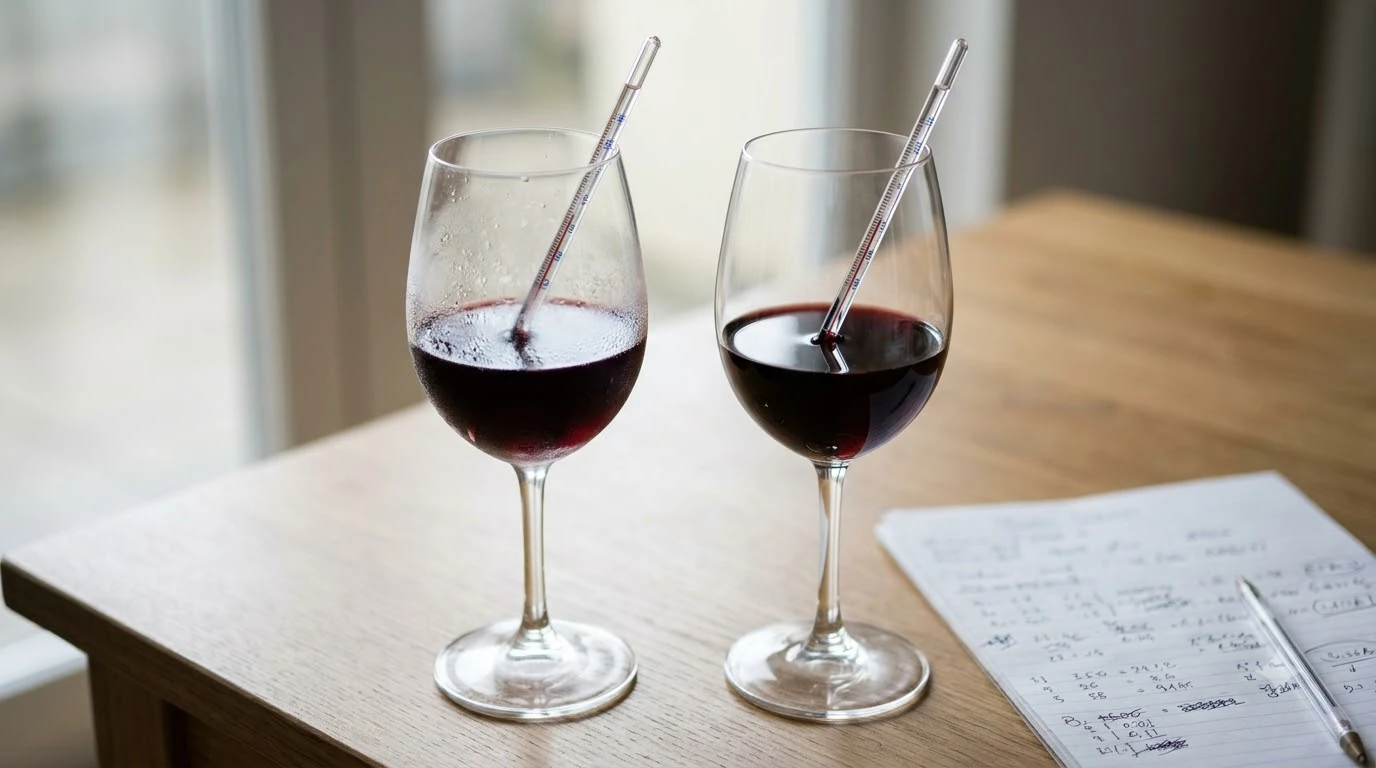
Serve full-bodied red Gigondas at approximately 60 to 65 degrees Fahrenheit. This temperature range helps preserve its aromatic expression while keeping alcohol from dominating the tasting experience.
A bottle served too warm may seem excessively alcoholic, while a bottle served too cold can feel harder and more tannic. If the room is warm, briefly chilling the bottle before serving can help bring it into the appropriate range.
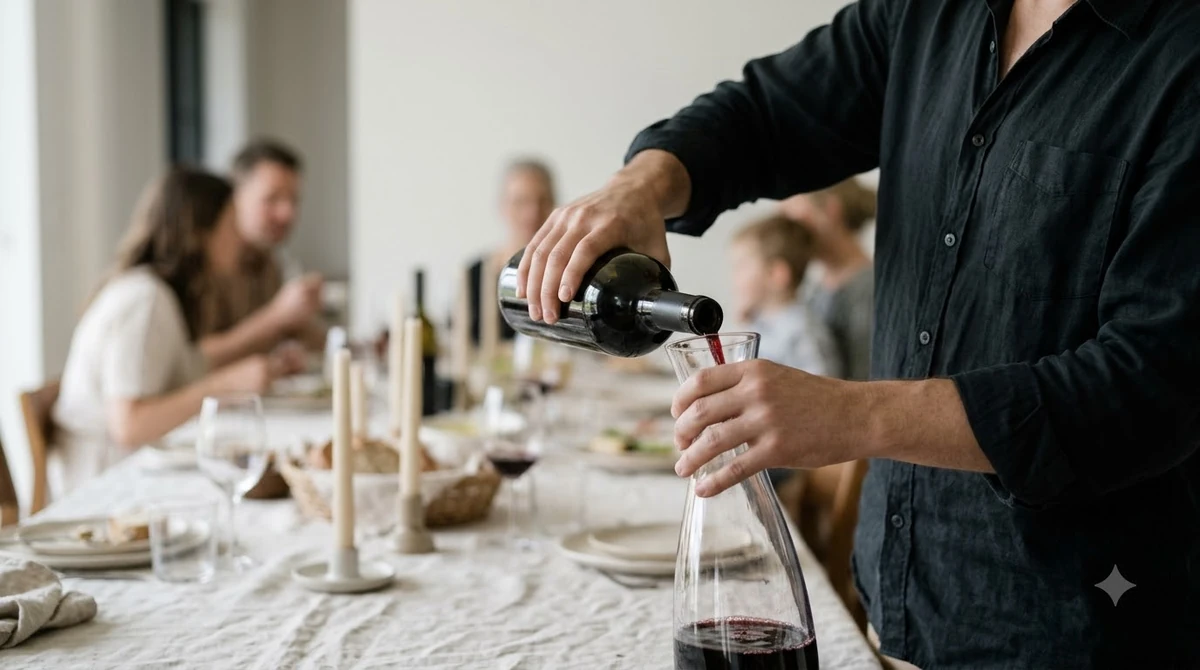
Young, concentrated examples can benefit from decanting for approximately 30 to 60 minutes. This allows the wine to open aromatically and can help soften the initial impression of a structured young red. Older bottles require more care because prolonged exposure to air can diminish delicate mature aromas.
Tip: For a dependable dinner pairing, serve Gigondas at 62 degrees Fahrenheit with rosemary-roasted lamb or slow-cooked beef. Give a young, structured bottle 30 to 60 minutes in a decanter, and use a large red-wine glass to allow its fruit, pepper, and herbal aromas to develop.
A standard wine serving is approximately 5 ounces, meaning a 750-milliliter bottle provides about five glasses. For a dinner with several courses, this makes it easy to plan portions without overwhelming the meal.
Buying Gigondas Wine and Understanding Its Aging Potential
When choosing Gigondas, consider the producer, vintage conditions, vineyard character, and intended drinking time. A younger bottle can offer expressive fruit and a more immediate drinking experience, while a more structured example may reward patience in the cellar.
One useful starting point is to identify the producer’s general style. Some estates favor generous Grenache fruit and relatively accessible tannins. Others place greater emphasis on Syrah and Mourvèdre, extraction, and extended maturation, resulting in wines with more pronounced structure.
Producer identity is particularly important because Gigondas is not a uniform wine style. Two bottles from the same vintage can have noticeably different aromatic profiles and textures because of vineyard location, blending proportions, harvest decisions, and cellar practices.
Understanding vintage variation
Vintage conditions influence ripeness, concentration, acidity, and overall balance. Warm, dry growing seasons may produce particularly ripe fruit, while cooler or more variable conditions can create wines with a different balance of freshness and structure.
The effects are not always straightforward. A warm vintage can produce excellent wines when growers manage ripeness carefully, while a cooler vintage can still deliver impressive quality when harvesting and selection decisions are well judged.
For this reason, it is more useful to evaluate the individual vintage and producer than to assume that every bottle from a particular year will taste the same.
How long should you age Gigondas?
Many Gigondas wines are enjoyable relatively young, particularly when their main attraction is fresh cherry, strawberry, and blackberry fruit. More concentrated examples with substantial tannin and balanced acidity can develop additional complexity over a longer period.
As a general purchasing approach, consider drinking approachable bottlings within their first several years, while giving particularly structured wines more time. Some carefully produced examples can develop favorably for a decade or longer, although this is not a guarantee for every bottle.
Look at the wine’s structure and style rather than relying on a fixed aging schedule. High concentration, balanced acidity, integrated alcohol, and firm but ripe tannins are useful indicators of potential longevity.
Proper storage at home
Storage conditions are just as important as the wine itself. Bottles intended for aging should be kept in a cool, dark location with a stable temperature close to 55 degrees Fahrenheit.
Traditional cork-sealed bottles should generally be stored horizontally so that the cork remains in contact with the wine. This helps reduce the risk of the cork drying out. Avoid locations with strong sunlight, frequent vibration, or significant temperature fluctuations.
Once opened, recork the bottle and place it in the refrigerator. Most still wines retain their best qualities for approximately three to five days, although the exact period depends on the wine’s age, condition, and exposure to oxygen.
Before serving an opened bottle again, allow it to warm slightly toward the appropriate serving temperature. This helps restore its aromatic expression without exposing it to unnecessary heat.
For American buyers exploring European wines, Gigondas offers a distinctive option for anyone who enjoys full-bodied Rhône reds but wants to explore beyond the most familiar appellations. Its combination of fruit, herbs, limestone influence, and aging potential makes it a worthwhile addition to a varied wine collection.
Frequently Asked Questions
Is Gigondas considered a prestigious wine appellation?
Yes. Gigondas is classified as a Cru des Côtes du Rhône, a distinction it received in 1971. Its appellation designation places it among the recognized geographically defined wine-growing areas of the southern Rhône, rather than the broader regional Côtes du Rhône classification.
Can Gigondas wine be made without Grenache?
Grenache Noir is the principal grape associated with traditional Gigondas red wine. The wine’s blend must comply with the appellation’s official production specifications, which define the permitted varieties and their use. Syrah and Mourvèdre are also important components of the traditional blend.
Does Gigondas produce white wine?
Historically, Gigondas was recognized primarily for red and rosé wines. The appellation’s official organization has announced the extension of the designation to white wines, reflecting a development in the area’s wine production. This makes it important to distinguish older descriptions of Gigondas from its newer appellation provisions.
What does the name Dentelles de Montmirail mean?
The French word dentelles means lace, referring to the mountain range’s sharply serrated limestone ridges. Montmirail is associated with the Latin mons mirabilis, meaning extraordinary mountain. The formation reaches approximately 730 meters at its highest point and is an important geographical feature of the Gigondas landscape.
Is Gigondas suitable for a wine cellar collection?
Yes, particularly concentrated examples with balanced acidity and firm, ripe tannins. The appellation’s wines can develop forest-floor and truffle aromas as they mature, making them interesting candidates for collectors who enjoy the evolution of southern Rhône reds. Consistent storage near 55 degrees Fahrenheit is important for bottles intended for extended aging.
The Gigondas wine region combines the warmth of Provence with the distinctive limestone terrain and mountain influences of the Dentelles de Montmirail. Its Grenache-led reds deliver generous fruit, savory herbs, and substantial structure, while their ability to develop complexity makes them especially rewarding for Rhône wine enthusiasts. Whether enjoyed young with roast lamb or carefully cellared for a more mature expression, Gigondas deserves a place among the southern Rhône’s most interesting appellations.
More in Wine Regions
 Willcox Wine Trail: Discover Arizona’s High-Elevation Wine CountryUpdated Nov 20, 2026
 Yakima Valley Wine Region: Find the Best Styles to TryUpdated Nov 20, 2026
 Vosne Romanee Wine Tasting: Identify Aromas and Choose Better PairingsUpdated Nov 20, 2026
 Yakima Valley Wine Festival: Find the Best Seasonal Wine EventsUpdated Nov 20, 2026
 Wales Vineyards: Discover Cool-Climate Wines and Where to VisitUpdated Nov 20, 2026
 Yountville Wine Festival: Discover Napa Wines and Local FoodUpdated Nov 20, 2026