

We may earn a commission when you buy through links on this page, at no extra cost to you. Learn more.
The GE wine and beverage center GVS04BQNSS is a compact combination refrigerator with room for up to 31 wine bottles or 109 cans, but its single cooling zone and mixed reliability feedback make it a cautious purchase. Its 4.10-cubic-foot interior, adjustable shelving, wooden wine storage, electronic controls, and stainless-steel appearance make it appealing for a home bar or entertaining area. However, repeated owner complaints about cooling failures deserve serious consideration before choosing this model.
The GE Wine Center and Beverage Center is designed for households that want wine and everyday drinks in one dedicated refrigerator instead of taking up space in the main kitchen refrigerator. Its combination of wine racks and removable shelves offers useful flexibility, although its capacity depends on the size and arrangement of the bottles and cans being stored. This review examines the GVS04BQNSS, including its specifications, everyday usability, owner experiences, and the important limitations that affect its value as a long-term appliance.
GE Wine And Beverage Center Specs And Key Features
The GVS04BQNSS combines a 4.10-cubic-foot refrigerator compartment with electronic temperature controls and five removable shelves. Its headline capacity is 31 wine bottles or 109 cans, making it a practical size for a household entertainment area rather than a large wine collection.
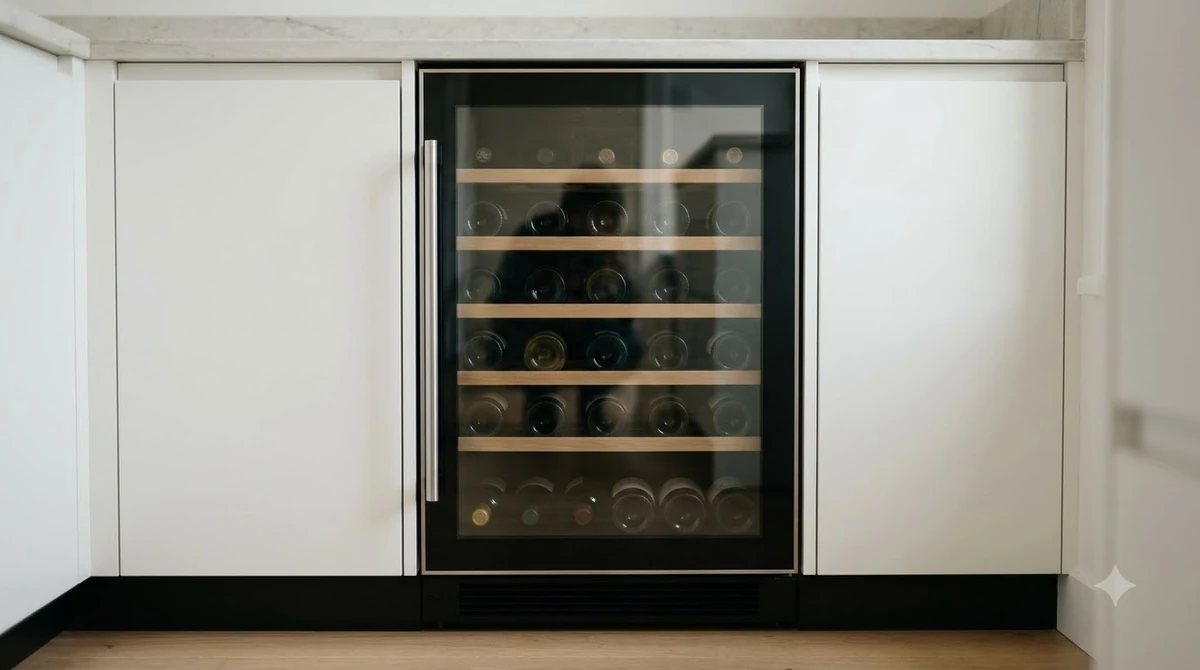
GE specifies a compressor cooling system and one cooling zone. This distinction matters because the refrigerator does not provide independently controlled wine and beverage compartments. Someone storing white wine, red wine, sparkling wine, and soft drinks together must work with one shared temperature setting rather than selecting a different temperature for each category.
The actual-temperature display is a useful feature because it gives the owner more information than a basic dial setting. Electronic controls also make temperature adjustments more straightforward than on older refrigerators that rely on a mechanical thermostat. The front control location is convenient, especially when the appliance is installed beneath a counter or positioned in a home bar.
| Specification | GE GVS04BQNSS |
|---|---|
| Product type | Wine and beverage center |
| Capacity | 4.10 cubic feet |
| Wine capacity | Up to 31 bottles |
| Beverage capacity | Up to 109 cans |
| Height | 33 inches |
| Width | 19 inches |
| Depth | 22.5 inches |
| Cooling method | Compressor |
| Cooling zones | 1 |
| Temperature controls | Electronic with actual-temperature display |
| Removable shelves | 5 |
| Shelf configuration | 3 full-depth and 2 half-depth |
| Interior lighting | Yes |
| Door configuration | 1 door |
| Lock | Key-operated lock |
| Defrost | Automatic |
| Refrigerant | R600a |
| Warranty | Limited 1-year parts and labor |
These specifications come from GE’s published product documentation for model GVS04BQNSS. The capacity figures represent alternative loading configurations, not simultaneous maximum capacities. In other words, the 109-can figure and 31-bottle figure should not be treated as separate compartments that can both reach their maximum at the same time.
The five removable shelves are another important part of the design. GE specifies three full-depth shelves and two half-depth shelves, allowing the owner to adjust the interior to different containers. The wooden wine shelf adds a more traditional wine-storage appearance than an interior made entirely from metal or plastic.
The approximate dimensions are particularly useful when planning a home bar. At 19 inches wide and 33 inches high, the appliance has a relatively narrow footprint. However, the 22.5-inch depth still needs to be considered alongside the space required for the door, handle, electrical connection, and installation ventilation.
For the complete manufacturer specifications, see the GE GVS04BQNSS product documentation. The published specifications are a stronger basis for planning an installation than relying on a retailer’s shortened product description.
One limitation is especially important: a single cooling zone cannot independently maintain ideal serving conditions for every wine style. Red wines, full-bodied white wines, lighter whites, sparkling wines, and soft drinks have different preferred serving temperatures. Owners who want separate wine-temperature settings should consider a dual-zone appliance instead.
What Owners Like About the GE Wine And Beverage Center
Positive owner feedback focuses on the appliance’s appearance, flexible storage, and convenience for entertaining. Its combination of wine and beverage storage is especially attractive for households that regularly keep cans, bottles, and wine ready for guests.
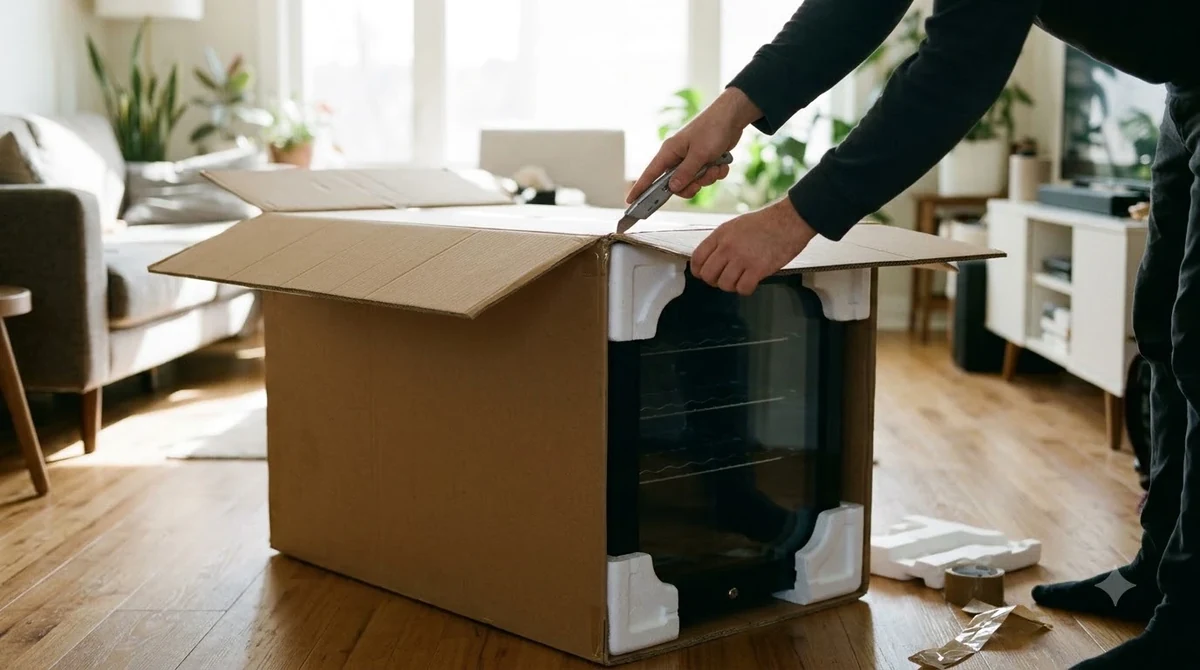
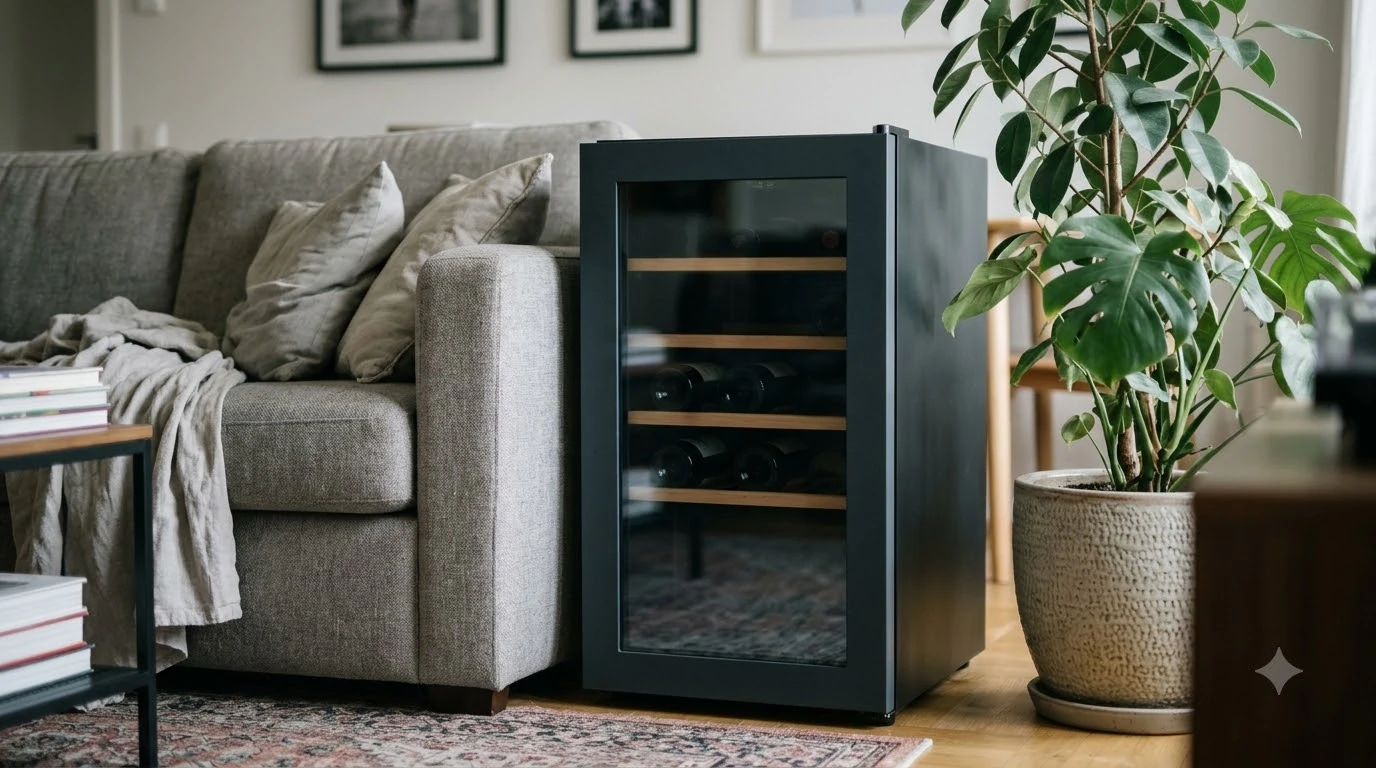
The stainless-steel exterior and glass door give the GVS04BQNSS a more polished appearance than a basic compact refrigerator. A glass-front appliance can also make a home bar look organized because the contents are visible without opening the door. The wooden shelves contribute to that presentation, providing a traditional visual contrast with the modern exterior.
Storage flexibility is another recurring positive point. Owners can use the full-depth shelves for cans and other beverages, while the half-depth shelves and wine-storage components provide additional arrangement options. Removing selected shelves can make room for taller containers that would otherwise be difficult to accommodate.
That flexibility is useful when entertaining. A household might keep sparkling water, soda, beer, and bottled mixers available for guests while reserving the wine section for bottles intended for dinner. It can also help separate everyday drinks from the food stored in the main refrigerator.
The electronic temperature display is a meaningful convenience. Rather than relying exclusively on an approximate mechanical setting, the owner can see the displayed temperature and make adjustments through the front controls. This is particularly helpful for someone who regularly stores different beverage categories and wants to monitor the refrigerator’s operation.
Customer feedback for the separate GE GWS04HAESS wine-only model provides additional context about the appeal of GE’s compact wine-center format. Best Buy reviewers mention temperature control and relatively quiet operation as positives, although those comments should not be treated as proof that the combination GVS04BQNSS performs identically. They concern a different model with a different configuration.
Several positive GVS04BQNSS reviews also mention its attractive shelving and useful capacity. For a household that wants a dedicated beverage refrigerator without installing a much wider unit, the compact cabinet can be a practical advantage.
The lock is another useful addition for certain households. It can help restrict access to the stored drinks, which may be helpful in shared living spaces or entertainment areas. It is not a sophisticated access-control system, but a keyed lock provides a straightforward physical barrier.
Tip: Plan the interior around the bottles and containers you actually use. A refrigerator advertised for 31 wine bottles or 109 cans may hold fewer if your collection includes wide Chardonnay bottles, sparkling wine bottles, tall cans, or oversized beverage containers.
For a home bar, the appliance can also make drink preparation more convenient. Keeping mixers and other chilled ingredients nearby helps when preparing an Aperol spritz recipe or a Hugo spritz recipe. These are practical examples of how a combination refrigerator can support entertaining beyond simply storing wine.
Common Complaints And Reliability Concerns
The most significant concern with the GE GVS04BQNSS is reliability, particularly reports of cooling problems and compressor-related failures. Although some owners are pleased with its appearance and everyday operation, negative experiences are frequent enough that buyers should investigate warranty coverage and service availability before committing.
Lowe’s displays a customer rating of 3.3 out of 5 based on 229 reviews on the consulted review page. The distribution is notable: 41% of reviewers gave the appliance five stars, while 29% gave it one star. This divided response suggests that ownership experiences are not consistently positive.
Some owners describe a refrigerator that initially performs well but gradually stops maintaining its selected temperature. Others report that the display or fan appears to operate while the interior becomes warmer than expected. A refrigerator that powers on is not necessarily a refrigerator that is cooling correctly.
One Lowe’s reviewer described a unit that remained around 60 degrees despite being set to 45 degrees. Other feedback mentions compressor problems and cooling deterioration within the first few years. These reports do not establish that every GVS04BQNSS will fail, but they are relevant warning signs for anyone considering a long-term appliance purchase.
Cooling reliability matters especially for wine storage. A dedicated wine refrigerator is supposed to provide more controlled storage than a typical room-temperature cabinet. If the unit cannot maintain a stable temperature, the central reason for purchasing it becomes less convincing.
The single cooling zone creates a separate limitation. Someone who wants to store red wine and white wine at different temperatures will not get that flexibility from this model. The same issue affects households that want particularly cold soft drinks alongside wine stored at a more moderate temperature.
Noise is another consideration. Some owners describe quiet operation, while other feedback mentions audible running sounds or fan noise. Compressor refrigerators cycle on and off, and the amount of sound perceived will depend partly on the installation location and the surrounding cabinetry. A unit in a utility room may be less noticeable than the same appliance positioned beside a living room seating area.
Installation deserves attention because poor ventilation and an improperly closed door can affect cooling performance. Some customer feedback discusses temperature problems associated with enclosed installations. Buyers should not assume that a product listing’s installation category guarantees suitability for every tight cabinet opening. The manufacturer’s installation instructions for the exact model should determine the required clearances and placement.
The door is another small but important consideration. A door that does not close fully can allow warm air to enter and compromise temperature consistency. Owners should check that the unit sits level, the door seal is unobstructed, and containers do not prevent the door from closing.
There is also a difference between an isolated negative review and a recurring pattern. One customer experiencing a malfunction does not prove a product has a design defect. However, repeated reports involving similar cooling symptoms make reliability a legitimate part of the buying decision rather than a minor complaint.
The limited one-year parts and labor warranty is relatively short for buyers expecting a refrigerator to remain in service for many years. Anyone considering this model should investigate available extended protection, local repair options, and the cost of replacement components before purchasing.
Who Should Buy And Who Should Skip This GE Model
The GE GVS04BQNSS makes the most sense for buyers who prioritize a compact combination beverage refrigerator, flexible shelving, and a glass-front design. It is less suitable for serious wine collectors, buyers who need separate temperature zones, and anyone unwilling to accept the reliability concerns reflected in customer feedback.
A casual wine drinker may find the capacity sufficient for a small household collection. Thirty-one bottles is a useful theoretical maximum for a compact wine and beverage center, particularly when the owner does not need room for a large number of specialty bottles. The additional ability to store cans makes the appliance more versatile than a wine-only refrigerator.
It can also suit a household that entertains regularly. Keeping soft drinks, sparkling water, mixers, and wine in one dedicated location can reduce traffic in the kitchen refrigerator. The keyed lock and removable shelves provide additional practical features for a shared entertainment area.
However, the model is not the strongest choice for a collector who stores expensive bottles or maintains several wine styles at carefully selected temperatures. A single zone limits temperature flexibility, while repeated cooling complaints raise questions about dependable long-term storage.
Buyers who frequently purchase sparkling wine should also think about bottle dimensions. Sparkling wine bottles can be wider than standard still-wine bottles, and a nominal capacity figure does not guarantee that every bottle will fit comfortably. A collection containing magnums, large Champagne bottles, and unusually shaped bottles needs a different storage assessment.
For someone who mainly wants cold cans and occasional wine storage, the GVS04BQNSS is more logical than a specialist wine cabinet. Its removable shelves make the interior adaptable, and the actual-temperature display provides useful operating information. Still, it is important to compare the appliance with alternatives that offer a stronger documented service record.
Someone furnishing a new home should also consider the cost of installation and the consequences of a future breakdown. A compact refrigerator is not automatically inexpensive to maintain. If access to appliance repair services is limited in the buyer’s area, the cooling complaints become even more relevant.
The most cautious buyers should look at the warranty first. GE’s published documentation specifies limited one-year parts and labor coverage. A longer protection plan may be available through some sellers, but its exclusions, service arrangements, and repair limits need to be understood before relying on it.
For additional appliance comparisons, the model reviews section can help readers evaluate other products using similar practical criteria: specifications, everyday usability, customer feedback, and ownership considerations.
How The GE GVS04BQNSS Compares To Alternatives
The GVS04BQNSS is a combination wine and beverage center, while the GE GWS04HAESS is a separate wine-only model with a stated 30-bottle capacity. The distinction is important because the two appliances are intended for different storage priorities, even though both belong to GE’s compact wine-refrigerator category.
The GVS04BQNSS provides a stated maximum of 31 wine bottles or 109 cans, making it more flexible for households with mixed beverage requirements. Its five removable shelves provide options for arranging different container sizes. This makes it a more natural fit for a home bar where wine is only one part of the stored inventory.
The GWS04HAESS, by contrast, is presented by Best Buy as a 30-bottle wine center. Its customer feedback highlights temperature control and quiet operation. The retailer displays a 4.2-out-of-5 rating based on 27 reviews, compared with the 3.3-out-of-5 rating displayed by Lowe’s for the GVS04BQNSS based on 229 reviews.
These ratings should not be compared as though they were a controlled performance test. The models are different, the review totals are different, and the feedback comes from separate retailer audiences. Nevertheless, the figures illustrate why it is important to evaluate the precise model number rather than assuming that all GE wine refrigerators offer the same ownership experience.
There are also practical differences in bottle storage. Best Buy reviewers of the GWS04HAESS mention that wider bottles, including some Chardonnay bottles, can reduce the number that fit comfortably. This is a useful reminder that stated bottle capacity is generally based on particular bottle dimensions, not every possible wine-bottle shape.
A buyer who primarily collects wine may prefer a dedicated wine refrigerator because its internal arrangement is designed around bottle storage. Someone who needs both canned drinks and wine may prefer the combination layout of the GVS04BQNSS, provided its reliability concerns and single-zone limitation are acceptable.
Another alternative is a dedicated beverage refrigerator with more emphasis on cans and bottles rather than wine racks. Such a unit may provide more useful shelf space for soda, sparkling water, mixers, and other containers. It may be a better fit if wine storage is only occasional.
For serious wine storage, a dual-zone refrigerator is another category worth comparing. Separate temperature controls allow different wine styles to be stored under different conditions. This is a more suitable arrangement for someone who regularly keeps reds and whites ready for serving at different temperatures.
The deciding factor is therefore not simply capacity. It is whether the appliance’s interior, cooling arrangement, installation requirements, and reliability match the way the household intends to use it. A larger advertised capacity is not necessarily more useful if the shelf layout does not accommodate the containers that matter most.
Frequently Asked Questions
Does the GE GVS04BQNSS have a reversible door?
GE’s product documentation for this model identifies a single-door configuration but does not establish reversible-door functionality in the listed specifications. Buyers should confirm the door-hinge arrangement with GE before planning an installation that requires a particular opening direction.
What refrigerant does the GE Wine and Beverage Center use?
GE identifies R600a as the refrigerant used in the GVS04BQNSS. This is a hydrocarbon refrigerant, so any sealed-system repair should be handled by a qualified appliance technician familiar with the equipment and applicable service requirements.
Does the GE GVS04BQNSS have automatic defrost?
Yes. GE lists automatic defrost for the GVS04BQNSS. This means owners do not have to schedule routine manual defrosting as they would with an appliance that requires periodic manual ice removal.
Can the GE Wine and Beverage Center be locked?
Yes. GE lists a key-operated lock as one of the model’s features. This provides basic physical access control, although owners should keep the key somewhere accessible to authorized household members.
How many leveling legs does the GE GVS04BQNSS have?
GE specifies two front leveling legs. Proper leveling is important because an uneven appliance can affect door alignment and closure, making it harder to maintain the intended refrigerated environment.
The GE Wine and Beverage Center GVS04BQNSS offers useful capacity, adaptable shelving, electronic controls, and an attractive glass-front design in a relatively compact cabinet. However, its single cooling zone and recurring owner reports of cooling problems make it difficult to recommend without reservations. Buyers who value mixed beverage storage may appreciate its flexibility, but those prioritizing dependable long-term wine storage should compare dedicated wine refrigerators and dual-zone alternatives before making a final decision.
More in Model Reviews
 Magic Chef 44 Bottle Wine Cooler Review for Flexible StorageUpdated Nov 21, 2026
 Whynter 164 Bottle Wine Cooler Review: Capacity, Features, and FitUpdated Nov 21, 2026
 Insignia NS WC16BK6 Review: Compact 16-Bottle Wine StorageUpdated Nov 21, 2026
 Wine Enthusiast Electric Blue Omega Review: Opening, Pouring, and Preserving Made EasierUpdated Nov 21, 2026
 Koolatron 20 Bottle Wine Cooler Review: Features, Fit, and PerformanceUpdated Nov 21, 2026
 NewAir AWC 330E Review for Home Wine StorageUpdated Nov 21, 2026