

We may earn a commission when you buy through links on this page, at no extra cost to you. Learn more.
The ge under counter wine fridge worth examining is the GE Profile PCR06WATSS, a 57-bottle wine center with built-in installation capability, seven full-extension racks and a reversible glass door. Its generous capacity and beechwood rack fronts make it appealing for kitchens and home bars where wine storage needs to fit beneath a countertop. However, GE has discontinued this particular model, so buyers should approach it as a legacy appliance and carefully check availability, condition, installation requirements and service support before purchasing.
GE Appliances has produced several wine and beverage centers, but not every model offers the same storage capacity or installation flexibility. The PCR06WATSS stands out because it combines a relatively large bottle capacity with a cabinet designed for undercounter placement. This review examines its specifications, practical advantages, potential limitations and the alternatives worth considering before committing to a GE wine refrigerator.
Specs and Key Features of the GE Profile PCR06WATSS
The GE Profile PCR06WATSS is a large-capacity wine center designed to keep a collection organized in a dedicated cabinet. Its 57-bottle capacity, seven full-extension racks and reversible door make it particularly interesting for homeowners planning a permanent kitchen or bar installation.
GE specifies a 5.50-cubic-foot interior and dimensions of 34 1/4 inches high, 23 3/4 inches wide and 25 inches deep. These measurements are important because undercounter appliances need to fit the available opening without interfering with cabinet doors, adjacent appliances or countertop supports. The advertised dimensions are appliance measurements, not a substitute for checking the complete installation instructions.
| Specification | GE Profile PCR06WATSS |
|---|---|
| Product type | Wine center |
| Rated bottle capacity | 57 bottles |
| Interior capacity | 5.50 cubic feet |
| Height | 34 1/4 inches |
| Width | 23 3/4 inches |
| Depth | 25 inches |
| Wine racks | 7 full-extension racks |
| Rack fronts | Beechwood |
| Temperature controls | Electromechanical |
| Door | Tinted glass with stainless accents |
| Door swing | Reversible |
| Handle | Recessed |
| Installation | Built-in or freestanding |
| Certification | ADA and UFAS compliant |
| Manufacturing status | Discontinued |
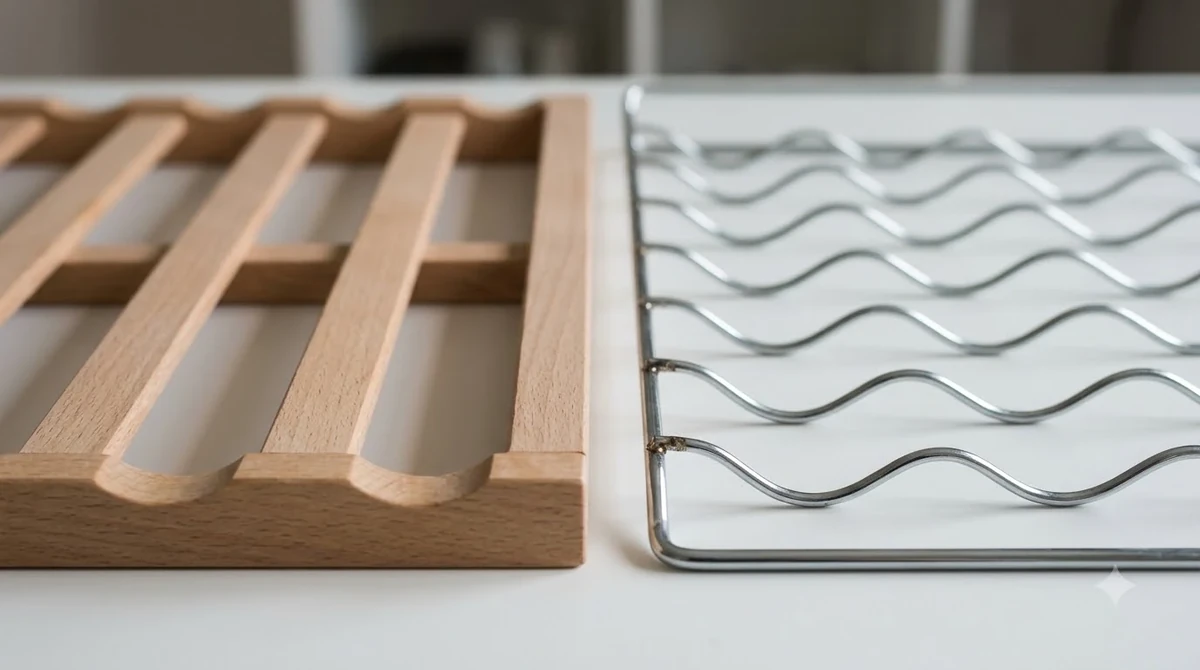
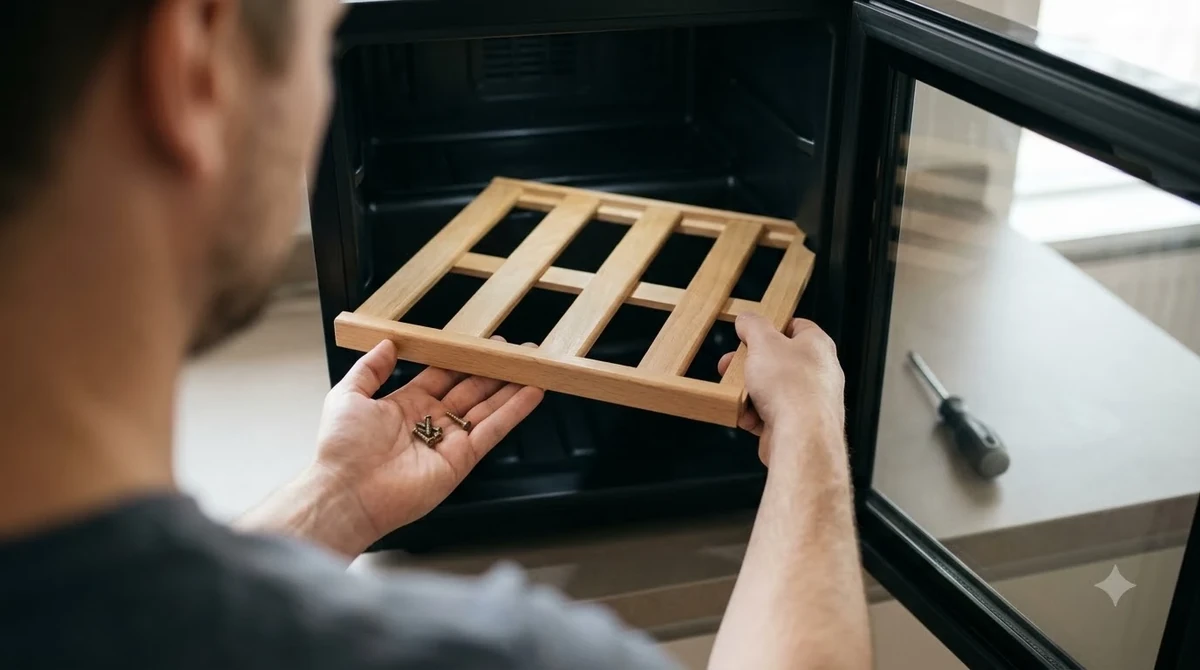
The seven full-extension racks are an important part of the design. Rather than requiring owners to reach deep into a dark cabinet, the sliding racks provide access to stored bottles. Beechwood fronts also give the interior a more traditional wine-storage appearance than an all-metal shelving arrangement.
The exterior combines tinted glass and stainless steel accents. This creates a display-oriented appearance while allowing the collection to remain partially visible. A recessed handle keeps the front relatively streamlined, which can help the unit blend with contemporary kitchen cabinetry.
Temperature adjustment is electromechanical, meaning the PCR06WATSS does not rely on a modern touchscreen interface. Buyers who prefer straightforward physical controls may appreciate that approach. Those expecting connected temperature monitoring, smartphone notifications or advanced electronic programming should investigate the specific appliance documentation rather than assume these features are included.
GE’s official PCR06WATSS product specifications identify the model’s dimensions, capacity, construction and discontinued status. The most important buying consideration is that the product is no longer being manufactured. Its specifications remain useful, but purchasing one today requires additional attention to condition and replacement-part availability.
What Owners Are Likely to Appreciate
The strongest ownership advantages of the PCR06WATSS are its 57-bottle capacity, full-extension storage and built-in-capable design. These features address practical problems for households that want an organized wine collection without dedicating an entire freestanding appliance to the kitchen floor.
Capacity is an obvious advantage. A 57-bottle specification provides room for a mixed collection of everyday bottles, special-occasion wines and bottles intended for longer storage. For someone who regularly buys wine by the case, this is considerably more useful than a compact cooler designed for a small selection.
However, the advertised capacity should be treated as a standard-bottle estimate. Wine bottles do not all share identical dimensions. A traditional 750 ml Bordeaux bottle has a relatively narrow profile, while Burgundy bottles, Champagne bottles and some specialty formats can require more room. A completely full collection of unusually shaped bottles may not fit as neatly as a collection of standard bottles.
The full-extension racks make everyday access more convenient. Pulling a rack outward allows the owner to inspect labels and retrieve a bottle without moving several others. This is particularly useful when organizing wines by grape variety, producer, drinking occasion or vintage.
The beechwood rack fronts also contribute to the appliance’s appearance. Wood details are a familiar feature of wine-storage furniture, and they create a warmer visual contrast against the stainless steel and glass exterior. For a kitchen with wood cabinetry or a dedicated entertaining area, this combination can look more integrated than basic wire shelving.
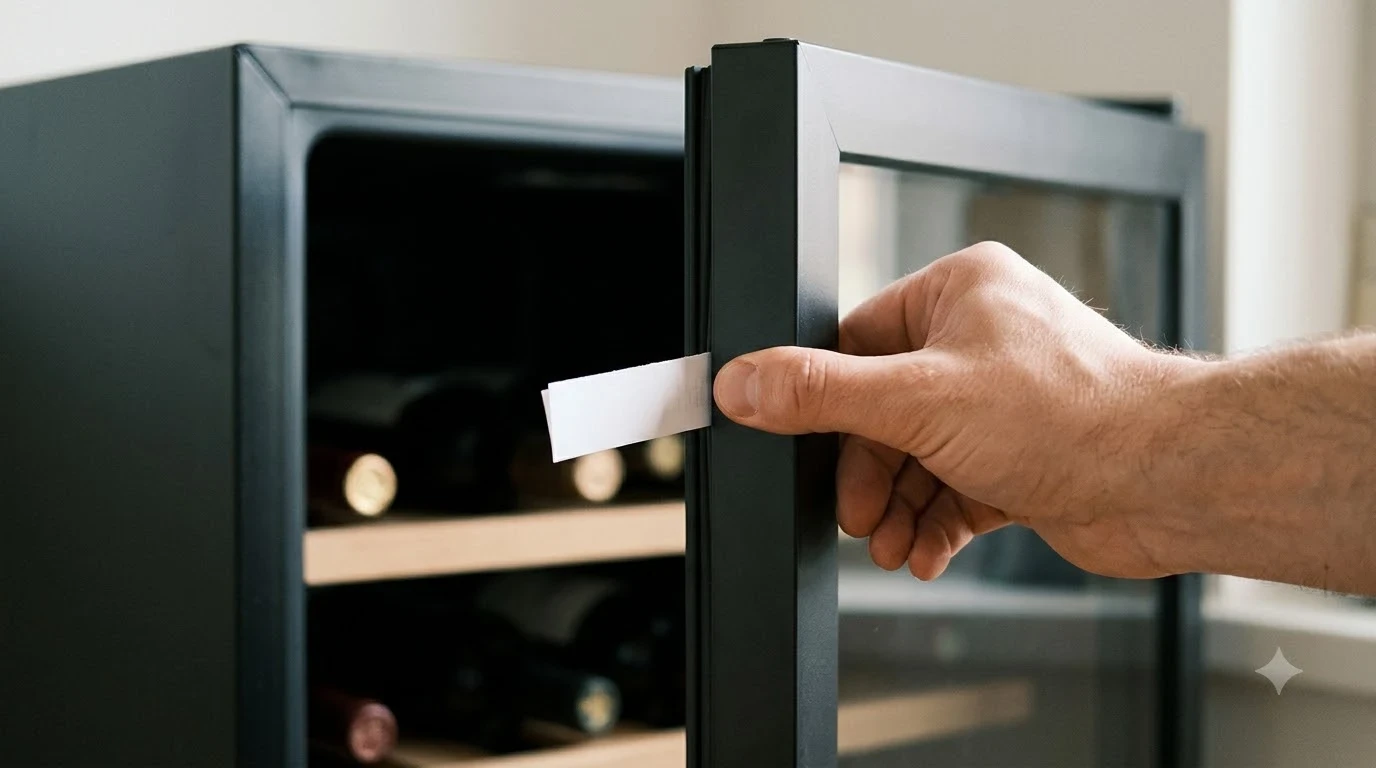
Another advantage is the reversible door. Kitchen layouts differ, and a door that can be configured to open from either side offers more installation flexibility. This matters when the wine center sits beside a dishwasher, cabinet pullout or another appliance. The door direction should be decided before installation rather than after the surrounding cabinetry is complete.
Its undercounter capability is also valuable. A freestanding wine cooler takes up floor space, while a built-in-capable cabinet can become part of a kitchen island, beverage station or bar arrangement. GE describes both built-in and freestanding installation capability for the PCR06WATSS.
For households that entertain regularly, keeping wine in a dedicated location can make serving easier. A bottle of Sauvignon Blanc can be stored separately from Cabernet Sauvignon, and sparkling wine can be reserved for celebrations. The arrangement also helps prevent wine bottles from occupying valuable space in a household refrigerator.
For example, a home bar used for an Aperol Spritz recipe can benefit from having a separate wine-storage area for other bottles and entertaining supplies. The refrigerator is designed for wine rather than general-purpose food storage, so it should remain dedicated to its intended use.
Common Complaints and Practical Limitations
The main disadvantages of the PCR06WATSS are its discontinued status, installation constraints and limited flexibility for unusually large bottles. Its storage capacity is impressive, but buyers should not assume that every aspect of the appliance will suit a modern kitchen or every type of wine collection.
The discontinued status deserves particular attention. GE explicitly identifies this model as no longer being manufactured. That means buyers should not approach it as a currently produced appliance with an assured supply of new inventory. Remaining stock, refurbished units and secondhand appliances may have different conditions and support situations.
A discontinued refrigerator can still be a useful purchase, but the decision depends heavily on the actual unit. A new-old-stock appliance may have little operating history, whereas a used appliance may have years of compressor operation, door openings and temperature adjustments behind it. Cosmetic condition alone does not establish mechanical reliability.
Another limitation is the bottle-capacity figure. The 57-bottle rating is attractive, but it should not be interpreted as a guarantee that 57 bottles of every shape will fit. Wider Champagne bottles and large-format bottles can reduce usable capacity. Collectors who frequently purchase sparkling wines or Burgundy bottles should be especially careful about rack spacing.
The installation dimensions also require careful attention. At 34 1/4 inches high, the unit may suit certain standard-countertop arrangements, but existing cabinets are not always built to identical measurements. Floor height, countertop thickness, leveling and door clearance can affect whether the appliance fits comfortably.
Temperature control is another area where expectations matter. The PCR06WATSS uses electromechanical controls, not an advanced dual-zone interface. Buyers seeking separate temperature settings for red and white wine should not confuse this model with GE products that specifically advertise dual-zone operation.
Wine-storage temperature is also different from ordinary refrigerator temperature. A wine center is intended to maintain suitable wine-storage conditions rather than chill groceries. The distinction matters because a household expecting the appliance to operate like a standard food refrigerator may be disappointed by its intended temperature range and performance characteristics.
Finally, an undercounter installation is less convenient to change than a freestanding setup. Once the cabinet is installed and surrounding trim is completed, removing the appliance for repair or replacement may require more work. This is particularly important for a discontinued model, where future replacement planning deserves attention before the original purchase.
Tip: Before purchasing a used PCR06WATSS, request a photograph of the model and serial-number label, confirm that the compressor cools properly, inspect every rack and door seal, and verify the appliance’s installation requirements. A working demonstration is more valuable than a clean exterior.
Who Should Buy and Who Should Skip This Wine Center
The PCR06WATSS is most appropriate for buyers who need substantial wine capacity and have an existing kitchen opening that matches its dimensions. It is less suitable for shoppers who want a newly manufactured refrigerator, modern connected controls or a small appliance for occasional wine storage.
Who should consider it
Homeowners with a 57-bottle storage requirement: The rated capacity is a strong reason to consider this model. A household with a growing collection can organize a wider selection of wines without relying on several small countertop or freestanding coolers.
Kitchen renovation projects: The built-in-capable construction makes the unit relevant to renovation plans involving a dedicated wine cabinet. Its stainless accents and tinted glass also suit kitchens where appliances have a coordinated appearance.
Collectors who prefer accessible racks: The seven full-extension racks offer a practical arrangement for people who frequently retrieve individual bottles. The beechwood fronts provide a traditional wine-storage detail that can complement other kitchen finishes.
Buyers comfortable with discontinued appliances: Someone who understands the risks of older equipment and can inspect the actual unit may find the PCR06WATSS worth considering. Access to a qualified appliance technician and a clear understanding of replacement-part options are especially important.
Who should skip it
Buyers who want a current production model: GE’s discontinued designation makes this a poor starting point for shoppers who want a straightforward new-appliance purchase with predictable inventory and a current product lineup.
Small households with limited storage needs: A 57-bottle wine center can be excessive for someone who keeps only a handful of bottles. A smaller unit may make more sense if kitchen space is limited.
Collectors needing two independently controlled zones: Buyers who regularly maintain separate storage settings for reds and whites should investigate a model that explicitly specifies dual-zone operation. The PCR06WATSS should not be selected on the assumption that it offers that feature.
Owners of unusually large bottles: People who frequently purchase large-format bottles or Champagne should evaluate actual rack dimensions and usable storage before committing. The rated capacity may not reflect the number of oversized bottles they can accommodate.
Shoppers who need smart-home integration: Those expecting smartphone temperature adjustments, remote alerts or connected inventory features should investigate newer products that explicitly include these functions.
Wine collections also benefit from a little organization. Separate areas for everyday whites, structured reds and sparkling bottles can make selection easier. A dedicated wine cabinet is particularly useful when entertaining with dishes such as a chicken Marsala recipe, where keeping the appropriate wine accessible can simplify meal planning.
How It Compares to Other GE Wine Centers
The PCR06WATSS is not the only GE appliance worth examining for undercounter wine storage. GE has offered smaller wine centers and combination wine-and-beverage units, including the PWS06DSPSS and GVS04BQNSS, but their capacities and intended uses differ.
The most important comparison is between dedicated wine storage and mixed beverage storage. A dedicated wine center prioritizes bottle organization, whereas a combination beverage center offers more flexibility for cans and other drinks. The right choice depends on whether wine storage or general entertaining capacity is the main requirement.
| GE model | Rated wine capacity | Primary purpose | Key distinction |
|---|---|---|---|
| PCR06WATSS | 57 bottles | Dedicated wine storage | Seven full-extension racks |
| PWS06DSPSS | 44 bottles | Dedicated wine storage | Dual-zone temperature control |
| GVS04BQNSS | 31 bottles | Wine and beverage storage | 109-can capacity in beverage configuration |
The PCR06WATSS is the largest of these three in stated bottle capacity. Its 57-bottle rating makes it the more relevant option for a collection that prioritizes wine rather than cans. Its seven sliding racks also provide a dedicated bottle-storage arrangement.
The GE Profile PWS06DSPSS is a different proposition. GE identifies it as a 44-bottle dual-zone wine cooler with built-in or freestanding installation capability. The dual-zone arrangement is particularly relevant to buyers who want separate temperature settings for different wine styles. Its smaller bottle capacity may be a reasonable trade-off for that functionality.
The GVS04BQNSS is more appropriate for households that need a combination appliance. GE lists capacity for 109 cans or 31 wine bottles, making it more versatile for parties and beverage stations. Its purpose differs from that of a dedicated 57-bottle wine center, so comparing the models by bottle capacity alone would be misleading.
GE’s broader wine and beverage center range also includes products with features such as reversible shelves and dual-zone temperature controls. However, features advertised for one model should not automatically be attributed to another. Check the exact model documentation when comparing controls, storage arrangements and installation requirements.
For someone who frequently serves a mixture of cocktails and wine, a combination appliance may be more practical than a dedicated wine cabinet. A beverage station used for a Hugo Spritz recipe, for example, may need space for several kinds of drinks and mixers in addition to wine bottles. The PCR06WATSS makes more sense when dedicated wine capacity is the priority.
Frequently Asked Questions
Does the GE Profile PCR06WATSS have a door lock?
GE’s listed feature set for this model emphasizes the tinted glass door, reversible swing and recessed handle rather than advertising a dedicated door lock. Buyers who require restricted access should verify the actual appliance and its documentation instead of assuming a locking mechanism is included.
Can the GE PCR06WATSS store sparkling wine bottles?
It can potentially accommodate some sparkling wine bottles, but the standard bottle-capacity rating does not guarantee space for every bottle shape. Champagne bottles are often wider than standard Bordeaux bottles, so measure the usable rack space and test the arrangement before loading a collection.
Does the GE Profile PCR06WATSS have automatic defrost?
GE’s available product specifications should be consulted for the exact model configuration rather than assuming a defrost feature from another GE wine center. For a used unit, inspect the interior for excessive frost accumulation and ask whether the previous owner experienced cooling or condensation problems.
Can the wine center be installed beside a dishwasher?
Adjacent installation depends on the kitchen layout, appliance clearances and the heat generated by neighboring equipment. A dishwasher can introduce heat and moisture into the surrounding cabinetry, so the installation plan should account for the manufacturer’s clearance instructions and the available ventilation.
Where can buyers find the PCR06WATSS model number?
GE’s model documentation directs owners to identify their appliance using its product label and serial information. For an existing unit, locate the identification label inside the cabinet and photograph it before requesting service or ordering replacement components. Matching parts to the complete model designation is important because related GE wine centers can have different components.
The GE Profile PCR06WATSS remains an interesting choice for its 57-bottle capacity, seven full-extension racks and built-in-capable construction. Its discontinued status is the major qualification, making careful inspection and installation planning essential. Buyers who find a suitable unit should prioritize mechanical condition, bottle compatibility and available service support; shoppers seeking a current appliance may be better served by comparing GE’s other wine and beverage center models.
More in Model Reviews
 Magic Chef 44 Bottle Wine Cooler Review for Flexible StorageUpdated Nov 21, 2026
 Whynter 164 Bottle Wine Cooler Review: Capacity, Features, and FitUpdated Nov 21, 2026
 Insignia NS WC16BK6 Review: Compact 16-Bottle Wine StorageUpdated Nov 21, 2026
 Wine Enthusiast Electric Blue Omega Review: Opening, Pouring, and Preserving Made EasierUpdated Nov 21, 2026
 Koolatron 20 Bottle Wine Cooler Review: Features, Fit, and PerformanceUpdated Nov 21, 2026
 NewAir AWC 330E Review for Home Wine StorageUpdated Nov 21, 2026