

We may earn a commission when you buy through links on this page, at no extra cost to you. Learn more.
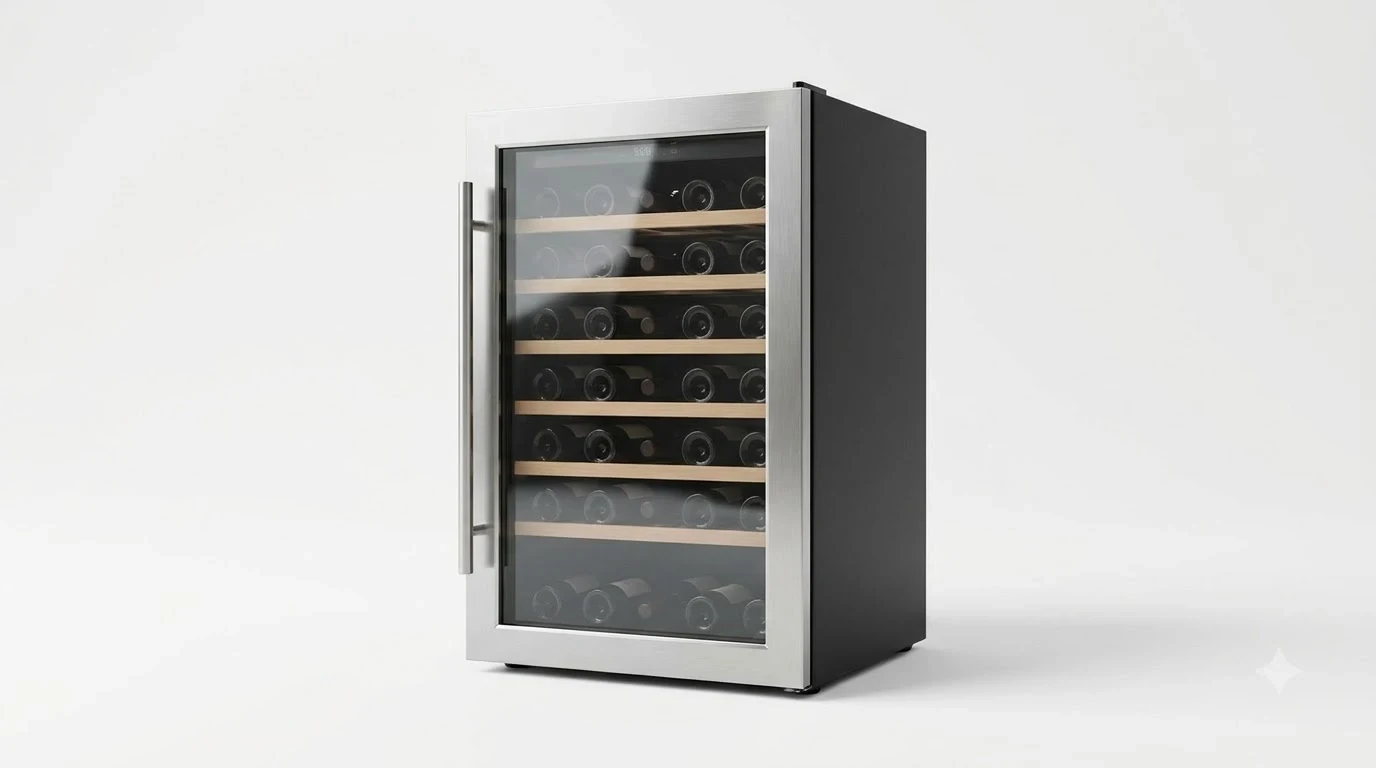
The ge 30 bottle wine fridge, model GWS04HAESS, is a compact 4.1-cubic-foot wine center with room for up to 30 bottles, adjustable temperatures from 41°F to 61°F, and a stainless-trimmed glass door. Its front electronic controls, interior lighting, and flexible installation options make it appealing for smaller wine collections. However, it has just one temperature zone, its door is not reversible, and GE confirms that the model is no longer manufactured, making availability and condition important considerations before purchasing.
The GE Wine Center GWS04HAESS occupies a useful middle ground between a small countertop wine cooler and a larger dedicated wine cellar. Its 30-bottle capacity suits households that regularly keep several bottles of red and white wine available without needing a full-size storage cabinet. The important distinction is that this is a single-zone appliance rather than a dual-zone cellar. Understanding its dimensions, rack arrangement, operating limitations, and discontinued status helps determine whether an existing unit is a sensible purchase.
Specs and Key Features
The GE GWS04HAESS combines a 30-bottle advertised capacity with a compact cabinet, electronic temperature adjustment, and a glass-front design. Its strongest features are straightforward storage, accessible controls, and installation flexibility rather than advanced wine-cellar technology.
GE lists the interior capacity at 4.1 cubic feet, with five removable shelves and six wine racks identified in its product documentation. The exterior measures 33 inches high, 19 inches wide, and 22.5 inches deep when measured with the handle. Those measurements make the unit relatively narrow compared with many larger wine refrigerators, although the door clearance still deserves attention before installation.
The temperature controls are located at the front, allowing adjustments without reaching behind the appliance or opening the door to access a control panel. GE specifies an operating selection range of 41°F to 61°F. That range is useful for keeping different wine styles at suitable serving temperatures, although one setting applies to the entire cabinet.
| Specification | GE GWS04HAESS |
|---|---|
| Model | GWS04HAESS |
| Advertised bottle capacity | 30 bottles |
| Total capacity | 4.1 cubic feet |
| Height | 33 inches |
| Width | 19 inches |
| Depth with handle | 22.5 inches |
| Depth with door open 90 degrees | 38.625 inches |
| Temperature range | 41°F–61°F |
| Temperature zones | 1 |
| Removable shelves | 5 |
| Wine racks | 6 |
| Interior lighting | Yes |
| Door | Glass with stainless steel trim |
| Defrost system | Automatic |
| Manufacturing status | Discontinued |
These specifications distinguish the GE from basic beverage refrigerators. The interior is arranged for wine bottles rather than being a completely open cabinet with generic wire shelves. The contoured storage arrangement helps keep bottles positioned horizontally, an important consideration for collections containing wines with natural cork closures.
The glass door and stainless steel trim give the appliance a more finished appearance than a plain black beverage cooler. Interior lighting also makes it easier to identify bottles without repeatedly removing them from the racks. However, the visible glass front means placement matters. A location exposed to direct sunlight is not a good choice for wine storage, even with tinted glass.
Another important specification is the installation flexibility. GE’s documentation identifies the appliance as built-in capable and suitable for freestanding use. It also carries ADA and UFAS compliance designations. Those details make it particularly interesting for compact kitchen layouts, but installation dimensions and door movement still need to be checked rather than relying on the advertised 19-inch width alone.
For additional manufacturer information, consult the official GE GWS04HAESS product page, which identifies the model and confirms its discontinued manufacturing status.
What Owners Like
Owner feedback points to three recurring advantages: temperature control, appearance, and practical storage. These strengths make the GE attractive as a compact household wine refrigerator, particularly for people who value a finished kitchen appearance and uncomplicated controls.
Temperature control is one of the more frequently praised features in the Best Buy review summaries. The retailer reports that customers appreciate the unit’s ability to maintain their selected temperature. Its electronic controls are also easier to use than a basic dial that provides only approximate temperature settings.
That convenience matters for households keeping several wine styles. A collection containing Sauvignon Blanc, Chardonnay, Pinot Noir, and Cabernet Sauvignon benefits from a predictable storage environment. Although the GE cannot provide separate temperatures for different bottles, its adjustable control gives owners a useful degree of flexibility.
The appearance is another recurring positive. The glass door makes stored bottles visible, while the stainless steel trim and handle give the refrigerator a coordinated look in contemporary kitchens. Its relatively narrow footprint also makes it easier to consider for smaller spaces than a wide wine cabinet.
Home Depot customer feedback includes positive comments about the fit, appearance, and shelf arrangement. One owner also described using the appliance for bottles stored horizontally and vertically. This is useful feedback because wine collections rarely contain identical bottles throughout their entire inventory.
The storage arrangement is particularly practical for a household that purchases wine regularly rather than collecting large numbers of expensive bottles for long-term aging. Five removable shelves provide some flexibility, while the six wine racks support the advertised capacity. The configuration is more purposeful than a refrigerator with ordinary beverage shelves.
Best Buy’s review summary also highlights noise level as a frequently praised feature. That is encouraging for someone considering a kitchen or dining-area installation. Nevertheless, sound perception varies with room acoustics, floor level, cabinet placement, and the condition of an individual appliance. A secondhand unit should be inspected while operating rather than judged entirely by other owners’ experiences.
The combination of relatively compact dimensions and a 30-bottle advertised capacity is perhaps the most compelling feature. It offers more dedicated wine storage than a small countertop cooler while avoiding the footprint of a larger cellar.
For readers comparing different wine refrigerator sizes, the wine appliance model reviews section provides a useful starting point for evaluating capacity, layout, and practical features across different appliances.
Common Complaints
The GE GWS04HAESS has several limitations that deserve attention, particularly its single-zone cooling system, fixed door swing, and dependence on standard bottle dimensions. Its discontinued status adds another consideration for anyone shopping for an older or previously owned unit.
The biggest functional limitation is the single temperature zone. The appliance cannot maintain one temperature for white wines and another for red wines simultaneously. The selected temperature applies to the entire interior, which means owners must decide whether they prefer a compromise storage temperature or a setting suited to one particular category.
This is not necessarily a serious drawback for someone who stores wine and adjusts serving temperatures shortly before opening bottles. It becomes more restrictive for households that want white wines ready to serve directly from the cooler while keeping reds at a different temperature.
Another concern is the door swing. GE’s specification document identifies the door as non-reversible, and a GE representative confirmed this limitation in the Best Buy question-and-answer section. This can be a significant problem in a narrow kitchen where adjacent cabinetry, a wall, or another appliance restricts the direction in which the door can open.
The glass door also needs sensible placement. A customer question about UV protection received a response indicating that the glass is tinted but remains sufficiently clear that direct sunlight should be avoided. Tinted glass should not be treated as complete protection from light exposure.
Capacity is another area where expectations need to remain realistic. The 30-bottle figure is an advertised maximum, not a guarantee that every combination of bottles will fit. Standard Bordeaux-style bottles are easier to arrange than unusually wide Champagne bottles, large Burgundy bottles, or oversized specialty formats.
Some Home Depot feedback also mentions an unusual lower-rack arrangement. Another owner described the appliance as louder than expected. These comments do not establish that every unit has the same problems, but they are useful reminders to inspect the rack movement and listen for excessive mechanical noise before buying a used refrigerator.
There is also a practical distinction between an appliance that can technically accommodate a bottle and one that can store it comfortably. A larger bottle may fit only after removing a shelf or changing the normal arrangement. Doing that repeatedly reduces the amount of usable storage and can make access to other bottles inconvenient.
Finally, GE’s discontinued-product designation is important. Replacement parts, service arrangements, and remaining retail inventory may vary. An attractive used unit is not automatically a good purchase if its cooling performance is inconsistent or its door hardware and electronic controls need attention.
Who Should Buy and Who Should Skip
The GE 30-bottle wine center is best suited to households with moderate wine collections, limited installation space, and a preference for simple temperature controls. It is less suitable for serious collectors who need two independently controlled zones, extensive aging storage, or maximum flexibility for unusual bottle shapes.
Who should consider it
People who regularly keep approximately 10 to 25 bottles at home are a natural audience. The 30-bottle advertised capacity provides some room for additional purchases, while the compact cabinet avoids the size of a large dedicated cellar. It can also suit someone who wants a designated place for entertaining wines rather than filling a kitchen refrigerator with bottles.
Home cooks may appreciate the ability to keep a small selection ready for meals and gatherings. A chilled white wine can accompany seafood, while a medium-bodied red can be stored for dishes such as chicken Marsala. The refrigerator is also convenient for maintaining a small selection of sparkling wine for an Aperol Spritz recipe gathering, although the appliance’s temperature setting applies to every bottle inside.
People with suitable under-counter spaces may also find the design attractive. The manufacturer’s built-in-capable designation provides more placement options than a unit designed exclusively for freestanding use. However, the actual opening, electrical connection, door clearance, and surrounding cabinetry must be checked before installation.
Who should skip it
Collectors who regularly purchase expensive Burgundy, Champagne, or other unusually shaped bottles should look for a refrigerator designed around their specific bottle requirements. The GE’s advertised capacity is most useful when the collection contains relatively standard wine bottles.
People who need separate red and white wine temperatures should also consider a dual-zone model. The GWS04HAESS offers only one zone, so it cannot independently maintain different conditions on separate shelves.
Another group that should be cautious is anyone planning to install the appliance beside a wall on the wrong side of the door hinge. Since the door cannot be reversed, an otherwise suitable cabinet opening may still be impractical.
Finally, buyers looking for a brand-new unit with current production support should be aware that GE has discontinued this model. Remaining stock and used examples may be available through individual retailers or resale channels, but availability and condition are not guaranteed.
Tip: Before purchasing a used GWS04HAESS, run it long enough to assess temperature stability, listen for unusual compressor or fan noise, inspect the door seal, and test every shelf. Confirm that the electronic controls respond correctly and that the door opens comfortably in the intended location.
How It Compares to Alternatives
The GE GWS04HAESS makes the most sense when compact dimensions and straightforward wine storage matter more than multiple cooling zones. Comparing it with other refrigerator categories helps clarify whether its 30-bottle layout provides the right balance of space and functionality.
A small countertop wine cooler typically has a lower capacity and occupies less floor space. These units are convenient for apartments and occasional entertaining, but they may require more frequent bottle rotation if a household regularly buys wine. The GE offers a larger advertised capacity and a more substantial cabinet installation.
A dual-zone wine refrigerator is a better match for households that want red and white wines maintained at different temperatures. The difference is particularly useful for people who entertain frequently and prefer chilled whites ready for serving while keeping reds at a separate setting. The GE cannot reproduce that arrangement because its entire cabinet shares one temperature setting.
A larger wine cellar is more suitable for collectors who keep substantial inventories. These appliances often provide more storage room and may offer shelving designed for different bottle formats. Their disadvantages are greater space requirements and the need to plan installation more carefully.
The GE sits between these categories. Its 4.1-cubic-foot capacity and 19-inch width make it more substantial than a compact countertop unit without requiring the space of a large wine cellar.
Choosing the right cooling arrangement
Think about how wine is actually consumed in the household. Someone who mostly buys one or two wine styles at a time may find a single-zone refrigerator perfectly adequate. A household that regularly serves sparkling wine, crisp whites, full-bodied whites, and several styles of red may benefit from independently controlled sections.
Serving temperature also differs from long-term storage temperature. For example, sparkling wines are generally served around 40°F to 50°F, light whites and rosé around 45°F to 50°F, full-bodied whites around 50°F to 55°F, and light reds around 55°F to 60°F. The GE’s 41°F-to-61°F adjustment range covers much of this serving-temperature territory, but the selected temperature is shared by all stored bottles.
That means owners may need to allow certain bottles to warm slightly before serving or chill others separately. It is a manageable compromise for casual entertaining, but less convenient for someone who wants every bottle at its preferred serving temperature immediately.
For food pairing, a Sauvignon Blanc stored in the cooler can work particularly well with acidic dishes and seafood, while Pinot Noir offers a lighter red option for poultry. A more structured Cabernet Sauvignon generally benefits from a warmer serving temperature than a crisp white. The refrigerator can hold these wines together, but it cannot optimize the serving temperature of each simultaneously.
The same practical distinction applies to sparkling cocktails. An Hugo Spritz recipe calls for chilled ingredients, but a single-zone wine refrigerator may not be the ideal dedicated beverage station if its temperature is being selected primarily for still wine.
For anyone considering the GE today, the comparison should also include product age and service availability. A newer refrigerator with comparable capacity and a current manufacturer warranty may provide better long-term value than an older discontinued appliance, even if the GE’s original design remains appealing.
Frequently Asked Questions
Is the GE GWS04HAESS still being manufactured?
No. GE identifies the GWS04HAESS as a model that is no longer being manufactured. Its original product page and support information remain useful for identifying specifications and documentation. Replacement availability depends on remaining inventory and the used-appliance market.
Can the GE wine cooler store beer and other beverages?
It is primarily designed around wine-bottle storage rather than a general beverage-can layout. A Best Buy customer reported accommodating both 750 ml and 1.5-liter bottles. However, beverage cans and differently shaped containers can reduce the usefulness of the contoured wine racks.
Does the GE 30-bottle wine refrigerator have a door lock?
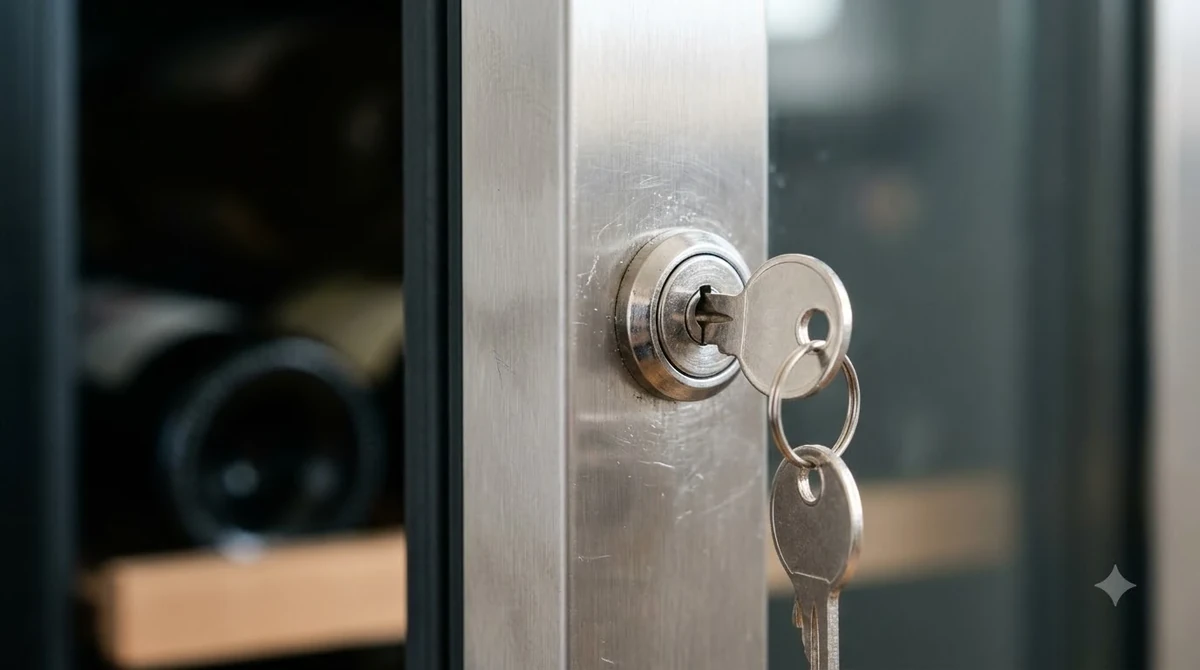
The product documentation identifies a door lock as one of the convenience features. This can be useful in shared household spaces or areas where access to stored beverages needs to be restricted. Buyers should verify that the lock and its key are present when purchasing a previously owned unit.
Can the GE wine center operate in a cold garage?
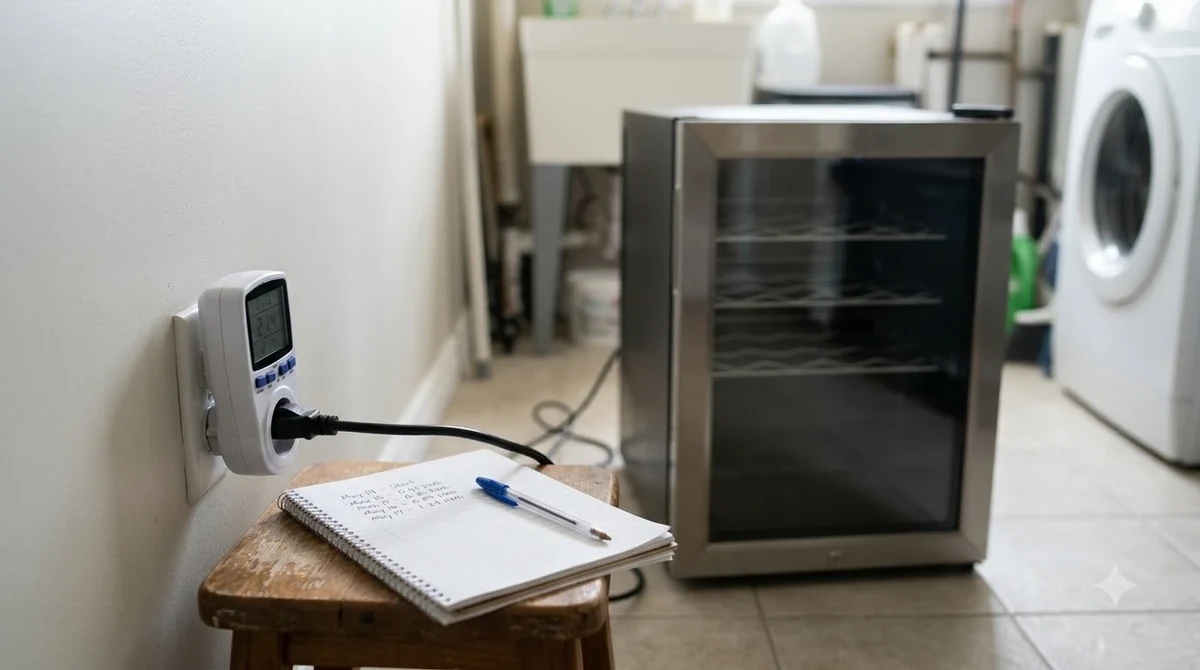
GE guidance provided through Best Buy specifies an acceptable ambient installation range of 55°F to 90°F. A garage that drops below 55°F can therefore create operating problems even if the appliance itself is set to a higher temperature. A temperature-controlled indoor location is a more dependable choice.
What electrical supply does the GE GWS04HAESS require?
The product documentation identifies a 120-volt electrical supply. The installation should use an appropriate grounded household outlet rather than an improvised extension arrangement. Consult the model’s installation instructions for the complete electrical and placement requirements before connecting the appliance.
The GE GWS04HAESS remains an interesting compact wine refrigerator because its 30-bottle capacity, front electronic controls, and installation flexibility address the needs of many everyday wine drinkers. Its single-zone design and discontinued status are meaningful compromises, so condition, fit, and service availability should guide any purchase. For someone who finds a properly functioning example with suitable installation dimensions, it can still provide practical wine storage without requiring a large cellar.
More in Model Reviews
 Magic Chef 44 Bottle Wine Cooler Review for Flexible StorageUpdated Nov 21, 2026
 Whynter 164 Bottle Wine Cooler Review: Capacity, Features, and FitUpdated Nov 21, 2026
 Insignia NS WC16BK6 Review: Compact 16-Bottle Wine StorageUpdated Nov 21, 2026
 Wine Enthusiast Electric Blue Omega Review: Opening, Pouring, and Preserving Made EasierUpdated Nov 21, 2026
 Koolatron 20 Bottle Wine Cooler Review: Features, Fit, and PerformanceUpdated Nov 21, 2026
 NewAir AWC 330E Review for Home Wine StorageUpdated Nov 21, 2026