

We may earn a commission when you buy through links on this page, at no extra cost to you. Learn more.
The fresh vine wine price typically falls around $10 to $25 per 750 ml bottle, depending on the variety, retailer, and availability. Fresh Vine positions its core wines in the premium-but-accessible category, with a stated list-price range of $15 to $25 per bottle. Retail listings can fall below that range, so comparing individual varieties and current retailer selections is the most useful way to assess value.
Fresh Vine Wine appeals to shoppers interested in California wines with a lower-carbohydrate, lower-calorie positioning and familiar grape varieties. Its lineup has included Cabernet Sauvignon, Pinot Noir, Chardonnay, Sauvignon Blanc, Rosé, and Sparkling Rosé. Understanding the price differences between these bottles, the brand’s positioning, and the availability of particular vintages can help shoppers decide whether a Fresh Vine bottle fits their budget.
Who This Fresh Vine Wine Price Guide Is For
This guide is for wine shoppers who want to understand what a bottle of Fresh Vine should cost before purchasing it. It is particularly useful for people comparing California Cabernet Sauvignon, Pinot Noir, Chardonnay, and rosé wines in the accessible premium category.
Fresh Vine occupies an interesting position between everyday supermarket wine and more expensive Napa Valley selections. The company has described its core offerings as premium wines intended for consumers seeking lower-carbohydrate and lower-calorie options. Its corporate filings place the intended core list price between $15 and $25 per bottle, providing a useful starting point for evaluating retailer listings.
Shoppers researching the Fresh Vine Wine lineup should also consider which grape variety suits their preferences. A Cabernet Sauvignon buyer may prioritize body and tannin, while someone looking for a refreshing summer bottle may prefer Sauvignon Blanc or Rosé. Those differences matter because comparing two wines solely by their shelf prices does not necessarily reveal which offers better value.
Readers comparing the brand’s nutritional positioning can also consult the guide to Fresh Vine Wine alcohol content. Alcohol percentage is another useful comparison point because it can differ between wine styles and influence how a bottle fits a particular occasion.
The guide is also helpful for shoppers who have encountered different Fresh Vine prices at online retailers. Listings may reflect different vintages, inventory situations, bottle selections, or regional availability. A bottle that appears inexpensive on one website may not be available for delivery in another state.
Key Factors to Compare When Shopping
The most useful comparison starts with bottle size, grape variety, retailer, and availability. Fresh Vine’s commonly listed bottles are 750 ml, while its different varieties offer distinct drinking experiences and may carry different retail prices.
| Wine or comparison | Typical price reference | What to consider |
|---|---|---|
| Fresh Vine core lineup | About $15–$25 | Company-stated list-price positioning |
| Retailer-listed still wines | About $10–$21 | Displayed ReserveBar portfolio range |
| Cabernet Sauvignon | Within the broader portfolio range | Body, tannin, oak, and food pairing |
| Pinot Noir | Within the broader portfolio range | Red-fruit character and lighter structure |
| Chardonnay | Within the broader portfolio range | Texture, acidity, and oak influence |
| Sauvignon Blanc | Within the broader portfolio range | Freshness, acidity, and citrus character |
| Rosé | Within the broader portfolio range | Style, freshness, and serving occasion |
| Sparkling Brut Rosé | Within the broader portfolio range | Carbonation and sparkling-wine style |
The company’s stated core list-price range of $15 to $25 comes from its SEC filing, while the approximately $10 to $21 retail range reflects the displayed 750 ml Fresh Vine collection at ReserveBar. These are different pricing references rather than competing claims: a company’s intended list price does not guarantee that every retailer will display the same amount. Prices vary by state and retailer, and delivery fees or local taxes can change the final purchase cost.
For a practical retail comparison, ReserveBar’s Fresh Vine collection provides a useful overview of several varieties sold through one retailer. The selection includes Cabernet Sauvignon, Chardonnay, Pinot Noir, Rosé, Sauvignon Blanc, and Sparkling Brut Rosé. Comparing those options together helps shoppers understand how the product range is positioned rather than relying on a single bottle listing.
Retail availability matters as much as the displayed price
Wine.com has also carried Fresh Vine products, although its collection has included sold-out listings from several vintages. Its catalog demonstrates why shoppers should distinguish a historical listing from an available bottle. A previous retail price can provide context, but it should not be treated as a guaranteed current purchase price.
Another important comparison is bottle size. A standard 750 ml bottle provides approximately five 5-ounce servings. This makes the bottle price easier to evaluate against other wines when the serving size is consistent. A larger-format bottle, if encountered, should be compared using its volume rather than its shelf price alone.
Tip: Compare the same grape variety, bottle size, and vintage whenever possible. A Fresh Vine Cabernet Sauvignon should be compared with another Cabernet Sauvignon, not directly with a lighter Pinot Noir or sparkling rosé.
Step-by-Step: How to Find the Right Bottle
A straightforward buying process can prevent shoppers from overpaying or choosing a variety that does not suit their preferences. Start with the style of wine you want, then compare available retailers and the final cost of the bottle.
-
Choose your preferred wine style.
Decide whether you want a red, white, rosé, or sparkling wine. Cabernet Sauvignon and Pinot Noir are different red-wine styles, while Chardonnay and Sauvignon Blanc offer contrasting white-wine profiles. Selecting the variety first makes the price comparison more meaningful.
-
Establish a realistic budget.
Use the company’s stated $15 to $25 core list-price range as a reference point. Retailer listings can fall outside that range, so treat it as a benchmark rather than a guaranteed checkout amount.
-
Compare at least two retailers.
Look at the Fresh Vine collection on ReserveBar and the brand’s catalog on Wine.com. Check whether the specific wine is available rather than relying on an old product page or an out-of-stock listing.
-
Confirm the bottle size.
Most of the listed Fresh Vine selections are standard 750 ml bottles. Make sure the product you are comparing has the same volume, especially when calculating the cost per serving.
-
Review the vintage and product details.
Wine.com has listed multiple Fresh Vine vintages, including 2018, 2019, 2020, and 2021 bottles. Older listings do not necessarily indicate current inventory, so distinguish the vintage shown on a product page from the wine currently available to purchase.
-
Check shipping eligibility.
Wine shipping rules and retailer delivery coverage vary by state. Confirm that the retailer can deliver the bottle to your destination and review shipping charges before deciding which listing offers the better overall value.
-
Compare the final checkout cost.
Include applicable shipping charges and taxes in the comparison. A lower displayed bottle price may not produce the lowest total cost if delivery expenses are higher.
This process is particularly helpful when buying multiple bottles for a dinner party or stocking a home wine collection. It also reduces the risk of confusing an advertised price for an older vintage with the cost of a current release.
Fresh Vine Wine Types and Styles Explained
Fresh Vine’s portfolio has covered several familiar grape varieties, making it possible to choose according to taste rather than price alone. The company’s SEC filing identifies seven varieties, including a limited Reserve Napa Cabernet Sauvignon, while retail listings show a selection of its standard wines.
Cabernet Sauvignon
Cabernet Sauvignon is the natural starting point for shoppers who enjoy fuller-bodied red wines. It generally has high tannin, which creates a drying sensation in the mouth and gives the wine structure. Fresh Vine Cabernet Sauvignon is described by H-E-B as medium-bodied, with blackberry, dark cherry, plum, vanilla, and supple tannins.
That combination makes Cabernet Sauvignon a practical choice for grilled beef, lamb, burgers, and other dishes with substantial savory flavors. Fat and salt can soften the perception of tannin, making the wine feel more balanced alongside richer food. For shoppers interested in a fuller red, this variety offers a more structured alternative to Pinot Noir.
Pinot Noir
Pinot Noir typically has lower to medium tannin and relatively high acidity compared with Cabernet Sauvignon. Its lighter structure and red-fruit character make it suitable for people who want a red wine that does not feel as heavy.
It works well with roast chicken, mushroom dishes, pork, and salmon. Shoppers comparing Pinot Noir with Cabernet Sauvignon should think about their preferred body and tannin level rather than assuming that one variety represents a better value simply because its shelf price is lower.
Chardonnay
Chardonnay generally has medium acidity and can range from crisp and citrus-driven to rounder, richer styles depending on its winemaking. Oak influence can add vanilla, spice, and a creamier impression, while stainless-steel fermentation tends to preserve a fresher fruit profile.
Chardonnay is a versatile option for roast poultry, creamy pasta, and grilled seafood. It is a useful choice for shoppers who want a white wine with more body than many light, aromatic whites.
Sauvignon Blanc
Sauvignon Blanc is known for high acidity and fresh citrus, green-fruit, and herbal characteristics. It is particularly suitable for shoppers who enjoy lively white wines rather than softer, rounder styles.
Pair it with goat cheese, salads, grilled vegetables, and seafood with citrus-based sauces. Its acidity is also useful with foods that have noticeable acidity themselves because a wine should generally have equal or higher acidity than the accompanying dish.
Rosé and Sparkling Rosé
Rosé offers a different option for casual meals, outdoor gatherings, and warm-weather drinking. Its flavor can range from delicate red berries to more pronounced strawberry and citrus notes, depending on the blend and production approach.
Sparkling Rosé adds carbonation, making it suitable for celebrations, appetizers, and lighter party menus. Fresh Vine’s retail collection has included a Sparkling Brut Rosé, so shoppers should distinguish it from the still Rosé when comparing the bottle price.
Reserve Napa Cabernet Sauvignon
The limited Reserve Napa Cabernet Sauvignon is another variety identified in the company’s portfolio description. It is distinct from the standard Cabernet Sauvignon in name and positioning, so it should not automatically be compared as though the two are identical releases.
Availability is an important consideration with a limited wine. A retailer may have a standard Cabernet Sauvignon but not the Reserve bottling. Shoppers specifically looking for the Reserve selection should verify that the product listing describes the correct wine before purchasing.
Common Mistakes When Comparing Fresh Vine Prices
The biggest mistake is treating every Fresh Vine listing as the same product. Varieties, vintages, bottle formats, and retailer availability can all affect how a price should be interpreted.
One common error is comparing a standard Cabernet Sauvignon with a Sparkling Brut Rosé. Both may belong to the same brand, but they serve different purposes and involve different production styles. A sparkling wine should be evaluated against other sparkling wines, while a still red should be compared with similar red-wine selections.
Another mistake is assuming that the company’s stated list-price range represents every current retailer’s shelf price. Fresh Vine’s corporate filing describes core wines in the $15 to $25 category, but ReserveBar has displayed a broader range of lower retail listings. The two figures describe different pricing contexts, and neither guarantees the price a shopper will find in every state.
It is also easy to overlook inventory status. Wine.com has shown Fresh Vine listings marked sold out, including multiple older vintages. A historical price on an unavailable bottle should not be used as proof that the same wine can still be purchased at that amount.
Shoppers should also avoid treating low-carbohydrate positioning as a substitute for checking the specific wine’s nutritional information. H-E-B publishes nutritional figures for its Fresh Vine Cabernet Sauvignon, including 0.4 grams of sugar, 3.9 grams of carbohydrates, and 103 calories. Those figures are specific to the listed Cabernet Sauvignon and should not automatically be applied to every other variety.
Finally, do not assume that a lower shelf price always means better value. The vintage, storage history, delivery cost, and intended drinking occasion all matter. A slightly more expensive bottle that suits the meal and the drinker’s taste may be a more satisfying purchase than a cheaper alternative that does not fit the occasion.
Fresh Vine Wine Care and Storage Tips
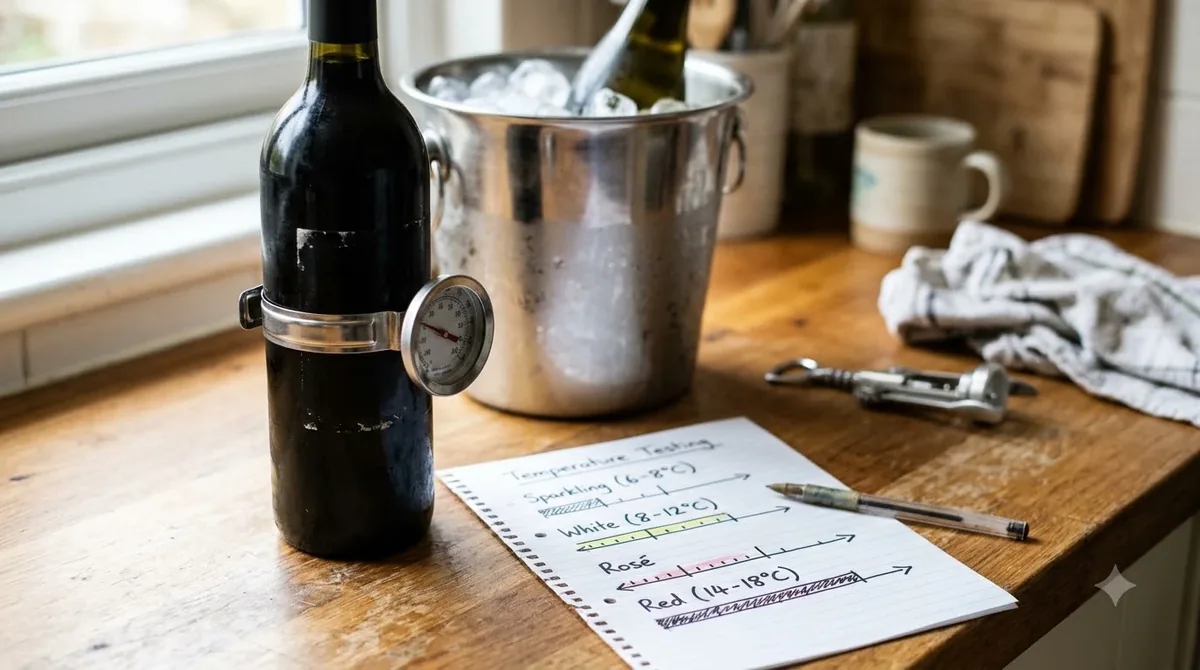
Once the bottle has been purchased, proper storage and serving can help preserve its intended character. Fresh Vine’s red, white, rosé, and sparkling styles benefit from different serving temperatures, so avoid treating every bottle as though it should be served at the same temperature.
Store unopened wine in a cool, dark location with a reasonably consistent temperature. A storage temperature near 55°F is a useful target for bottles intended for short- or longer-term storage. Avoid direct sunlight, hot kitchens, and repeated temperature fluctuations, which can affect wine quality.
For bottles with traditional cork closures, horizontal storage helps keep the cork from drying out. Screw-cap bottles do not require the same cork-moisture consideration, although they still benefit from cool and stable conditions. Wine.com’s Fresh Vine catalog identifies screw caps on several Chardonnay and Pinot Noir listings.
Recommended serving temperatures
- Cabernet Sauvignon: Serve around 60–65°F for a fuller-bodied red.
- Pinot Noir: Serve around 55–60°F to preserve freshness and fruit character.
- Chardonnay: Serve around 50–55°F, particularly for a fuller white style.
- Sauvignon Blanc: Serve around 45–50°F for a refreshing experience.
- Rosé: Serve around 45–50°F.
- Sparkling Rosé: Serve around 40–50°F to retain its refreshing character.
Serving temperature can make a noticeable difference. An overly warm Cabernet Sauvignon may seem more alcoholic, while an excessively cold white wine can lose some of its aromatic character. Allow refrigerated bottles a little time to warm before pouring if they seem too cold.
After opening
Once opened, still wines generally keep for approximately three to five days in the refrigerator when properly recorked or sealed. Sparkling wines usually retain their best quality for around one to three days when closed with a suitable sparkling-wine stopper.
For the best experience, return unfinished bottles to the refrigerator promptly, including red wines. Bring the remaining wine back toward its preferred serving temperature before drinking again. Sparkling Rosé deserves particular attention because its carbonation gradually dissipates after opening.
These simple practices help protect the value of the purchase. A well-stored bottle is more likely to deliver the expected fruit, freshness, and balance than one left in a warm room or exposed to sunlight.
Frequently Asked Questions
Is Fresh Vine Wine made in Napa Valley?
Fresh Vine’s corporate filing identifies Napa, California, as the production and bottling location for its listed wines. Its Cabernet Sauvignon product description also identifies Napa Valley as the wine’s origin. This provides a useful distinction from California wines that carry a broader statewide designation without a Napa-specific production identity.
Who is the winemaker associated with Fresh Vine Wine?
Fresh Vine’s corporate filing identifies Jamey Whetstone as its named winemaker. His association is a distinguishing part of the brand’s positioning in the accessible premium wine category. Shoppers interested in winemaking credentials can use this information when comparing the brand with other California wine producers.
Does Fresh Vine Wine use screw caps?
Yes, some Fresh Vine products have been listed with screw-cap closures. Wine.com’s catalog specifically identifies screw caps on several Chardonnay and Pinot Noir listings. Closure type can vary between individual products, so it should not be assumed that every bottle in the collection uses the same closure.
How many glasses are in a standard Fresh Vine bottle?
A standard 750 ml bottle provides approximately five servings when poured in 5-ounce glasses. That makes it suitable for a small dinner gathering or several individual servings over more than one occasion. The actual number of glasses depends on the pour size and whether the wine is served in smaller tasting portions.
Is Fresh Vine Cabernet Sauvignon aged in oak?
H-E-B describes its Fresh Vine Cabernet Sauvignon as aged for one year in French oak, with 25% new oak. The retailer also describes stainless-steel fermentation before the aging stage. This combination provides useful context for understanding the wine’s vanilla and spice character alongside its dark-fruit profile.
Fresh Vine Wine offers several familiar California varieties in a price category aimed at shoppers seeking accessible premium wine. A reasonable starting point is the company’s stated core list-price range, followed by a comparison of current retailer listings, bottle sizes, and availability. Choose the variety that suits your taste and occasion, and compare the complete purchase cost before making a final decision.
More in Wine Brands
 Underwood Wine Price: Compare Bottles, Cans, and Pack SizesUpdated Nov 21, 2026
 Zenato Wine Price: Compare Styles and Choose the Right BottleUpdated Nov 21, 2026
 Zuccardi Wine Price: Compare Bottles and Find the Right RangeUpdated Nov 21, 2026
 Yellow Tail Moscato Review: Taste, Sweetness and Serving TipsUpdated Nov 21, 2026
 Wolf Blass Yellow Label Review: Choose Your Best StyleUpdated Nov 21, 2026
 Wolffer Estate Rose Review: Choose the Right Bottle for Your TableUpdated Nov 21, 2026