

We may earn a commission when you buy through links on this page, at no extra cost to you. Learn more.
The fomup beverage cooler is a practical option for households that want dedicated drink storage, with the 17-inch FM17S offering room for up to 126 standard cans, adjustable shelves, and digital temperature control. Its 37°F to 65°F operating range, glass door, interior lighting, and compact footprint make it appealing for kitchens, entertainment areas, and home bars. However, buyers should understand its ventilation requirements, countertop or freestanding installation limitations, and the difference between beverage storage and proper long-term wine storage before choosing this refrigerator.
FoMup offers several refrigerator configurations rather than one universal beverage cooler. The FM17S is the smaller 126-can model, while the FM24S provides approximately 200-can capacity and a wider cabinet. This review focuses primarily on the FM17S because its compact dimensions make it a relevant choice for everyday household beverage storage. It also examines the larger FM24S where the differences affect a buying decision. Specifications and operating details are based on published product information and available instruction manuals, rather than independent laboratory testing.
Specs and Key Features: FM17S Capacity, Temperature, and Design
The FoMup FM17S combines a 126-can interior, digital temperature adjustment, and three adjustable shelves in a cabinet approximately 17 inches wide. Its main strengths are flexible drink organization, a relatively narrow footprint, and a temperature range that accommodates many commonly refrigerated beverages.
| Specification | FoMup FM17S |
|---|---|
| Model | FM17S |
| Advertised capacity | 126 standard cans |
| Interior volume | 3.2 cubic feet |
| Width | 16.92 inches |
| Depth | 18.89 inches |
| Height | 29.76 inches |
| Published weight | 55 pounds |
| Temperature range | 37°F to 65°F |
| Number of shelves | 3 adjustable wire shelves |
| Electrical requirement | 115V AC |
| Annual energy consumption | 145 kWh |
| Defrost system | Frost-free |
| Installation configuration | Countertop or freestanding |
| Door | Glass with lock |
| Published noise specification | Below 38 dB |
The capacity figure refers to standard beverage cans, not an equivalent number of wine bottles or large specialty containers. Actual usable capacity depends on the combination of can diameters, bottle heights, shelf positions, and the space needed for air circulation. A refrigerator filled entirely with uniform soda cans will use its interior differently from one holding tall beer bottles, sparkling water, and several oversized drink containers.
Three adjustable stainless steel wire shelves provide the main organizational flexibility. Guardrails help keep containers from sliding forward when shelves are moved or loaded. The glass door makes it easier to see available drinks without repeatedly opening the refrigerator, while the blue interior LED lighting improves visibility in a dim entertainment space. These features are useful for a home bar where appearance and convenient access matter alongside cooling.
The digital control panel allows temperature changes in one-degree increments. Its specified operating range extends from 37°F to 65°F, giving buyers considerable flexibility for different drinks. The unit also has a lockable door and temperature memory, while the frost-free system reduces routine defrosting work. The FoMup FM17S instruction manual provides further details about its controls, installation, and operating specifications.
One distinction deserves attention: the FM17S is a beverage refrigerator, not a dedicated wine cellar. Its broad temperature range is useful for chilling bottles before serving, but its published specifications do not establish the humidity management or specialized storage conditions that a serious wine collection may require.
What Owners Like About the 126-Can Storage and Everyday Features
The most appealing characteristics of the FM17S are its 126-can advertised capacity, adjustable shelving, and digital temperature control. These features address three practical needs for home users: storing enough drinks for gatherings, accommodating different container sizes, and adjusting chilling temperatures without relying on a conventional refrigerator compartment.
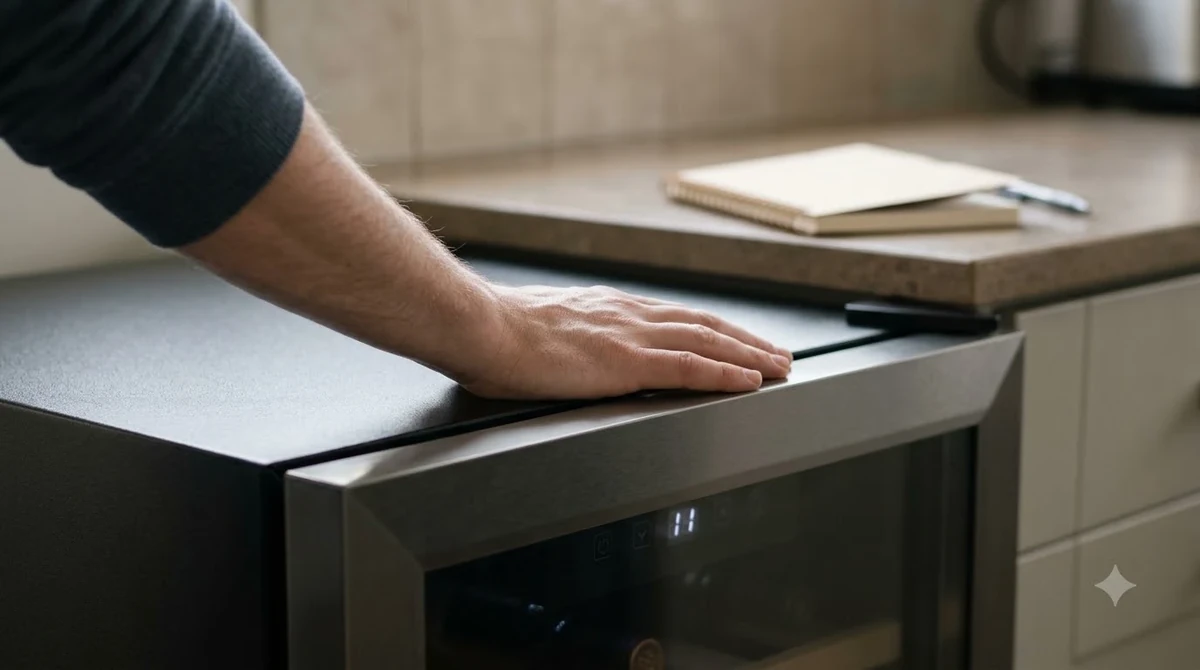
The three-shelf arrangement is particularly useful for households that purchase several types of beverages. A shelf can accommodate standard soda cans, another can hold shorter bottles, and the remaining space can be adjusted for taller containers. This is more practical than a fixed-layout mini refrigerator when the contents change throughout the week.
Temperature control is another advantage. A conventional refrigerator may be colder than necessary for some drinks, while a kitchen cabinet provides no active chilling at all. The FM17S allows a setting anywhere between 37°F and 65°F, giving users the ability to select a suitable temperature for their usual drinks. For example, a setting near 38°F works for particularly cold soft drinks, while a warmer setting can be more appropriate for beverages that do not need refrigerator-level chilling.
The glass door and blue LED lighting contribute to the presentation. A home bar or entertainment room benefits from visible drink organization, particularly when guests need to identify available options quickly. The lock is also useful in shared spaces where access to stored beverages should be restricted.
Frost-free operation is a meaningful convenience. Manual defrosting can be inconvenient in a compact refrigerator because removing the contents temporarily eliminates its storage function. FoMup’s FM17S manual describes an automatic frost-free system, reducing the need for that maintenance task under normal operating conditions.
There is also a useful distinction between the advertised noise specification and the experience of a particular installation. The FM17S documentation lists operation below 38 dB, a relatively low published figure for a compressor-based beverage appliance. Nevertheless, a refrigerator placed against a cabinet or on an uneven floor can transmit additional vibration, so positioning still matters.
Available retailer information identifies the FM17S and its core features, but there is not enough independently documented written owner feedback to establish long-term reliability, consistent cooling performance across different homes, or the typical lifespan of the compressor. Consequently, documented features should be treated as specifications rather than proven independent performance results.
Common Complaints and Limitations of the FoMup FM17S
The main limitations to consider are installation flexibility, capacity assumptions, and the difference between advertised cooling specifications and real operating conditions. The FM17S is a compact beverage appliance, but it still needs sufficient ventilation, a suitable electrical connection, and careful placement to work properly.
First, the product’s advertised 126-can capacity should not be interpreted as a guaranteed everyday capacity for every beverage combination. Standard 12-ounce cans have predictable dimensions, whereas wine bottles, tall energy drinks, craft beer bottles, and large water containers can require different shelf arrangements. Removing or repositioning shelves can accommodate some larger containers, but doing so reduces the total number of drinks that fit inside.
Second, the installation description needs careful interpretation. The FM17S documentation identifies countertop and freestanding placement. That does not establish that the refrigerator is suitable for enclosed under-counter installation. Buyers planning a fitted kitchen should distinguish this model from the larger FM24S, whose manual explicitly describes built-in under-counter and freestanding installation.
Third, the temperature range does not mean that the unit will instantly chill every warm beverage to its selected setting. Cooling time depends on the starting temperature, room conditions, quantity of drinks, and how frequently the door is opened. Loading a large quantity of warm cans immediately before a party can therefore produce a different result from maintaining an already chilled collection.
The manual also identifies temperature fluctuations of approximately 3-4°F as possible during normal operation. This is an important consideration for buyers expecting the display setting to represent an absolutely constant temperature throughout the entire cabinet. A frequently opened door, heavy loading, or insufficient ventilation can further affect cooling behavior.
Noise is another point to evaluate in context. Although the published specification is below 38 dB, compressor and fan operation can still be audible in a silent bedroom or small office. Uneven flooring, contact with surrounding furniture, or incorrectly positioned shelves may create additional rattling or vibration.
There is also a documentation limitation. The FM17S manual directs owners to FoMup customer service or the relevant product documentation for warranty and technical assistance, but it does not establish a clearly defined warranty duration. Buyers should obtain the applicable warranty terms, replacement-part arrangements, and return conditions in writing before purchasing.
Finally, the lack of extensive independently documented owner feedback makes it difficult to assess long-term durability. A product description can identify features and measurements, but it cannot establish how reliably a refrigerator performs after several years of daily operation. This is especially relevant for buyers who intend to install the appliance permanently in a kitchen or entertainment room.
Who Should Buy the FoMup Beverage Cooler and Who Should Skip It?
The FM17S makes the most sense for households that regularly keep a variety of chilled beverages and need a compact dedicated refrigerator. Its 126-can advertised capacity and 16.92-inch width offer a useful combination for smaller entertainment spaces, provided there is enough room for the required ventilation.
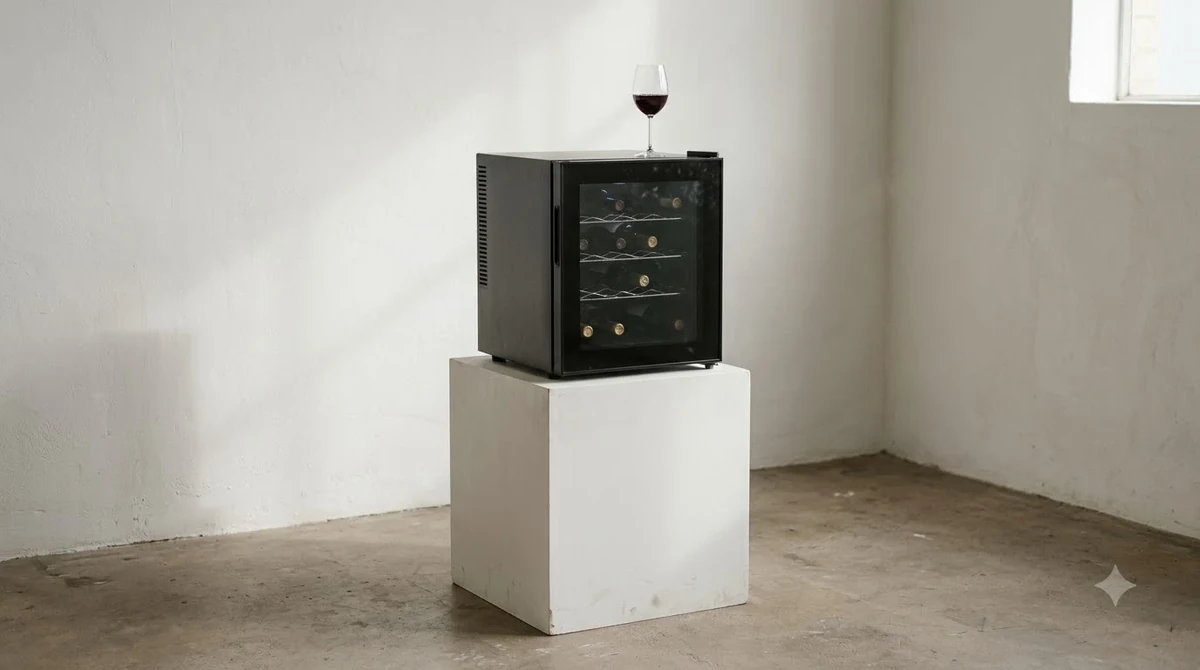
For a home bar, the refrigerator can hold a rotating selection of soft drinks, canned cocktails, beer, sparkling water, and other beverages. The three adjustable shelves make it possible to change the interior layout as the collection changes. The glass door and interior lighting also suit spaces where the appliance remains visible rather than hidden behind cabinetry.
It is particularly appropriate for people who entertain regularly but do not need a full-size refrigerator. Keeping frequently served drinks in a dedicated appliance can free up space in the main kitchen refrigerator. It also provides guests with an accessible place to find refreshments without repeatedly opening the refrigerator used for food storage.
However, buyers who regularly host large gatherings may prefer the FM24S. That larger model has approximately 200-can capacity, compared with 126 cans for the FM17S. Its under-counter installation designation also makes it more relevant to certain fitted kitchen projects, although its dimensions and ventilation requirements still need to be checked against the intended cabinet opening.
Who should consider the FM17S?
- Small households: People who want dedicated beverage storage without taking up the space required by a full-size refrigerator.
- Home bar owners: Buyers who value a glass door, blue LED lighting, and adjustable shelves for organizing drinks.
- Apartment residents: People with enough floor or countertop space for a 17-inch-wide appliance and the necessary ventilation clearance.
- Entertainers: Households that want a separate supply of chilled cans and bottles for regular gatherings.
- Shared spaces: Users who appreciate a door lock for controlling access to stored beverages.
Who should consider another refrigerator?
- Wine collectors: People who need a dedicated wine refrigerator with suitable bottle shelving and storage conditions.
- Large households: Buyers who regularly need more than 126 standard cans of beverage storage.
- Built-in kitchen planners: People who require a model specifically documented for enclosed under-counter installation.
- Very quiet rooms: Buyers who require an appliance with independently verified acoustic performance in their particular environment.
- Commercial operators: Bars or restaurants that need documented commercial-duty specifications, service coverage, and established replacement-part availability.
Wine drinkers should also consider how often they serve different styles. Sparkling wine is generally served around 40-50°F, light whites and rosé around 45-50°F, and fuller-bodied white wines around 50-55°F. The FM17S temperature range can accommodate these serving temperatures, but that alone does not make it an ideal long-term wine storage appliance. Buyers who regularly store multiple wine bottles should compare dedicated models in our guide to the best rated wine cooler options.
For mixed entertaining, a beverage refrigerator can complement a separate wine storage solution. The FM17S can handle everyday cans and mixers while a dedicated wine fridge maintains a more suitable environment for bottles intended for longer storage. A separate cocktail station can also benefit from having chilled mixers and sparkling water ready for an Aperol Spritz recipe.
How the FM17S Compares to the Larger FM24S and Wine Coolers
The most relevant alternative within the FoMup range is the FM24S, which increases advertised capacity from 126 to approximately 200 cans. The FM24S also has a documented under-counter installation option, making it a more suitable candidate for buyers planning a fitted beverage station.
The difference in physical size is substantial. The FM17S measures 16.92 inches wide, 18.89 inches deep, and 29.76 inches high. The FM24S measures 23.42 inches wide, 22.63 inches deep, and 34.25 inches high. The larger refrigerator therefore needs a noticeably bigger installation area, even before accounting for door movement and any required ventilation.
| Comparison | FM17S | FM24S |
|---|---|---|
| Advertised capacity | 126 cans | Approximately 200 cans |
| Width | 16.92 inches | 23.42 inches |
| Depth | 18.89 inches | 22.63 inches |
| Height | 29.76 inches | 34.25 inches |
| Weight | 55 pounds | 89.8 pounds |
| Temperature range | 37°F-65°F | 37°F-65°F |
| Annual energy consumption | 145 kWh | 175 kWh |
| Shelf count | 3 | 3 |
| Installation description | Countertop/freestanding | Built-in under-counter/freestanding |
| Defrost system | Frost-free | Frost-free |
The FM24S is the more appropriate choice for households with larger beverage requirements. Its approximately 200-can capacity gives it considerably more room, while its reversible door and under-counter installation designation provide additional planning flexibility. The trade-off is a larger and heavier appliance that requires more installation space. FoMup’s official refrigerator website also presents its broader beverage and wine refrigerator configurations.
The FM17S has a lower published annual energy consumption of 145 kWh compared with 175 kWh for the FM24S. These are manufacturer-published specifications rather than measured household electricity bills. Actual consumption depends on ambient temperature, ventilation, loading, and usage patterns. Nevertheless, the figures provide a useful starting point when comparing the two configurations.
FoMup also lists a dual-zone wine and beverage refrigerator with capacity for 18 bottles and 88 cans. This is a more relevant alternative for households that want wine and everyday drinks in one appliance. Independent temperature zones allow different types of beverages to be stored at different settings, which a single-zone FM17S cannot provide.
A dedicated wine refrigerator is another alternative. Wine storage requires more than the ability to reach a particular temperature. Bottle positioning, humidity conditions, temperature stability, vibration, and light exposure all matter for bottles intended to age. A beverage cooler is primarily designed for ready-to-serve drinks, while a wine refrigerator is organized around bottle storage.
The best choice therefore depends on what the refrigerator will contain most often. Choose the FM17S for a smaller collection of everyday beverages, the FM24S for a larger supply and documented under-counter placement, or a dual-zone or dedicated wine refrigerator if wine storage is a significant priority. For readers comparing other appliances, our Brand x Type product reviews provide another starting point for evaluating different refrigerator categories.
Frequently Asked Questions
Does the FoMup FM17S have a reversible door?
The published FM17S specifications do not establish a reversible-door feature. The larger FM24S documentation specifically identifies reversible hinges, so buyers who need a particular opening direction should confirm the FM17S configuration before ordering.
Does the FoMup beverage cooler remember its temperature setting after a power outage?
Yes. The FM17S manual describes a temperature memory function that restores the previous setting after power returns. This preserves the selected control setting, but it does not mean the drinks remain at their target temperature throughout an extended outage.
Can the FoMup FM17S cool drinks immediately after delivery?
The manual recommends allowing the refrigerator to stand upright for at least 24 hours before connecting it to power. After switching it on, allow several additional hours for the interior to reach the desired temperature before loading beverages.
Does the FoMup FM17S use a special refrigerant?
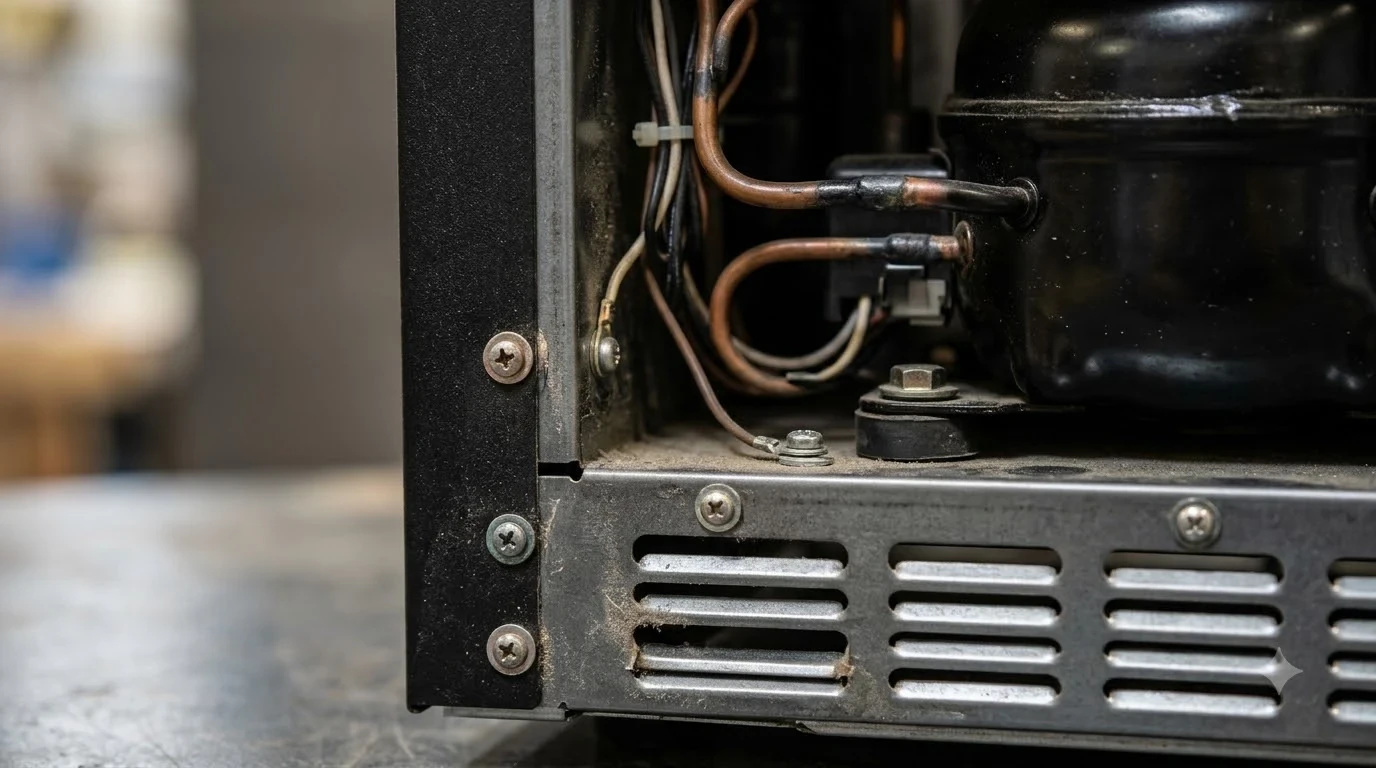
The FM17S product documentation identifies an R600A compressor system. R600A is isobutane refrigerant, which is flammable, so the refrigerant circuit should never be punctured or serviced using improvised methods.
Can the FoMup beverage cooler be transported immediately after being unplugged?
Transport instructions should be confirmed with the manufacturer because compressor refrigerators require appropriate handling and positioning. Keep the appliance protected from impact, avoid damaging the refrigerant circuit, and follow the model-specific instructions before reconnecting power at its new location.
The FoMup FM17S is a capable-looking compact beverage refrigerator on paper, with useful organization features, digital controls, and space for 126 standard cans. Its main appeal is everyday drink storage rather than specialist wine preservation. Buyers who confirm their installation space, ventilation, warranty coverage, and actual storage needs will be in a much better position to decide whether the FM17S or the larger FM24S belongs in their home.
More in Model Reviews
 Magic Chef 44 Bottle Wine Cooler Review for Flexible StorageUpdated Nov 21, 2026
 Whynter 164 Bottle Wine Cooler Review: Capacity, Features, and FitUpdated Nov 21, 2026
 Insignia NS WC16BK6 Review: Compact 16-Bottle Wine StorageUpdated Nov 21, 2026
 Wine Enthusiast Electric Blue Omega Review: Opening, Pouring, and Preserving Made EasierUpdated Nov 21, 2026
 Koolatron 20 Bottle Wine Cooler Review: Features, Fit, and PerformanceUpdated Nov 21, 2026
 NewAir AWC 330E Review for Home Wine StorageUpdated Nov 21, 2026