

We may earn a commission when you buy through links on this page, at no extra cost to you. Learn more.
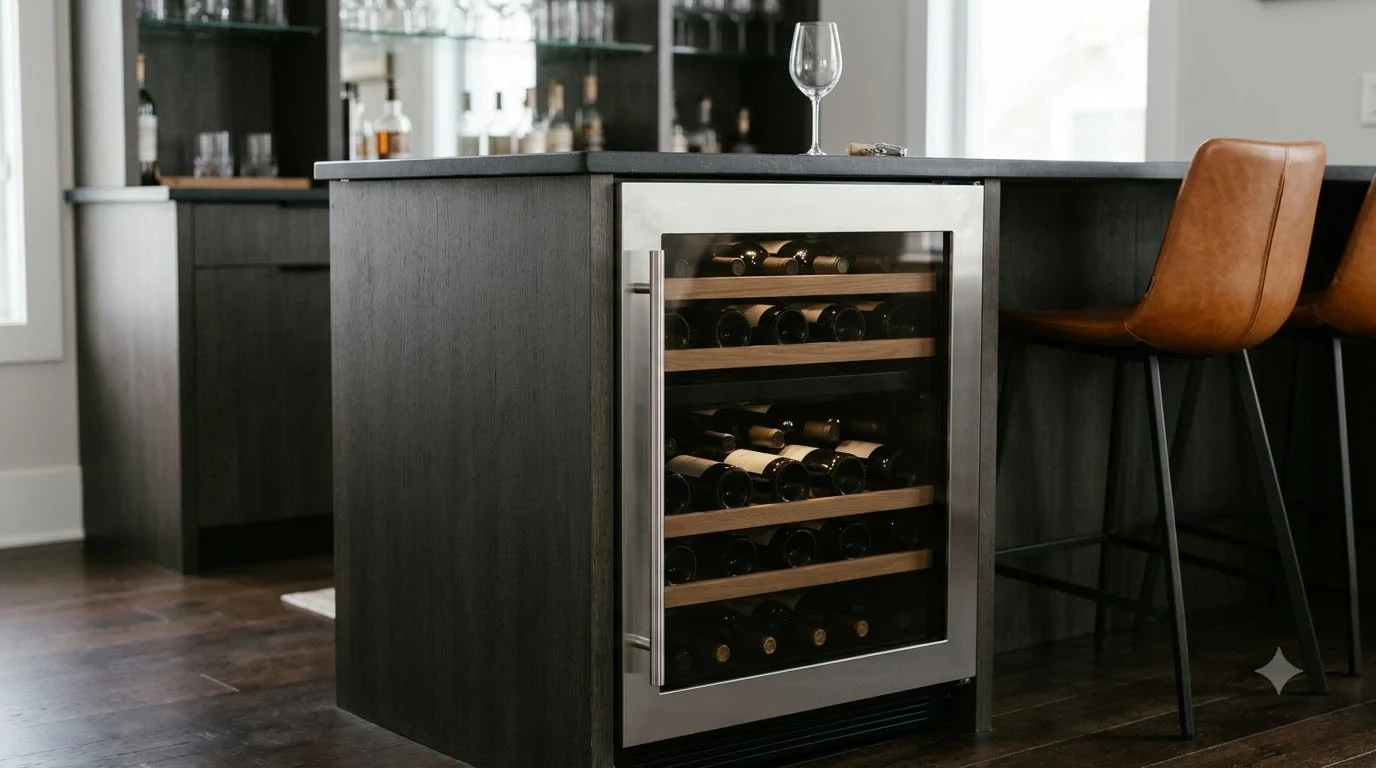
A eurocave built in wine fridge is a premium wine storage solution for homeowners who want controlled temperatures, specialized bottle shelving, and an integrated kitchen appearance. The Compact collection is particularly suitable for under-counter installations, while the Inspiration collection offers additional design flexibility for custom cabinetry. These refrigerators make the most sense for serious wine collectors who value preservation and appearance, although installation requirements, cabinet dimensions, and relatively specialized features deserve careful consideration before purchasing.
Wine storage becomes more complicated as a collection grows. A kitchen refrigerator is not designed to provide the stable conditions that bottles need for extended storage, and a conventional freestanding wine cooler may not fit the design of a carefully planned kitchen. EuroCave addresses this problem with dedicated built-in wine cabinets that combine preservation features with furniture-friendly installation. This review examines the brand’s Compact and Inspiration collections, their practical differences, specifications, advantages, and potential drawbacks to help buyers decide whether one belongs in their home.
Specs and Key Features
EuroCave’s built-in wine refrigerators are designed to combine dedicated wine preservation with cabinetry integration. The Compact and Inspiration collections cover different installation requirements, storage capacities, and interior design preferences.
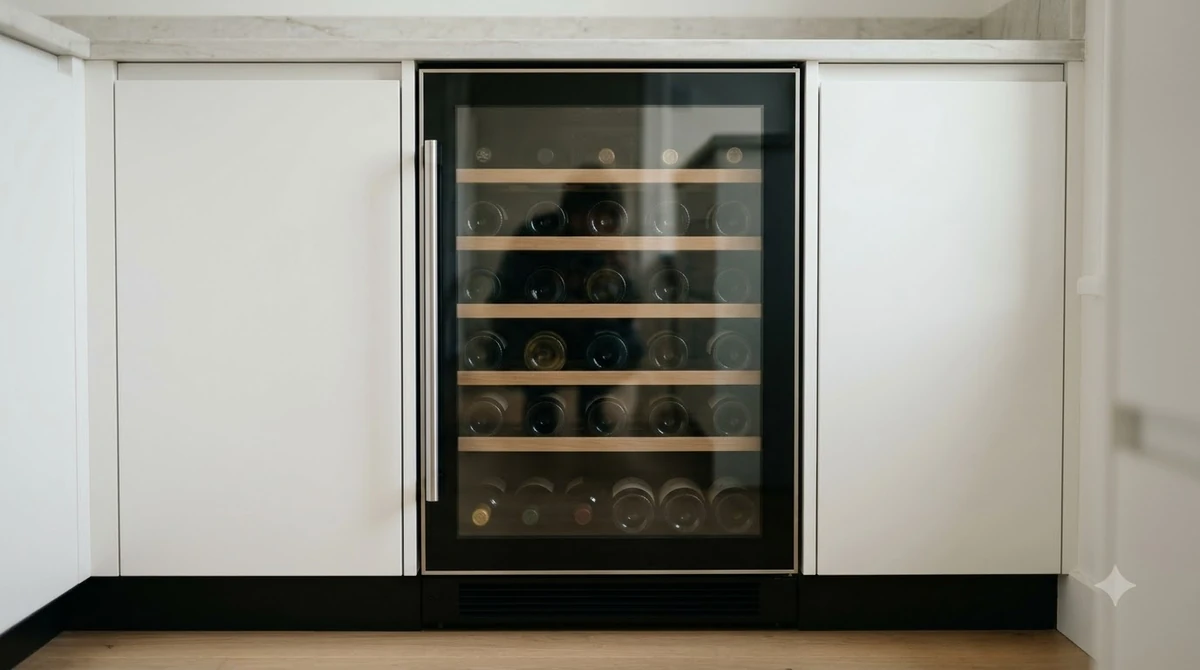
The Compact collection is the more straightforward option for homeowners planning an under-counter wine refrigerator. It comes in small and large configurations, with aging and multi-temperature versions. The Inspiration collection is designed for more customized kitchen and living-space projects, including installations where the refrigerator becomes part of the overall furniture design.
One important distinction is that a built-in wine cabinet is not necessarily a conventional beverage refrigerator with a decorative door. EuroCave designs its products around wine storage, including temperature management, vibration protection, UV protection, and ventilation. These features matter because wine can be affected by prolonged exposure to temperature fluctuations, strong light, and unnecessary movement.
The Inspiration M provides a useful example of the technical specifications available in this product category. Its Wine Enthusiast specification document identifies a single-temperature zone, a maximum capacity of 59 bottles, nine rolling shelves, and one grid shelf. The cabinet also includes a dual-pane UV-tinted glass door, charcoal filter, security lock, and reversible door.
The following specifications are particularly useful when comparing the available options.
| Specification | Compact Small | Inspiration M |
|---|---|---|
| Maximum capacity | Up to 56 bottles | Up to 59 bottles |
| Temperature configuration | Single or multi-temperature | Single zone |
| Temperature range | 5–20°C aging; 5–22°C multi-temperature | 41–68°F |
| Approximate height | 32.2–32.8 inches | 52 inches |
| Approximate width | 23.4 inches | 22–23.25 inches |
| Approximate depth | 21.9 inches | 23.5 inches |
| Door options | Glass or technical door | Glass or stainless steel |
| Installation | Under-counter built-in | Built-in or flush-fitted |
| Notable feature | Compact cabinetry integration | Rolling shelves and single-zone storage |
Specifications are drawn from EuroCave’s Compact collection information and the Wine Enthusiast Inspiration M product document. The Compact dimensions depend on the selected configuration, and the Inspiration M measurements refer to the product rather than a universal cabinet opening. Bottle capacities are maximum advertised figures, not guaranteed counts for every collection. Buyers can consult the EuroCave Compact collection specifications for additional configuration details.
For buyers comparing different premium wine appliances, it is also useful to understand the distinction between a wine cellar designed for aging and one designed primarily for serving. A single-temperature refrigerator generally maintains a consistent environment for a collection, while a multi-temperature configuration allows different wine styles to be kept at more appropriate serving temperatures.
What Owners Like
The strongest attractions of EuroCave built-in wine refrigerators are their specialized storage design, cabinetry options, and emphasis on wine preservation. Buyers looking for a permanent kitchen installation may appreciate these features more than the additional convenience offered by an ordinary beverage cooler.
1. A purpose-built appearance. EuroCave offers more than one approach to integrating a wine refrigerator into a room. A glass-fronted cabinet can display bottles as part of the kitchen design, while a technical door can accommodate a matching furniture finish. The distinction is particularly useful for homeowners who want their appliances to coordinate with existing cabinetry rather than introduce another contrasting finish.
2. Flexible bottle access. Rolling shelves are an important part of the Inspiration M configuration. They make individual bottles easier to access without requiring the user to rearrange an entire stack. Compact configurations also offer storage, sliding, and presentation shelving options. This flexibility is useful for collections containing bottles that are opened regularly alongside bottles being kept for future occasions.
3. Dedicated preservation features. UV protection, vibration protection, temperature management, and continuous ventilation are important characteristics of a wine-specific cabinet. These are not merely decorative extras. A bottle stored for several years benefits from a stable environment rather than the repeated temperature changes associated with frequent relocation between rooms or ordinary kitchen refrigeration.
4. Different capacities and configurations. The Compact range provides small and large sizes, with the Swiss product specifications listing maximum capacities of 56 and 164 bottles respectively. This gives buyers a meaningful progression from a relatively modest kitchen collection to a more substantial storage requirement. The Inspiration range adds further choices for custom installations.
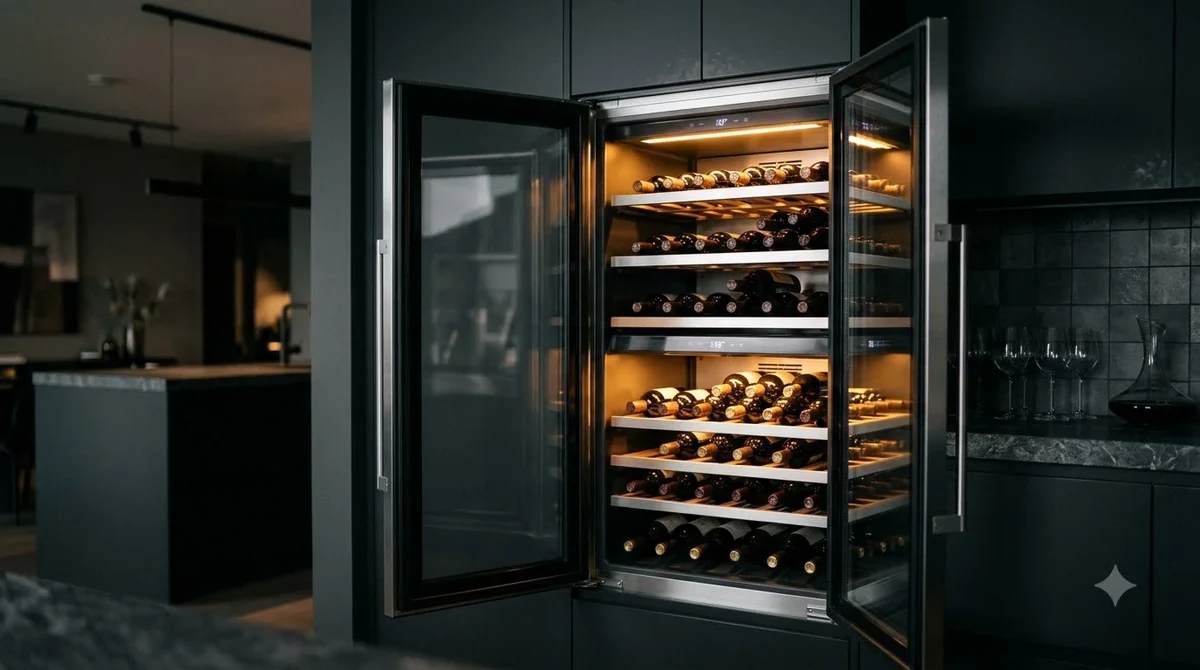
5. Interior presentation. EuroCave uses amber lighting in its Compact collection, while the Inspiration M specification identifies atmospheric LED lighting. Combined with a glass door and organized shelves, this creates a display that can work particularly well in a dining room, home bar, or open-plan kitchen.
These are documented product advantages rather than claims about a measured owner satisfaction score. Public product specifications establish the available features, but they do not establish that every purchaser will have the same experience with installation, noise, reliability, or long-term maintenance.
For a home that regularly hosts dinners, having wine stored close to the dining area can also be convenient. A bottle of Chardonnay can be prepared for a chicken dinner, while sparkling wine can be kept accessible for cocktails. A properly planned chicken marsala recipe dinner, for example, is an occasion where organized wine storage can make serving more convenient.
Common Complaints and Limitations
EuroCave’s premium positioning does not make every configuration suitable for every kitchen. The most important potential drawbacks involve installation complexity, capacity expectations, configuration choices, and the distinction between a built-in appliance and a truly concealed integrated cabinet.
Installation requires careful planning. A wine refrigerator cannot simply be placed inside any available cabinet opening. Ventilation, electrical access, door clearance, cabinet depth, and leveling all matter. The Inspiration M specification lists rear ventilation, so the installation must account for the required airflow rather than treating the cabinet as a completely enclosed furniture compartment.
The Compact collection also has different ventilation requirements depending on size. EuroCave’s Swiss product information states that the small model has front ventilation, while the large model requires a rear opening for exhaust air. This distinction can change the design of the surrounding cabinetry and should be discussed with the kitchen installer before the furniture is manufactured.
Maximum capacity can be misleading. A stated bottle count generally assumes a particular bottle shape and shelf arrangement. Champagne bottles, Burgundy bottles, and unusually shaped bottles may occupy more room than standard Bordeaux bottles. Buyers who own a diverse collection should not assume that the advertised maximum capacity will reflect their everyday storage needs.
Configuration choices add complexity. EuroCave offers different door finishes, shelf types, and temperature configurations. These choices are useful, but they also mean buyers must select the correct combination rather than relying on the collection name alone. Two cabinets from the same range may have different storage layouts or installation requirements.
Maintenance and servicing should be considered. A built-in appliance is less convenient to move than a freestanding wine cooler. Routine filter replacement and interior cleaning are relatively straightforward, but a technical problem involving cooling components or electronic controls may require a qualified technician and access to the appliance.
The premium feature set may be unnecessary for casual drinkers. Someone who keeps six or eight bottles for occasional weekend use may not benefit enough from a specialized built-in cabinet to justify dedicating valuable kitchen space to it. A simpler wine refrigerator may meet that household’s needs.
Tip: Have the kitchen installer review the exact EuroCave installation drawing before ordering cabinetry. Confirm the opening width, height, depth, ventilation arrangement, electrical connection, and door-swing clearance together rather than relying on the refrigerator’s external dimensions alone.
Who Should Buy and Who Should Skip
A EuroCave built-in wine refrigerator is most appropriate for homeowners who want permanent wine storage integrated into a kitchen or living area. It is less compelling for people who need only occasional beverage chilling or do not have a suitable installation location.
Who should consider buying one?
Serious wine collectors. People who maintain a collection of Bordeaux, Burgundy, Champagne, California Cabernet Sauvignon, or other wines intended for future enjoyment may appreciate the stable storage environment. A dedicated wine cabinet offers more appropriate conditions than a frequently opened household refrigerator.
Homeowners planning a kitchen renovation. EuroCave’s Compact and Inspiration options make particular sense when the appliance can be incorporated into the original kitchen design. Selecting the door finish, ventilation approach, and dimensions before cabinetry construction can produce a more coherent installation.
Hosts with regular entertaining schedules. A wine refrigerator near a dining room or kitchen island keeps bottles organized and accessible. A multi-temperature model can be especially practical for households that regularly serve sparkling wine, white wine, rosé, and red wine at different temperatures.
Design-conscious buyers. The choice between visible glass and matching furniture-front finishes makes EuroCave relevant to people who consider the refrigerator part of their interior design rather than a separate appliance.
Who should skip it?
Occasional wine drinkers. A household that opens one bottle every few weeks may not need a dedicated built-in storage system. A smaller freestanding wine cooler may provide enough capacity without requiring permanent cabinetry changes.
Renters and frequent movers. A built-in appliance makes the most sense in a property where the owner controls the kitchen layout. People expecting to relocate soon may prefer an appliance that can be moved without coordinating with cabinet contractors.
Buyers with no suitable ventilation arrangement. If the intended location cannot accommodate the specified airflow, the installation may be unsuitable. A freestanding cabinet or another appliance designed for the available location may be a better choice.
People who want a simple beverage refrigerator. EuroCave’s primary purpose is wine preservation. It should not automatically be treated as a replacement for a refrigerator designed for soft drinks, cans, and a wide variety of everyday beverages.
The best purchase decision comes from matching the collection’s actual storage needs to the cabinet’s intended purpose. A 56-bottle maximum is generous for many households, but a 164-bottle cabinet may make more sense for someone who buys wine by the case and intends to keep bottles for several years.
How It Compares to Alternatives
EuroCave Compact and Inspiration offer different approaches to built-in wine storage. The Compact range emphasizes smaller spaces and under-counter integration, while Inspiration provides additional flexibility for architectural and furniture-led projects.
Compact versus Inspiration. Compact is the more straightforward choice for a kitchen where a dedicated under-counter space is already available. Its small configuration is designed around the dimensions of kitchen cabinetry, and the collection offers both aging and multi-temperature versions.
Inspiration is more suitable for buyers who want a wider range of design choices or a more substantial integrated installation. The Inspiration M, for example, has a maximum stated capacity of 59 bottles in its Premium Pack configuration, nine rolling shelves, and one grid shelf. Its specified installation dimensions are also different from those of the under-counter Compact small model. The Inspiration M product specifications provide the detailed measurements and feature information for this configuration.
Single-temperature versus multi-temperature. This is arguably more important than the exterior appearance. A single-temperature cabinet is appropriate for storing an entire collection under a consistent temperature setting. It is generally the more logical configuration when the main objective is aging wine.
A multi-temperature cabinet is better suited to households that want different wine styles ready for service. Red wine, white wine, rosé, and Champagne do not necessarily benefit from being stored at identical serving temperatures. For example, light whites and rosé are generally served around 45–50°F, while full-bodied reds are typically served around 60–65°F.
Glass door versus technical door. A glass door makes the collection visible and works well in a home bar or contemporary kitchen. A technical door is more appropriate when the priority is visual continuity with the surrounding furniture. The decision is primarily about the intended installation and aesthetic rather than a simple ranking of product quality.
Built-in versus freestanding. A built-in cabinet is designed around a particular furniture opening and ventilation arrangement. A freestanding refrigerator is easier to position independently and can generally be moved more easily. Buyers who are still experimenting with their kitchen layout may find a freestanding design more practical.
Other wine storage categories can also be considered through our wine appliance reviews. Comparing products by installation type, capacity, and intended storage use is more useful than selecting an appliance based solely on appearance or advertised bottle count.
Installation, Temperature Settings, and Everyday Use
Correct installation and sensible temperature settings are essential to getting the most from a EuroCave built-in wine refrigerator. Even a well-designed cabinet can become inconvenient if the surrounding furniture restricts ventilation or makes bottle access difficult.
Measure the installation opening
Start by identifying the exact collection and configuration. For the Inspiration M, the Wine Enthusiast product specification lists a cabinet height of approximately 52 inches, a width of 22–23¼ inches, and a depth of 23½ inches. The specified minimum built-in area is approximately 52–54¾ inches high, 23½ inches wide, and 22–23½ inches deep.
These measurements demonstrate why a general description such as a standard wine refrigerator opening is insufficient. The surrounding furniture must accommodate the manufacturer’s actual installation requirements. Door hinges, handles, electrical access, and air circulation should all be considered.
Choose the correct temperature arrangement
For long-term storage, a single-temperature setting around 55°F is a useful general target. The purpose is to maintain a consistent storage environment rather than repeatedly changing the temperature according to the style of wine being opened that evening.
Multi-temperature cabinets are more convenient for serving different wines. Sparkling wine is generally served around 40–50°F, light whites and rosé around 45–50°F, and full-bodied whites around 50–55°F. Light reds are usually served around 55–60°F, while fuller reds are better around 60–65°F.
These are serving-temperature guidelines, not instructions to use every temperature simultaneously in a single-zone aging cabinet. Buyers should distinguish between the intended storage temperature and the desired temperature when pouring wine.
Organize the shelves around the collection
Sliding shelves are convenient for bottles opened regularly because they make access easier. Storage shelves can be more practical for maximizing the number of bottles, while presentation shelves are useful when a few special bottles deserve additional visibility.
Consider the shape of the collection before choosing a shelf package. A cellar containing mostly standard 750 ml Bordeaux bottles can use space differently from one holding larger Burgundy bottles, Champagne bottles, and magnums. Leaving some spare capacity also makes future purchases easier to accommodate.
Maintain a consistent storage environment
Keep the cabinet away from excessive heat sources and follow the manufacturer’s ambient-temperature requirements. Avoid blocking ventilation openings with kitchen panels, decorative objects, or stored household items.
Wine bottles should generally be stored horizontally when they have natural cork closures, helping maintain contact between the wine and the cork. Minimize unnecessary movement, keep the interior clean, and follow the recommended schedule for filter replacement and maintenance.
For wine that is opened and served regularly, practical storage organization matters just as much as maximum bottle capacity. Keeping everyday bottles near the front and longer-term bottles in less frequently accessed positions makes the cabinet easier to use.
Frequently Asked Questions
Where are EuroCave wine refrigerators manufactured?
EuroCave identifies France as its manufacturing origin and states that its wine cabinet production began in 1976. The company also emphasizes its French manufacturing heritage in its brand materials. Buyers interested in a particular cabinet should confirm the manufacturing information for that specific configuration.
Can a EuroCave wine fridge store Champagne bottles?
Yes, Champagne can be stored in an appropriate EuroCave configuration. However, Champagne bottles are generally wider and heavier than standard Bordeaux bottles, so their placement can affect total capacity. EuroCave also identifies specific shelving arrangements that accommodate Champagne bottles, making shelf selection important for sparkling wine collections.
Does EuroCave provide replacement parts for its wine cabinets?
EuroCave Swiss lists replacement-part availability for up to 11 years from a product’s manufacturing date for the Compact models described in its product information. This is useful for long-term ownership planning, although parts availability and service arrangements should be confirmed with the relevant regional distributor.
Can the door hinge be changed after installation?
The Inspiration M specification identifies a reversible door, and EuroCave also describes reversible doors as an installation feature across its built-in range. This provides additional flexibility when planning a kitchen layout. The exact procedure and suitability should be confirmed for the selected model before installation.
Does a wine cabinet control humidity independently of room humidity?
Humidity behavior depends on the cabinet’s design and operating environment. A displayed humidity reading does not necessarily mean that the appliance has an independently adjustable humidity setting. Buyers who prioritize long-term cork preservation should ask the regional distributor about the humidity management system of the exact model being considered.
A EuroCave built-in wine fridge is a compelling option for a homeowner who wants dedicated wine preservation in a carefully planned kitchen or living space. Compact is the logical starting point for under-counter installations, while Inspiration deserves consideration for more customized projects. Before ordering, compare the exact configuration, storage capacity, ventilation requirements, and installation measurements so the finished cabinet suits both the wine collection and the room.
More in Model Reviews
 Magic Chef 44 Bottle Wine Cooler Review for Flexible StorageUpdated Nov 21, 2026
 Whynter 164 Bottle Wine Cooler Review: Capacity, Features, and FitUpdated Nov 21, 2026
 Insignia NS WC16BK6 Review: Compact 16-Bottle Wine StorageUpdated Nov 21, 2026
 Wine Enthusiast Electric Blue Omega Review: Opening, Pouring, and Preserving Made EasierUpdated Nov 21, 2026
 Koolatron 20 Bottle Wine Cooler Review: Features, Fit, and PerformanceUpdated Nov 21, 2026
 NewAir AWC 330E Review for Home Wine StorageUpdated Nov 21, 2026