

We may earn a commission when you buy through links on this page, at no extra cost to you. Learn more.
Does chateauneuf du pape need to breathe? Yes, most young red Châteauneuf-du-Pape wines benefit from 30–60 minutes of aeration before serving. Giving a powerful, youthful bottle some air can help its aromas develop and make its tannins feel more approachable. However, older bottles generally need less oxygen, and some are best enjoyed shortly after opening. The right approach depends on the wine’s age, structure, and condition.
Châteauneuf-du-Pape is one of the Southern Rhône’s most recognizable red wine appellations, known for Grenache-based blends, ripe fruit, savory herbs, and considerable structure. These qualities make aeration useful, but they do not mean every bottle should spend an hour in a decanter. Understanding the difference between a young, concentrated wine and a mature, delicate one will help you serve each bottle at its best.
Why Young Châteauneuf-du-Pape Benefits From Breathing
Young Châteauneuf-du-Pape often benefits from oxygen because its concentrated fruit, alcohol, and tannins can initially seem tightly packed. A moderate period of aeration gives the wine an opportunity to reveal more of its aromatic character and become more approachable.
The appellation is located in the Southern Rhône Valley of France, where Grenache noir is the dominant red grape. Syrah and Mourvèdre are also important blending partners. According to the Rhône Valley wine organization, the region’s red wines are generally powerful, structured, complex, and particularly suitable for aging. That combination helps explain why some bottles respond positively to breathing.
Grenache contributes ripe red and dark fruit, generous body, and warmth. Syrah can bring darker fruit, pepper, color, and additional tannic structure, while Mourvèdre contributes depth and firm structure. The proportions vary considerably between producers, so two bottles carrying the same appellation name can behave differently after opening.
Consider the example from producer Lavau, whose documented blend contains 50% Grenache noir, 40% Syrah, and 10% Mourvèdre. Its tasting description includes plums, black cherries, cocoa, and cloves. This combination of ripe fruit and savory complexity gives an idea of the aromatic range that a Southern Rhône red can reveal as it opens.
However, aeration does not automatically make a wine better. A bottle that already smells expressive and feels balanced may need no additional time. Oxygen is useful when the wine seems closed, not as a compulsory step in every serving routine.
Another consideration is the wine’s tannin structure. Tannins create a drying sensation around the gums and inside the cheeks. A young, concentrated red can initially feel firm or slightly austere, even when its fruit is ripe. Some air exposure can make the overall experience feel less compressed and allow the fruit, spice, and savory elements to become easier to distinguish.
For additional background on its aromatic character, see our guide to what Châteauneuf-du-Pape tastes like. Recognizing the wine’s normal fruit and spice profile makes it easier to distinguish a bottle that simply needs air from one with an actual fault.
How Long Should Châteauneuf-du-Pape Breathe?
For most young red bottles, start with 30 minutes and extend the aeration period toward 60 minutes if the wine remains closed or strongly tannic. This gives a useful starting point without assuming that every producer, vintage, or bottle requires identical treatment.
There is no universal decanting time for this appellation. A youthful wine with substantial Syrah and Mourvèdre may respond differently from a Grenache-dominant blend with softer tannins. Bottle age, storage conditions, winemaking choices, and the wine’s initial condition also affect how quickly it develops.
| Wine style or condition | Suggested breathing time | Serving approach |
|---|---|---|
| Young, concentrated red | 45–60 minutes | Decant and reassess |
| Young, approachable red | 20–30 minutes | Pour and swirl |
| Young, tightly structured red | 30–60 minutes | Use a broad-based decanter |
| Middle-aged red | 10–30 minutes | Start with a sample |
| Older, delicate red | Little or none | Serve carefully after opening |
| Older red with sediment | Minimal aeration | Separate sediment and serve |
These are practical starting ranges rather than official appellation rules. A 30-minute rest might be sufficient for a relatively open young bottle, while a concentrated red may show better after an hour. Conversely, a mature wine can lose its most interesting aromas if left exposed to air for too long.
Wine Enthusiast notes that a young, opulent, highly tannic Rhône red may need at least an hour in a decanter. Its guidance provides a useful reference for particularly structured examples of the style. You can read its broader discussion of aeration in Wine Enthusiast’s guide to how long wine should breathe.
Rather than relying entirely on a clock, taste the wine at intervals. Pour a small sample immediately after opening, then another after approximately 20 or 30 minutes. Compare the aromas and texture. If the second sample has more recognizable fruit and a more balanced finish, additional aeration may be worthwhile.
There is no advantage in forcing a wine to remain in a decanter simply because a recommended time has not elapsed. The goal is to serve it when it tastes expressive and balanced, not to reach a particular number of minutes.
How to Aerate a Bottle Without Losing Its Character
The simplest approach is to taste a small amount first, then choose between swirling, pouring, and decanting. A decanter introduces more air than an unopened bottle with its cork removed, while a wineglass offers a slower and more controlled way to observe development.
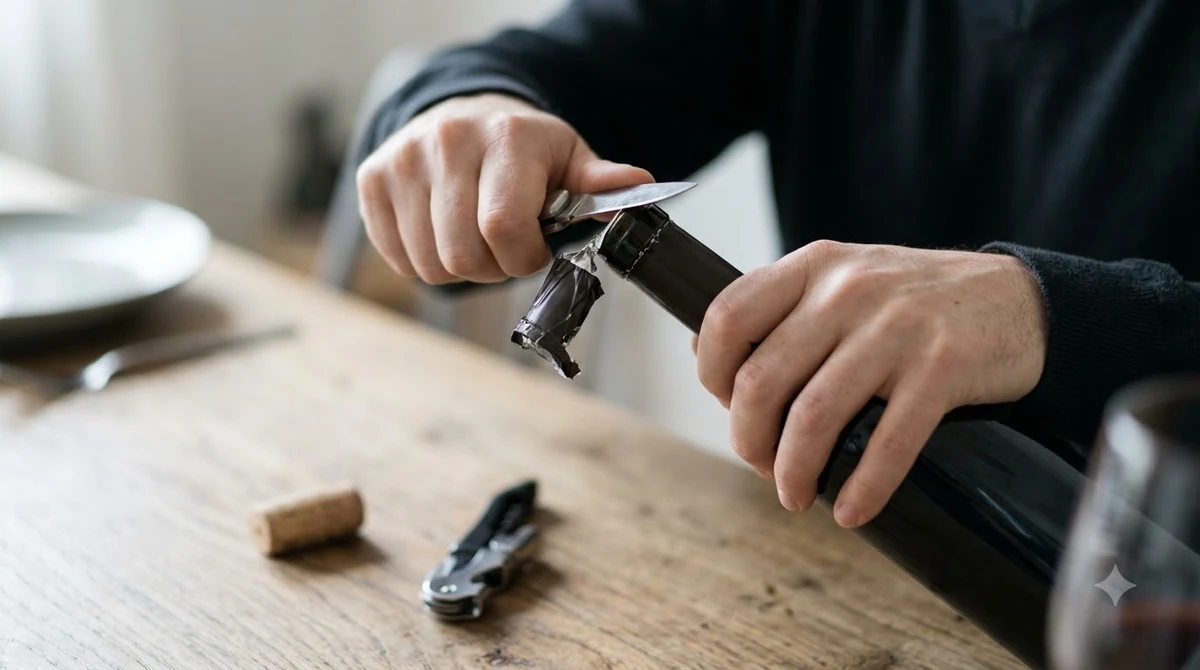
Start by opening the bottle carefully and pouring approximately one ounce into a glass. Examine its aromas before swirling. A young Châteauneuf-du-Pape might initially show ripe cherry, plum, black fruit, pepper, or herbal notes. Some bottles may appear muted, with the fruit difficult to distinguish from the wine’s alcohol and tannic structure.
Swirl the sample gently for several seconds. This increases the wine’s contact with air and helps volatile aromatic compounds become more noticeable. Smell it again, then take a small sip. If the wine is already enjoyable, continue pouring and allow it to develop naturally in the glass.
If the wine remains tight, transfer it to a clean decanter. A broad base provides more wine-to-air contact than the narrow neck of the original bottle. This makes a decanter more effective when a young, powerful red needs a meaningful period of aeration.
Pour steadily rather than splashing the wine aggressively. There is no need to use a complicated pouring technique for a young bottle without sediment. Once transferred, leave the wine undisturbed for approximately 30 minutes, then taste it again.
Does opening the bottle early work?
Removing the cork an hour before dinner is a familiar practice, but it has limited practical effect on most bottles. The wine exposed to air is concentrated in the narrow neck, leaving most of the liquid protected inside the bottle.
Decanter explains that this method is less effective than transferring wine into a decanter or allowing it to aerate in a glass. If you want a young Châteauneuf-du-Pape to open up within a specific timeframe, pouring it into a suitable vessel is generally more effective than simply leaving the bottle open.
There is one reason to consider the open-bottle approach: it provides relatively gentle exposure. This can be useful for an older or more delicate wine that might be overwhelmed by a vigorous transfer. It is a way to proceed cautiously rather than a reliable substitute for decanting a tightly structured young red.
Use a sample to guide the decision
One of the most useful habits is to reserve a small amount for comparison. Pour the first sample, assess the nose and palate, and repeat after the wine has rested. Look for changes in fruit definition, spice, texture, and finish rather than expecting the wine to become dramatically different.
Some reductive aromas, including burnt matches, rubber, or rotten eggs, may diminish after approximately 10–15 minutes of aeration. However, not every unpleasant smell disappears with oxygen. A cork-tainted or seriously faulty wine cannot be repaired by spending more time in a decanter.
The same principle applies if the wine initially seems hot or alcoholic. A little air may make its aromas easier to recognize, but it cannot remove the alcohol or fundamentally change the wine’s structure.
Tip: Keep a small sample from the first pour. Taste it again after 20–30 minutes and compare the fruit, spice, tannins, and finish. Stop aerating once the wine becomes expressive and balanced.
Should Older Châteauneuf-du-Pape Be Decanted?
Older Châteauneuf-du-Pape generally needs less aeration than a young bottle, and some mature examples should be served almost immediately after opening. Their developed aromas can be more fragile, making prolonged exposure to oxygen a potential disadvantage.
Age changes the way red wine develops. Over time, primary fruit aromas can give way to more complex notes of dried herbs, leather, earth, tobacco, and dried fruit. Tannins also evolve, and a wine that once seemed firm may become smoother and more integrated.
These characteristics are part of the appeal of mature Southern Rhône reds. Their complexity does not necessarily improve with a longer stay in a decanter. A delicate bottle that has spent many years in the cellar may begin to lose its aromatic definition after relatively brief exposure.
Wine Enthusiast warns that even several minutes in a decanter can over-oxidize certain older, delicate wines. Its advice is particularly relevant when opening a mature bottle whose condition is uncertain. Start by pouring a small glass and observe how it develops before deciding whether further aeration is appropriate.
Age alone does not determine the correct approach. A well-preserved, concentrated older red may still have considerable structure and benefit from a short period in the glass. Another bottle of the same vintage may be fragile and already close to its ideal drinking condition.
When sediment is present
Older red wines can develop sediment as pigments and tannin compounds combine and settle during bottle aging. This material is generally harmless, but it can create an unpleasant gritty texture if poured into a glass.
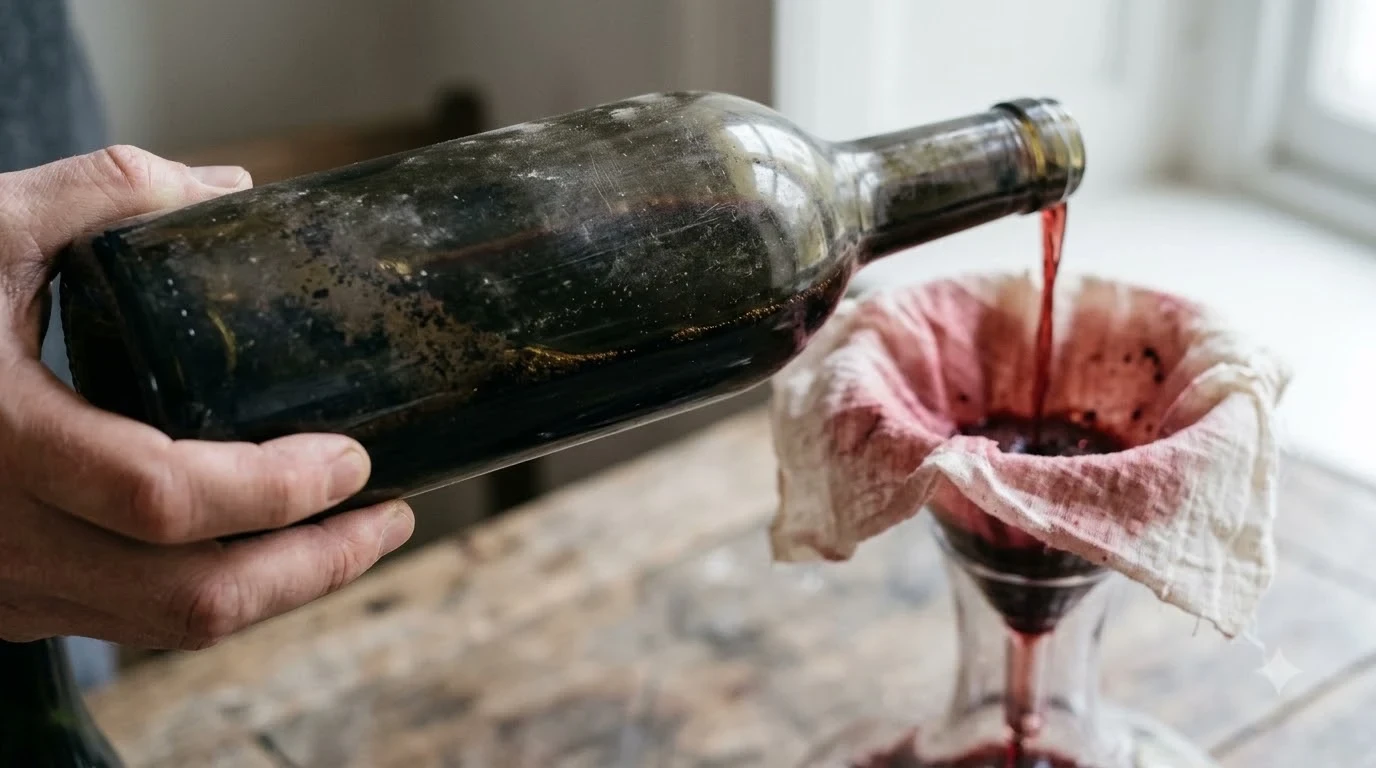
In this situation, decanting serves a different purpose. Instead of exposing the wine to oxygen to encourage development, the objective is to separate the clear wine from the sediment. Stand the bottle upright for 24–48 hours beforehand when possible, allowing the deposits to collect at the bottom.
Open the bottle gently and pour slowly into a narrow decanter. A light positioned behind the bottle’s neck can help you see the sediment approaching. Stop pouring when the deposits reach the neck, leaving the cloudy final portion in the original bottle.
Serve the transferred wine promptly rather than leaving it exposed for another hour. This approach preserves as much of its remaining aromatic complexity as possible while keeping sediment out of the glass.
For bottles with substantial age, careful handling matters as much as the decision to decant. Avoid shaking the bottle, pouring rapidly, or repeatedly transferring the wine between containers. Gentle handling reduces unnecessary disturbance and gives a delicate wine a better chance of showing its remaining character.
If you are deciding whether to open an older bottle for a special occasion, our article on how long Châteauneuf-du-Pape lasts unopened provides additional context about bottle aging and storage.
Serving Temperature and Food Pairings
Serve red Châteauneuf-du-Pape at approximately 60–65°F, with 62–64°F providing a useful target for many bottles. Proper temperature helps preserve aromatic definition while preventing alcohol from becoming overly prominent.
Although red wine is frequently served at room temperature, a warm dining room can make a full-bodied Southern Rhône red taste hotter and heavier. A brief period in the refrigerator can bring an overly warm bottle into a more suitable range.
Lavau specifically recommends serving its Châteauneuf-du-Pape at 17–18°C, approximately 63–64°F. That recommendation fits comfortably within the usual serving range for full-bodied reds. The producer also suggests decanting its particular wine one hour before serving, demonstrating how a producer’s guidance can help establish a useful starting point.
Temperature and aeration should be considered together. A decanter left in a warm kitchen can allow the wine to heat up, making the alcohol more noticeable. Keep the wine in a reasonably cool location while it rests, particularly during a long meal preparation period.
Foods that complement the wine
Châteauneuf-du-Pape’s ripe fruit, savory notes, and firm structure make it a natural partner for substantial dishes. Roasted duck, lamb, beef, game birds, and slow-cooked meat can complement its concentration and aromatic complexity.
Lavau specifically identifies duck with green pepper, guinea fowl, and pheasant as suitable pairings for its red wine. These dishes offer useful inspiration because their savory flavors and substantial textures work well alongside the wine’s fruit and spice character.
Herb-seasoned lamb is another practical choice. Rosemary, thyme, garlic, and black pepper can echo the savory qualities often found in Southern Rhône blends. Roasted vegetables, mushrooms, and lentils also provide suitable alternatives for a meat-free meal.
Fat and salt can soften the perception of tannin, which helps explain why richer dishes often work well with structured red wines. However, very spicy food requires more care. Chili heat can become more pronounced alongside alcoholic, tannic reds, so heavily spiced dishes may overwhelm the wine.
Cheese can work well, particularly varieties with enough richness and flavor to stand alongside the wine. Mature hard cheeses and savory washed-rind styles are possible options. Avoid choosing a particularly sweet accompaniment unless the wine has enough sweetness to balance it.
For a simple dinner plan, serve the wine with roasted lamb, potatoes, and rosemary. Open a young bottle approximately one hour before the main course, taste it during the preparation period, and adjust the serving time according to how the wine develops.
Common Aeration Mistakes and Practical Serving Advice
The most common mistake is assuming that every Châteauneuf-du-Pape requires exactly one hour in a decanter. Young, powerful reds often benefit from that approach, but mature bottles and already expressive wines can lose their character if exposed to too much air.
Another mistake is confusing aeration with aging. Oxygen can change a wine’s aromatic presentation over a relatively short period, but it cannot reproduce the complex development that occurs over years in a bottle. A young red remains young, even after several hours in a decanter.
It is also easy to mistake alcohol warmth for excessive tannin. A concentrated Grenache-based blend can have generous alcohol and ripe fruit, while Syrah and Mourvèdre can contribute additional structure. If the wine feels hot, serving it slightly cooler may help more than extending the aeration period.
Choosing the wrong decanter can also create difficulties. A wide-based vessel is useful for introducing air to a young, concentrated wine, but it exposes more of the liquid to oxygen. That additional contact is not necessarily beneficial for an older bottle with delicate aromas.
For a young bottle, a clean decanter and a controlled 30–60-minute resting period are usually sufficient. For a mature bottle, use the glass as your first assessment tool. If sediment is the main concern, separate it carefully and serve without an extended aeration period.
Decanter’s general guidance emphasizes that young, powerful reds tend to benefit more from breathing, whereas older and delicate wines need more careful treatment. Its discussion of aeration also highlights the importance of using the glass to observe how a wine changes. Read Decanter’s advice on letting wine breathe for a broader explanation of the process.
For additional guidance about other wine styles and serving decisions, explore Wine by Type. Different grapes, regions, and winemaking methods produce wines with different structures, so aeration practices should be adjusted rather than applied automatically.
Finally, remember that the wine continues to develop after it reaches the glass. You do not need to finish aerating before dinner begins. Pour a small amount, let it develop while you eat, and observe whether the later glasses become more expressive or begin to lose freshness.
Frequently Asked Questions
Can you drink Châteauneuf-du-Pape immediately after opening?
Yes. There is no requirement to wait before drinking a bottle. The appellation includes both red and white wines, and individual bottles vary considerably in their structure. If the first glass already shows good fruit, balanced acidity, and an appealing finish, you can serve the rest immediately.
Does white Châteauneuf-du-Pape need to breathe?
Most white examples do not require prolonged aeration. The appellation permits varieties including Grenache blanc, Clairette, and Roussanne, which can produce expressive wines with different aromatic profiles. A brief period in the glass is usually a sensible starting point, particularly for a young bottle intended to emphasize freshness.
Can a wine aerator replace a traditional decanter?
Yes, an aerator can introduce air as wine passes through it during pouring. However, it does not provide the same controlled resting period as a decanter. For a mature bottle with sediment, a traditional decanting method is more appropriate because it allows you to separate deposits carefully.
Can Châteauneuf-du-Pape be served in a standard red wine glass?
Yes. A generously sized red wine glass with enough room for swirling is suitable for most bottles. A bowl of approximately 450–650 ml provides practical space for a standard 5-ounce pour and allows aromas to collect above the wine. The glass does not need to be an expensive specialty design.
How much wine should you pour when assessing aeration?
Start with approximately 1–2 ounces for an initial assessment, then compare it with another small pour after the wine has rested. A standard tasting pour is smaller than the usual 5-ounce serving. Keeping the sample modest makes it easier to compare changes without committing too much wine before it has opened.
Most young red Châteauneuf-du-Pape benefits from approximately 30–60 minutes of breathing, but the best timing depends on its structure and maturity. Taste before decanting, use a glass to monitor its development, and give older bottles gentler treatment. The aim is to reveal the wine’s fruit, spice, and complexity without allowing excessive oxygen exposure to diminish its character.
More in Wine Types & Grapes
 What Does Mourvèdre Taste Like? Flavor Profile, Regions, and PairingsUpdated Nov 20, 2026
 What Does Marsanne Taste Like? Flavors, Styles, and Food PairingsUpdated Nov 20, 2026
 What Does Malvasia Taste Like? Styles, Flavors, and Food PairingsUpdated Nov 20, 2026
 What Does Grenache Blanc Taste Like? Flavor Profile, Styles, and PairingsUpdated Nov 20, 2026
 What Does Garnacha Taste Like? Key Flavors, Styles, and Pairing TipsUpdated Nov 20, 2026
 What Does Fruit Wine Taste Like? A Complete Flavor and Style BreakdownUpdated Nov 20, 2026