

We may earn a commission when you buy through links on this page, at no extra cost to you. Learn more.
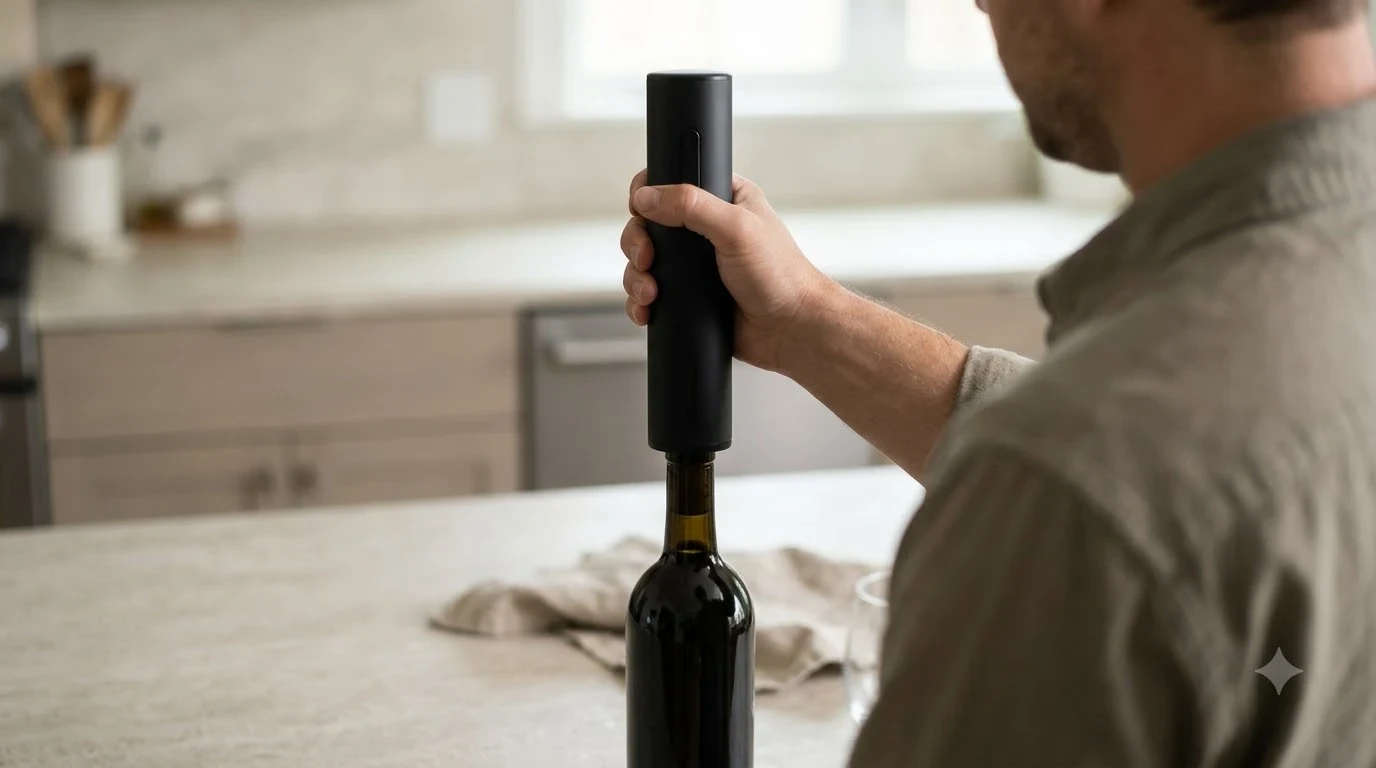
If your cuisinart wine opener not working, start by checking the battery charge, charging-base connection, and alignment over the bottle before assuming the motor has failed. Most operating problems involve insufficient power, an incorrectly positioned corkscrew, or a cork that has not been released from the mechanism. A few simple checks can identify the likely cause, although a worn-out rechargeable battery or damaged internal mechanism may require professional service or replacement.
Cuisinart electric wine openers are designed to make opening a bottle easier with a rechargeable motor and simple button controls. Models such as the CWO-25 and CWO-50 use a similar basic approach, but their charging instructions and indicator lights are not identical. Understanding which model you own is important because following the wrong charging procedure can lead to unnecessary troubleshooting. This review examines the common failures, practical fixes, owner complaints, and situations in which replacing the opener makes more sense than continuing to troubleshoot it.
Specs and Key Features
Cuisinart’s electric wine openers combine a rechargeable corkscrew mechanism, a charging base, and a separate foil cutter. The familiar two-button design handles both cork extraction and cork release, while the cordless construction allows the opener to be used away from an electrical outlet.
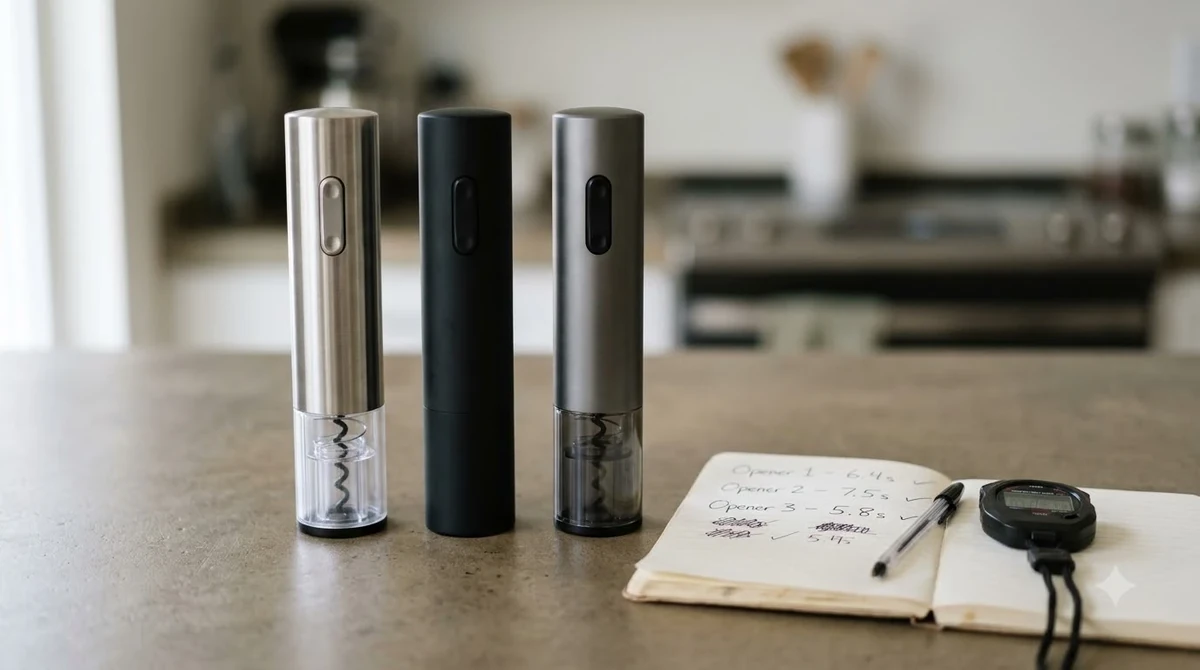
The CWO-25NAS is a useful reference point for American buyers. Cuisinart specifies a capacity of approximately 50 bottles per full charge, a brushed stainless steel exterior, a charging base, and a three-year warranty. Its published dimensions are 3.5 inches long, 4.75 inches wide, and 10 inches high. The older CWO-50 family also uses a cordless rechargeable design, but instructions vary between regional versions.
| Feature | CWO-25NAS | CWO-50U manual | CWO-50C manual |
|---|---|---|---|
| Battery capacity | About 50 bottles | About 80 bottles | About 50 bottles |
| Initial charge | Follow supplied manual | At least 8 hours | At least 12 hours |
| Recharge time | Follow supplied manual | About 6–8 hours | About 12 hours |
| Charging indicator | Model-specific | Flashing/solid green | Blue illumination |
| Button functions | Remove and Eject | Down and Up arrows | Remove and Eject |
| Charging arrangement | Dedicated base | Dedicated base | Dedicated base |
| Foil cutter | Included | Included | Included |
| Exterior | Black stainless steel | Dark gray/black | Stainless steel |
These figures come from separate manufacturer product descriptions and manuals, not from one universal Cuisinart specification. In particular, the CWO-50U instructions describe an eight-hour initial charge and a green indicator, while the Canadian CWO-50C booklet specifies a twelve-hour initial charge and a blue indicator. The stated bottle capacities also differ. Those differences are important because a flashing light on one model does not necessarily mean the same thing as a continuously illuminated light on another.
The main operating components are straightforward. The lower or Remove control turns the spiral into the cork and extracts it. The upper or Eject control reverses the spiral to release the cork from the opener. The foil cutter is a separate accessory, and the charging base connects the rechargeable unit to its power adapter. A problem with one component does not automatically mean that every part of the appliance has failed.
For the American CWO-25NAS, the official Cuisinart electric wine opener specifications provide a useful reference for identifying the model and checking its included components. The model number matters when ordering a replacement charging base or adapter because similar-looking accessories are not necessarily interchangeable.
As a product, the Cuisinart opener is attractive for households that regularly open cork-finished wine bottles and prefer push-button operation. However, the rechargeable battery creates an additional maintenance requirement that a traditional manual corkscrew does not have. If the opener sits unused for long periods or develops a battery problem, the convenience advantage can disappear quickly.
What Owners Like
The main attraction of a Cuisinart electric wine opener is its simple operation: position the device, press the extraction control, lift it away, and use the reverse control to release the cork. For people who find traditional corkscrews difficult to operate, this powered process can make opening a bottle more comfortable.
Owner feedback on retail listings commonly highlights convenience, ease of use, and the ability to remove corks without the physical effort associated with a manual opener. Positive experiences describe a straightforward two-button routine and a device that is ready to use when kept charged. The compact charging base also provides a designated place to store the opener and its foil cutter between uses.
Another advantage is the combination of the corkscrew and foil cutter. Instead of searching through a drawer for separate tools, users can keep the accessories together. The foil cutter is stored in the base on the CWO-25 and CWO-50 designs discussed here. This is particularly useful for a home bar where several wine accessories are kept in one location.
Compatibility with both natural and synthetic corks is another advertised benefit of the CWO-25. Synthetic corks can sometimes feel different from traditional natural cork because of their material and friction characteristics. Having a powered extraction mechanism can simplify the process, provided the device is charged and aligned correctly. It does not, however, mean that every cork can be removed without resistance.
The stainless steel exterior also contributes to the product’s appeal. The CWO-25NAS measures 10 inches high and has a brushed black stainless finish, making it suitable for countertop storage. The finish is easier to coordinate with many kitchen appliances than a brightly colored plastic design. A compact base helps keep the charger and opener organized rather than leaving a separate power cable loose in a drawer.
Convenience is especially noticeable when opening multiple bottles for a dinner gathering. A fully charged CWO-25 is specified for approximately 50 openings, although actual performance depends on usage and battery condition. That capacity is considerably more practical than recharging after every bottle. Users who regularly serve wine can also keep a manual corkscrew nearby as a backup rather than relying on the battery-powered appliance as their only opening tool.
There is also value in the separate cork-release control. Some electric openers make users work to remove a cork that remains attached to the spiral. Cuisinart’s two-control arrangement gives the user a dedicated reverse operation. When the mechanism works correctly, removing the cork from the bottle and releasing it from the opener are two distinct, predictable steps.
For a home entertaining setup, the opener can sit alongside a bar cart with a decanter, wine glasses, and a stopper. It is also a useful part of a broader collection of wine accessories. The convenience is real, but it depends on keeping the charging components in good condition and following the operating instructions.
Common Complaints
The most important complaints involve battery performance, incomplete cork extraction, and corks becoming stuck inside the mechanism. These problems can look similar at first, but their causes are different. A device that does not respond at all needs a different diagnostic approach from one that operates normally but fails to release the cork.
Battery and charging complaints: Some owners report that their openers stop working before the expected number of bottles or fail to retain a charge. A battery that has gradually lost capacity may operate briefly and then stop under the load of extracting a cork. A charging base that is not making proper contact can produce a similar symptom because the battery never receives a complete charge.
Incomplete extraction: A recurring complaint is that the opener starts removing the cork but stops halfway through. Cuisinart’s response to a customer complaint on a Kohl’s product listing recommends completing a full charge cycle and positioning the opener straight on the bottle. These are sensible first checks because low battery power and poor alignment can interfere with the extraction process. If the same failure happens repeatedly after both issues have been addressed, an internal mechanical or battery fault becomes more likely.
Stuck corks: A cork can remain attached to the spiral after extraction. This is not necessarily evidence that the motor has failed. The device has a separate reverse function for releasing the cork. Cuisinart’s customer-service response on the retail listing recommends using that function and avoiding excessive force. Forcing the cork out manually can damage the spiral or housing and may expose the user to the sharp mechanism.
Difficulty centering the opener: Another source of frustration is placing the unit at an angle to the bottle. If the spiral enters the cork off-center, the cork may resist extraction or the opener may struggle to complete its cycle. The manufacturer specifically instructs users to maintain a straight, upright position. This is particularly important with older corks or bottles where the cork is already slightly damaged.
Button or motor failure: If neither control produces a response after charging, the problem may involve the switch, battery, or internal electrical components. A button that feels loose, sticks, or behaves inconsistently should not be treated as a routine charging issue. Cuisinart warns against operating the appliance when its switch is not functioning correctly. Opening the housing to inspect the wiring is not an appropriate home repair because the mechanism and rechargeable battery are not intended for consumer servicing.
Charging-base problems: The base and adapter are separate components, so a charging failure does not automatically establish that the opener itself is defective. A loose adapter connection, damaged power cord, or incorrectly seated opener can interrupt charging. Cuisinart lists replacement charging bases and power adapters for certain CWO-25 versions, which means identifying the model before ordering a component is essential.
These complaints should be considered in context. A customer review represents an individual experience rather than proof that every Cuisinart opener has the same defect. The most useful approach is to match the symptom to a specific component, perform the safe checks, and stop if the appliance shows signs of electrical or mechanical damage.
Who Should Buy and Who Should Skip
The Cuisinart electric wine opener is a sensible choice for people who prioritize convenience, prefer powered cork removal, and have a suitable place to keep the charging base. It is less appealing for someone who wants a maintenance-free tool or regularly needs to open bottles away from a power source for extended periods.

Who should consider it: Regular wine drinkers who open several bottles each week may appreciate the simple Remove and Eject controls. The CWO-25NAS offers an advertised capacity of approximately 50 bottles per full charge, which provides a useful reserve for normal household entertaining. People who have difficulty using a traditional waiter’s corkscrew may also appreciate the powered mechanism because it reduces the physical work involved in extracting the cork.
It can also suit households that prefer a coordinated countertop setup. The included foil cutter and dedicated charging base keep the basic opening accessories together. If the opener has a permanent storage location near a kitchen outlet, returning it to its base after use becomes a simple habit. That routine can reduce the likelihood of discovering an empty battery just before serving dinner.
Who should skip it: Buyers who want a tool that works without batteries may be better served by a manual corkscrew. A traditional waiter’s opener is compact, does not require charging, and is easier to carry in a picnic basket or travel bag. It also avoids the possibility of a rechargeable battery gradually losing capacity.
People who frequently open older bottles with fragile corks should consider keeping a two-prong wine opener as another option. An electric spiral is not always the ideal tool for a cork that is already deteriorating. A specialized two-prong opener can grip the sides of a fragile cork rather than driving a spiral through its center, although it requires a different technique.
Another reason to skip an electric model is limited storage space. The CWO-25NAS is approximately 10 inches high and uses a separate charging base. A small kitchen drawer or crowded countertop may not have a convenient place for the complete setup. A compact manual opener takes up less room and does not need to remain near an outlet.
Buyers should also consider the age and condition of an existing appliance before investing in accessories. If a CWO-25 repeatedly fails to charge, has a damaged housing, or produces inconsistent motor operation, purchasing a replacement base may not solve the underlying problem. Cuisinart describes the rechargeable batteries in its CWO-50U manual as non-replaceable by the end user, with battery work reserved for an authorized engineer.
For someone deciding between a standalone opener and a more complete wine accessory package, a wine opener and preserver set may provide a more convenient combination of opening and storage tools. A manual backup is also useful. A small wine bottle opener keychain can provide a portable alternative when a powered countertop opener is not available.
The decision should come down to how often the device will be used, whether charging is convenient, and whether the user values reduced physical effort more than long-term simplicity. An electric opener can be a worthwhile household accessory, but it should not be purchased with the expectation that its battery will remain in perfect condition indefinitely.
How It Compares to Alternatives
Cuisinart’s electric opener competes with manual corkscrews, two-prong cork extractors, and other rechargeable electric wine openers. The main difference is not simply how quickly each device removes a cork. It is the balance between convenience, maintenance, portability, and the type of cork being opened.
A traditional waiter’s corkscrew is the most straightforward alternative. It usually combines a small foil knife, a spiral, and a hinged lever. The user removes the foil, inserts the spiral, and uses the bottle rim as leverage to extract the cork. Unlike the Cuisinart, it does not require a charging base, battery, or electrical components. It is also relatively inexpensive to replace and easy to store in a kitchen drawer.
The main disadvantage of a manual corkscrew is the physical effort involved. A tight cork can require considerable pulling force, especially when the user does not have a good grip or the lever is positioned incorrectly. The Cuisinart replaces much of that manual work with a motor, which can make it more comfortable for regular household use. However, a manual opener remains functional when the electric device is discharged or malfunctioning.
A two-prong opener is designed for a different situation. Instead of penetrating the cork with a spiral, it slides two narrow metal prongs between the cork and the bottle neck. This can be helpful with older bottles where the cork is delicate and may crumble if a conventional corkscrew is inserted. It requires practice and is not necessarily the easiest choice for someone who simply wants to open everyday bottles quickly.
Other electric wine openers offer a similar rechargeable convenience. The important comparison points are battery capacity, charging time, available replacement parts, button design, and warranty support. A model that has a removable or serviceable battery may be preferable to one with a sealed rechargeable system, depending on the manufacturer’s specifications. Buyers should also verify that the charging base and adapter are available separately rather than assuming replacement components will always be stocked.
The Cuisinart CWO-25NAS has a useful advantage in its documented accessory availability. Cuisinart lists a compatible charging base, power adapter, and foil cutter for the model. That makes component identification more practical than guessing which generic charger might fit. However, replacement-part availability does not mean that every internal failure can be repaired economically.
Warranty support is another important distinction. Cuisinart advertises a three-year warranty for the CWO-25NAS, and the product page provides a customer-service contact number. Buyers should retain their purchase documentation and confirm the applicable warranty terms for their particular unit. Warranty coverage and service procedures can differ by market and product version.
For a buyer who wants electric convenience without committing to a complicated wine setup, the Cuisinart is a straightforward choice. For someone who values reliability during travel, a manual opener is more practical. For collectors opening older bottles, a two-prong tool may be a better specialist option. The right choice depends on the cork, usage frequency, and willingness to maintain a rechargeable appliance.
Frequently Asked Questions
Can a Cuisinart wine opener be used with screw-cap bottles?
No. The powered corkscrew is designed for bottles sealed with corks, not screw caps. A screw-cap bottle should be opened by turning its cap rather than placing the electric opener over the closure. Attempting to use the motor on a screw cap can damage the bottle closure or place unnecessary strain on the appliance.
Can I take the rechargeable Cuisinart opener apart to replace its battery?
Consumer battery replacement is not recommended for the CWO-50U described in the manufacturer’s manual. Its rechargeable nickel-metal hydride batteries are identified as non-replaceable by the end user, and battery servicing is reserved for an authorized engineer. The CWO-50C manual also warns users not to open the appliance or charging base because they contain no user-serviceable parts.
Can a Cuisinart electric wine opener damage a synthetic cork?
The CWO-25 product description specifically identifies compatibility with natural and synthetic corks. However, a synthetic closure can still become difficult to extract if the spiral is misaligned or the battery is weak. Keeping the opener upright and allowing the motor to operate at its intended speed helps avoid unnecessary stress on the cork and mechanism.
Does the Cuisinart opener need a voltage converter when traveling internationally?
Electrical compatibility depends on the specific regional model and its supplied adapter. The Canadian CWO-50C booklet specifies a 120-volt appliance and warns against using it with a converter. A US model should not automatically be assumed suitable for overseas electrical systems, even if a plug adapter physically fits the outlet.
How can I identify the exact Cuisinart opener model?
Look for the model designation printed on the product identification label, usually on the underside of the appliance or its base. Common designations include CWO-25, CWO-25NAS, CWO-50, and CWO-50C. The complete model number is more useful than the exterior appearance when requesting support or identifying compatible replacement accessories.
A Cuisinart wine opener that stops working is not necessarily beyond repair. Start with the correct model-specific charging procedure, check the adapter and base connection, maintain upright bottle alignment, and use the reverse control to release a trapped cork. If the battery consistently loses power or the controls and motor remain unreliable after these checks, contact Cuisinart before attempting an internal repair. Matching the replacement part to the exact model can save time and prevent an otherwise usable appliance from being discarded unnecessarily.
More in Wine Accessories
 Coravin Vs Vacu Vin: Choose the Right Wine Saver for Your BottlesUpdated Nov 21, 2026
 Zwilling Wine Stopper Review: Preserve Open Bottles LongerUpdated Nov 21, 2026
 Wine Enthusiast Wine Preserver Review: Features, Benefits and LimitationsUpdated Nov 21, 2026
 Wine Enthusiast Wine Stopper: An Easier Way to Reseal Open BottlesUpdated Nov 21, 2026
 Vintorio Wine Opener: Two-Step Cork RemovalUpdated Nov 21, 2026
 Zwilling Wine Aerator Review: Aerate, Pour, and Seal With One ToolUpdated Nov 21, 2026