
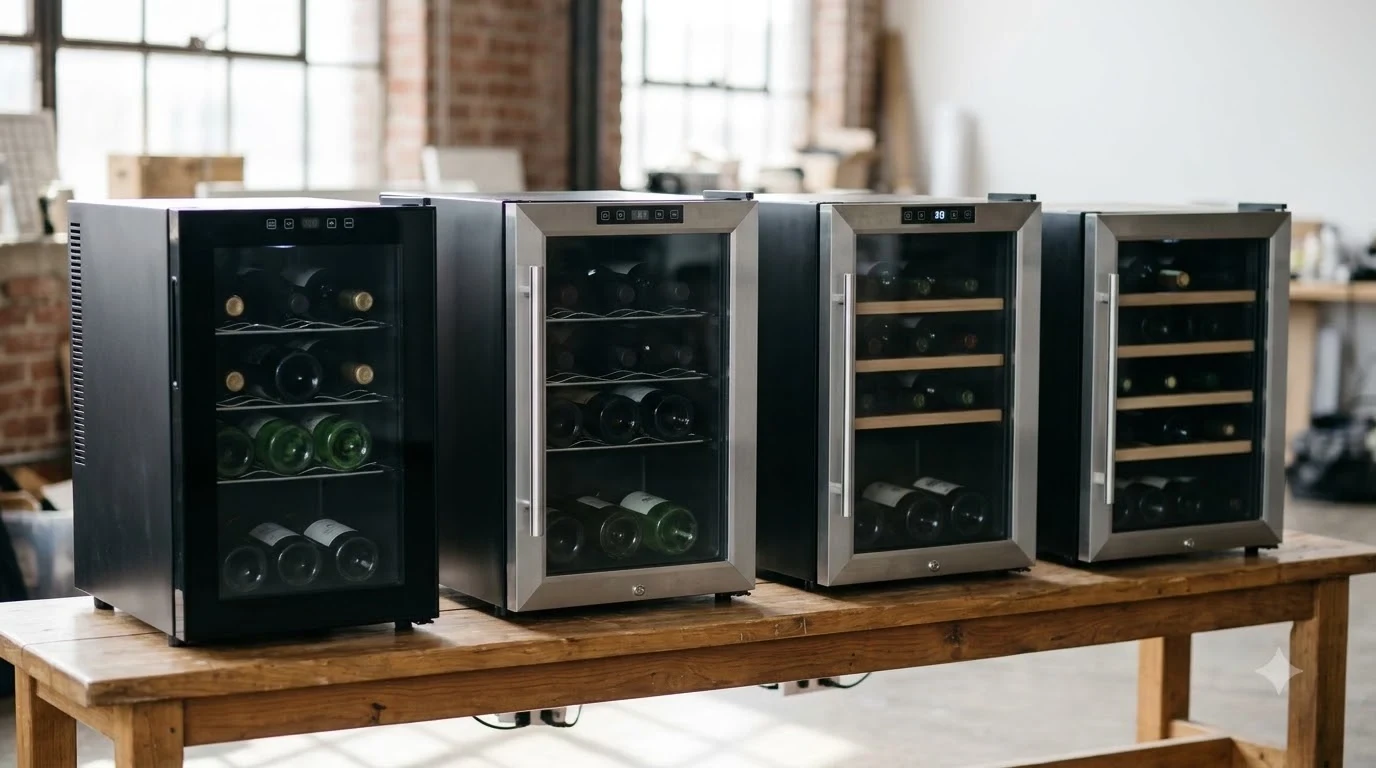

We may earn a commission when you buy through links on this page, at no extra cost to you. Learn more.
The Cuisinart beverage cooler is a practical choice for backyard entertaining if you want an 80-quart rolling ice chest with room for up to 100 cans or 50 bottles. The Cuisinart CCC-3517 combines a dual-sided lid, four swiveling wheels, a built-in bottle opener, and a lower storage shelf in one outdoor serving cart. It is an ice-filled cooler rather than an electric beverage refrigerator, so its appeal depends on whether portable party storage matters more than automatic temperature control.
The Cuisinart CCC-3517 is designed to make drinks accessible during outdoor gatherings without requiring guests to crowd around a traditional cooler on the ground. Its raised cart design, large interior, and integrated accessories give it a different purpose from a countertop beverage refrigerator or a dedicated wine cooler. However, buyers should understand its insulation, lid design, assembly requirements, and storage limitations before deciding whether it belongs on their patio.
Specs and Key Features
The Cuisinart CCC-3517 is an 80-quart insulated outdoor beverage cart with room for substantial quantities of drinks and ice. Its main strengths are its generous capacity, four-wheel mobility, and practical features for serving guests during backyard parties.
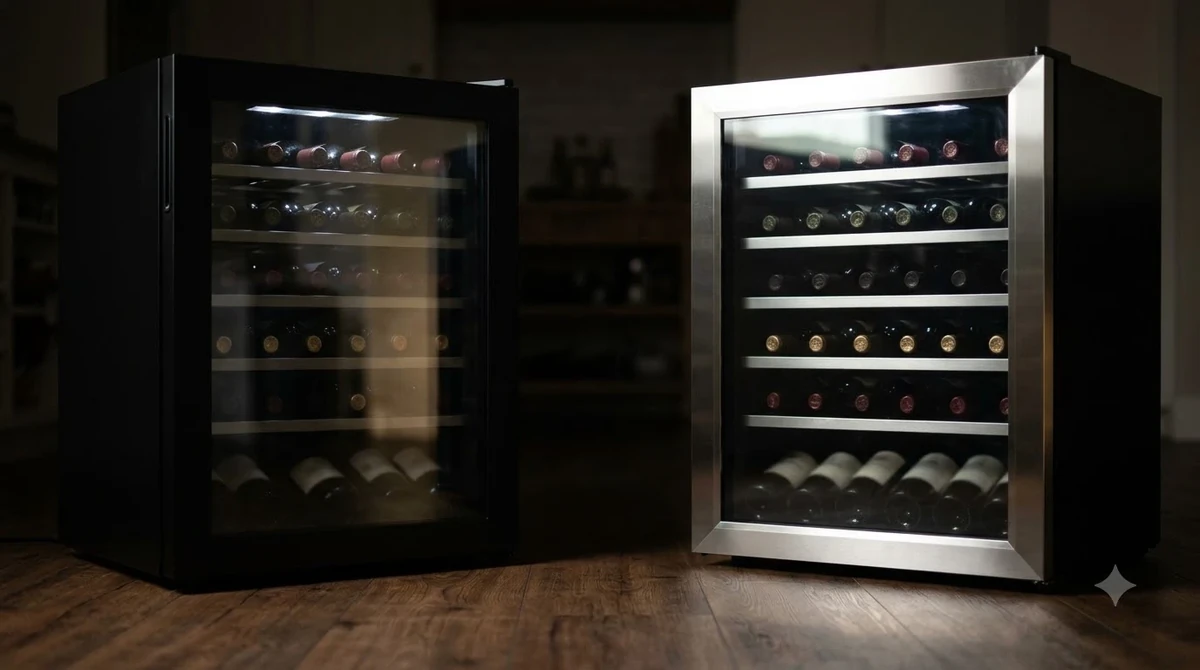
According to the official Cuisinart CCC-3517 product specifications, the cooler accommodates up to 100 cans or 50 bottles with ice. Cuisinart advertises cooling performance of up to 48 hours, although actual ice retention depends on outdoor temperature, direct sunlight, how frequently the lid is opened, and the amount of ice and beverages inside. This is an important distinction: the product does not provide powered refrigeration or a digital temperature setting.
| Specification | Cuisinart CCC-3517 |
|---|---|
| Product type | Outdoor insulated beverage cooler cart |
| Model | CCC-3517 |
| Capacity | 80 quarts |
| Can capacity | Up to 100 cans |
| Bottle capacity | Up to 50 bottles |
| Advertised cooling duration | Up to 48 hours |
| Overall length | 36 inches |
| Overall width | 19 inches |
| Overall height | 35 inches |
| Weight | 42 pounds |
| Wheels | Four swiveling casters; two rear wheels lock |
| Lid | Dual-sided access |
| Additional features | Bottle opener, cap catcher, lower shelf, drain |
| Warranty | One-year limited warranty |
One useful feature is the dual-sided lid. Rather than requiring everyone to reach across the same opening, the arrangement provides access from different sides of the cart. This can be convenient when the cooler sits between a patio dining area and an outdoor kitchen. It also helps reduce unnecessary exposure of the interior to warm air when guests retrieve drinks.
The four swiveling casters make repositioning easier, particularly when the cart is moved between a covered patio, poolside area, and outdoor dining space. The two rear locking wheels help keep the cooler stationary after it reaches its intended position. The integrated bottle opener and cap catcher are useful additions for gatherings where bottled beer, sparkling water, and other capped drinks are served. A lower shelf provides extra room for napkins, cups, plates, and supplies.
Construction details deserve attention. Lowe’s identifies the primary container material as plastic, while Cuisinart describes the exterior finish as black and silver. These descriptions refer to different aspects of the overall assembly rather than establishing that the entire cooler is stainless steel. Buyers should not assume that its exterior is a solid stainless-steel insulated container.
The 36-by-19-by-35-inch overall dimensions are also important. Although this is a relatively compact footprint for an 80-quart cart, it still needs sufficient room for the wheels, access to both sides of the lid, and space for guests to stand comfortably.
What Owners Like
Customer feedback highlights the CCC-3517’s generous capacity, convenient serving height, and usefulness during backyard gatherings. Its combination of an elevated cooler, rolling base, and built-in accessories makes it more functional as an outdoor beverage station than a basic ice chest.
Capacity is one of the clearest advantages. An advertised maximum of 100 cans or 50 bottles gives hosts room to prepare drinks for a substantial group. That capacity is particularly useful for family celebrations, weekend cookouts, pool parties, and neighborhood gatherings where guests may want different beverages throughout the afternoon.
The cart’s height is another practical benefit. Cuisinart lists an overall height of 35 inches, which places the drink compartment above the level of a conventional ground-level cooler. A customer who used the cart for a child’s birthday celebration specifically appreciated that guests did not need to bend down as far to retrieve drinks.
That difference can make serving more comfortable during a long event. Instead of placing a cooler on the patio floor and asking guests to lift its lid repeatedly, the host can position the Cuisinart cart near the seating area and let visitors help themselves.
Customer feedback also mentions the lower storage shelf. It provides a convenient location for frequently used entertaining supplies, including disposable cups, napkins, plates, and serving accessories. Keeping those items together can reduce trips between the kitchen and the patio.
The exterior’s magnetic properties are another detail mentioned in customer feedback. Compatible magnetic accessories, such as a paper towel holder, may be attached to the exterior, depending on the surface and accessory. This can make the cart more useful as a small outdoor serving station.
Ice retention receives positive comments as well. One Home Depot customer reported that the initial supply of ice remained adequate for more than six hours during a birthday party, without needing the additional bag of ice kept in reserve. That is encouraging feedback for ordinary event use, although it should not be interpreted as a controlled performance measurement or a guarantee for every outdoor environment.
For buyers who regularly entertain, the convenience of keeping drinks, serving supplies, and a bottle opener together may matter more than having a complicated collection of refrigerator settings. The CCC-3517 is designed around that straightforward purpose.
It also provides a more organized presentation than a standard plastic cooler placed on the ground. The elevated cart creates a defined beverage station that can sit alongside patio furniture, a grill, or an outdoor dining table. This is particularly useful when the goal is to create a self-service area rather than have the host personally distribute every drink.
The wheels provide additional flexibility. A host can position the cooler where guests are gathering, then move it elsewhere when the event ends. Four swiveling casters make this more convenient than carrying a loaded chest, although moving it while fully loaded with drinks and ice is a different task from repositioning an empty cart.
Overall, positive owner comments focus more on convenience and event functionality than specialized cooling technology. That is consistent with the product’s intended role as a portable outdoor cooler cart.
Common Complaints
The main considerations with the Cuisinart beverage cooler involve its removable lid, exposure to sunlight, and dependence on ice rather than powered refrigeration. These limitations are important because the advertised cooling duration should not be mistaken for guaranteed temperature control.
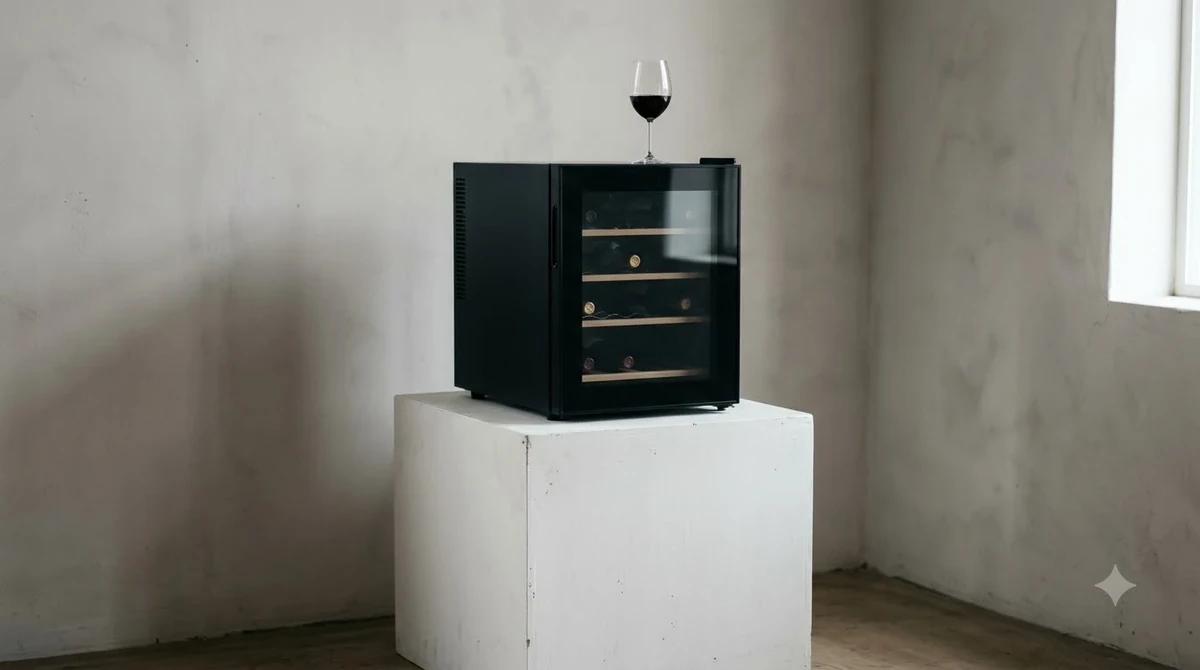
The lid deserves particular attention. The assembly manual instructs owners to attach two knobs to the cooler lid and place it on top of the main basin. It is therefore important not to assume that the lid operates like a permanently attached refrigerator door. Although the dual-sided design makes drinks easier to reach, a removable lid requires additional care when moving or positioning the cart.
This matters most in outdoor environments where wind, accidental contact, or frequent movement could disturb the lid. Buyers who expect a hinged or locking refrigerator-style door should understand that the CCC-3517 uses a different arrangement. Its lid is intended to provide convenient access to an insulated ice compartment, not an airtight mechanical seal.
Another customer reported that the lid became hot when exposed to direct sunlight. This is a practical concern for patios without overhead shade. A cooler can retain ice while its exterior surfaces become uncomfortable to touch, so placement under a canopy or umbrella is sensible.
Ice retention is also variable. The advertised maximum of 48 hours describes the manufacturer’s stated performance, not a guarantee that drinks will remain equally cold for two full days in every setting. Hot weather, repeated opening, warm beverages, and inadequate initial ice all affect results.
For example, a cart used during a shaded evening gathering may retain ice longer than one placed beside a sunny swimming pool during a particularly hot afternoon. The difference between a lightly stocked cooler and one repeatedly opened by a large group can also be significant.
Another potential drawback is the absence of powered temperature adjustment. There is no electronic thermostat that lets users select a precise beverage temperature. This means the product is not a direct substitute for an indoor refrigerator or an electric beverage center.
The 42-pound listed weight is another detail to consider. While four wheels improve mobility, the cart is not a lightweight portable cooler that can simply be carried to a campsite. Its intended use is better suited to a relatively stable outdoor entertaining area where it can be positioned and left for the duration of an event.
Assembly is required, and buyers should account for that before planning to use the cooler immediately after delivery. The manufacturer’s manual identifies a Phillips screwdriver, an included Allen wrench, and an included open-end wrench as the tools needed. The assembly process includes fitting four legs, the lower tray, four casters, handles, and accessories.
There is also a difference between advertised maximum capacity and practical serving capacity. The stated 100-can or 50-bottle figures describe the product’s maximum accommodation with ice. A host who wants a substantial amount of ice surrounding every beverage may need to load fewer drinks than the headline capacity suggests.
Finally, the one-year limited warranty is relatively straightforward, but buyers should read the applicable warranty terms before purchasing. It requires proof of purchase and covers replacement of defective parts. The manual excludes certain cosmetic problems, corrosion, misuse, and damage associated with improper maintenance.
None of these limitations automatically makes the CCC-3517 a poor purchase. They simply reinforce that it is an outdoor ice cooler cart rather than a fully featured refrigerator. Buyers who understand that distinction are less likely to expect features the product was never designed to provide.
Who Should Buy and Who Should Skip
The Cuisinart CCC-3517 makes the most sense for homeowners who regularly host outdoor gatherings and want a large, elevated beverage station. It is less suitable for people who need precise temperature control, built-in refrigeration, or a compact appliance for indoor beverage storage.
Who should consider buying it
Backyard entertainers: The 80-quart interior provides room for a substantial selection of drinks. Hosts who regularly organize family celebrations, barbecues, and summer gatherings can benefit from keeping refreshments accessible in one place.
Poolside hosts: Four swiveling casters make the cart easier to position near an outdoor seating area. The dual-sided lid also allows guests to access beverages without everyone gathering at one end of the cooler.
Outdoor kitchen owners: The bottle opener, cap catcher, and lower storage shelf make the cart a useful addition beside a grill or serving counter. Cups, napkins, and other accessories can stay close to the beverages rather than taking up valuable kitchen-counter space.
Families hosting larger gatherings: A capacity of up to 100 cans or 50 bottles gives families more room than many ordinary personal coolers. The raised 35-inch design can also make drink retrieval more convenient for guests.
People who prefer self-service: The Cuisinart cart works well when guests are expected to retrieve their own beverages. Instead of repeatedly opening a kitchen refrigerator, the host can prepare drinks and ice before the gathering begins.
Who should skip it
Buyers seeking an electric refrigerator: This is the most important distinction. The CCC-3517 uses insulation and ice, not a compressor or thermoelectric cooling system. It cannot maintain a digitally selected temperature throughout the day.
Wine collectors: A traditional wine cellar is more appropriate for bottles that need consistent storage conditions. The Cuisinart cart is designed for temporary beverage chilling rather than long-term wine storage.
For dedicated wine storage, a comparison of the best rated wine cooler options is a more useful starting point. Wine refrigerators are designed around bottle organization and temperature management, while the CCC-3517 prioritizes party capacity and outdoor serving convenience.
Apartment dwellers with limited outdoor space: Its 36-inch length and 19-inch width require meaningful floor space. A small balcony or narrow patio may not offer enough room to position the cart and open the lid comfortably.
People who frequently transport their cooler: The cart weighs 42 pounds before loading. Although its casters help with movement, a conventional portable cooler may be a better choice for camping trips, beach outings, and frequent vehicle transportation.
Buyers who want a permanently attached lid: The assembly instructions show that the lid is placed on top of the basin rather than installed as a conventional hinged door. Anyone who needs a firmly attached or locking lid should consider this limitation carefully.
The best buying decision comes down to intended use. For an established patio entertaining area, the Cuisinart cart offers a useful combination of capacity and convenience. For indoor beverage storage or precise cooling, a dedicated appliance is a better investment.
How It Compares to Alternatives
The Cuisinart CCC-3517 occupies a different category from countertop beverage refrigerators, wine coolers, and ordinary portable ice chests. Its defining advantage is the combination of an 80-quart insulated compartment with an elevated serving cart and integrated entertaining accessories.
A conventional portable cooler is usually the simpler choice for transportation. It can be placed in a vehicle, carried to an outdoor event, and stored away after use. The Cuisinart cart, by contrast, is designed to remain in an outdoor entertaining area and serve drinks at a convenient height.
A powered beverage refrigerator provides a different set of advantages. It uses electricity to maintain an internal cooling environment without requiring hosts to replenish ice. Depending on the model, it may include adjustable temperature settings, shelves, glass doors, and interior lighting.
Those features are useful for indoor kitchens, home bars, and covered entertainment spaces. However, a powered appliance is not automatically a better choice for a backyard party where portability and access to a large number of drinks are the main priorities.
Wine refrigerators are another separate category. Their shelves and temperature controls are designed to accommodate wine bottles rather than a large assortment of canned beverages packed in ice. Someone organizing a dinner party may find a wine cooler useful for bottle storage while using an outdoor ice chest for soft drinks, beer, and bottled water.
The difference becomes clearer when considering how each product is used. The Cuisinart cart is filled before an event, opened by guests throughout the gathering, drained afterward, and cleaned before storage. An electric refrigerator is intended to provide ongoing cooling with less manual preparation.
For example, someone serving an Aperol Spritz recipe at a summer patio gathering could use the Cuisinart cart to keep canned sparkling water, bottled mixers, and other cold refreshments available. However, the cart should not be treated as a substitute for properly chilling delicate ingredients or storing wine bottles for extended periods.
Similarly, an outdoor meal featuring a chicken Marsala recipe may involve wine, sparkling water, and other beverages for guests. The cart can handle the general-purpose drinks, while a dedicated wine refrigerator or indoor refrigerator is better suited to bottles that need controlled storage conditions.
The CCC-3517’s design also differs from a simple outdoor serving trolley. A regular serving cart provides shelves and a surface for drinks but may not offer a large insulated compartment. The Cuisinart combines the two functions by incorporating the cooler into the cart itself.
There is no single alternative that is automatically superior. A standard cooler may be more convenient for transportation, an electric beverage center may be more appropriate for regular indoor use, and a wine refrigerator may be preferable for bottle storage. The Cuisinart is most appealing when the cart format and ice-based capacity are the features that matter most.
For additional appliance comparisons, the Brand x Type model review category can help readers explore other beverage and wine storage options before choosing a product.
Frequently Asked Questions
Can the Cuisinart CCC-3517 be used without ice?
It can physically hold beverages without ice, but its cooling performance depends on the insulated compartment and cold contents rather than an electric refrigeration system. Prechilling beverages before loading can help reduce the amount of initial cooling needed. For reliable chilling without manually adding ice, choose a powered beverage refrigerator.
Can the Cuisinart beverage cooler hold wine bottles upright?
The product is advertised for up to 50 bottles, but that figure does not establish compatibility with every bottle shape. Champagne bottles, oversized sparkling wine bottles, and unusually tall wine bottles may occupy more room than standard beverage bottles. Measure the intended bottles and interior clearance before planning a full load.
Can the Cuisinart cooler cart be left outside during winter?
The assembly manual specifically advises against leaving the cart outside unprotected in the elements. It also recommends keeping the cooler dry when it is not in use and avoiding damp storage environments. A protected garage or covered storage area is a better choice during extended periods of nonuse.
Does the Cuisinart CCC-3517 have a locking wheel mechanism?
Yes. The cart has four swiveling casters, including two locking rear casters and two non-locking casters. The assembly instructions identify the locking wheels separately in the parts list. Engage the rear brakes after positioning the cart on a level surface.
Can the drain hole be used to empty melted ice while the cart is in position?
The product description confirms that the integrated drainage system is intended to remove water after use. The assembly manual recommends draining the cooler after each use. Position the cart where water can drain safely and avoid allowing standing moisture to accumulate during storage.
The Cuisinart CCC-3517 is best viewed as a spacious outdoor beverage station rather than a conventional refrigerator. Its 80-quart capacity, rolling design, bottle opener, and storage shelf make it a practical option for regular patio entertaining, provided buyers are comfortable managing ice and working with its removable lid. Measure the intended space, review the assembly and warranty details, and consider how frequently the cart will be used before making a purchase decision.
More in Model Reviews
 Magic Chef 44 Bottle Wine Cooler Review for Flexible StorageUpdated Nov 21, 2026
 Whynter 164 Bottle Wine Cooler Review: Capacity, Features, and FitUpdated Nov 21, 2026
 Insignia NS WC16BK6 Review: Compact 16-Bottle Wine StorageUpdated Nov 21, 2026
 Wine Enthusiast Electric Blue Omega Review: Opening, Pouring, and Preserving Made EasierUpdated Nov 21, 2026
 Koolatron 20 Bottle Wine Cooler Review: Features, Fit, and PerformanceUpdated Nov 21, 2026
 NewAir AWC 330E Review for Home Wine StorageUpdated Nov 21, 2026