

We may earn a commission when you buy through links on this page, at no extra cost to you. Learn more.
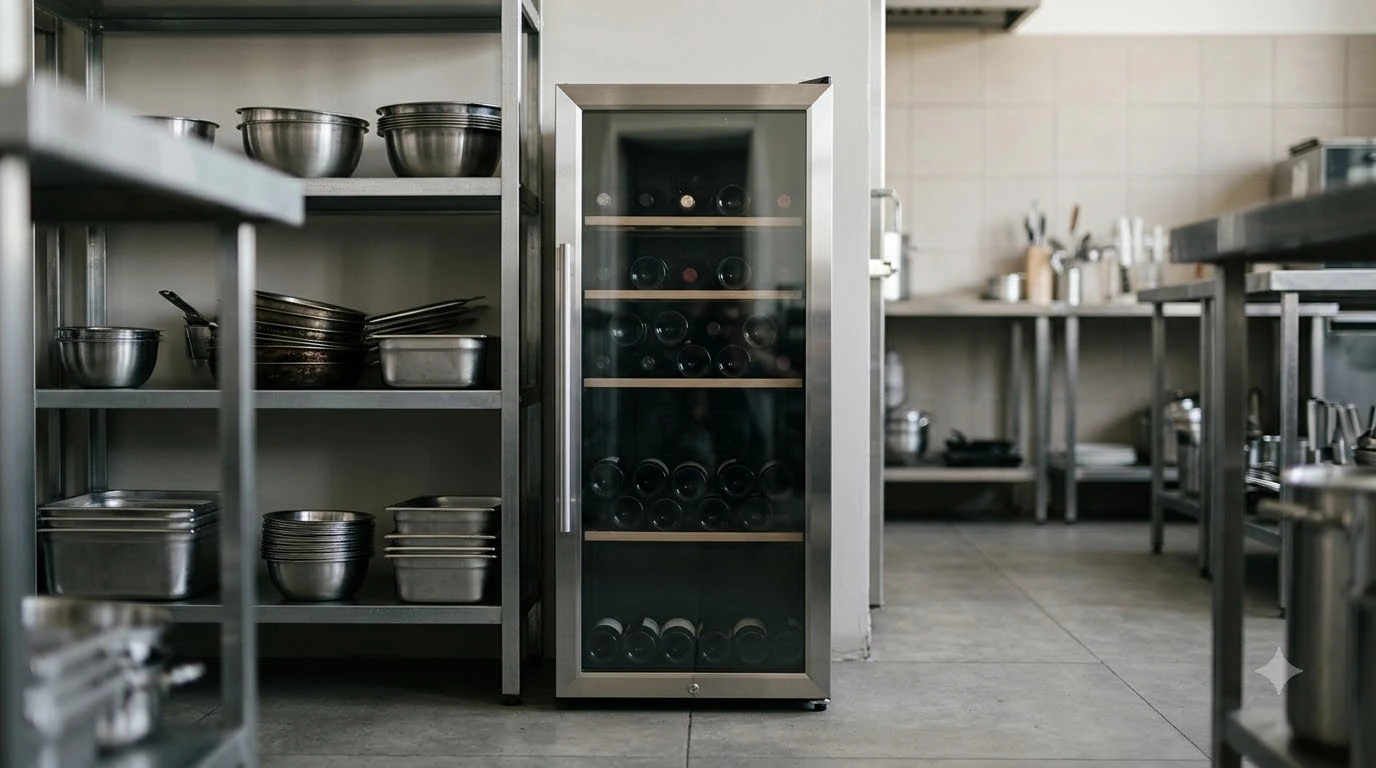
The cuisinart 8 bottle wine fridge, officially called the Cuisinart Private Reserve CWC-800CEN, is a compact eight-bottle wine cellar with adjustable thermoelectric cooling, touchscreen controls, and convenient countertop-friendly dimensions. Its quiet operation, attractive glass-front design, and adjustable temperature settings make it appealing for smaller wine collections. However, its single temperature zone and sensitivity to room temperature are important limitations, particularly for households that want consistently cold white wine in a warm kitchen.
The Cuisinart Private Reserve is designed for wine drinkers who want dedicated bottle storage without committing to a large freestanding wine refrigerator. It offers useful everyday features, including interior lighting, chrome racks, and a digital temperature display, while keeping its footprint relatively small. The important distinction is that this is a compact thermoelectric cellar, not a full-size compressor refrigerator. Understanding that difference helps determine whether its cooling performance, capacity, and bottle arrangement match your collection.
Specs and Key Features
The Cuisinart CWC-800CEN combines eight-bottle storage with adjustable cooling and a relatively simple control system. Its strongest specifications are the 39°F to 68°F temperature setting range, triple-pane viewing window, and compact black-and-stainless-steel exterior.
Tip: Pay attention to the distinction between the temperature displayed on the control panel and the actual temperature inside the cabinet. Thermoelectric cooling performance depends heavily on the surrounding room temperature.
According to Cuisinart, the unit measures 10.5 inches long, 17.5 inches wide, and 17.25 inches high. Its listed weight is 24 pounds. These measurements make it considerably easier to accommodate than a conventional full-height wine refrigerator, although the additional ventilation space required around the cabinet should be included when measuring an installation location.
The appliance uses thermoelectric cooling, which operates differently from the compressor systems found in many larger wine refrigerators. Instead of relying on a conventional compressor, it uses a thermoelectric cooling mechanism. Cuisinart promotes this arrangement for reduced operating noise and energy consumption. The trade-off is that the unit’s cooling ability is more closely tied to ambient temperature.
The controls are another practical feature. A touchscreen panel lets users adjust the temperature, while an LED display shows the selected setting. Temperature adjustments are made in one-degree increments according to the instruction manual. Interior lighting can also be switched on or off independently, providing a way to display bottles without opening the door.
| Specification | Cuisinart CWC-800CEN |
|---|---|
| Product name | Private Reserve 8-Bottle Wine Cellar |
| Model number | CWC-800CEN |
| Maximum stated capacity | 8 bottles |
| Cooling technology | Thermoelectric |
| Temperature setting range | 39°F–68°F |
| Temperature zones | 1 |
| Rack configuration | 3 contoured chrome racks |
| Compatible bottle sizes stated by manufacturer | 750 ml and 1500 ml |
| Exterior finish | Black with stainless steel trim |
| Viewing window | Triple-pane |
| Interior lighting | Soft lighting with independent control |
| Dimensions | 10.5 x 17.5 x 17.25 inches |
| Listed weight | 24 pounds |
| Warranty | 3-year limited warranty |
One detail deserves particular attention: the stated capacity is eight bottles, but capacity does not automatically mean eight bottles of every shape will fit equally well. The manufacturer identifies 750 ml and 1500 ml bottles as compatible sizes, while customer feedback indicates that some wider bottles can make the rack arrangement difficult. Bottle shape, shoulder width, and the amount of room available between shelves can all affect practical storage.
The appliance also has adjustable feet, which help compensate for minor unevenness on a countertop or other hard surface. A level installation matters because an uneven cabinet can contribute to vibration and affect how the door closes. The triple-pane window and chrome shelving give the unit a more finished appearance than a basic opaque beverage cooler.
For official product specifications, the Cuisinart Private Reserve product page provides the manufacturer’s feature list, dimensions, and warranty information.
What Owners Like
Customer feedback points to four recurring advantages: compact dimensions, straightforward digital controls, relatively quiet operation, and attractive interior lighting. These qualities make the CWC-800CEN particularly appealing as a small household wine storage appliance rather than a high-capacity cellar.
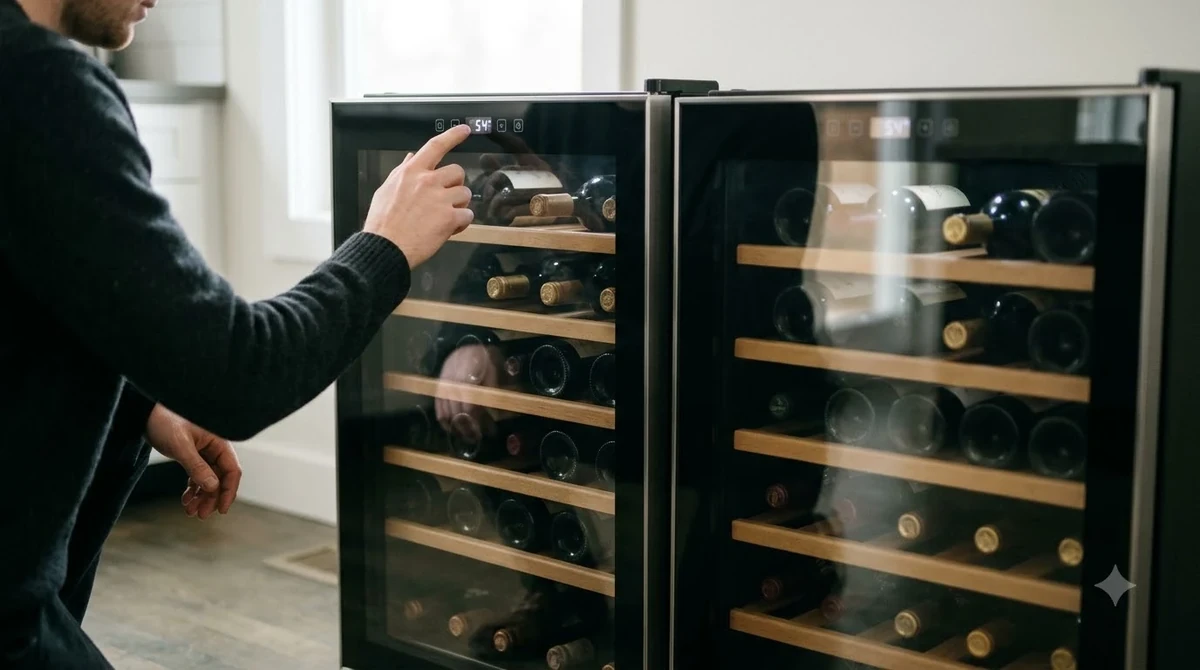
Its size is one of its clearest selling points. Owners reviewing the appliance at Best Buy frequently describe it as a convenient option for countertop placement and smaller homes. A dedicated wine refrigerator can be useful even when a household does not maintain an extensive collection. Eight bottles provide room for several everyday favorites, a bottle for guests, and a few selections reserved for particular meals.
The digital temperature controls also receive favorable comments. Rather than relying on a basic mechanical dial, the Cuisinart provides a visible LED display and electronic adjustment. This makes it easier to select a target setting and change it when the household’s wine preferences change. For example, someone who primarily stores Cabernet Sauvignon might prefer a different setting from someone who regularly keeps Sauvignon Blanc and Chardonnay.
Owners also appreciate the lighting. The soft interior illumination makes it easier to identify bottles through the viewing window, particularly in a dim kitchen or dining area. The light is a display feature rather than a replacement for good cellar conditions, and the instruction manual recommends leaving it off during normal operation.
Quiet operation for everyday rooms
Several Best Buy reviewers describe the wine cellar as quiet or barely noticeable during operation. This is a useful advantage for an appliance intended to sit in a kitchen, dining area, or other shared living space. A loud cooling system can become distracting when a refrigerator is positioned near a dining table or an open-plan living area.
However, quiet operation should not be confused with completely silent operation. Thermoelectric appliances still use fans and other moving components to manage heat transfer and internal circulation. Some operating noise is normal, and the unit should be placed on a stable, level surface to reduce unnecessary vibration.
Another favorable point is its ability to provide a middle ground between room-temperature storage and a standard kitchen refrigerator. A conventional refrigerator is often too cold for serving many red wines comfortably. The Cuisinart allows users to choose a warmer setting, which can be convenient for someone who regularly drinks lighter reds or wants to keep a small selection ready for dinner.
Useful for modest collections
The eight-bottle capacity is suitable for a household that purchases wine gradually instead of buying large quantities at once. It can hold a small rotation of reds, whites, and sparkling wines, provided the bottle dimensions are compatible with the shelves.
Consider a collection containing two bottles of Pinot Noir, two bottles of Chardonnay, two bottles of Sauvignon Blanc, one bottle of sparkling wine, and one bottle of rosé. That is a practical eight-bottle rotation for someone who enjoys variety but does not need long-term storage for dozens of bottles.
The cabinet is also useful for keeping wines separate from frequently opened food-storage compartments. Repeatedly opening a kitchen refrigerator for beverages can expose wine to changing temperatures and household odors. A dedicated wine cellar provides a separate storage space and makes bottle organization easier.
Common Complaints
The most important limitation is temperature consistency in warm surroundings, followed by the single-zone design and restricted bottle spacing. These issues do not make the appliance unsuitable for everyone, but they mean its advertised temperature range should not be interpreted as guaranteed cooling performance in every home.
The instruction manual specifically explains that the actual cabinet temperature of a thermoelectric unit depends on ambient temperature. Although the control panel allows settings from 39°F to 68°F, the appliance may not reach the selected temperature if the surrounding room is too warm.
Cuisinart provides particularly useful examples. At an ambient temperature of 77°F, the lowest achievable cabinet temperature may be approximately 50°F to 52°F. At an ambient temperature of 66°F, the unit can reach approximately 39°F to 41°F. That is a substantial difference, and it changes how the refrigerator should be evaluated.
This matters most for households in warm climates, kitchens that receive direct sunlight, and rooms without reliable air conditioning. A setting of 42°F does not guarantee that the interior will actually remain at 42°F during a hot afternoon. Anyone expecting reliably cold white-wine storage should consider this limitation before purchasing.
One temperature zone limits flexibility
The CWC-800CEN has one temperature zone, meaning the entire cabinet operates around one selected setting. It cannot independently maintain a colder compartment for white wines and a warmer compartment for red wines.
That limitation is important because different wine styles benefit from different serving temperatures. Sparkling wines are generally served around 40°F to 50°F, light whites and rosés around 45°F to 50°F, full-bodied whites around 50°F to 55°F, light reds around 55°F to 60°F, and fuller reds around 60°F to 65°F.
A single-zone refrigerator requires a compromise if the collection includes all these styles. A setting around 55°F can work as a general storage choice, but it will not deliver the ideal serving temperature for every bottle. Some wines may need a short period in a conventional refrigerator or on the counter before serving.
For example, a bottle of Sauvignon Blanc may need additional chilling before dinner, while a Cabernet Sauvignon stored at the same temperature may need only a brief period outside the cabinet. This is manageable for casual wine drinkers, but less convenient for people who expect every bottle to be immediately ready to pour.
Rack spacing and bottle shape
Customer comments also identify tight wire shelving as a potential inconvenience. Some owners report that wider bottles do not fit comfortably without removing a rack. This can reduce the practical capacity even when the appliance is otherwise functioning correctly.
Standard 750 ml bottles are the safest starting point when planning a collection. However, bottle dimensions vary between producers and wine styles. A broad-shouldered Chardonnay bottle, a wider sparkling wine bottle, and a traditional Bordeaux bottle may occupy different amounts of horizontal space.
There is also a distinction between fitting a 1500 ml bottle and accommodating multiple large bottles at the same time. Cuisinart identifies 1500 ml bottles as compatible, but that specification should not be interpreted as a guarantee that every combination of oversized bottles will fit within the eight-bottle arrangement.
Anyone who frequently purchases Champagne, sparkling wine, or unusually shaped bottles should pay close attention to internal rack dimensions before choosing this appliance. The nominal eight-bottle capacity is most useful for collections dominated by standard bottle shapes.
Installation is less flexible than the compact size suggests
Another potential misunderstanding concerns countertop or cabinet placement. Although the unit is compact, its instruction manual specifies freestanding installation. It should not be fully recessed or built into a kitchen cabinet.
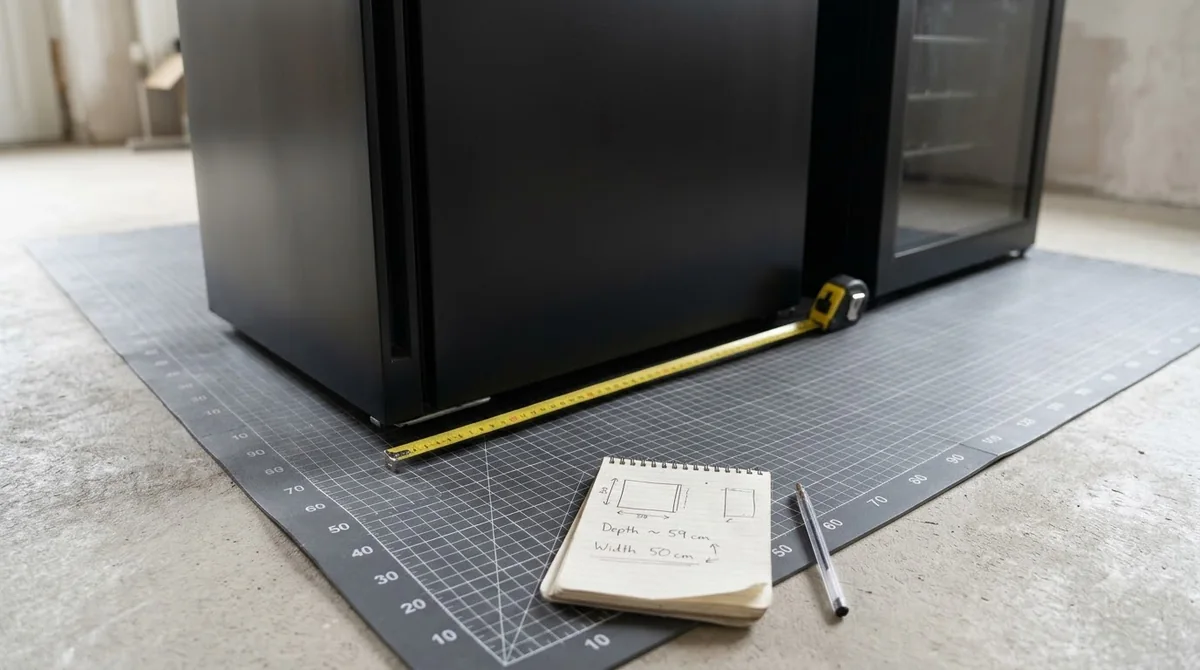
The manual requires two inches of clearance on both sides and behind the appliance. Those spaces allow the cooling system to circulate air and release heat. Placing the unit tightly against surrounding cabinetry can interfere with cooling performance and contribute to higher operating temperatures.
The manual also advises keeping the appliance away from direct sunlight, radiators, ovens, dishwashers, and other heat-producing equipment. A position beside a frequently used oven may be convenient for meal preparation, but it is not a good location for thermoelectric cooling.
Who Should Buy and Who Should Skip
The Cuisinart Private Reserve is best suited to wine drinkers who want a small, attractive, single-zone storage appliance in a reasonably temperature-controlled room. It is less suitable for large collections, warm kitchens, and households that require independent red- and white-wine temperature settings.
Good candidates include:
- Apartment residents: The 17.5-inch width and 17.25-inch height make the appliance easier to accommodate than a full-height wine refrigerator, provided adequate ventilation space is available.
- Occasional wine drinkers: Eight bottles offer enough capacity for a modest selection without dedicating an entire cabinet or room to wine storage.
- Small households: Couples and individuals who rotate through a few favorite bottles can benefit from dedicated storage without needing a larger appliance.
- People who prefer quieter appliances: Thermoelectric cooling and favorable owner comments about operating noise make this model worth considering for shared living areas.
- Casual entertainers: The interior lighting and glass-front presentation make it convenient to display a small selection of wine before dinner or a gathering.
The appliance can also suit someone who enjoys both red and white wine but is comfortable with a single general storage temperature. A person who mostly buys Pinot Noir, Merlot, Chardonnay, and Sauvignon Blanc may find the eight-bottle arrangement sufficient for regular household use.
For entertaining, the cellar can hold several bottles for a dinner menu without requiring frequent trips to the kitchen refrigerator. A bottle of Chardonnay for the first course and a bottle of Merlot for the main course can share the same cabinet, although their ideal serving temperatures are different.
Food pairing is another practical consideration. A bottle of Merlot can complement a chicken Marsala recipe, while a chilled white wine may work better with lighter seafood dishes. A compact cellar can keep both styles organized, even if some final temperature adjustment is needed before serving.
For readers interested in serving sparkling wine at home, an Aperol Spritz recipe offers another reason to keep a bottle of sparkling wine chilled and ready. The Cuisinart can accommodate a small sparkling-wine rotation when bottle dimensions fit its racks, although its cooling limitations should be considered.
Who should skip it?
- Collectors with extensive inventories: Eight bottles are insufficient for anyone who regularly purchases wine by the case or wants to keep several vintages available.
- People who need dual-zone cooling: The single-zone design cannot maintain two independently selected temperatures.
- Residents of consistently hot rooms: Thermoelectric cooling becomes less effective as ambient temperature increases, making warm kitchens particularly challenging.
- Buyers with many oversized bottles: Tight rack spacing can make unusually wide bottles inconvenient to store.
- People planning built-in installations: The manufacturer specifies freestanding use, so this is not the right choice for a fully integrated kitchen cabinet installation.
- Long-term wine collectors: The small capacity and temperature limitations make it less appropriate for maintaining a serious collection intended to age over many years.
It is also worth separating everyday wine storage from long-term aging. A small wine refrigerator can make ordinary bottles more convenient to keep at a suitable temperature, but it does not automatically provide all the environmental controls associated with a dedicated aging cellar. Wine intended for extended aging benefits from stable conditions, protection from light, and appropriate humidity management.
For people who mainly buy wines for consumption over the next few weeks or months, the Cuisinart’s basic functionality may be sufficient. Those who routinely purchase collectible Bordeaux, Burgundy, or Napa Cabernet for extended cellaring should investigate a larger appliance designed around more consistent storage conditions.
How It Compares to Alternatives
The Cuisinart CWC-800CEN occupies a particular category: a compact, eight-bottle, single-zone thermoelectric wine cellar. Its main advantage is convenience, while its main compromise is cooling performance under warmer ambient conditions.
Comparing it with other appliance categories helps clarify where it makes sense. The relevant comparison is not simply how many bottles a refrigerator can hold, but how well its cooling system, temperature configuration, installation requirements, and shelving suit a particular collection.
Against larger compressor wine refrigerators
A larger compressor wine refrigerator is generally a more appropriate option for people who need higher capacity or stronger cooling performance in a warm room. Compressor systems operate differently from thermoelectric systems and are generally less dependent on the surrounding temperature when maintaining a colder cabinet.
The Cuisinart has an advantage in its compact footprint and simple eight-bottle arrangement. It can be easier to accommodate in a smaller home, particularly when the owner does not want a substantial appliance occupying floor space.
However, someone storing 20, 30, or more bottles will likely benefit from a larger cabinet. More capacity also creates opportunities for better organization, including separating everyday wines from bottles intended for special occasions.
Against dual-zone wine refrigerators
Dual-zone models provide two independently controlled storage areas, which are useful for households that frequently drink red and white wines. One compartment can be maintained at a cooler setting for whites and sparkling wines, while the other can operate at a warmer setting for reds.
The CWC-800CEN cannot provide this separation. Its one-zone design means that all eight bottles share a common temperature environment.
That is not necessarily a disadvantage for someone who prefers a single storage temperature and is happy to make serving adjustments. However, people who want to open a chilled Riesling and a red Burgundy at the same dinner without preparing either bottle separately may prefer a dual-zone alternative.
Against a standard kitchen refrigerator
A regular kitchen refrigerator provides colder storage and is convenient for quickly chilling white wines, rosés, and sparkling bottles. It can also be useful when a wine needs to be brought down to serving temperature shortly before dinner.
However, ordinary refrigerators are generally colder than the preferred serving conditions for many red wines. A bottle of Pinot Noir or Merlot can emerge too cold to show its aromas and texture properly.
The Cuisinart offers a dedicated adjustable environment that can be set warmer than a typical kitchen refrigerator. This is particularly useful for households that frequently drink red wine and want to avoid storing every bottle in the main food refrigerator.
Choosing the right storage category
The decision ultimately depends on how many bottles are stored, what types of wine are purchased, and how warm the installation room becomes. A compact single-zone unit is appropriate for occasional use, while a larger compressor or dual-zone refrigerator offers more flexibility for a substantial collection.
| Storage option | Main advantage | Main limitation | Best suited to |
|---|---|---|---|
| Cuisinart CWC-800CEN | Compact eight-bottle storage | Single zone and ambient-temperature sensitivity | Small collections |
| Larger compressor wine refrigerator | Greater capacity and stronger cooling capability | Requires more installation space | Growing collections |
| Dual-zone wine refrigerator | Separate temperature settings | More complex and typically larger | Mixed red and white collections |
| Standard kitchen refrigerator | Convenient colder storage | Often too cold for serving many red wines | Short-term chilling |
For someone who primarily needs a convenient place for eight standard wine bottles, the Cuisinart is a reasonable category match. For someone who needs precise temperature management across multiple wine styles, a larger dual-zone appliance is a more sensible direction. Readers comparing other compact appliances can also browse our wine appliance model reviews for additional product evaluations.
Frequently Asked Questions
Does the Cuisinart CWC-800CEN have a reversible door?
The manufacturer information and operating instructions do not establish a reversible-door feature for this model. Buyers should therefore avoid assuming that the door can be changed to open from the opposite side. Allow enough front clearance for the door to open comfortably when planning its position.
Does the wine fridge have an automatic defrost system?
The published manufacturer feature list does not identify an automatic defrost function. The instruction manual instead provides guidance for ordinary cleaning and maintenance. Consult Cuisinart support if frost accumulation becomes a recurring problem rather than attempting an unapproved repair.
Can the Cuisinart wine cellar store an opened bottle?
One Best Buy customer specifically reports successfully storing an opened bottle fitted with a vacuum stopper. This is a useful indication that certain opened bottles can fit, although the result depends on bottle dimensions and the arrangement of the racks. Use an appropriate closure and keep opened wine away from strong household odors.
Does the appliance require a special electrical connection?
The instruction manual specifies a grounded 120-volt, 15-amp electrical supply. It advises against using three-prong adapters or removing the grounding prong. A properly grounded household outlet is therefore important for installation and safe operation.
Can the wine refrigerator be used in a garage?
The instruction manual advises against installation in locations that are not properly insulated or heated, including garages. Temperature fluctuations and excessive ambient heat can interfere with thermoelectric cooling. A stable indoor location is a more appropriate choice for this appliance.
The Cuisinart Private Reserve CWC-800CEN makes the most sense as a compact wine storage solution for a modest collection, with useful digital controls and an attractive display. Its eight-bottle capacity and quiet operation are appealing, but the single-zone design and sensitivity to room temperature deserve serious consideration. Choose it for convenient everyday storage in a suitable indoor environment, rather than as a substitute for a larger wine cellar designed for extensive collections or long-term aging.
More in Model Reviews
 Magic Chef 44 Bottle Wine Cooler Review for Flexible StorageUpdated Nov 21, 2026
 Whynter 164 Bottle Wine Cooler Review: Capacity, Features, and FitUpdated Nov 21, 2026
 Insignia NS WC16BK6 Review: Compact 16-Bottle Wine StorageUpdated Nov 21, 2026
 Wine Enthusiast Electric Blue Omega Review: Opening, Pouring, and Preserving Made EasierUpdated Nov 21, 2026
 Koolatron 20 Bottle Wine Cooler Review: Features, Fit, and PerformanceUpdated Nov 21, 2026
 NewAir AWC 330E Review for Home Wine StorageUpdated Nov 21, 2026