

We may earn a commission when you buy through links on this page, at no extra cost to you. Learn more.
The Cuisinart 30 bottle wine fridge is a 30-bottle compressor wine cellar designed for home collectors who want adjustable cooling, convenient touchscreen controls, and compact counter-height storage. The Private Reserve CWC-3000CU offers a temperature range of 43°F to 64°F, wood-trimmed racks, and soft interior lighting. However, Cuisinart lists this model as discontinued and out of stock, so prospective buyers should pay particular attention to used-unit condition, replacement parts, and the availability of competing storage options.
A dedicated wine refrigerator can make a noticeable difference in how conveniently a household stores and serves its collection. The Cuisinart Private Reserve 30-Bottle Compressor Wine Cellar combines practical storage capacity with a relatively straightforward control system, making it an interesting option for people who regularly keep several varieties on hand. Its discontinued status changes the buying decision, though. Rather than evaluating it as a readily available new appliance, shoppers should consider its specifications, limitations, ownership history, and long-term suitability before committing to a purchase.
Specs and Key Features
The Cuisinart CWC-3000CU is a single-compartment compressor wine cellar with room for up to 30 standard bottles and an adjustable temperature range of 43°F to 64°F. Its combination of exterior controls, wood-trimmed shelves, and counter-height dimensions makes it a practical design for a dedicated home wine-storage area.
| Specification | Cuisinart CWC-3000CU |
|---|---|
| Product name | Private Reserve Compressor Wine Cellar |
| Model number | CWC-3000CU |
| Advertised capacity | 30 bottles |
| Cooling system | Compressor |
| Temperature range | 43°F–64°F |
| Dimensions | 20.19 × 19.68 × 31.96 inches |
| Weight | 79 pounds |
| Finish | Black |
| Door frame | Stainless steel |
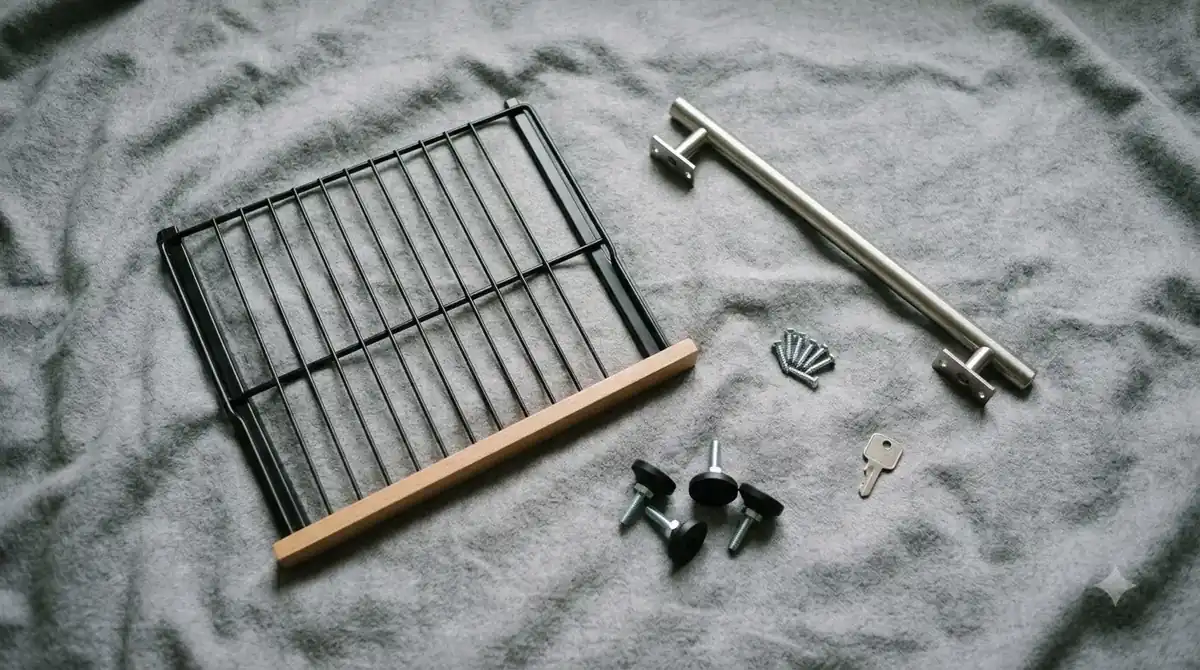
| Shelf construction | Black rubber-coated shelves with beechwood trim |
| Controls | Exterior touchscreen |
| Temperature display | LED |
| Lighting | Soft interior lighting |
| Availability | Discontinued |
These specifications come from the official Cuisinart CWC-3000CU product listing and its instruction booklet. The distinction between advertised capacity and practical capacity is important. Thirty bottles describes the manufacturer’s stated maximum, not a guarantee that every combination of bottle shapes will fit without adjustments.
Compressor cooling and temperature adjustment
The compressor system is one of the central features of this appliance. Unlike small wine coolers that depend on thermoelectric cooling, the CWC-3000CU uses a compressor-based refrigeration system. Cuisinart describes this technology as helping maintain a consistently cool interior despite changes in surrounding room temperature.
This is useful in a household where the appliance sits in a kitchen, dining area, or other space that experiences ordinary temperature fluctuations. A compressor-based system is generally a sensible choice for collectors who want a dedicated refrigerator rather than a simple countertop beverage chiller. However, cooling performance still depends on suitable placement, ventilation, room conditions, and a properly sealed door.
The adjustable range of 43°F to 64°F gives owners flexibility across several wine categories. It covers cooler serving temperatures for sparkling wine and lighter whites as well as warmer settings for red wine. It does not provide independent temperature zones, however, so the entire collection shares one selected temperature.
Touchscreen controls and interior presentation
The exterior touchscreen is a convenient design feature because users can change settings without opening the door. Frequent door openings allow warmer air into a refrigerator, so controlling the temperature externally is a practical advantage for everyday use.
The LED display provides a visible temperature reference, while the interior light makes it easier to identify bottles without relying entirely on room lighting. The manufacturer also includes black rubber-coated shelves with beechwood trim, providing a more traditional wine-cellar appearance than basic wire shelving.
The CWC-3000CU is therefore more than a basic bottle cabinet. Its combination of refrigeration, display features, and wood-trimmed storage gives it a finished appearance that can suit a home bar or dining room. Still, buyers should prioritize cooling condition and mechanical reliability over appearance when evaluating a discontinued unit.

What Owners Like
The strongest potential advantages of the Cuisinart 30-bottle cellar are its straightforward temperature controls, compressor-based cooling, and attractive storage arrangement. These are useful features for households that want one dedicated place for everyday reds, whites, and sparkling bottles rather than several separate wine racks.
There is an important distinction between manufacturer specifications and verified owner experience. The CWC-3000CU is a discontinued product, and publicly accessible retailer information for a similarly named 30-bottle Cuisinart cellar identifies a different model number, CWC-60CU. Its customer feedback should not automatically be treated as feedback about the CWC-3000CU. Consequently, the following advantages are based primarily on documented product features rather than claims of independently verified long-term ownership performance.
Convenient temperature presets
The instruction booklet identifies three preset selections: Champagne at 43°F, white wine at 50°F, and red wine at 61°F. These presets give users a convenient starting point without requiring them to calculate an appropriate setting every time they change the collection.
The red-wine preset is particularly useful for households that prefer a dedicated storage temperature rather than leaving bottles at fluctuating room temperatures. The white-wine and Champagne settings provide cooler alternatives for bottles intended for relatively prompt consumption.
Owners can also use the adjustable controls to select a preferred temperature within the supported range. That flexibility is useful when the collection changes with the seasons or when different bottles are being prepared for serving.
Practical shelf design
The wood-trimmed shelves are another attractive feature. Their appearance gives the appliance a more traditional cellar aesthetic, while the rubber-coated construction provides a finished surface for stored bottles.
Slide-out shelves also make it easier to reach bottles toward the back of the compartment. This matters in a refrigerator holding as many as 30 bottles because retrieving one particular wine should not require moving several other bottles unnecessarily.
The manual identifies the shelves as slide-out and wood-trimmed. It also warns against overloading the racks, which is particularly relevant when storing heavier bottles or experimenting with different arrangements.
Useful capacity for everyday collections
A 30-bottle capacity is a reasonable middle ground for a household that purchases wine regularly but does not need a large cellar. It can accommodate a mixture of bottles for dinner parties, weekend meals, and casual entertaining.
For example, a collection might include Cabernet Sauvignon, Pinot Noir, Sauvignon Blanc, Chardonnay, Riesling, and sparkling wine. Having a dedicated refrigerator means these bottles do not need to compete for space in the main kitchen refrigerator.
It can also make meal planning easier. A chilled white wine can be ready for a seafood dinner, while a bottle of red can be stored separately from everyday groceries. Someone planning a dinner featuring chicken Marsala may appreciate having an appropriately stored red or fuller-bodied white available without reorganizing the kitchen refrigerator.
Nevertheless, the advertised capacity should be treated as an upper limit. Bottle shape, shoulder width, length, and shelf arrangement can affect how many bottles fit comfortably.
Common Complaints
The main concerns with this Cuisinart wine cellar are its discontinued status, single-zone cooling, limited flexibility for oversized bottles, and the uncertainty associated with purchasing an older compressor appliance. These limitations deserve careful consideration before buying a used example.
Discontinued availability
The most significant drawback is that Cuisinart identifies the CWC-3000CU as discontinued and out of stock. That makes it different from a current appliance that can be purchased new with straightforward manufacturer support.
Availability becomes especially important when a refrigerator develops a mechanical problem. A used appliance may have experienced years of compressor operation, temperature fluctuations, door opening, or shelf wear. Even if the exterior looks clean, those factors can affect its remaining useful life.
Buyers should also consider the practical difficulty of finding a replacement appliance with exactly the same dimensions. If the refrigerator is intended to fit beneath a counter or inside a designated storage space, replacing it with a different model may require adjustments to the surrounding furniture.
One cooling zone instead of two
The CWC-3000CU has one shared cooling compartment. It cannot independently maintain different temperatures for red and white wine at the same time.
This is not necessarily a problem for a modest collection. A single temperature can provide a convenient general storage environment, especially when bottles are intended for longer-term holding rather than immediate serving.
However, collectors who regularly switch between sparkling wine, aromatic whites, and reds may prefer separate temperature zones. For example, sparkling wines are commonly served around 40°F to 50°F, while full-bodied red wines are generally served around 60°F to 65°F. One compartment cannot provide both serving conditions simultaneously.
The practical solution is to use the cellar for consistent storage and adjust individual bottle temperatures before serving. That works well for occasional entertaining but is less convenient for people who want several varieties ready at their preferred drinking temperatures.
Capacity limitations with unusual bottles
The 30-bottle rating is based on standard wine-bottle dimensions. Larger Champagne bottles, broad-shouldered bottles, and some specialty formats may reduce the usable capacity.
Cuisinart’s instruction booklet specifically explains that storing a 1,500 ml bottle requires removing one rack. This is a useful detail for anyone who regularly purchases large-format wine.
Removing a shelf creates more room, but it also reduces the number of bottles that can be stored at once. A collection dominated by Champagne, sparkling wine, or unusually shaped bottles may therefore be less compatible with the refrigerator than a collection of standard 750 ml bottles.
Compressor noise and vibration
Compressor refrigerators can produce operating sounds and vibration. The CWC-3000CU manual includes troubleshooting advice for vibration, including checking whether the unit sits on a level surface or touches a nearby wall.
This matters if the appliance will be installed in an open-plan living space, a quiet dining room, or beside a bedroom. A refrigerator that operates acceptably in a utility room may become more noticeable when positioned beside a dining table.
When inspecting a used unit, listen to it during a complete cooling cycle rather than judging it only while the compressor is inactive. Check for unusual rattling, excessive vibration, and repeated clicking. A brief period of normal compressor operation should not be confused with a mechanical fault, but persistent abnormal sounds deserve investigation.
Who Should Buy and Who Should Skip
The Cuisinart 30-bottle cellar is most appropriate for someone who wants a compact, single-zone compressor wine refrigerator and understands the limitations of buying a discontinued appliance. It is less attractive for buyers who require independent cooling zones, guaranteed new-product availability, or generous capacity for specialty bottles.
Who should consider it
A used CWC-3000CU may suit a household with approximately 15 to 30 standard wine bottles and a suitable location for a counter-height refrigerator. The appliance’s dimensions make it worth considering for a dedicated bar area or a kitchen layout where a larger cellar would be impractical.
It is also potentially suitable for people who store a combination of reds and whites but do not need them maintained at different temperatures. A household that generally keeps wine at one storage setting and chills individual bottles before serving can make good use of the single-zone arrangement.
Collectors who appreciate exterior touchscreen controls may also find the design convenient. Being able to see the temperature and adjust the setting without opening the door is useful during regular household use.
Who should skip it
Buyers who want a new refrigerator with current manufacturer availability should consider a currently supported alternative instead. A discontinued product may still be usable, but the purchase requires more careful inspection and a realistic assessment of future repair options.
People with growing collections should also consider a larger appliance. Thirty bottles can disappear quickly when several cases are purchased for special occasions or when a collector wants to maintain separate selections for everyday drinking and longer-term storage.
Those who frequently serve red and white wines at the same gathering may prefer a dual-zone refrigerator. Separate compartments offer more control over serving preparation, while the CWC-3000CU requires a compromise temperature or additional chilling outside the appliance.
Finally, buyers who regularly purchase large-format bottles should not assume that the advertised capacity will accommodate their entire collection. The need to remove a shelf for a 1,500 ml bottle illustrates the trade-off between flexible bottle storage and maximum capacity.
Tip: Before purchasing a used CWC-3000CU, ask the seller to run the refrigerator continuously long enough to demonstrate that it cools properly. Confirm the displayed temperature against an independent thermometer, inspect the door seal, test the touchscreen, and check every shelf for damage. A clean exterior is not sufficient evidence of a healthy compressor.
How It Compares to Alternatives
The Cuisinart CWC-3000CU should be compared with other wine refrigerators by capacity, cooling system, temperature control, and long-term availability rather than by bottle count alone. Its main strengths are its 30-bottle rating and compressor cooling, while its discontinued status makes current alternatives worth investigating.
Single-zone versus dual-zone refrigerators
A single-zone refrigerator maintains one temperature throughout the compartment. This design is generally simpler and works well for collectors who store most bottles at a consistent temperature before serving.
A dual-zone refrigerator separates the interior into two independently controlled areas. One section can be maintained at a cooler setting for white wine, while another can be kept warmer for red wine.
The CWC-3000CU belongs to the single-zone category. Its preset selections for Champagne, white wine, and red wine are alternatives for the same compartment, not separate cooling zones that operate simultaneously.
For a household that primarily purchases one wine category, this may be perfectly adequate. For someone who keeps Sauvignon Blanc, Chardonnay, Pinot Noir, Cabernet Sauvignon, and sparkling wine ready for different occasions, dual-zone storage offers more flexibility.
Compressor versus thermoelectric cooling
Another important comparison is the cooling technology. Compressor wine refrigerators use a refrigeration system that is generally better suited to situations where more substantial cooling capacity is required.
Thermoelectric models use a different cooling mechanism and are often selected for smaller collections and relatively stable room conditions. Their suitability can depend more heavily on the surrounding temperature and the specific appliance design.
The CWC-3000CU’s compressor design is a sensible feature for a 30-bottle refrigerator. It is intended to maintain a cool interior despite normal room-temperature fluctuations, according to Cuisinart.
However, compressor technology alone does not establish that an older appliance is reliable. A new, properly supported refrigerator may be a better long-term choice than a used compressor model with uncertain maintenance history.
Thirty-bottle versus larger-capacity storage
A 30-bottle refrigerator is a useful size for moderate collections. It can hold a selection of wines for regular meals and occasional gatherings without taking up the space required by a much larger cellar.
Larger refrigerators make more sense for collectors who purchase wine by the case, maintain several vintages, or regularly entertain groups. They also provide more room for unusual bottle formats, depending on shelf design.
Smaller refrigerators may be preferable for apartment dwellers and occasional wine drinkers. A compact model can handle a small collection without requiring a dedicated counter-height appliance.
The right choice depends on the number of bottles actually stored, not simply the number of bottles a manufacturer advertises. Someone who regularly keeps 25 bottles may find a 30-bottle model restrictive if the collection contains larger formats.
Questions about similarly named Cuisinart models
One point deserves particular attention when researching this product. Cuisinart also lists a discontinued 30-bottle Private Reserve wine cellar under model number CWC-60CU. Its official product description includes compressor cooling, touchscreen controls, wood-trimmed racks, and the same stated temperature range.
However, CWC-3000CU and CWC-60CU are different model identifiers. Buyers should not assume that their parts, manuals, or internal components are interchangeable merely because their descriptions and dimensions are similar.
This distinction is especially important when searching for replacement shelves, door components, or service information. Confirm the exact model number on the appliance identification label before ordering anything.
For readers comparing other appliance categories and capacities, the model reviews section offers another starting point for evaluating specifications and practical buying considerations.
For an entertaining home-bar setup, wine storage can also be part of a broader drinks area. A chilled bottle of sparkling wine can complement an Aperol Spritz recipe, while a separate selection of still wines can remain stored at a consistent cellar temperature.
Frequently Asked Questions
What electrical outlet does the Cuisinart CWC-3000CU require?
The instruction booklet specifies a grounded 120-volt, 15-amp electrical outlet for this appliance. It advises against using the same outlet as a refrigerator or microwave. A properly grounded connection is important, and questionable household wiring should be evaluated by a qualified electrician.
How long should the wine cellar stand before its first use?
Cuisinart’s instruction booklet recommends allowing at least 24 hours for the interior temperature to adjust during initial use. It also recommends having approximately 3 to 5 bottles inside during this initial period. Following the manufacturer’s setup instructions is preferable to immediately filling the appliance with an entire collection.
How long does the refrigerator take to restart after being unplugged?
The CWC-3000CU manual states that the compressor may take approximately 3 to 5 minutes to restart after the unit is plugged back in. This delay is part of the appliance’s operating behavior. A short pause after restoring electrical power should therefore not automatically be interpreted as a failure.
Does the Cuisinart wine fridge have an automatic defrost system?
The CWC-3000CU instruction booklet includes a dedicated automatic-defrost section. It also provides separate guidance for power interruptions, cleaning, and vacation or moving care. Owners should follow those instructions rather than attempting to speed up defrosting with mechanical tools.
Can the interior light remain switched on?
The manual provides an ON/OFF lighting control and specifies that the light cover must be in place. It cautions that bright light without the cover can cause vision damage. Keeping the light switched off when it is not needed is a sensible operating practice.
The Cuisinart CWC-3000CU remains an interesting 30-bottle wine cellar because of its compressor cooling, adjustable temperature settings, and attractive wood-trimmed shelves. Its discontinued status, single-zone design, and potential limitations with larger bottles mean that a used example deserves careful inspection before purchase. For the right household, a properly functioning unit can still provide convenient dedicated wine storage, but buyers should compare its condition and long-term support prospects against currently available alternatives before making a decision.
More in Model Reviews
 Magic Chef 44 Bottle Wine Cooler Review for Flexible StorageUpdated Nov 21, 2026
 Whynter 164 Bottle Wine Cooler Review: Capacity, Features, and FitUpdated Nov 21, 2026
 Insignia NS WC16BK6 Review: Compact 16-Bottle Wine StorageUpdated Nov 21, 2026
 Wine Enthusiast Electric Blue Omega Review: Opening, Pouring, and Preserving Made EasierUpdated Nov 21, 2026
 Koolatron 20 Bottle Wine Cooler Review: Features, Fit, and PerformanceUpdated Nov 21, 2026
 NewAir AWC 330E Review for Home Wine StorageUpdated Nov 21, 2026