

We may earn a commission when you buy through links on this page, at no extra cost to you. Learn more.
The Cuisinart 12 bottle wine fridge is a compact countertop wine cellar designed for storing up to 12 standard bottles, with quiet thermoelectric cooling and adjustable temperature controls. The original Private Reserve CWC-1200 offers eight temperature presets, removable chrome racks, an electronic thermostat, and an interior light. However, Cuisinart lists this model as discontinued, so buyers should distinguish it from the related CWC-1200TS and CWC-1200DZ models before purchasing.
The Cuisinart Private Reserve range appeals to wine drinkers who want dedicated bottle storage without committing to a large freestanding wine cabinet. Its small capacity makes it suitable for a modest collection, regular dinner wines, and bottles that need to be ready for serving. The important consideration is cooling performance: thermoelectric wine refrigerators behave differently from compressor models, particularly in warm rooms. This review examines the original CWC-1200, explains the differences between related versions, and identifies what to inspect when shopping for an older unit.
Specs and Key Features of the Cuisinart CWC-1200
The original Cuisinart CWC-1200 combines a 12-bottle capacity with thermoelectric cooling, eight preset temperature options, and straightforward electronic controls. Its strongest selling points are compact storage, low-vibration operation, and convenient access to different serving temperatures rather than extensive long-term cellar capacity.
| Specification | Cuisinart CWC-1200 |
|---|---|
| Product line | Private Reserve Wine Cellar |
| Model number | CWC-1200 |
| Maximum capacity | 12 bottles |
| Cooling technology | Thermoelectric |
| Temperature controls | 8 presets and manual selection |
| Shelving | 3 removable chrome racks |
| Designed bottle size | 750 ml |
| Temperature display | Electronic thermostat with LED readout |
| Door | Double-pane tinted viewing window |
| Lighting | Interior light with permanent-on option |
| Temperature units | Celsius and Fahrenheit |
| Warranty listed by manufacturer | Limited 3 years |
| Current product status | Discontinued |
These specifications come from Cuisinart’s official product listing for the CWC-1200. The three removable chrome racks are designed around standard 750 ml wine bottles, making the cabinet appropriate for everyday Chardonnay, Cabernet Sauvignon, Pinot Noir, Sauvignon Blanc, and similar wines. However, the stated 12-bottle capacity should be treated as a maximum rather than a guarantee that every bottle shape will fit equally well.
The electronic thermostat and LED readout make temperature adjustments easier than using a basic dial. Eight presets provide convenient starting points for different wine categories, while manual selection allows more control over the cabinet setting. Switching between Celsius and Fahrenheit is another useful feature for households that use different temperature conventions.
The double-pane tinted window provides a view of the collection without requiring the door to be opened. The interior lighting is useful when selecting a bottle in a dim dining area, and the permanent-on option allows the display to remain illuminated. However, buyers who prefer a completely dark storage environment may want to switch the light off when it is not needed.
One important distinction concerns the product name. Cuisinart has sold several 12-bottle wine cellars with different model numbers. The CWC-1200 is the original single-zone version, while the CWC-1200TS and CWC-1200DZ have different specifications. Their features should not automatically be attributed to the original model. The official Cuisinart CWC-1200 product page provides the manufacturer’s specifications and discontinued-product status.
What Owners May Like About the Design and Cooling
The CWC-1200’s most appealing characteristics are its quiet thermoelectric cooling system, compact bottle storage, and simple presentation. It is particularly attractive for households that want a dedicated place for 12 everyday wines rather than a large refrigerator-style appliance.
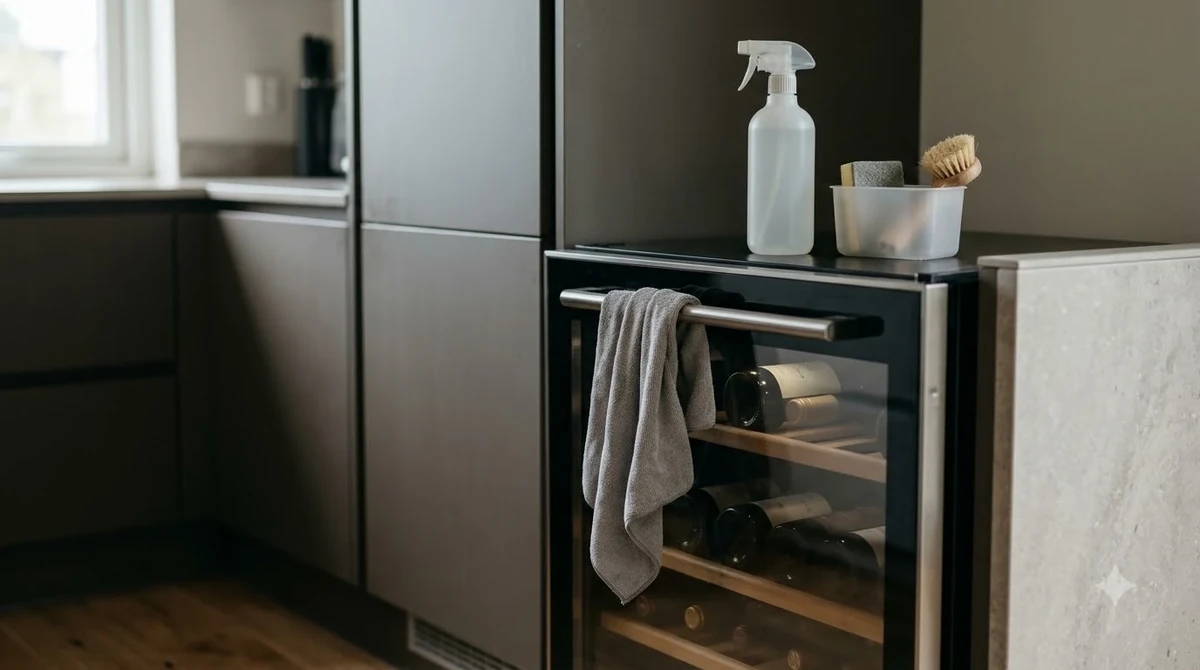
Thermoelectric technology is an important part of the design. Instead of using a conventional compressor, the cooling system uses an electrical process to move heat away from the interior. Cuisinart describes this approach as reducing operating noise and vibration. That can be appealing in an open-plan kitchen, dining room, or living area where a frequently cycling compressor might be distracting.
Reduced vibration is also a useful characteristic for wine storage. Bottles can remain relatively undisturbed instead of experiencing the movement associated with some conventional refrigeration systems. This does not make the CWC-1200 a professional wine-aging cabinet, but it supports its intended role as a convenient home storage appliance.
The removable chrome racks offer another practical advantage. A household can organize bottles by grape variety, drinking occasion, or intended serving temperature. For example, the upper section might hold several bottles of Sauvignon Blanc and Riesling, while the lower section contains Merlot and Pinot Noir.
Its 12-bottle capacity is appropriate for people who purchase wine in small quantities. A typical 750 ml bottle provides approximately five standard 5-ounce pours, so a fully stocked cabinet represents around 60 glasses of wine. That is sufficient for several dinners or a modest rotation of bottles without requiring a dedicated wine room.
The tinted viewing window and interior lighting also give the appliance a more polished appearance than an ordinary storage cupboard. Bottles remain visible, and the stainless-steel styling of the original Private Reserve model can complement other kitchen appliances.
There is a practical difference between convenient bottle storage and serious wine preservation, though. A small thermoelectric cabinet is intended to keep wines at useful temperatures for regular enjoyment. Collectors who maintain valuable bottles for many years should pay greater attention to temperature stability, humidity, insulation, and environmental conditions.
For someone who typically keeps a few bottles of red, white, and sparkling wine available, the basic concept remains sensible. The main question is whether the room where the refrigerator will operate is suitable for thermoelectric cooling.
Common Complaints and Thermoelectric Cooling Limitations
The biggest limitation of the Cuisinart CWC-1200 design is its dependence on surrounding room temperature. Thermoelectric cooling can struggle in hot environments, so a displayed temperature should not automatically be treated as proof that the wine has reached that temperature.
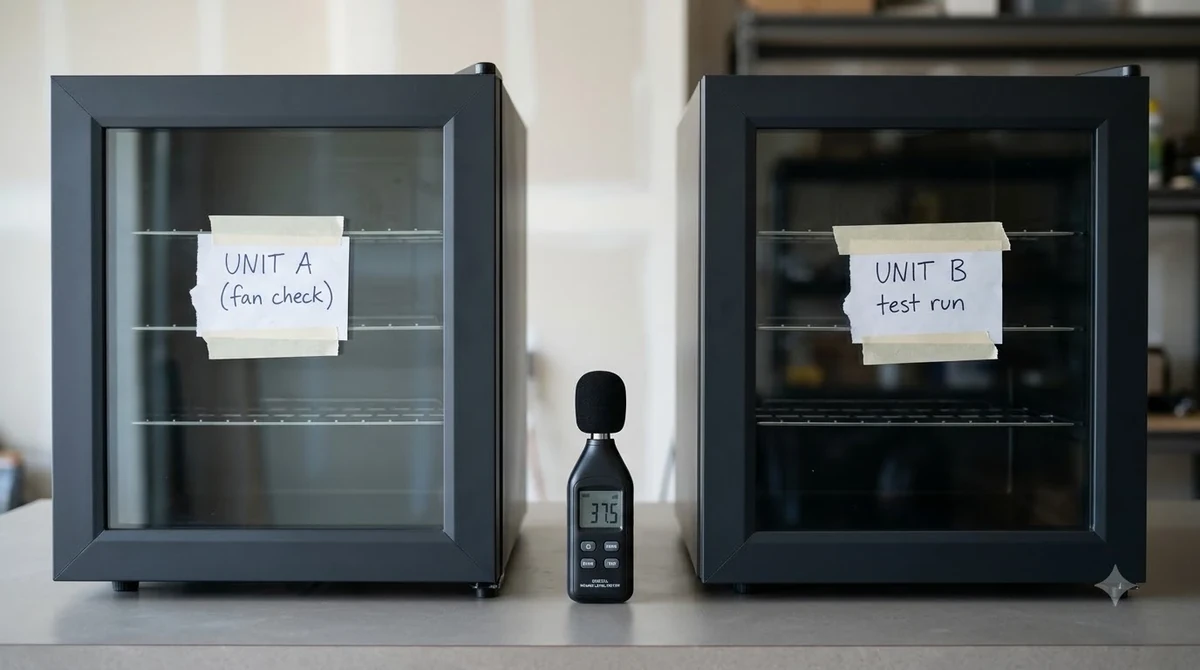
The CWC-1200TS instruction manual provides particularly useful information about this limitation. It recommends operating the appliance in an ambient environment below 70°F for efficient cooling. It also explains that actual cabinet temperature depends on the temperature surrounding the appliance.
The manual gives two useful examples. At a room temperature of 77°F, the cabinet may only reach approximately 50°F to 52°F. At a cooler ambient temperature of 66°F, it may reach approximately 39°F to 41°F. These figures illustrate why a thermoelectric wine refrigerator may perform differently in a cool basement than in a warm kitchen.
This is a meaningful consideration for buyers in warmer parts of the United States. A kitchen that regularly reaches the upper 70s can make it difficult for a small thermoelectric unit to reach lower white-wine serving temperatures. Positioning the refrigerator beside an oven, dishwasher, or sunny window can make the problem worse.
Capacity is another possible source of disappointment. The original CWC-1200 is designed around standard 750 ml bottles, but wine packaging is not completely uniform. Champagne bottles, wide Burgundy bottles, and unusually shaped containers can occupy more space than traditional Bordeaux-style bottles.
There is also the limitation of having only one storage compartment. The original CWC-1200 does not provide independently controlled red and white wine zones. Someone who wants to keep Sauvignon Blanc cold while maintaining Cabernet Sauvignon at a warmer temperature will need to compromise or use separate storage arrangements.
Its discontinued status creates an additional purchasing concern. Replacement availability, service support, and warranty coverage may be less straightforward for an older appliance. A used refrigerator can also have hidden problems involving the cooling system, electronic controls, door seal, or ventilation components.
Another point to consider is the distinction between quiet operation and completely silent operation. Cuisinart promotes reduced noise and vibration, but the cooling system still requires heat management and air movement. Buyers should not assume that every operating sound indicates a defect or that the appliance will be inaudible in every room.
Finally, the 12-bottle rating can encourage buyers to overestimate how much wine they can store. Twelve standard bottles may fit under ideal conditions, but a collection containing several oversized bottles can reduce the practical capacity. Buyers who regularly purchase mixed-format wine should plan around their actual bottle collection rather than the advertised maximum.
Who Should Buy and Who Should Skip This Wine Fridge
The Cuisinart 12-bottle wine cellar is best suited to casual wine drinkers with limited storage needs and a reasonably cool indoor location. It is less appropriate for collectors who need substantial capacity, independently controlled temperature zones, or dependable cooling in consistently hot rooms.
Who should consider it
Small households: A 12-bottle cabinet makes sense for people who keep a few wines ready for dinner rather than purchasing cases. Its compact format avoids dedicating a large area to wine storage.
Occasional entertainers: Keeping a selection of red, white, and sparkling wines together can simplify preparation for small gatherings. A bottle of Chardonnay, a bottle of Pinot Noir, and a few other favorites can provide useful variety without requiring a full-size wine cabinet.
People with cool indoor spaces: The manual’s recommended ambient operating condition below 70°F makes a temperature-controlled room particularly attractive. A cool interior location is more appropriate than a hot utility room or sun-exposed kitchen.
Buyers who appreciate straightforward controls: Eight presets and manual adjustment provide practical options without requiring complicated programming. The electronic readout also makes it easier to identify the selected setting.
Who should skip it
Serious wine collectors: People storing expensive bottles for extended periods may prefer a purpose-built wine refrigerator with more consistent environmental control. A small countertop appliance is not a substitute for a dedicated cellar.
Large wine households: Twelve bottles can disappear quickly when wine is served regularly. Households that purchase multiple cases or entertain large groups may find the storage space restrictive.
People who need two temperature zones: The original CWC-1200 has a single storage compartment. A household that frequently serves white and red wines at different temperatures should consider a genuinely dual-zone appliance.
Homes with consistently warm rooms: The thermoelectric cooling system is less suitable when the surrounding temperature regularly exceeds the manual’s recommended operating environment. A compressor-based refrigerator may be a more practical choice in that situation.
Buyers who require a new appliance with current warranty protection: Since the original CWC-1200 is discontinued, finding an unused unit with reliable documentation and valid manufacturer support may be difficult. A currently supported model can offer a more straightforward purchasing experience.
The distinction between storage and serving is also important. Some people want a refrigerator that keeps every bottle at its ideal drinking temperature, while others simply want to prevent bottles from sitting in a warm room. The CWC-1200 is better understood as a compact serving-oriented storage appliance than as a comprehensive wine preservation system.
How It Compares to the CWC-1200TS and CWC-1200DZ
The CWC-1200, CWC-1200TS, and CWC-1200DZ are related Cuisinart products, but they are not interchangeable. The original model has eight preset settings, the TS version adds touchscreen controls and a different rack arrangement, and the DZ version offers two independently controlled compartments.
Understanding these differences matters because older retail listings and secondhand advertisements sometimes use the general phrase Cuisinart 12-bottle wine fridge without clearly identifying the exact model. A product photograph alone is not always sufficient to establish which version is being sold.
| Feature | CWC-1200 | CWC-1200TS | CWC-1200DZ |
|---|---|---|---|
| Capacity | 12 bottles | 12 bottles | 12 bottles |
| Temperature zones | Single zone | Single zone | Dual zone |
| Cooling system | Thermoelectric | Thermoelectric | Two thermoelectric units |
| Controls | Electronic controls | Touchscreen | Touchpad |
| Temperature range | Eight presets and manual setting | 39°F–68°F | 39°F–68°F |
| Racks | 3 removable chrome racks | 6 contoured chrome racks | 6 contoured chrome racks |
| Lighting | Interior light | Blue interior lighting | Individual zone lighting |
| Viewing window | Double-pane tinted | Double-pane | Double-pane tinted |
| Manufacturer-listed warranty | 3 years limited | 3 years limited | 3 years limited |
The original CWC-1200 is the straightforward choice for someone who wants a basic 12-bottle cellar with preset temperature selection. Its removable racks and LED readout cover the main requirements for a small household wine collection. It does not offer the separate compartments found in the DZ model.
The CWC-1200TS is a different presentation of the Private Reserve concept. Cuisinart describes touchscreen controls, a blue LCD temperature display, warm natural wood trim on the shelving, stainless-steel exterior trim, and six contoured chrome racks. Its listed adjustment range is 39°F to 68°F.
The CWC-1200DZ is the more interesting version for households that serve different wine styles regularly. Its two compartments have separate temperature controls, individual thermoelectric cooling units, and a dual-fan system. This arrangement allows a household to set different temperatures for white and red wines instead of relying on one compromise setting.
Newegg lists the CWC-1200DZ at approximately 21 × 18.5 × 15 inches and 34.4 pounds. Those measurements are useful when assessing counter or floor space, but they should not be transferred to the original CWC-1200 or CWC-1200TS without checking the relevant model documentation.
For additional appliance comparisons, the wine and appliance model reviews section provides a useful starting point for assessing different product designs and capacities. The right choice depends on whether bottle capacity, cooling method, temperature flexibility, or current manufacturer support matters most.
One caution applies to all three versions: Cuisinart identifies these particular products as discontinued. The original CWC-1200 page and the related product listings therefore describe historical models rather than a guaranteed source of new inventory. A listing that claims to offer a Cuisinart 12-bottle cellar should identify its precise model number before a buyer makes a decision.
Setup, Temperature Performance, and Wine Storage Tips
Correct installation has a direct effect on how well a small thermoelectric wine refrigerator operates. A level surface, adequate ventilation, moderate room temperature, and a sensible bottle arrangement all help the CWC-1200 operate under the conditions intended by its manufacturer.
The CWC-1200TS manual provides useful installation guidance for its related Private Reserve design. It recommends allowing 24 hours for the internal temperature to adjust before relying on the cabinet. It also calls for at least 2 inches of clearance on both sides and at the rear to support proper ventilation.
The manual specifies that the unit is designed for freestanding use rather than installation as a fully recessed or built-in appliance. This distinction is important because enclosing the refrigerator can restrict airflow and interfere with heat removal. A wine cellar placed tightly between cabinets may not perform as expected.
For initial setup, use the following sequence:
- Choose a suitable location. Select a dry, level indoor surface away from direct sunlight, ovens, dishwashers, radiators, and other heat-producing appliances.
- Allow ventilation space. Follow the manual’s recommendation of at least 2 inches of clearance on both sides and behind the unit.
- Check the electrical supply. The related CWC-1200TS manual specifies a properly grounded 120-volt, 15-amp electrical outlet. Follow the instructions supplied with the exact model.
- Inspect the racks and door. Make sure the removable shelves are correctly positioned and the door closes without obstruction.
- Start the cooling system. Allow at least 24 hours for temperature adjustment, following the related model’s manual guidance.
- Load standard bottles carefully. Avoid overfilling the cabinet or forcing oversized bottles into spaces intended for standard 750 ml formats.
- Monitor the actual temperature. Check the interior with an independent thermometer if accurate serving temperatures are important.
Temperature selection should reflect the wine style rather than simply the color of the bottle. A light white wine generally benefits from a colder serving temperature than a full-bodied red, while sparkling wine and sweet whites are usually served particularly cold.
| Wine style | Recommended serving temperature | Examples |
|---|---|---|
| Sparkling wine | 40°F–50°F | Champagne, Cava, Prosecco |
| Light whites and rosé | 45°F–50°F | Pinot Grigio, Sauvignon Blanc, dry rosé |
| Full-bodied whites | 50°F–55°F | Oaked Chardonnay, Viognier |
| Light reds | 55°F–60°F | Pinot Noir, Beaujolais |
| Full-bodied reds | 60°F–65°F | Cabernet Sauvignon, Syrah |
| Sweet whites | 43°F–50°F | Moscato, dessert Riesling |
These are serving-temperature ranges rather than a requirement to store every wine permanently at its ideal drinking temperature. A household can use a convenient general storage setting and make final adjustments shortly before serving. However, the actual performance of a thermoelectric cabinet must be considered before selecting a target.
Tip: Do not rely exclusively on the temperature shown on the display. Thermoelectric cooling depends heavily on room conditions, and the related Cuisinart manual illustrates that a 77°F room can limit cabinet cooling to approximately 50°F–52°F. Use an independent thermometer to verify the actual interior temperature.
Bottle placement also makes a difference. Store bottles horizontally when their closures are designed for traditional cork storage, and avoid blocking internal airflow with an overly crowded arrangement. If a Champagne bottle or wide Burgundy bottle does not fit comfortably, do not force the rack or door closed.
Wine intended for regular drinking does not necessarily need elaborate cellar treatment. A few bottles of Sauvignon Blanc can be kept ready for seafood dinners, while Pinot Noir and Merlot can be reserved for meals that call for lighter or softer red wines.
Food pairing can also help determine which bottles deserve priority in the cabinet. A chicken Marsala recipe is a natural opportunity to serve a medium-bodied red such as Pinot Noir or Merlot. Their softer tannins complement the savory mushroom sauce without overwhelming the chicken.
For a casual gathering, sparkling and refreshing mixed drinks may also be part of the serving plan. An Aperol Spritz recipe provides an example of a cocktail that uses chilled sparkling wine, while the wine refrigerator can keep the underlying bottles ready for use.
Warranty, Maintenance, and Buying a Discontinued Unit
The original CWC-1200 has a manufacturer-listed limited three-year warranty, but its discontinued status makes the exact purchase date, ownership history, and warranty documentation particularly important. A used unit should be assessed for operating condition rather than judged by its original product specifications alone.
Cuisinart’s official product page identifies the original Private Reserve CWC-1200 as discontinued and out of stock. The CWC-1200TS and CWC-1200DZ also appear on Cuisinart’s discontinued product pages. This means buyers should not assume that a new replacement unit or current warranty service will be available simply because an old listing remains online.
Before buying a used refrigerator, request a photograph of the model identification label. The label should establish whether the appliance is the CWC-1200, CWC-1200TS, or CWC-1200DZ. This prevents confusion between the original single-zone model and the separate dual-zone version.
Ask the seller whether the refrigerator has been operating recently. An appliance that has been sitting unused for years may have problems that are not immediately visible. A demonstration showing the controls, lighting, door closure, and cooling operation provides more useful evidence than a photograph of a clean exterior.
Check the following areas before committing to a purchase:
- Cooling performance: Confirm that the interior temperature changes after the appliance has been operating for a reasonable period.
- Electronic controls: Test temperature selection and verify that the LED display responds properly.
- Door and seal: Inspect the double-pane window for damage and check whether the door closes securely.
- Racks: Confirm that all three original chrome racks are present and can slide into position.
- Interior condition: Look for residue, corrosion, persistent odors, and damaged interior surfaces.
- Ventilation: Inspect the cooling area for accumulated dust or obstructions.
- Electrical components: Check the power cord, plug, and controls for visible damage.
- Documentation: Request the original manual, proof of purchase, and any remaining warranty paperwork.
Maintenance should remain simple. Unplug the appliance before cleaning, remove bottles and racks as appropriate, and wipe the interior with a soft damp cloth. Avoid spraying liquid directly into electronic controls or ventilation openings.
Keep the refrigerator away from moisture and excessive heat. Dust accumulation around ventilation areas can interfere with heat removal, so inspect these areas periodically. Always remove bottles before moving the appliance, as recommended in the related Cuisinart instruction manual.
The warranty deserves particular attention. Cuisinart lists a limited three-year warranty for the original CWC-1200, and the related TS and DZ product pages also list limited three-year coverage. However, a secondhand buyer should not assume that coverage automatically transfers to a new owner. Confirm the applicable terms directly with Cuisinart before treating the warranty as a purchasing benefit.
For buyers who cannot find a working original unit, a currently supported 12-bottle wine refrigerator may be a better long-term purchase. Comparing the manufacturer’s current documentation, cooling technology, ventilation requirements, and service availability is more useful than selecting an older model solely because it has the familiar Cuisinart name.
Frequently Asked Questions
Does the Cuisinart CWC-1200 have a reversible door?
The original product specifications do not establish that the door is reversible. Buyers should not assume the hinge can be moved to the opposite side without explicit instructions for their model. Check the physical hinge arrangement and original documentation before purchasing if door direction is important.
Can the Cuisinart 12-bottle wine cellar be transported on its side?
The safest approach is to transport the appliance upright whenever possible. Remove all bottles and loose racks before moving it, protect the glass door, and secure the power cord. Consult the exact model’s manual for any additional instructions about repositioning and restarting after transport.
Does the CWC-1200 have a child safety lock?
The original CWC-1200 feature list does not identify a dedicated child safety lock. The CWC-1200DZ listing also does not establish that the unit has a locking mechanism. Buyers who need physical access control should verify this feature on the exact appliance rather than assuming all Private Reserve versions have it.
Can a wine refrigerator be used to store unopened sparkling wine?
Yes, sparkling wine can be kept in a suitable wine refrigerator if the bottle fits securely and the actual cabinet temperature is appropriate. Champagne and Cava generally use traditional bottle fermentation, while Prosecco is commonly produced using the tank method and the Glera grape. Their serving temperatures are typically around 40°F–50°F.
Does the Cuisinart 12-bottle wine fridge require a water connection?
No water connection is specified for the original CWC-1200 or the related thermoelectric Private Reserve models. These are freestanding electrical wine cellars rather than plumbed appliances. Their installation requirements focus on a suitable electrical outlet, stable positioning, and sufficient ventilation.
The Cuisinart 12-bottle wine fridge remains an appealing compact storage concept, particularly for households that value quiet operation, straightforward controls, and a small bottle collection. However, its discontinued status and the limitations of thermoelectric cooling make model identification and room conditions essential considerations. Anyone purchasing an older CWC-1200 should verify its actual cooling performance, inspect its condition, and compare it with currently supported alternatives before making a final decision.
More in Model Reviews
 Magic Chef 44 Bottle Wine Cooler Review for Flexible StorageUpdated Nov 21, 2026
 Whynter 164 Bottle Wine Cooler Review: Capacity, Features, and FitUpdated Nov 21, 2026
 Insignia NS WC16BK6 Review: Compact 16-Bottle Wine StorageUpdated Nov 21, 2026
 Wine Enthusiast Electric Blue Omega Review: Opening, Pouring, and Preserving Made EasierUpdated Nov 21, 2026
 Koolatron 20 Bottle Wine Cooler Review: Features, Fit, and PerformanceUpdated Nov 21, 2026
 NewAir AWC 330E Review for Home Wine StorageUpdated Nov 21, 2026