
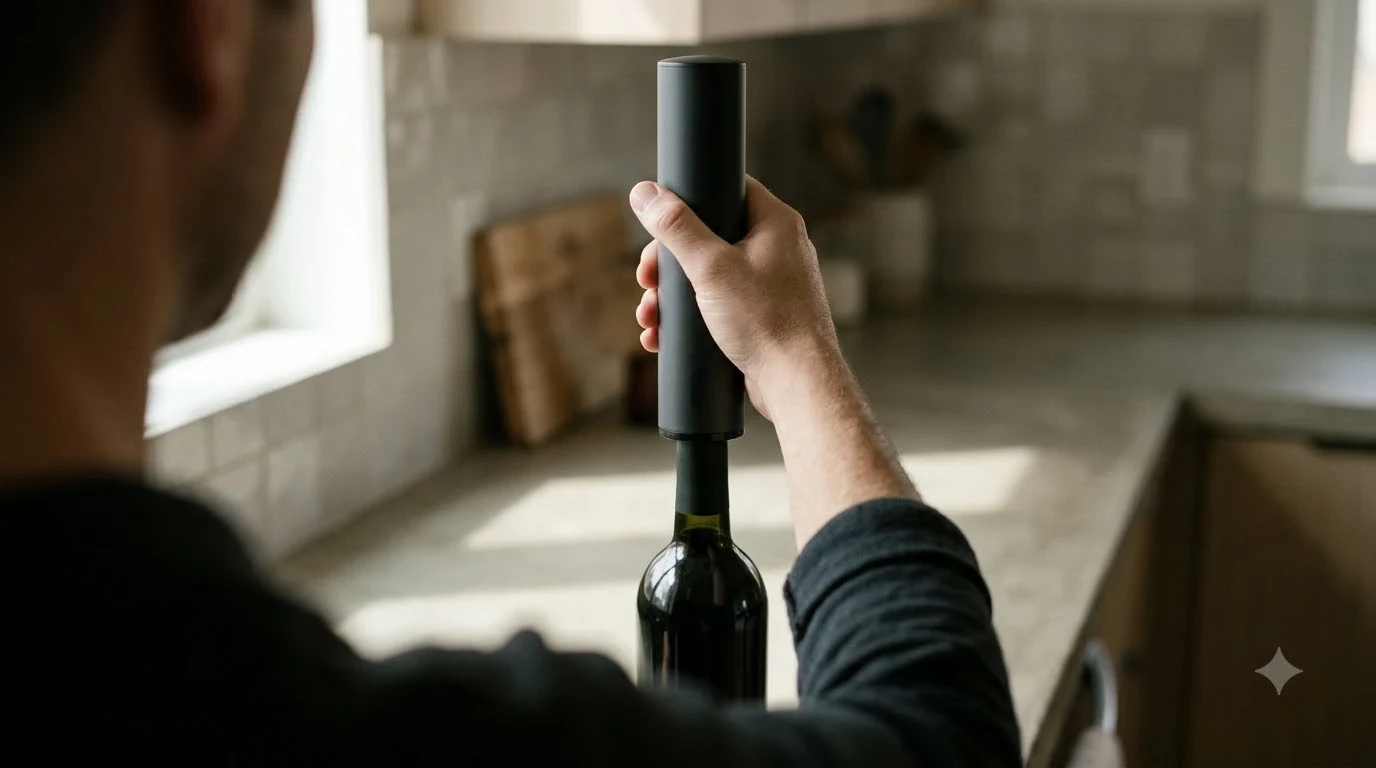

We may earn a commission when you buy through links on this page, at no extra cost to you. Learn more.
The corvino wine opener could not be verified as a documented wine opener product, and buyers should distinguish it from Coravin, the established wine-preservation system. The difference matters because a conventional corkscrew removes a cork, while Coravin’s Timeless technology uses a needle and argon gas to pour wine without removing it. Anyone considering a product advertised as Corvino should verify its manufacturer, model information, compatibility, and warranty before purchasing.
The name Corvino can create confusion for wine-accessory shoppers, particularly because Coravin has a recognizable range of wine-by-the-glass preservation systems. These products serve a different purpose from ordinary corkscrews, electric openers, and waiter-style wine keys. This review examines what can be verified, explains the closest documented product category, and identifies the practical considerations that should guide a purchase. It also covers situations where a straightforward manual opener makes more sense than a specialized preservation device.
Specs and Key Features: Identifying the Actual Product
The first issue with a Corvino wine opener is product identification. No sufficiently reliable manufacturer documentation or product specification could be established for an opener under that exact name, so assigning it a model number, construction material, dimensions, operating mechanism, or warranty would be misleading. Coravin, however, documents a recognizable alternative that provides a useful comparison for shoppers who may have encountered a misspelled product listing.
Coravin’s Timeless system is not a conventional corkscrew. Its needle passes through a suitable cork, allowing wine to flow into a glass while argon gas replaces the volume removed. The cork remains in the bottle, and the manufacturer explains that it reseals after the needle is withdrawn. That makes the product a preservation-oriented pouring device rather than a tool for physically removing a cork.
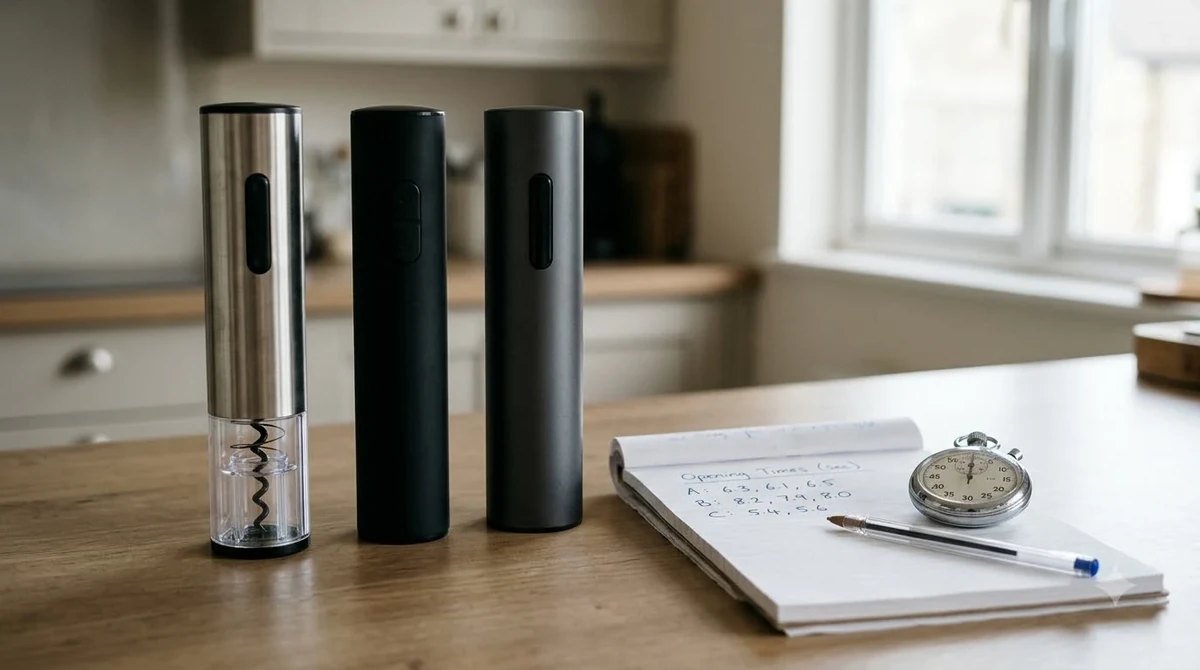
The following table separates the information that can be verified about Coravin from the information that remains unknown about a supposed Corvino product. The distinction is particularly important when shopping through marketplaces, where similar-looking product names can lead to incorrect assumptions about compatibility and functionality.
| Specification | Corvino | Documented Coravin Timeless System |
|---|---|---|
| Manufacturer identity | Not verified | Coravin |
| Product category | Not verified | Wine preservation and pouring system |
| Operating mechanism | Not verified | Needle-through-cork technology |
| Gas technology | Not verified | Argon gas |
| Cork removal | Not verified | Cork remains in the bottle |
| Compatibility | Not verified | Standard natural and technical corks |
| Typical operation time | Not verified | Approximately 30 seconds, according to Coravin |
| Consumables | Not verified | Argon capsules |
| Maintenance requirements | Not verified | Careful needle handling and system maintenance |
These specifications should not be transferred from Coravin to a product advertised as Corvino. Even if a seller uses similar photographs or descriptions, that does not establish that the products share a manufacturer, mechanism, or performance characteristics. Buyers should request the exact model designation and original instruction manual before treating the names as interchangeable.
For additional technical information, Coravin explains its operating principles on its official wine opener and preservation system page. This is the appropriate starting point for understanding the documented product, not proof that a separate Corvino model exists.
What Owners Like About the Documented Alternative
Coravin’s main appeal is the ability to pour a glass without committing to finishing an entire bottle. That feature is especially useful for collectors, people who enjoy several different wines during the week, and households that do not regularly share a bottle with multiple drinkers. The preservation approach also changes how wine can be served at home.
One significant advantage is portion flexibility. With an ordinary corkscrew, opening a bottle exposes the remaining wine to oxygen. Refrigeration and a suitable stopper can slow deterioration, but the bottle has still been opened. A Coravin Timeless system instead introduces argon as wine is poured through the needle. The cork stays in place and can reseal after the device is removed.
This approach can be practical when comparing different wines alongside dinner. For example, someone choosing between a Cabernet Sauvignon and a Pinot Noir can pour a modest serving of each without opening two full bottles. Cabernet Sauvignon generally has higher tannin, while Pinot Noir typically has lower to medium tannin and higher acidity. Being able to sample both styles separately can make a wine night more varied without requiring several people to finish every bottle.
Another attraction is the ability to return to a bottle later. Coravin describes the preservation process as allowing another pour the following day or even much later, depending on the system and conditions. This is different from the more limited storage window associated with ordinary opened wine. It can be particularly appealing for special bottles that are not intended for everyday consumption.
The system also offers a different serving experience. There is no traditional cork extraction, no need to pull against a stubborn stopper, and no cork left on the table. That can be helpful in a small home wine station or on a prepared bar cart, where the equipment is used repeatedly for small pours rather than for opening several bottles at once.
These benefits are specific to the documented preservation technology. They should not be attributed to a Corvino-branded opener without independent evidence that it actually uses the same mechanism. A product that merely resembles a Coravin system might be an ordinary electric corkscrew, a battery-powered opener, or a completely different accessory.
Common Complaints and Practical Limitations
A preservation system is not automatically the right wine accessory for every household. Its specialized operation, consumables, compatibility requirements, and delicate components can make it less convenient than a basic corkscrew. These considerations deserve attention before spending money on a product whose identity is uncertain.
The first limitation is compatibility. Coravin’s Timeless technology is designed for suitable corked bottles, rather than being a universal solution for every wine closure. Screw-cap bottles require a different approach. Coravin addresses this distinction with its Pivot system, which uses a replacement stopper and is designed for standard bottles including screw-cap varieties. The Sparkling system is another separate product category, intended for sparkling wine bottles with mushroom-shaped corks.
Another consideration is the needle. It is a precision component, not a heavy-duty screw that can be forced through a resistant closure. Liquor.com identifies needle fragility as a concern and advises careful insertion. Buyers who prefer tools that can withstand rough handling may find a traditional corkscrew more reassuring.
Consumables also matter. Argon capsules are required for the documented Timeless preservation method, creating an ongoing expense and another item to keep available. This differs from a manual waiter-style opener, which generally needs no batteries, gas cartridges, or replacement power accessories. A person who opens one bottle every weekend may not benefit enough from a specialized preservation system to justify the extra equipment.
There is also a learning curve. Although Coravin describes the standard operation as taking approximately 30 seconds, new users still need to position the device correctly, operate the pouring mechanism, and handle the needle carefully. A conventional wine key may require a little practice too, but its basic operating principle is straightforward and familiar.
Tip: Before buying anything advertised as a Corvino wine opener, ask the seller for a photograph of the manufacturer’s nameplate, the exact model number, the original manual, and the replacement-parts information. If those details cannot be supplied, avoid assuming that the item is a genuine Coravin system or that it offers wine-preservation functionality.
Finally, preservation should not be confused with a guarantee that every bottle will remain unchanged indefinitely. Wine is a living product, and storage conditions, closure quality, temperature, and the condition of the original bottle all influence its development. The manufacturer’s claims describe the intended operation of its equipment, not a reason to ignore appropriate wine storage practices.
Who Should Buy and Who Should Skip a Wine Preservation Opener
A Coravin-style system makes the most sense for people who regularly want individual glasses from different bottles. Its benefits become less important for households that typically finish a bottle during one meal or prefer uncomplicated opening tools. The decision should depend on drinking habits rather than the appeal of an unusual gadget.
Who may benefit from a preservation system?
Wine collectors are an obvious audience. A collector may have several bottles reserved for different occasions and may want to check the progress of a wine without removing the cork. Being able to pour a small amount while retaining the original closure can make occasional sampling more practical.
Wine students and enthusiasts who compare grape varieties can also appreciate the flexibility. A tasting might include Sauvignon Blanc, Chardonnay, Merlot, and Syrah, with each wine served in a relatively small portion. A preservation system allows the remaining wine to stay in its original bottle rather than requiring every bottle to be opened conventionally.
Restaurants and wine bars that offer premium wines by the glass may find this approach useful as well. A bottle can be presented as an individual serving option without requiring the establishment to sell the entire bottle in one sitting. Food Network’s wine-accessory coverage also distinguishes preservation devices from manual, lever, and electric openers, reflecting the different needs these categories address.
Who should choose a conventional opener?
Most occasional wine drinkers are better served by a dependable manual opener. A double-hinged waiter-style corkscrew is compact, inexpensive to maintain, and easy to store in a kitchen drawer. It is also a familiar tool for anyone who regularly opens wine for dinner parties.
People who entertain frequently and open several bottles in one evening may prefer an electric or lever opener. These designs can reduce repeated manual effort. An electric opener is especially attractive for someone who finds traditional cork extraction uncomfortable, while a lever model offers a mechanical alternative without requiring capsules.
People who primarily drink screw-cap wines should not purchase a needle-through-cork system solely because it is marketed as an advanced wine opener. They should consider a suitable conventional opener for corked bottles or a preservation device specifically designed for screw-cap compatibility.
Before deciding, consider how often a bottle is left unfinished, how many different wines are consumed in a typical week, and whether preserving expensive bottles is a recurring concern. If those situations rarely occur, the additional technology may remain unused in a cupboard.
How It Compares to Alternative Wine Openers
The most useful comparison is between a preservation system and the conventional mechanisms used to extract corks. Each design solves a different problem, so the best choice depends on whether the priority is keeping the remaining wine protected, minimizing opening effort, or having a compact tool available for everyday use.
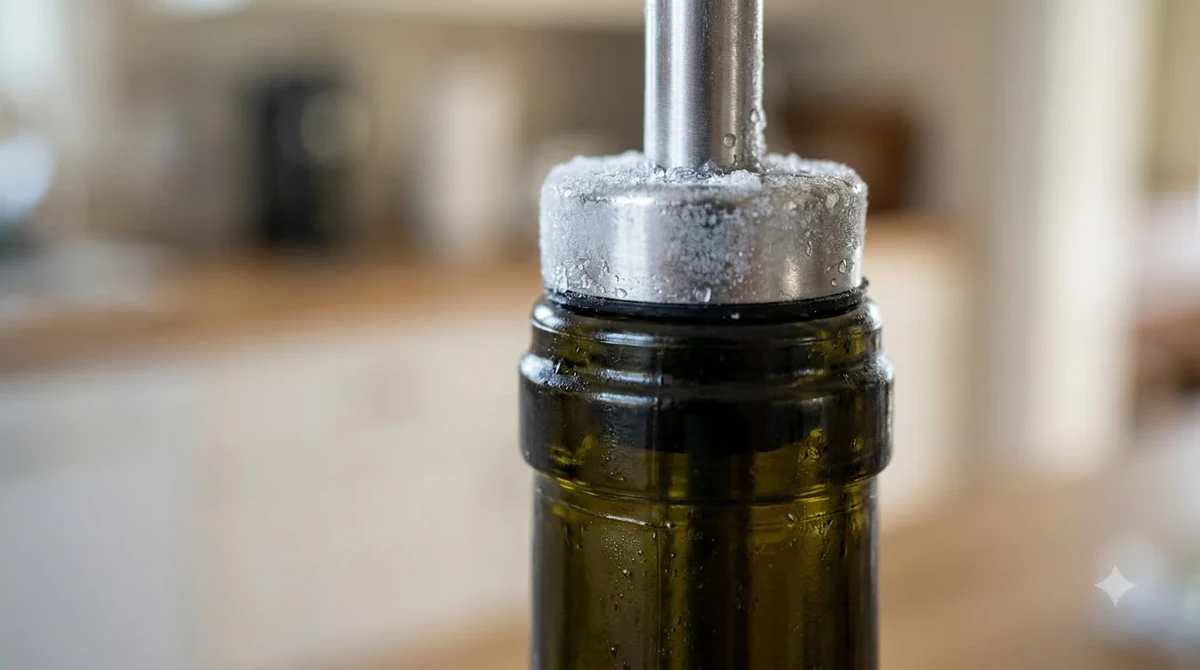
A waiter-style corkscrew remains one of the most practical choices. It uses a spiral worm and a hinged support to extract the cork through leverage. Liquor.com identifies this traditional design as a standard option among hospitality professionals. Its compact shape makes it convenient to store, and it does not require electricity or gas cartridges.
A winged corkscrew offers a different mechanical arrangement. The user turns the central handle to insert the worm, causing the two side levers to rise. Pressing the levers downward extracts the cork. It can be easier for beginners to understand, although its larger shape makes it less convenient to carry than a small wine key.
A lever corkscrew uses a handle mechanism to insert and withdraw the worm. The Le Creuset LM-250, discussed in the wine-accessory comparison by Todo para mis vinos, is an example of this category. The advantage is a relatively controlled extraction process, while the trade-off is bulkier storage and more moving parts than a simple manual key.
A two-prong cork puller, often called an Ah-So, is a specialized alternative for older bottles. Its two metal prongs slide between the cork and the inside of the bottle neck. The tool can then be twisted and lifted to extract the cork without piercing it. This is useful when an older cork is fragile and might crumble under a conventional spiral worm.
Coravin belongs in a separate category because its purpose is not cork extraction. The user accesses the wine while leaving the cork in place. That makes the technology particularly different from a waiter-style corkscrew or a winged model. The distinction is important because a preservation device cannot simply replace every conventional opening tool in a wine collection.
For a broader examination of practical accessories, the wine accessory brands category can help shoppers understand the differences between equipment manufacturers and the products they offer. A useful home setup may include more than one opening tool rather than relying on a single specialized device.
Choosing, Using, and Maintaining the Right Equipment
The safest buying approach begins with identifying the exact product and matching it to the bottles you normally purchase. A tool designed to remove a cork, a device designed to preserve wine, and a specialized sparkling-wine accessory are not interchangeable. Understanding those distinctions can prevent compatibility problems and unnecessary purchases.
Step 1: Confirm the manufacturer’s identity
Look for a recognizable manufacturer name, a complete product designation, and an official product page. A genuine product should have enough documentation to explain its mechanism and intended bottle closures. If a seller lists Corvino but provides specifications copied from Coravin, ask for independent confirmation before proceeding.
Check whether the manual identifies replacement components and provides operating instructions. For a conventional corkscrew, the important parts include the worm, handle, and any leverage mechanism. For a preservation device, the needle, gas supply, stopper compatibility, and maintenance instructions deserve closer attention.
Step 2: Match the tool to your drinking habits
If most bottles are finished at dinner, a manual opener is usually sufficient. If several bottles are opened for parties, an electric or lever mechanism may reduce repetitive effort. If premium wines are poured a glass at a time, a preservation system may provide more useful functionality.
Think about the bottle closures in your collection, too. Natural cork, technical cork, and screw-cap closures require different handling. The presence of a familiar brand name does not mean every model works with every closure.
Step 3: Use the correct opening technique
With a traditional waiter-style corkscrew, cut the foil below the bottle lip, center the worm, and turn it into the cork without pushing through its bottom. Position the hinge against the bottle lip and lift steadily. If the opener has a two-stage lever, use both stages rather than trying to pull the entire cork out in one awkward movement.
With a Coravin Timeless system, follow the manufacturer’s instructions for attaching the device, positioning the needle, and pouring. Do not twist or force the needle if it meets unusual resistance. Its purpose is to pass through a suitable cork with controlled pressure, not to behave like a heavy conventional corkscrew.
Step 4: Store and clean the equipment properly
Manual openers should be wiped clean after use, especially around the worm and foil cutter. Remove wine residue and dry metal components before storing them. Keep sharp blades protected, and avoid leaving loose accessories in a drawer where they can damage other kitchen tools.
Preservation devices require more specific care. Follow the manufacturer’s directions for cleaning, capsule replacement, needle handling, and storage. Avoid dropping the unit or placing unnecessary pressure on precision components. A damaged needle can affect operation and may require a replacement rather than an improvised repair.
Wine storage itself remains important regardless of the opener. Bottles intended for longer storage should generally be kept on their sides near 55 degrees Fahrenheit, away from strong temperature fluctuations and direct sunlight. Opened still wine usually benefits from refrigeration and a suitable closure, with a typical consumption window of approximately three to five days.
For a complete serving station, a compact wine key can be stored alongside glassware and other accessories on a home bar cart. Keeping the tools organized makes it easier to select the right opener for the bottle rather than forcing one device to handle every situation.
Frequently Asked Questions
Is Corvino the same company as Coravin?
The two names should not be treated as interchangeable. Coravin is the documented wine-accessory brand associated with needle-based wine preservation technology. A seller using the name Corvino should provide independent manufacturer information before buyers assume the product is related to Coravin.
Can a Coravin system open a bottle with a synthetic cork?
Coravin’s product information identifies compatibility with natural and technical corks for its Timeless systems. Synthetic closures should not automatically be assumed to have the same resealing behavior as suitable natural corks. Buyers should consult the instructions for their particular system and closure type.
Does a wine preservation opener work with champagne?
Standard still-wine Timeless systems are not the same as sparkling-wine preservation equipment. Coravin offers a separate Sparkling system designed for bottles with mushroom-shaped sparkling-wine corks. Champagne and other sparkling bottles also require careful handling because their internal pressure makes opening different from still wine.
How many glasses can one argon capsule provide?
Capacity depends on the particular system, capsule design, and serving conditions. Liquor.com’s discussion of the older Coravin Model Two specifies up to 15 five-ounce glasses per capsule. That figure should not automatically be applied to every Coravin model or to a product advertised under another name.
Can a wine opener damage an expensive bottle?
Yes, an unsuitable or poorly handled opener can damage a fragile cork or bottle closure. Older corks are particularly vulnerable to crumbling, which is why specialized two-prong pullers are sometimes preferred. Avoid excessive force, keep the tool aligned with the bottle neck, and use an opening method appropriate to the closure’s condition.
The Corvino wine opener name remains insufficiently documented for a dependable product-specific recommendation. Coravin is the identifiable alternative if the intended purchase is a system that pours wine without removing the cork, while a waiter-style or lever corkscrew is generally more practical for ordinary bottle opening. Verify the manufacturer and model before buying so the equipment matches the way wine is actually served and stored.
More in Wine Accessories
 Coravin Vs Vacu Vin: Choose the Right Wine Saver for Your BottlesUpdated Nov 21, 2026
 Zwilling Wine Stopper Review: Preserve Open Bottles LongerUpdated Nov 21, 2026
 Wine Enthusiast Wine Preserver Review: Features, Benefits and LimitationsUpdated Nov 21, 2026
 Wine Enthusiast Wine Stopper: An Easier Way to Reseal Open BottlesUpdated Nov 21, 2026
 Vintorio Wine Opener: Two-Step Cork RemovalUpdated Nov 21, 2026
 Zwilling Wine Aerator Review: Aerate, Pour, and Seal With One ToolUpdated Nov 21, 2026