

We may earn a commission when you buy through links on this page, at no extra cost to you. Learn more.
Cornas vineyards are located on steep granite hillsides above the Rhône River in France’s Northern Rhône Valley, where Syrah produces powerful, structured red wines with excellent aging potential. This small appellation in the Ardèche department is distinguished by its south- and east-facing slopes, narrow stone terraces, and distinctive decomposed-granite soils. Unlike many neighboring Northern Rhône appellations, Cornas permits only one grape variety: Syrah. Understanding its geography, vineyard conditions, and winemaking traditions helps explain why Cornas has such a distinctive reputation among French red wines.
Although Cornas occupies a relatively small area, its vineyard landscape contains considerable variation. Elevation, slope position, soil composition, sunlight exposure, and vineyard management all contribute to differences between individual wines. For wine enthusiasts exploring the Northern Rhône, Cornas offers an especially interesting example of how a single grape variety can express different characteristics across a compact growing region.
Where the Cornas Vineyards Are Located
Cornas occupies a small section of the Northern Rhône Valley on the river’s right bank, within the Ardèche department of southeastern France. Its vineyards surround the village of Cornas, between Saint-Joseph to the north and Saint-Péray to the south, approximately 7 kilometers from Valence.
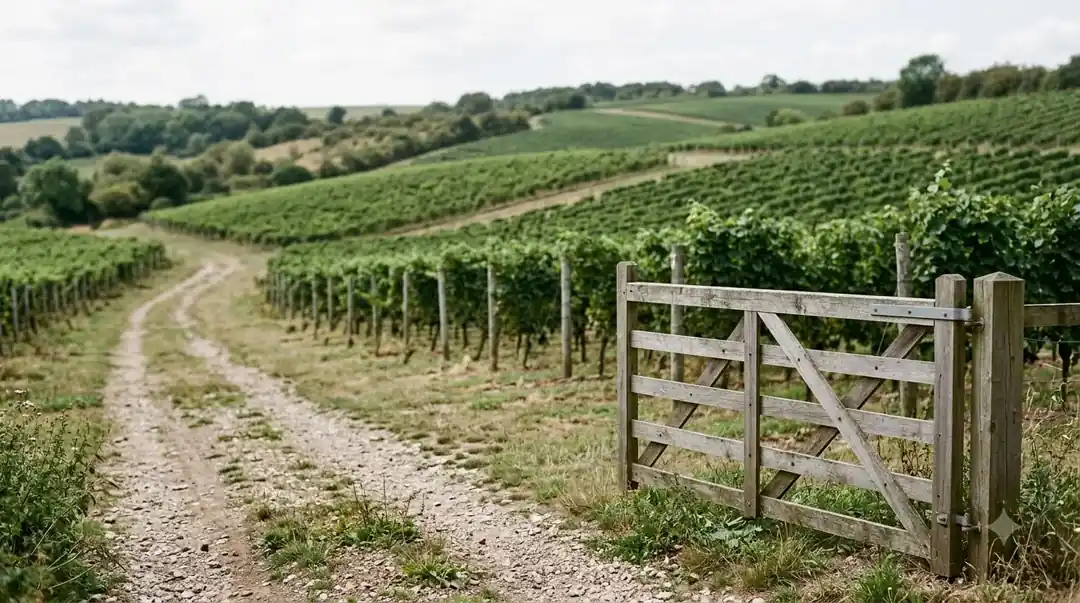
The appellation’s geographical boundaries are particularly important because Cornas is not a broad regional designation covering numerous communities. The entire production area belongs to one village, creating a close relationship between the appellation’s identity and its local landscape. Its position on the eastern edge of the Massif Central gives the vineyards a distinctive combination of steep terrain, granite geology, and exposure to Mediterranean climatic influences.
According to Inter Rhône, the vineyard slopes generally face east and southeast and occupy elevations between 125 and 400 meters. These different positions influence the amount of sunlight received by the vines and the speed at which grapes mature. Higher vineyards can experience different ripening conditions from lower parcels closer to the Rhône Valley floor.
The natural amphitheater surrounding Cornas is another important geographical feature. Its semicircular arrangement of hills provides protection from the Mistral, the strong northerly wind that affects many parts of the Rhône Valley. This sheltered setting helps moderate some of the temperature fluctuations experienced by exposed vineyard sites.
The regional setting also helps explain Cornas’s relationship with neighboring wine appellations. Hermitage lies farther north across the Rhône near Tain-l’Hermitage, while Saint-Joseph extends along the western side of the river. Although these regions share the broader Northern Rhône identity, each has its own geographical boundaries and production requirements. Readers exploring other wine-growing landscapes can also discover Wine Regions for a broader understanding of how geography shapes regional wine styles.
Granite Soils, Terraces, and Vineyard Geology
Granite is the defining geological feature of much of Cornas, particularly where the rock has broken down into sandy, clay-rich material known locally as gores. These soils, combined with steep slopes and carefully maintained terraces, create growing conditions that distinguish Cornas from many other Rhône appellations.
The Rhône River played an important role in shaping this landscape over geological time. Erosion cut into the eastern edge of the Massif Central, creating the steep natural amphitheater that now accommodates the vineyards. Weathering gradually broke down granite into smaller particles, leaving sandy surfaces and decomposed mineral material suitable for vine cultivation.
The vineyard soils are not completely uniform. Granite dominates much of the appellation, but limestone scree appears in the northern sector, particularly around the geological formations of Rocher de Crussol and Rocher de Rochepertuis. Deposits of silt also occur in certain locations, adding further variation to the growing environment.
These differences matter because soil depth, texture, drainage, and water availability influence vine development. A shallow, rocky hillside parcel does not necessarily behave like a deeper-soil vineyard closer to the foot of the slope. Such differences can influence grape maturity, concentration, and the structure of the resulting wine.
One of the most recognizable features of Cornas is its chaillées, the narrow vineyard terraces supported by dry-stone walls. Some terraces accommodate only a few rows of vines. Maintaining them requires considerable physical work, particularly where slopes are steep and soil movement threatens the stability of the vineyard.
These walls serve a practical purpose beyond preserving the traditional appearance of the landscape. They help retain soil, control water movement, and protect the cultivated hillside from erosion. Their continued maintenance is therefore essential to preserving the physical structure of the appellation.
The local vineyard environment also includes oak trees, pines, boxwood, honeysuckle, rockrose, and broom. These surrounding plants contribute to the landscape’s biodiversity and form part of the natural environment in which the vines grow.
Tip: When comparing two Cornas wines, pay attention to the producer’s vineyard location and slope position. A wine from a higher hillside parcel may have a different texture and ripening profile from one produced on the middle slopes or lower vineyard terraces, even when both are made entirely from Syrah.
Syrah: The Only Authorized Grape Variety
Cornas is unusual even within the Northern Rhône because its appellation specifications authorize only one grape variety: Syrah. Every wine carrying the Cornas designation must therefore be a red wine made exclusively from this grape, without the blending options found in some neighboring appellations.
Syrah is particularly well suited to the region’s warm, sheltered hillsides. The grape can develop substantial flavor concentration while retaining the structural characteristics associated with Northern Rhône reds. In Cornas, it commonly produces dark-colored wines with black-fruit flavors, firm tannins, and savory complexity.
The aromatic profile frequently includes blackberry, black cherry, violet, licorice, and black pepper. Depending on the producer, vintage, and maturity of the bottle, additional notes can include roasted cocoa, leather, musk, and truffle.
Young Cornas can feel particularly concentrated and structured. Its tannins may initially dominate the palate, especially in wines produced from fruit harvested at full maturity. With bottle aging, these tannins can become more integrated, allowing the fruit and secondary aromas to become more apparent.
It is useful to distinguish Cornas Syrah from the styles found in other French regions. Northern Rhône Syrah generally emphasizes savory complexity, dark fruit, and structure, whereas Syrah-based wines from warmer climates may show more pronounced ripe-fruit characteristics. Neither style is inherently better; they reflect different growing conditions and winemaking decisions.
Cornas is also distinct from Crozes-Hermitage and Saint-Joseph in its appellation rules. Although Syrah is important in all three areas, Cornas’s single-village boundaries and exclusive grape requirement give it a particularly focused regional identity. The Cornas appellation specifications provide further details about the grape requirements, vineyard practices, and production rules that protect this identity.
For a useful comparison outside France, readers interested in the relationship between climate, grape variety, and vineyard location can explore Tasmania vineyards, where cooler growing conditions produce a different range of wine styles.
How Vineyard Elevation and Exposure Influence Wine Style
Not all Cornas vineyards produce identical wines, even though they share the same appellation and grape variety. The position of a parcel along the hillside can influence ripening speed, soil characteristics, tannin development, and the overall texture of the finished wine.
Georges Truc, an oenogeologist interviewed by the Cornas appellation organization, describes three broad vineyard positions: higher ground, the middle slopes, and the lower vineyard areas. These positions provide a useful framework for understanding the differences between individual Cornas wines.
Higher hillside vineyards
Higher parcels tend to experience slower grape ripening. According to Truc’s explanation of the local geology, wines from these locations can display a more open, less concentrated tannin structure than those from the middle slopes.
Their character can emphasize freshness and a more restrained expression of fruit. The longer ripening process may also produce differences in the balance between fruit maturity and tannin development, depending on the conditions of a particular growing season.
Middle-slope vineyards
The middle section of the hillside is associated with the traditional, structured expression of Cornas. Its granite-rich soils contain substantial rocky material, and wines from these locations can develop richer, more tightly knit tannins.
This structure is an important reason why Cornas is often associated with powerful, age-worthy red wine. The wines may require additional bottle time before their tannins become fully integrated, although modern vineyard management and winemaking techniques can produce approachable examples earlier.
Lower vineyard positions
The lower areas contain deeper soils and greater amounts of sandy material in certain locations. These conditions can produce wines with gentler tannins and a lighter, more immediately accessible texture.
That does not mean every lower-slope wine is simple or lacks complexity. Producer decisions, harvest timing, grape maturity, and vintage conditions remain important. However, understanding the general differences between slope positions provides useful context when comparing wines from individual Cornas estates.
| Vineyard characteristic | Reported figure or feature | Potential influence |
|---|---|---|
| Appellation area | 162 hectares | Compact production region |
| Vineyard elevation | 125–400 meters | Different ripening conditions |
| Total production | 3,871 hectoliters | Relatively limited regional output |
| Average yield | 24 hectoliters per hectare | Low average production per area |
| Minimum planting density | 4,400 vines per hectare | High-density vineyard planting |
| Standard maximum yield | 40 hectoliters per hectare | Controlled production limits |
The production figures are published by Inter Rhône, while the planting density and standard maximum yield come from the Cornas appellation specifications. These numbers describe the scale and regulatory framework of the region rather than the characteristics of every individual vineyard.
History and Traditional Vineyard Management
Cornas has a long history of wine production, with documentary evidence extending back to the medieval period. Its modern identity reflects centuries of cultivation on difficult hillsides, followed by formal appellation protection and continued efforts to preserve its distinctive vineyard landscape.
The history of winegrowing in the area reaches back further than the surviving written records. Inter Rhône notes that the earliest terraced vineyards and dry-stone walls were probably constructed during Roman times. These early agricultural structures established a tradition of hillside cultivation that remains visible in the landscape.
The first written reference to local vineyards dates to the 10th century. The Canon of Viviers described the church at Cornas as being surrounded by vines, indicating that viticulture was already an established feature of the village.
Historical references from 1763 also mention the powerful wines produced in Cornas. In the 19th century, the region developed a reputation for quality, although its wines did not always receive the same recognition as those from more widely known neighboring appellations.
The phylloxera crisis created serious difficulties for vineyards across the Rhône Valley during the late 19th century. Cornas benefited from the continued reputation of its established terroir, encouraging renewed investment and replanting rather than the permanent abandonment experienced in some surrounding areas.
In the early 20th century, local winegrowers and merchants worked to promote the wines of the Rhône Valley. Marius Cherpe was an important figure in these efforts, helping organize producers and encourage recognition of regional wines.
Cornas received official appellation recognition in 1938. This protection established clear boundaries and production requirements, reinforcing the relationship between the village, its vineyards, and its distinctive Syrah wines.
The appellation specifications now include several practical vineyard requirements:
- Only Syrah is authorized for Cornas wines.
- Grapes must be harvested by hand.
- The minimum planting density is 4,400 vines per hectare.
- The standard maximum yield is 40 hectoliters per hectare.
- Vineyard terraces, low walls, and other soil-protection structures must be maintained according to local requirements.
- Wood chips are prohibited during winemaking.
These requirements help preserve the connection between Cornas wine and its traditional production environment. The rules also establish a common foundation for producers while leaving room for differences in vineyard management, fermentation techniques, and maturation choices.
Understanding Cornas Wine, Aging, and Food Pairings
The wines produced from Cornas vineyards are generally full-bodied reds with substantial tannin and concentrated fruit. Their structure makes them particularly suitable for hearty dishes, while their savory aromas provide opportunities for more sophisticated food pairings.
Young Cornas often displays blackberry, black cherry, pepper, and violet. The tannins can be firm, giving the wine a dense mouthfeel and a long finish. With additional bottle aging, the fruit profile can become more complex, developing notes of leather, truffle, licorice, and roasted cocoa.
How long should Cornas age?
Many Cornas wines benefit from several years of bottle aging, although the ideal drinking window depends on the producer, vineyard location, vintage, and winemaking approach. More concentrated examples can develop additional complexity over a decade or longer when stored properly.
Not every bottle needs extensive aging. Wines with softer tannins and more approachable fruit can be enjoyable earlier, especially when the producer emphasizes freshness and accessibility rather than maximum concentration.
For bottles intended for extended storage, maintain a consistent temperature close to 55°F, protect them from light, and avoid unnecessary temperature fluctuations. Store cork-finished bottles on their sides to keep the cork from drying out.
Serving temperature and decanting
Full-bodied red wines such as Cornas are generally best served between 60°F and 65°F. Serving the wine too warm can make its alcohol seem more prominent, while excessive chilling can make the tannins feel harder and suppress aromatic expression.
Young, concentrated examples may benefit from 30 to 60 minutes of decanting before serving. This allows the wine to interact with oxygen and can help soften its initial impression. Older bottles require more care because extended aeration may diminish delicate mature aromas.
A standard 750-milliliter bottle provides approximately five 5-ounce glasses. If the bottle is not finished, reseal it and store it in the refrigerator. Most opened still wines remain in good condition for approximately three to five days, depending on their structure and exposure to oxygen.
Food pairings for Cornas Syrah
The combination of concentrated fruit and substantial tannin makes Cornas particularly effective alongside rich, savory dishes. Fat and protein help soften the perception of tannin, while roasted and grilled ingredients complement the wine’s peppery and earthy characteristics.
- Grilled lamb: Roasted lamb shoulder or herb-crusted lamb chops complement Cornas’s dark fruit and savory aromas.
- Beef short ribs: Slow-braised short ribs provide enough richness to balance the wine’s firm tannins.
- Duck breast: Roasted duck with black pepper and a savory reduction creates a strong match for mature Syrah.
- Venison: Game meat and mushroom-based sauces complement the earthy characteristics found in aged Cornas.
- Beef stew: Slow-cooked beef with herbs, mushrooms, and root vegetables works well with the wine’s concentrated structure.
- Aged hard cheese: Firm cheeses such as aged Comté or mature cheddar can balance the wine’s tannins through their fat and savory flavors.
Very spicy dishes require more care. Chili heat can seem stronger alongside alcoholic, tannic reds, so heavily spiced food may overwhelm the wine. Similarly, oily fish is generally a difficult match for tannic red wines such as Cornas.
For an interesting comparison of different wine-growing environments and food cultures, explore Uruguay vineyards, where regional conditions and grape varieties create a different approach to red wine production.
Frequently Asked Questions
Are Cornas vineyards organic or biodynamic?
Some Cornas producers use organic or biodynamic vineyard practices, but these methods are not compulsory across the entire appellation. Farming methods and certification therefore need to be evaluated at the individual estate level rather than assumed for every Cornas bottle.
What does the word Cornas mean?
The name is associated with the village that gives the appellation its identity. Cornas is also commonly presented through the local expression connecting a village, a grape variety, and an appellation. The name on a wine label identifies a specific protected geographical origin rather than a general style of Syrah.
Can Cornas wine be made with Viognier?
No. Unlike Côte-Rôtie, where traditional rules permit a small proportion of Viognier alongside Syrah, Cornas permits only Syrah for its appellation wines. The restriction applies to the authorized grape variety, making Cornas one of the more strictly defined Syrah appellations in the Northern Rhône.
Are all Cornas wines suitable for long-term cellaring?
No. Although the appellation is associated with age-worthy wines, not every bottle has identical aging potential. Vintage conditions, grape maturity, extraction, oak use, and the producer’s style influence how a particular wine develops. Less concentrated examples can be intended for earlier drinking rather than extended cellaring.
Is Cornas located in the Southern Rhône?
No. Cornas belongs to the Northern Rhône Valley, within the Ardèche department. Its position is relatively southern within the Northern Rhône group, but its geographical and appellation classification remains Northern Rhône. This distinction matters because the region’s climate, grape varieties, and wine traditions differ from those of the Southern Rhône.
Cornas vineyards demonstrate how a relatively small growing area can produce distinctive wines through the interaction of granite geology, steep hillside exposure, and carefully managed Syrah vines. Their historic terraces and tightly defined appellation rules preserve a strong connection between the landscape and the wine in the bottle. For anyone interested in structured French reds, understanding Cornas provides an excellent starting point for exploring the diversity of the Northern Rhône Valley.
More in Wine Regions
 Willcox Wine Trail: Discover Arizona’s High-Elevation Wine CountryUpdated Nov 20, 2026
 Yakima Valley Wine Region: Find the Best Styles to TryUpdated Nov 20, 2026
 Vosne Romanee Wine Tasting: Identify Aromas and Choose Better PairingsUpdated Nov 20, 2026
 Yakima Valley Wine Festival: Find the Best Seasonal Wine EventsUpdated Nov 20, 2026
 Wales Vineyards: Discover Cool-Climate Wines and Where to VisitUpdated Nov 20, 2026
 Yountville Wine Festival: Discover Napa Wines and Local FoodUpdated Nov 20, 2026